(Prelims: National Events, Environmental Ecology)
(Mains, General Studies Paper 3: Conservation, Environmental Pollution and Degradation, Environmental Impact Assessment) |
Context
Air pollution in India is no longer a seasonal phenomenon confined to the northern plains; it has become a persistent and widespread national public health emergency. From the Indo-Gangetic plains to rapidly growing urban centers, concentrations of hazardous particulate matter (PM 2.5) in the air are affecting every demographic group, impacting child development and invisibly reducing life expectancy in the country.
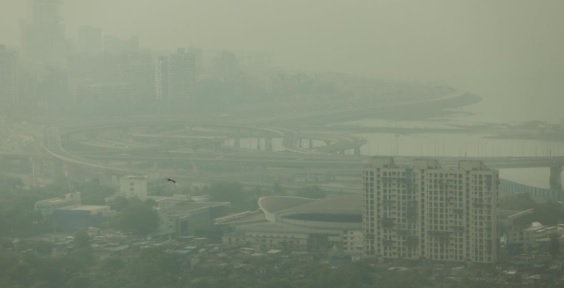
The Scale of the Crisis: Flawed Indices and Unrealistic Limits
- According to a report by the Centre for Air Quality and Clean Air Research (CREA), 150 out of 256 cities surveyed in 2025 were found to be violating the national PM 2.5 standard (60 µg/m³).
- PM 2.5 levels in the national capital, Delhi, were recorded between 107-130 µg/m³, twice the Indian limit and several times higher than the World Health Organization (WHO) guideline (15 µg/m³).
Failure of the Official Index:
- India's official Air Quality Index (AQI) still remains at a threshold of 500, while actual pollution levels are often higher.
- As a result, government platforms group all extreme pollution into a single "severe" category, while international monitoring systems (such as IQAir) regularly show values above 600 and sometimes even over 1,000. However, experts are calling for an immediate readjustment of this outdated and flawed AQI scale and the implementation of a modern monitoring system.
Devastating Burden on Health
The devastating health impact of toxic air directly impacts life expectancy.
- Loss of Life Expectancy
- According to the University of Chicago's AQLI, approximately 46% of Indians live in areas where air pollution significantly reduces life expectancy.
- According to WHO standards, exposure to current levels of PM 2.5 in Delhi reduces life expectancy by more than eight years.
- Mortality
- According to the State of Global Air Report 2025, air pollution will cause approximately two million deaths nationwide in 2023.
- Pollution-related mortality has increased by 43% since 2000, highlighting the long-term and cumulative risk.
Effects of PM 2.5 on the Body
Cardiovascular Problems
- PM 2.5 particles penetrate deep into the lungs, enter the bloodstream, and cause inflammation throughout the body.
- Studies have shown that a 10 µg/m³ increase in long-term exposure to PM 2.5 leads to an 8% increase in annual mortality.
- It causes hypertension, atherosclerosis, myocardial infarction, and stroke in the human body.
Respiratory Illnesses
- The most obvious consequence of toxic air is respiratory illnesses. About 6% of children in India suffer from asthma.
- Clinical data from AIIMS shows that even a modest 10 µg/m³ increase in PM 2.5 can lead to a 20-40% increase in the number of children presenting to pediatric emergency departments for respiratory problems.
Effects on the Nervous System
- PM 2.5 particles can cross the blood-brain barrier, causing neuroinflammation and oxidative stress.
- It can also affect children's academic performance, memory, and cognitive development. International meta-analyses show that the risk of dementia increases by 35-49% with every 10 µg/m³ increase in PM 2.5.
Maternal and Newborn Health
High PM 2.5 exposure increases preterm birth, low birth weight, and neonatal mortality, deepening intergenerational health inequalities.
Strategic Problem
- Air pollution also reflects existing social and economic inequalities in India. In fact, lower-income groups often live closest to major sources of pollution, such as roads, industrial areas, construction sites, and landfills, making them most vulnerable.
- Public discussions often focus heavily on stubble burning or Diwali fireworks, while these are merely seasonal factors that exacerbate the situation.
- Source-assignment studies consistently show that year-round structural factors, such as vehicular emissions, industrial processes, construction dust, and informal waste burning, profoundly impact baseline PM 2.5 levels.
Way Forward: Develop a Health-Focused Policy Framework
While the National Clean Air Programme (NCAP) is pushing for improvements, its targets are not relevant and implementation is weak. However, what is needed now is a multi-sectoral, health-focused strategy that can address air pollution at the grassroots level.
Transportation Overhaul
Large-scale electrification of buses, taxis, and two-wheelers and shifting freight transport to rail and electric fleets
Strict Industrial Regulation
Strict enforcement of pollution control technologies and phasing out coal-based processes
Building Regulation and Waste Management Reforms
Mandating dust-control protocols and ensuring the implementation of decentralized treatment systems to eliminate open waste burning
Health System Integration
Clean air standards should be integrated into routine health care. This should include district-level health advisories based on real-time AQI, lung function testing within school health programs, and proactive screening for COPD and cognitive impairment.
Promoting Clean Air as a Fundamental Right
Clean air, as a fundamental right in India, is essential for inclusive development. Scientific evidence and its irreversible impact on health demand that the protection of clean air now be an unwavering national priority.






 Contact Us
  New Batch : 9555124124/ 7428085757
  Tech Support : 9555124124/ 7428085757