| Prelims: (Defence + CA) Mains: (GS 2 – International Relations, Security Cooperation; GS 3 – Internal Security, Defence Preparedness) |
The 13th edition of the joint military Exercise KHANJAR between India and Kyrgyzstan has begun recently at Misamari in Sonitpur district of Assam. The annual special forces exercise reflects the growing defence cooperation between the two countries and India’s strategic engagement with Central Asia.

FAQs1. What is Exercise Khanjar ? Exercise Khanjar is an annual joint Special Forces military exercise conducted by India and Kyrgyzstan to enhance interoperability and counter-terrorism capabilities. 2. Where is the 13th edition being held ? The 13th edition, Khanjar-XIII, is being conducted at Misamari in the Sonitpur district of Assam, India. 3. What is the main focus of the 2026 exercise ? The exercise focuses on urban warfare and counter-terrorism operations under United Nations mandates. 4. Why is this exercise important for India ? It strengthens defence ties with Central Asia, enhances counter-terrorism preparedness, and supports India’s broader strategic and security objectives in the region. 5. How often is Exercise Khanjar Conducted ? It is conducted annually, with hosting duties alternating between India and the Kyrgyz Republic. |
| Prelims: (Environment & Ecology + CA) Mains: (GS 3 – Environment, Climate Change, Industry & Infrastructure) |
The Union Budget has announced an allocation of ₹20,000 crore over five years for Carbon Capture, Utilisation and Storage (CCUS), signalling a major policy push to cut emissions from hard-to-abate sectors. By backing CCUS technologies, the government aims to reduce industrial carbon footprints and support India’s long-term goal of achieving net-zero emissions by 2070.
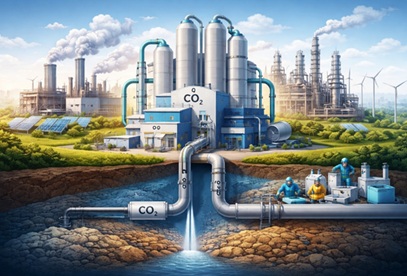
FAQs1. What is CCUS and why is it important ? CCUS captures carbon dioxide from industrial sources and either stores it underground or reuses it, helping reduce emissions and combat climate change. 2. Why is CCUS particularly relevant for India ? India has large hard-to-abate industries like steel and cement where emissions arise from chemical processes, making CCUS the only viable decarbonisation option. 3. How will the ₹20,000 crore budget allocation be used ? It will fund field testing, scale-up, and commercial deployment of CCUS technologies, raising their readiness for industrial application. 4. How does CCUS support India’s export competitiveness ? By reducing embedded carbon in products, CCUS helps Indian exports meet international climate standards and avoid carbon border taxes. 5. What are the main challenges to CCUS deployment in India ? High costs, energy requirements, regulatory gaps, safety concerns, and the need for large-scale infrastructure remain key barriers. |
| Prelims: (Social Issues + CA) Mains: (GS 1 – Indian Society, GS 2 – Governance, Social Justice, Constitution) |
Denotified, nomadic and semi-nomadic tribes have demanded constitutional recognition and a separate column in the 2027 Census to address long-standing political, administrative, and social marginalisation. The demand reflects growing frustration over continued invisibility in policy frameworks despite decades of post-Independence reforms.
FAQs1. Who are Denotified Tribes (DNTs) ? DNTs are communities that were labelled as “criminal tribes” under colonial laws and were denotified after Independence but continue to face social and administrative marginalisation. 2. Why are DNTs demanding constitutional recognition ? Because they lack a dedicated constitutional category, leading to policy invisibility, poor access to welfare schemes, and continued exclusion from affirmative action benefits. 3. What is the significance of including DNTs in the 2027 Census ? It will generate reliable population data, enabling targeted policymaking, budgetary allocation, and political representation. 4. What is the SEED scheme ? The Scheme for Economic Empowerment of DNTs provides support for education, health, housing, and livelihoods, but suffers from low implementation and outreach. 5. How can the situation of DNTs be improved ? Through constitutional recognition, Census enumeration, effective welfare delivery, legal empowerment, and inclusive development policies. |
| Prelims: (Polity & Governance + CA) Mains: (GS 3 – Disaster Management, GS 2 – Governance, Institutional Frameworks) |
A series of major disasters struck India in 2025, exposing serious gaps in the identification and management of disaster victims.In response, the National Disaster Management Authority (NDMA) has released India’s first comprehensive Standard Operating Procedure (SOP) for handling Mass Fatality Incidents (MFIs).The guidelines, titled “National Disaster Management Guidelines on Comprehensive Disaster Victim Identification and Management”, were released on Republic Day by the Ministry of Home Affairs, marking 25 years since the 2001 Gujarat earthquake.
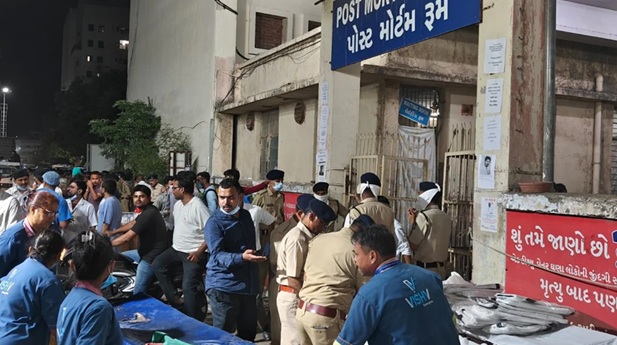
India witnessed at least five major mass fatality events in 2025, including:
In several of these incidents:
These recurring challenges underscored the urgent need for a uniform, scientific, and humane national protocol.
The SOP adopts a globally accepted structured approach:
The SOP integrates multiple forensic branches, including:
This holistic approach brings together science under a single coordinated framework.
The guidelines explicitly recognise that:
FAQs1. What is Disaster Victim Identification (DVI) ? It is a scientific and systematic process of identifying victims of mass fatality incidents using forensic, medical, and personal data. 2. Why did NDMA release this SOP now ? A series of major disasters in 2025 exposed serious gaps in victim identification, necessitating a uniform national framework. 3. What is the significance of the National Dental Data Registry ? Dental records are among the most reliable identifiers, especially in cases involving fire, explosions, or decomposition, and align with Interpol standards. 4. How does the SOP balance science and humanitarian concerns ? It adopts a humanitarian forensics approach, prioritising dignity, cultural sensitivity, and emotional support alongside scientific procedures. 5. What impact will this SOP have on India’s disaster management system ? It will standardise mass fatality management, strengthen institutional coordination, improve victim identification, and enhance India’s compliance with international best practices. |
| Prelims: (Polity & Governance + CA) Mains: (GS 2 – Governance, Judiciary, Rights; GS 3 – Economy, Digital Markets, Regulation) |
In a significant hearing, the Supreme Court of India sharply questioned the data practices of Meta, the parent company of WhatsApp, suggesting that the extraction of user data may resemble “theft” rather than voluntary exchange.
A three-judge Bench observed that in markets dominated by a few digital platforms, user consent may be illusory, as individuals have little real choice but to accept data-sharing terms. The court indicated that market dominance can convert consent into coercion, raising concerns that go beyond privacy to challenge the very economic foundations of data-driven business models.
These observations signal a possible judicial rethink on how consent, competition, and data ownership are understood in India’s rapidly expanding digital ecosystem, with far-reaching implications for Big Tech regulation in the world’s largest internet market.

FAQs1. Why is the Meta–WhatsApp case significant ? It challenges the assumption that user consent is meaningful in dominant digital markets and raises questions about data ownership and economic exploitation. 2. What was the CCI’s main concern ? That WhatsApp abused its dominant position by forcing users to accept data-sharing with Meta without a real opt-out option. 3. How did the Supreme Court differ from earlier rulings ? The Court went beyond privacy to examine the economic value of data and the coercive nature of consent in monopolistic markets. 4. What role does the Digital Personal Data Protection Act, 2023 play ? While it safeguards informational privacy, it does not address who benefits economically from monetised personal data. 5. What could be the long-term impact of this case ? It could lead to stronger Big Tech regulation, new data ownership frameworks, and a redefinition of user rights in India’s digital economy. |
Recently, the Union Finance Minister announced the launch of a new initiative called "Biopharma Shakti" during Budget 2026–27. It aims to empower India's biopharmaceutical sector.
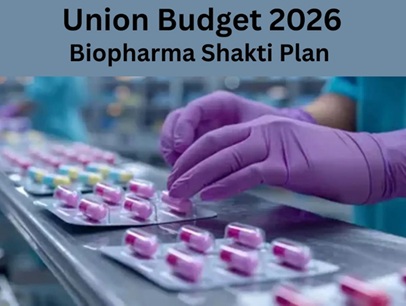
The primary objective of Biopharma Shakti is to build an innovation and manufacturing network that can effectively address India's changing healthcare needs. In particular, this initiative has been developed keeping in mind the increasing burden of non-communicable diseases such as diabetes, cancer, and autoimmune diseases.
The Supreme Court of India has placed an interim stay on the implementation of the UGC (Promotion of Equality in Higher Education Institutions) Regulations, 2026. The Court directed that the previous 2012 guidelines remain in effect until further orders. It also expressed concern that the language of the new regulations is ambiguous and could potentially create divisions in society.

This case involves the UGC's attempt to replace the 14-year-old equality framework with more stringent and legally binding regulations. These new regulations were intended to prevent caste-based discrimination on higher education campuses. However, the 2026 regulations sparked widespread dissent and opposition.
Key Challenges to the Rules
The UGC Equality Regulations of 2026 are a well-intentioned attempt to provide a legal basis for social justice on Indian higher education campuses, but their legal structure suffers from glaring shortcomings. By banning these, the Supreme Court has sent a clear message that any protective law can only be effective if it is clear, inclusive, and non-divisive. The way forward lies in creating a balanced framework that provides genuine protection to disadvantaged groups without alienating the general student community.

Our support team will be happy to assist you!


 Contact Us
  New Batch : 9555124124/ 7428085757
  Tech Support : 9555124124/ 7428085757