New
GS Foundation (P+M) - Delhi : 05th Jan., 2026 Winter Sale offer UPTO 75% + 10% Off, Valid Till : 5th Dec., 2025 GS Foundation (P+M) - Prayagraj : 15th Dec., 11:00 AM Winter Sale offer UPTO 75% + 10% Off, Valid Till : 5th Dec., 2025 GS Foundation (P+M) - Delhi : 05th Jan., 2026 GS Foundation (P+M) - Prayagraj : 15th Dec., 11:00 AM

Current Affairs for 05 November 2025

Illegal Sand Mining — An Environmental, Social, and Administrative Analysis

(GS Paper 3 – Environment)

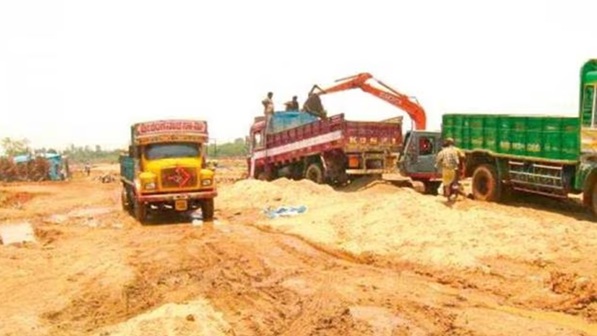
Sand — often perceived as an insignificant resource — is, in fact, the backbone of modern civilization. It is the foundation of the construction industry, essential for concrete, glass, roads, and infrastructure projects. However, growing demand coupled with limited natural supply has turned sand into “White Gold”. In India and many other countries, sand has become synonymous with illegal mining, mafia networks, and environmental degradation.
Legal vs. Illegal Sand Mining

Aspect

Legal Mining

Illegal Mining

Licensing

Approved by government with permits and quotas

Conducted without any license or permission

Revenue

State earns royalty and taxes

No revenue; direct loss to exchequer

Environmental Management

Environmental Clearance (EC) and replenishment norms

No EIA, no restoration or safety norms

Monitoring

District Mining Officers, SPCBs, Police

Local networks, nocturnal operations, corruption, and violence

Demand–Supply Dynamics of Sand in India

  • Construction sector contributes ~9% of India’s GDP.
  • Annual demand for sand: ~700 million tonnes.
  • Legal supply: ~400 million tonnes → Deficit: ~300 million tonnes, met through illegal mining.
  • Estimated value of the “Sand Mafia Economy”: 40,000–50,000 crore annually.

Major Hotspots of Illegal Sand Mining

State

Major Affected Rivers

Uttar Pradesh

Yamuna, Ken, Betwa, Son, Ganga

Madhya Pradesh

Narmada, Chambal, Tapti

Maharashtra

Godavari, Bhima

Tamil Nadu

Vellar, Kolar, Cauvery

Bihar

Son, Gandak

Odisha

Brahmani, Mahanadi

Haryana–Punjab

Yamuna, Sutlej

Key Reasons for Illegal Sand Mining

  1. Rapid urbanization and soaring construction demand.
  2. Complex and slow mining approval process.
  3. Corruption and local administrative nexus.
  4. Political patronage and revenue leakage.
  5. Lack of affordable substitutes like Manufactured Sand (M-sand).

Environmental Impacts

Impact

Description

River Ecology Degradation

Deepening of riverbeds lowers groundwater table; streams dry up.

Erosion and Land Loss

Riverbank erosion affects villages and agricultural lands.

Loss of Biodiversity

Destruction of habitats for fish, turtles, and aquatic birds.

Water Pollution

Increased silt imbalance reduces water clarity and quality.

Climatic Effects

Reduced moisture increases local temperature and dust pollution.

Example: The Chambal Sanctuary, home to gharials, faces severe threats from illegal sand extraction.

Social and Economic Consequences

  • Rising violence and murders of villagers, activists, and journalists by sand mafias.
  • Livelihood loss of fishermen and farmers.
  • Huge revenue loss to state governments (thousands of crores annually).
  • Law and order challenges due to the politicization of mining networks.

Governmental Interventions

1. Policy Measures

  • National Mineral Policy (2019): Emphasizes transparency and sustainable mining.
  • Sustainable Sand Mining Guidelines (SSMG, 2016): MoEFCC guidelines for environmental compliance.
  • Enforcement & Monitoring Guidelines for Sand Mining (EMGSM, 2020): Drone and satellite-based monitoring framework.

2. Technological Initiatives

  • e-Green Watch Portal: Real-time environmental clearance monitoring.
  • Drone Mapping & GPS Tracking: Identification and surveillance of mining sites.
  • Digital Sand Tracking System: End-to-end traceability of mined sand.

3. Legal Actions

  • Relevant IPC sections: 379 (theft), 120B (criminal conspiracy), 420 (cheating).
  • Environment Protection Act, 1986 and Mines & Minerals (Development & Regulation) Act, 1957 — penal provisions.
  • NGT directives: “Ban on deep riverbed mining” and “Mandatory rehabilitation plans”.

Judicial Interventions

Year

Case

Court Direction

2013

Deepak Kumar v. State of Haryana (SC)

Mining without environmental clearance declared illegal.

2018

NGT v. TN Sand Mining Case

Mandated digital monitoring of sand transportation.

2022

UP Sand Mining PIL

Directed implementation of e-licensing system.

Alternative and Sustainable Solutions

  1. M-Sand (Manufactured Sand)
    • Produced by crushing stones; eco-friendly and cost-effective substitute.
  2. River Replenishment Policy
    • Defines sustainable extraction limits and natural replenishment cycles.
  3. Community Participation
    • Involvement of Gram Panchayats for local monitoring and reporting.
  4. Green Construction Innovations
    • Use of fly ash, slag, and recycled materials in construction to reduce sand dependency.

Analytical Perspective

Dimension

Analysis

Environmental

Illegal mining threatens biodiversity, river ecology, and climate balance.

Economic

Loss of state revenue; rise of a parallel black economy.

Governance

Weak enforcement, corruption, and policy implementation gaps.

Social

Local violence, human rights issues, and threat to journalists.

Constitutional

Article 48A: State’s duty to protect the environment; Article 51A(g): Citizens’ duty toward environmental protection.

Conclusion

Illegal sand mining is not merely an environmental crime — it represents administrative failure, social unrest, and economic inequity. Unless government, judiciary, and local communities jointly create a transparent, tech-based, and accountable system, this “theft of rivers” will continue to erode both nature and society.

“Rivers are the soul of our civilization — and sand is their body; If the body turns hollow, how long can the soul survive?”

UPSC Practice Questions

  1. “Illegal sand mining has emerged as one of the gravest challenges to environmental governance in India.” — Analyze.
    (GS Paper 3 – Environment)
  2. “Illegal sand mining is not only an environmental issue but also a socio-political problem.” — Discuss.
    (Essay / GS Paper 2)
  3. “Sustainable utilization of sand resources is crucial for India’s water security.” — Examine.
    (GS Paper 3 – Resource Management)

Assessing Income and Wealth Inequality: G20 Report

(Prelims: Current Affairs)

Context

A report by the G20 group, led by Nobel laureate Joseph Stiglitz, warns that global inequality has reached emergency levels.

About the G20 Report on Global Inequality

  • This report was prepared by the G20's "Extraordinary Committee of Independent Experts on Global Inequality."
  • Its objective is to assess growing income and wealth inequality between and within countries.
  • This report was prepared under the South African G20 presidency.

Key Findings for India

  • The wealth of the top 1% of people in India increased by 62% between 2000 and 2023.
  • In China, this increase was approximately 54%.
  • The report says that while intra-country inequality has declined slightly due to rising per capita incomes in countries like India and China, inequality within countries has risen sharply.

Global Outlook

  • Dominance of the Top 1%: Between 2000 and 2024, the top 1% of people concentrated 41% of global new wealth; while the bottom 50% received only 1%.
  • Poverty Reduction Stalled: Since 2020, the rate of global poverty reduction has virtually stalled, and poverty has risen again in some regions.
  • Food Insecurity: Nearly 2.3 billion people worldwide face moderate or severe levels of food insecurity.
  • Health Services: Half the world's population lacks access to basic health services, and 1.3 billion people are falling below the poverty line due to health expenses.

Democracy and Inequality

  • According to the report, countries with high income and wealth inequality are seven times more likely to experience weakened democracy.
  • This trend contributes to declining public trust, political polarization, and “elite capture” in governance.
  • Social Impact:
    • Growing inequality increases discontent, distrust, and divisions in society.
    • Social cohesion and public communication are weakened.
  • Economic Impact:
    • Concentration of wealth limits consumption and demand.
    • Human capital development is hampered.
    • Inclusive growth is slowed.
  • Political Impact:
    • The influence of the wealthy on policymaking increases.
    • Access to equal opportunities decreases.
    • Transparency and accountability in governance are reduced.

New Recommendations

  • The report proposes the establishment of an International Panel on Inequality (IPI) to monitor inequality.
  • This panel will function like the Intergovernmental Panel on Climate Change (IPCC).
  • Its objective will be to provide governments with reliable data and policy guidance related to inequality.
  • This institution will be launched under the South African G20 presidency.

Conclusion

  • The report makes it clear that extreme inequality is not a natural process, but rather a consequence of policymaking. It can be changed through political will and global coordination.
  • For countries like India, this report is a warning that if income distribution is not balanced despite rapid economic growth, the goals of social stability, democracy, and inclusive development could be at risk
  •  Moving towards “Developed India 2047,” India must ensure that the benefits of development are not limited to the top 1% but reach every citizen.

Transforming the Agricultural Sector: NITI Aayog Report

(Prelims: Current Affairs)
(Mains, General Studies Paper 3: Storage, Transportation, and Marketing of Agricultural Produce, Related Issues and Barriers; E-Technology to Assist Farmers.)

Context

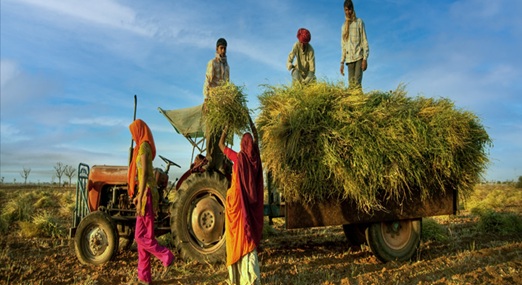
NITI Aayog's Frontier Tech Hub in Gandhinagar, Gujarat, released a report titled "Reimagining Agriculture: A Roadmap for Frontier Technology-Led Transformation." This report presents a roadmap for making India's agricultural sector technologically empowered, sustainable, and inclusive by 2047.
About the Report

This report provides a strategic approach to increasing productivity, sustainability, and farmers' incomes by utilizing advanced technologies such as artificial intelligence (AI), IoT, drones, digital twins, agentic AI, and bio-innovation in India's agricultural system.

Key Objectives

  • Increasing productivity and profitability through technology integration in agriculture.
  • Developing tailored solutions for small and large farmers.
  • Achieve the vision of a developed India 2047 by promoting sustainable agriculture.

A three-pillar framework

The report proposes three key pillars under the “Digital Agriculture Mission 2.0”:

  • Data ecosystem development: Strengthen digital and data-driven decision-making in the agricultural sector.
  • R&D and skills development: Promote research, innovation, and digital literacy of farmers.
  • Policy and industry coordination: Accelerate agricultural transformation by combining industry knowledge and policymaking.

Farmer classification

The report categorizes India's farmers into three categories:

  • Aspiring farmers (70–80%): Small farmers who need technical support and training.
  • Transition farmers (15–20%): Those who are gradually adopting modern agriculture.
  • Advanced farmers (1–2%): Farmers who use high-tech technologies on a commercial scale.

Current Agricultural Situation in India

  • The agricultural sector employs 45.8% of the workforce and produces approximately 1 billion tons of food annually.
  • Key Problems:
    • 86% of farmers are smallholders, owning less than 1 hectare of land.
    • Low mechanization and high costs.
    • Post-harvest losses; an annual loss of approximately $18 billion.
    • Limited access to digital and financial resources.
    • Pressure on crop productivity due to climate change.

Opportunities in Frontier Technologies

  • AI and Predictive Analytics: Accurate advisories for weather, disease, and crop forecasting, such as a 21% productivity increase in a pilot project in Telangana.
  • Climate-resilient seeds: Drought, heat, and pest-resistant crops using gene editing technologies like CRISPR.
  • Smart mechanization: Efficient resource utilization through drones, sensors, and digital twins.
  • Blockchain: Transparency and security of farmer data from crop to consumer.
  • Agritech Startups: 1,000+ Indian startups modernizing agriculture through AI and fintech.

Government Initiatives

  • Digital Agriculture Mission (2021–25): Unified digital database of farmers.
  • National Mission for Sustainable Agriculture: Promoting climate-smart farming.
  • Kisan Drone Yojana: Crop spraying and mapping using drones.
  • PM-KISAN and eNAM: Direct income support and digital agricultural markets.
  • Agristack and Agri Accelerator Fund: Promoting startups and digital infrastructure development.

Key Challenges

  • Data inconsistency: Data is misaligned across various systems.
  • Lack of digital literacy: Small farmers lack trust in technology.
  • Digital inequality: Lack of network and technical infrastructure in rural areas.
  • Skills gap: Lack of coordination between agriculture and AI.
  • Financial limitations: Lack of capital for technological innovations.

NITI Aayog's key recommendations

  • Digital Agriculture Mission 2.0: Integrating AI-based advisories, digital twins, and startup accelerators.
  • Research and innovation: Accelerating technology transfer from laboratories to farms.
  • Agricultural talent development: Training farmers and youth in AI and digital skills
  • Institutional collaboration: Coordinating policy, industry, and academia.
  • ​​Inclusive financial models: Increasing access to credit and insurance through alternative data.

Conclusion

This NITI Aayog report positions India towards an "Intelligent Agricultural Revolution," where data is the new soil and AI its nervous system. If policy, innovation, and inclusion are brought together, Indian agriculture can transform from traditional to tech-enabled, leading to balanced growth of productivity, sustainability, and prosperity.

« »
  • SUN
  • MON
  • TUE
  • WED
  • THU
  • FRI
  • SAT
Have any Query?

Our support team will be happy to assist you!

OR