New
GS Foundation (P+M) - Delhi : 05th Jan., 2026 Winter Sale offer UPTO 75% + 10% Off, Valid Till : 5th Dec., 2025 GS Foundation (P+M) - Prayagraj : 15th Dec., 11:00 AM Winter Sale offer UPTO 75% + 10% Off, Valid Till : 5th Dec., 2025 GS Foundation (P+M) - Delhi : 05th Jan., 2026 GS Foundation (P+M) - Prayagraj : 15th Dec., 11:00 AM

Current Affairs for 07 November 2025

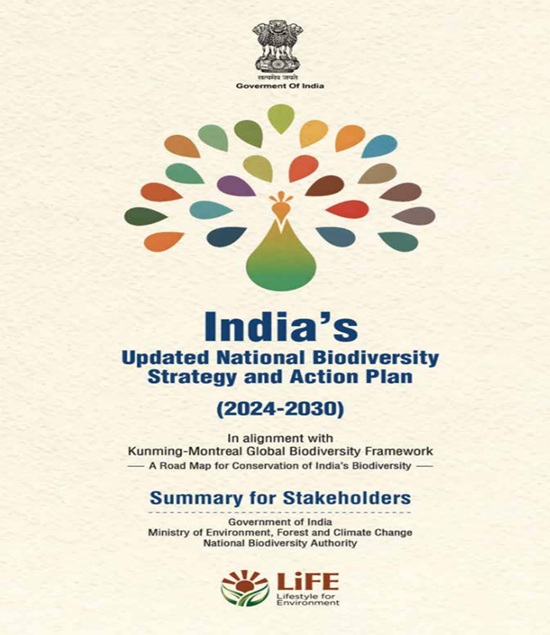
India’s National Biodiversity Strategy and Action Plan (NBSAP) 2024–30

GS paper -III : Environment

India presented its updated National Biodiversity Strategy and Action Plan 2024–30 (NBSAP 2024–30) at COP16 of the UN Convention on Biological Diversity (UNCBD) held in Cali, Colombia – 2024. This initiative reflects India’s strong commitment to biodiversity conservation and aligns with the Kunming–Montreal Global Biodiversity Framework (KMGBF).
Background

  • Under Article 6 of UNCBD, each Party is required to develop and update its NBSAP.
  • India’s NBSAP Journey:

Year

Initiative

Description

1999

First NBSAP

India’s first comprehensive biodiversity strategy.

2008

National Biodiversity Action Plan (NBAP)

National policy framework aligned with the Biodiversity Act 2002.

2014

NBAP (Updated)

Revised to align with Aichi Biodiversity Targets.

2024–30

Updated NBSAP

New version aligned with KMGBF (2022) and SDGs 2030.

Vision & Approach

  • “Whole of Government, Whole of Society” approach – engaging government, industry, communities, and civil society.
  • Alignment with the three key pillars of Kunming–Montreal Framework:
    • Reduction of threats to biodiversity
    • Sustainable use of natural resources
    • Effective means and financial mechanisms for implementation

National Biodiversity Targets (NBTs)

  • 23 national targets have been set.
  • Classified under three main areas:
    • Threat Reduction – addressing ecological degradation, invasive species, pollution, etc.
    • Sustainable Utilisation – equitable and sustainable use of natural resources.
    • Means of Implementation – science, policy, finance, and institutional collaboration.

Implementation Framework

  • Central Agency: Ministry of Environment, Forest & Climate Change (MoEF&CC)
  • Institutional Structure:

Level

Institution

Key Role

National

National Biodiversity Authority (NBA)

Policy formulation, coordination, international cooperation

State

State Biodiversity Boards / UT Councils

State-level policy and approval

Local

Biodiversity Management Committees (BMCs)

Local resource management and maintenance of People’s Biodiversity Register (PBR)

Resource Mobilisation

  • India is among the key countries implementing BIOFIN (Biodiversity Finance Initiative).
  • BIOFIN (UNDP + EU Commission):
    • Objective: Identify and expand financial flows for biodiversity conservation.
    • India is working to link it with national budget, CSR, green bonds, and international cooperation.

Other Key Features

  1. Ecosystem-based Management: Restoration based on ecosystems and bottom-up policy making at local levels.
  2. Biodiversity Mainstreaming: Integration of biodiversity considerations into agriculture, water, industry, urban planning, and tourism policies.
  3. Data & Monitoring: Establishment of biodiversity databases and transparent monitoring & reporting systems.
  4. Public Participation & Education: Promoting environmental education in schools, panchayats, and urban bodies.

Importance & Impact

Area

Impact

Environmental

Ecosystem restoration and climate resilience

Socio-economic

Promotes rural employment, sustainable agriculture, and local industries

Global Policy

Strengthens India’s global leadership role aligned with KMGBF

Financial

Finance biodiversity-based development through mechanisms like BIOFIN

Other Related Initiatives

  1. Biodiversity Regulations, 2004: Defines NBA’s role – agreements with foreign entities, IPR protection, etc.
  2. State-level Initiatives:
    • Arunachal Pradesh issued the first State Biodiversity Strategy & Action Plan, including district-level implementation plans.
  3. People’s Biodiversity Register (PBR):
    • Documentation of biodiversity resources by local communities.

United Nations Convention on Biological Diversity (UNCBD) — COP16

GS paper -III: Environment

  • Theme: “Peace with Nature”
  • Location: Cali, Colombia
  • Date: 21 October – 1 November 2024
  • The Convention on Biological Diversity (CBD) was established at the 1992 Rio Earth Summit.
  • Its primary objectives are the conservation of biodiversity, sustainable use, and equitable sharing of benefits.
  • COP16, the 16th Conference of the Parties, was held in Colombia.
  • The conference focused on implementing the Kunming–Montreal Global Biodiversity Framework (KMGBF), adopted at COP15 (2022, Montreal).
  • The theme “Peace with Nature” emphasized the connection between biodiversity, social stability, and economic well-being.

Key Objectives & Agenda

  1. Review of KMGBF ProgressTracking progress on the 23 targets set for 2030.
  2. One Health Approach Integrated focus on human, animal, and ecosystem health.
  3. Digital Sequence Information (DSI) Framework for equitable sharing of benefits derived from genetic resources.
  4. Marine & Coastal Biodiversity Protection and restoration of marine ecosystems.
  5. Resource MobilisationEnsuring financial resources for biodiversity conservation.
  6. Monitoring, Reporting, and Review (MRR) Tracking progress towards biodiversity targets.
  7. Local & Indigenous ParticipationStrengthening the role of indigenous communities, cities, and subnational governments.

Key Achievements

  1. Establishment of ‘Cali Fund’ New financial mechanism for equitable sharing of DSI-derived benefits.
  2. Biodiversity and Health Global Action PlanInternational action plan linking ecology and health.
  3. Recognition of Local GovernanceOfficial inclusion of local governments and cities in biodiversity governance.
  4. Strengthening Indigenous RightsIndigenous knowledge and rights formally integrated into global biodiversity governance.
  5. Climate–Biodiversity LinkageFormal recognition of integrating biodiversity and climate policies.

Challenges

  1. Financial Resource Gap Estimated $200 billion/year needed for biodiversity conservation; firm commitments lacking.
  2. NBSAPs (National Biodiversity Strategies & Action Plans)Most countries have yet to submit updated plans.
  3. Implementation GapSlow on-ground progress in achieving COP15 targets.
  4. Negotiation Deadlocks Disagreements on resource mobilisation and monitoring frameworks temporarily stalled COP16.
  5. DSI Framework Technical and legal aspects require further clarification.

Relevance for India

  1. Megadiverse Country India is one of the world’s 17 megadiverse nations.
  2. National Measures Needed:
    1. Update NBSAPs in line with KMGBF targets.
    2. Develop DSI-related policy frameworks.
    3. Include indigenous communities in biodiversity governance.
    4. Coordinate biodiversity and climate policies.
  3. Opportunities in Blue EconomyEmphasis on marine biodiversity aligns with India’s Blue Economy initiatives.
  4. One Health Approach Useful post-pandemic model for balancing health, ecology, and agriculture policies.

Kunming–Montreal Global Biodiversity Framework (KMGBF)

Key Features:

  • Non-binding framework adopted at COP15, Montreal, 2022.
  • Replaces the Strategic Plan for Biodiversity 2011–2020 and Aichi Targets.
  • Objective: Halt biodiversity loss and restore ecosystems by 2030.

Four Main Goals by 2050:

  1. Conservation and Restoration
  2. Nature-positive Benefits
  3. Equitable Sharing of Benefits – Especially DSI-derived benefits.
  4. Finance and Collaboration – Closing the annual biodiversity finance gap of $700 billion.

2030 Targets Highlights (23 Targets):

  • 30-by-30 Target:
    • Protect 30% of land, sea, and inland waters by 2030.
    • Restore 30% of degraded ecosystems.
  • Invasive Alien Species: Reduce spread by 50% by 2030.
  • Financial Target: Mobilize $200 billion/year, including $30 billion through international finance.

UPSC-Relevant Points

Topic

Details

International Organization

Convention on Biological Diversity (CBD) – 1992, Rio Summit

COP16 Location/Year

Cali, Colombia – 2024

Theme

Peace with Nature

Key Achievements

Cali Fund (DSI benefit sharing), One Health Global Plan

Relevance to India

Updated NBSAP, DSI policy, local and indigenous participation

Major Challenges

Financial resources, slow implementation

Next Step

COP17 (2026) – Review of implementation and finance

Conclusion

  • COP16 positioned biodiversity conservation as a broad social movement.
  • The theme “Peace with Nature” highlights that biodiversity is linked not only to environment but also to human survival, economic stability, and global justice.
  • For countries like India, COP16 offers an opportunity to align national targets with global frameworks and advance towards harmonious development with nature.

Maharashtra - Starlink Service Agreement: Digital Inclusion

(Prelims: Current Affairs)

Why in the News

Maharashtra has become the first state in the country to sign an agreement with Starlink, under which satellite-based internet services will be provided to government institutions and rural areas of the state.
What is the Starlink Project?

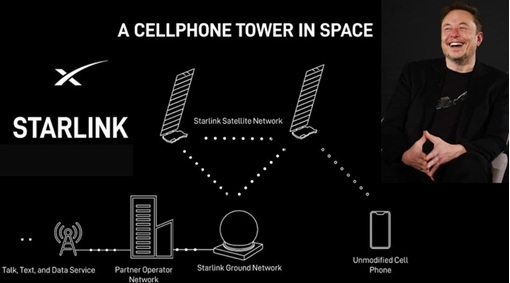
  • Starlink is a satellite-based broadband service operated by Elon Musk's company SpaceX.
  • This service provides fast and reliable internet worldwide through a network of satellites placed in low Earth orbit (LEO).

Starlink Technology Working

  • While traditional satellites orbit at an altitude of approximately 35,786 kilometers, Starlink satellites operate at an altitude of only 550 kilometers.
  • This significantly reduces data transmission latency, down to approximately 25 milliseconds.
  • These satellites connect to each other via optical inter-satellite links (Optical ISLs), eliminating the need for internet signals to rely on local ground stations.
  • This technology will enable services like real-time video calling, gaming, and live streaming, even in rural areas.

Key Features

  • Global coverage: A network of thousands of LEO satellites delivers internet to nearly every corner of the world.
  • Fast and low-latency service: High-speed and low-latency connectivity ensures smooth operation of data-intensive applications.
  • AI-based security: Satellites avoid collisions and space debris with the help of artificial intelligence (AI).
  • Compact design: Flat-panel satellites can be easily launched from Falcon-9 rockets.
  • Focus on rural connectivity: Technology specifically designed for areas where fiber or mobile networks are difficult to reach.

Maharashtra - Starlink Agreement: Digital Inclusion

  • This is not a comprehensive "services agreement," but rather a letter of intent for future collaboration between the government and Starlink, with specific deployment plans and terms to be finalized later.
  • The commercial launch of Starlink services in India is expected in early 2026, as the company is still obtaining necessary regulatory approvals and establishing ground infrastructure.

Objective

  • The primary goal of this initiative is to connect schools, health centers, and government institutions in remote and rural areas of Maharashtra with fast, reliable internet connectivity.
  • This will make services like online education, telemedicine (remote health services), and e-governance more accessible.

Significance

  • This initiative by Maharashtra is a major step towards digital inclusion across the country.
  • This partnership will not only empower education and healthcare services, but also accelerate the goals of the Digital India Mission and Develop India 2047.
  • This will expand digital opportunities in rural areas and give new direction to socio-economic development.

Operation White Cauldron

Why in News

The Directorate of Revenue Intelligence (DRI) achieved a major success by raiding a clandestine factory in Valsad district, Gujarat, under Operation White Cauldron.
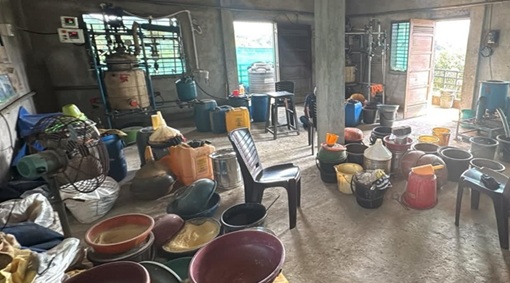

About Operation White Cauldron

  • It is a nationwide anti-narcotics operation conducted by the DRI.
  • Its objective is to detect clandestine factories manufacturing psychotropic substances.
  • These substances are banned under the NDPS Act, 1985.

Key Objectives

  • Dismantle the synthetic drug network spread across states.
  • Stop the illegal trade of chemical precursors.
  • Strengthen the Government of India's Drug Free India campaign.

Recent Operation Events

  • Location: Valsad, Gujarat
  • Seizures:
    • 9.55 kg of Alprazolam (finished form)
    • 104.15 kg of Alprazolam (unfinished form)
    • 431 kg of raw material; including chemicals such as p-Nitrochlorobenzene, Phosphorous Pentasulfide, Ethyl Acetate, and Hydrochloric Acid.
    • Industrial-grade equipment.
  • Previously, the DRI had seized a similar factory in Achyutapuram, Andhra Pradesh, in August 2025, where 119.4 kg of Alprazolam was seized.

Also Know!

Alprazolam is a prescription medication used to treat anxiety and panic disorders. It belongs to the class of drugs called benzodiazepines, which work by producing a calming effect on the brain and nervous system.

Significance and Impact

  • Stopping the Synthetic Drug Trade: This operation dealt a major blow to illegal drug manufacturing and its spread across states.
  • Improving State-Level Coordination: Coordination between various agencies enabled the rapid detection of crime networks.
  • Strengthening the Drug-Free India Campaign: This action furthers the government's goals of the Drug-Free India Campaign and protects society from the threat of drugs.

Conclusion

“Operation White Cauldron” is a testament to the vigilance and efficiency of India's intelligence and enforcement agencies. This operation not only dismantled a major drug network but also made clear that the government is committed to a zero-tolerance policy against drug trafficking.

What is the NDPS Act, 1985?

  • Its full form is the “Narcotic Drugs and Psychotropic Substances Act, 1985,” which is known as the “Narcotic Drugs and Psychotropic Substances Act, 1985” in Hindi.
  • It is a comprehensive legislation in India that aims to consolidate and amend the laws relating to narcotic drugs and psychotropic substances, to impose strict controls and regulations on the illegal manufacture, possession, sale, purchase, transport, storage and consumption of these substances.
« »
  • SUN
  • MON
  • TUE
  • WED
  • THU
  • FRI
  • SAT
Have any Query?

Our support team will be happy to assist you!

OR