- UPSC Exam
- State PCS
- One Day Exam
- Current Affairs
- PT Quiz
- Downlaods
- About Coaching
- Blog
- Videos

India is one of the 17 mega-diverse countries in the world in terms of biodiversity. Approximately 8% of global biodiversity is found in India, including 7% of mammals, 12% of birds, 6% of amphibians, and around 6% of flowering plants. Rapid population growth, urbanization, and industrialization pose serious threats to wildlife, making wildlife conservation in India increasingly critical.
1. Constitutional Provisions
2. Legal Framework
3. Key Institutions
|
Challenge |
Description |
|
Habitat Loss |
WWF reports 10 million hectares of forest lost annually. |
|
Wildlife Crime |
Rhinoceroses, pangolins, and elephants are most affected. |
|
Climate Change |
Rising temperatures and changing rainfall patterns affect habitats. |
|
Human-Wildlife Conflict |
Population growth and encroachment increase conflicts. |
|
Zoonotic Diseases |
Nearly 50% of emerging infectious diseases arise from human-animal-ecosystem interactions (IPBES Report). |
|
Biodiversity Decline |
WWF’s Living Planet Report (2020) shows a 73% decline in wildlife populations between 1970–2020. |
India has made remarkable progress in wildlife conservation — programs like Project Tiger, Project Elephant, and Project Cheetah serve as global examples. Yet, with increasing human activity and climate change, conservation must be viewed as a complement to development.
“Protecting wildlife is not only an environmental necessity but also a prerequisite for human survival.”
India has established several institutional frameworks to conserve wildlife and safeguard biodiversity. Among these, the National Board for Wildlife (NBWL) serves as the apex advisory body, playing a key role in wildlife policies, conservation strategies, and decisions related to notifications of protected areas. The NBWL was established under the Wildlife (Protection) Act, 1972 to provide institutional support for wildlife conservation at the policy-making level.

NBWL is a statutory body comprising representatives from the central and state governments, scientists, and NGOs. As per Section 5A of the Wildlife (Protection) Act:
|
Members |
Details |
|
Chairperson |
Prime Minister of India |
|
Vice-Chairperson |
Minister of Environment, Forest and Climate Change (MoEFCC) |
|
Members |
5 Parliament members (3 from Lok Sabha, 2 from Rajya Sabha) |
|
Member Secretary |
Director/Secretary, MoEFCC |
|
Members |
10 representatives from NGOs/experts in wildlife conservation |
|
Members |
15 representatives from state governments/Union Territories |
|
Members |
Scientists, ecologists, and directors of wildlife institutions (e.g., WII, ZSI, BSBI) |
Total Members: 47
Under Section 5C of the Wildlife (Protection) Act:
NBWL has issued three action plans so far:
|
Edition |
Period |
Focus Areas |
|
First |
1983–2001 |
Traditional conservation and expansion of sanctuaries. |
|
Second |
2002–2016 |
Human-wildlife conflict, community participation, policy coordination. |
|
Third |
2017–2031 |
“Balancing environment and development” – climate change adaptation, community involvement, linking biodiversity conservation with development. |
|
Issue |
Details |
|
Political influence |
Chairpersonship by the Prime Minister may lead to political influence over scientific decisions. |
|
Lack of transparency |
Public consultations and transparency are sometimes lacking in project approvals. |
|
Development vs. Conservation |
Approval of certain projects (roads, mining) in protected areas has drawn criticism. |
|
Irregular meetings |
Board meetings are sometimes delayed for years. |
|
Weak state coordination |
Limited coordination with State Wildlife Boards. |
The National Board for Wildlife (NBWL) is the backbone of India’s wildlife conservation framework. It plays a crucial role not only in policy-making but also in balancing development with environmental sustainability. The future success of NBWL depends on adopting scientific, transparent, and participatory decision-making processes, keeping wildlife conservation at the center of sustainable development.
| (Prelims: Environment and Ecology; Current Affairs) (Mains, General Studies Paper 3: Conservation, Environmental Pollution and Degradation, Environmental Impact Assessment) |
Ahead of the Leaders Summit (COP 30) in Belém, Brazil, India announced its participation as an observer country in the Tropical Forests Forever Facility (TFFF).
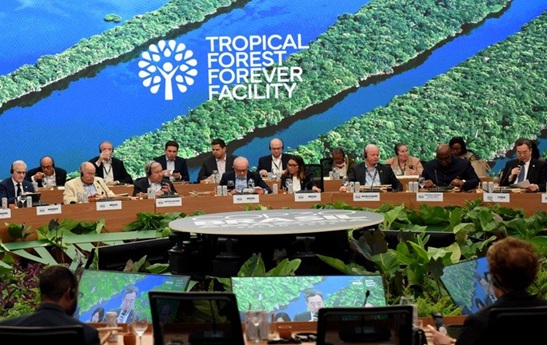
What it is: The TFFF is a new global financial mechanism that aims to provide economic incentives to countries that protect their tropical forests.
|
Country |
Contribution Amount |
|
Brazil |
US$ 1 billion |
|
Indonesia |
US$ 1 billion |
|
Colombia |
US$ 250 million |
|
Norway |
US$ 3 billion |
|
Netherlands |
US$ 5 million |
|
Portugal |
1 million euros |
France, China, and the United Arab Emirates (UAE) have also supported the initiative. However, they have not yet announced their financial contributions.
Brazilian President Luiz Inácio Lula da Silva appealed to world leaders on this occasion to:
He also launched a new initiative called the "Belém Commitment," which aims to quadruple the use of sustainable fuels by 2035.
India's Ambassador to Brazil, Dinesh Bhatia, speaking on behalf of India, said that the TFFF is an important step in collective global action that will promote the conservation of tropical forests and the democratization of climate finance.
The Tropical Forests Forever Facility (TFFF) is an excellent example of a financial incentive-based conservation model to combat climate change. India's participation in this initiative signals that the country is not only serious about its climate goals but also committed to playing global environmental leadership.
| (Preliminary Exam: Current Events) (Mains Exam, General Studies Paper 2: Bilateral, Regional, and Global Groups and Agreements Relating to India and/or Affecting India's Interests) |
On October 31, 2025, the Asia-Pacific Economic Cooperation (APEC) Summit 2025 was held in Gyeongju, South Korea. This summit made headlines, particularly due to the trade agreement between the United States and China.

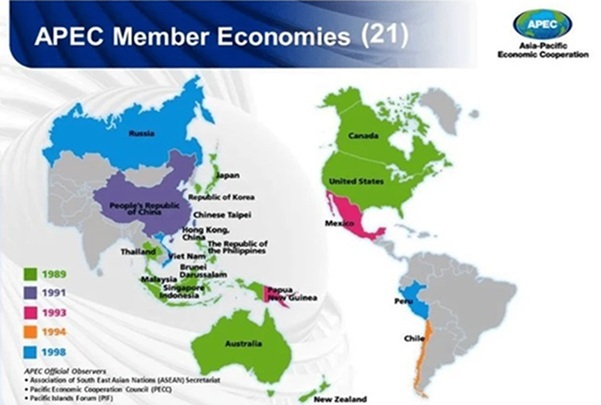
APEC Summit 2025 made it clear that the future of the Asia-Pacific region will depend on cooperation, innovation, and sustainable development. While the US-China agreement has provided short-term relief, balanced leadership and multilateral partnerships are essential for long-term stability.

Our support team will be happy to assist you!

 Contact Us
  New Batch : 9555124124/ 7428085757
  Tech Support : 9555124124/ 7428085757