New
GS Foundation (P+M) - Delhi : 05th Jan., 2026 Winter Sale offer UPTO 75% + 10% Off, Valid Till : 5th Dec., 2025 GS Foundation (P+M) - Prayagraj : 15th Dec., 11:00 AM Winter Sale offer UPTO 75% + 10% Off, Valid Till : 5th Dec., 2025 GS Foundation (P+M) - Delhi : 05th Jan., 2026 GS Foundation (P+M) - Prayagraj : 15th Dec., 11:00 AM

Current Affairs for 12 November 2025

Agriculture and Biodiversity Conservation

The relationship between agriculture and biodiversity is deeply intertwined — agriculture depends on biodiversity, and at the same time, it plays a role in its conservation.
In an agriculture-dominated country like India, where nearly 55% of the population is directly or indirectly dependent on agriculture, conserving biodiversity is crucial for food security, nutrition, livelihoods, and ecological balance. However, modern agricultural practices involving chemical fertilizers, pesticides, and monocropping have led to a concerning decline in biodiversity.

Global and National Context

Level

Key Initiatives / Laws

Global

• Convention on Biological Diversity (CBD, 1992)
• Nagoya Protocol (2010) – Framework for benefit-sharing
• FAO Global Plan of Action on Agricultural Biodiversity

National (India)

• Biodiversity Act, 2002
• National Agriculture Policy, 2000
• National Biodiversity Authority (NBA)
• National Agrobiodiversity Action Plan (2019)

What is Agrobiodiversity?

Agrobiodiversity refers to all living components that are part of agricultural and food production systems. It includes:

  1. Crop DiversityDiversity of crops and their varieties.
  2. Livestock DiversityDifferent species and breeds of animals.
  3. Soil BiodiversityMicroorganisms, fungi, insects, worms, etc.
  4. Aquatic Biodiversity Fish, algae, and aquatic plants.
  5. Pollinators & Ecosystem Services Bees, birds, butterflies, insects, etc.

Agrobiodiversity in India

  • India traditionally cultivates around 166 crops and 3,200+ varieties.
  • It is one of the Vavilov Centres of Crop Origin, the origin center for crops like rice, sugarcane, mung bean, and pigeon pea.
  • India has a gene pool of 50,000+ rice varieties and 1,500+ wheat varieties.

Major Challenges

Challenge

Description

Monocropping

Dependence on a single crop disrupts ecological balance.

Erosion of traditional seeds

High-yielding varieties (HYVs) have displaced indigenous seeds.

Chemical agriculture

Pesticides and fertilizers reduce soil biodiversity.

Climate change

Droughts, floods, and erratic weather patterns affect crop diversity.

Land degradation

About 30% of India’s land is degraded to some extent.

Neglect of traditional knowledge

Less attention to farmers’ indigenous knowledge and seed conservation.

Important Data and Reports

  • FAO (2023): 75% of agricultural biodiversity has been lost globally over the past 100 years.
  • IPBES (2022): Expansion of agricultural land contributes about 70% to global biodiversity loss.
  • India (2022): Only 10 major crops contribute more than 80% of total food production.

Strategies for Agrobiodiversity Conservation

1. In-situ Conservation (On-site)

  • Conserving seeds, crops, and living organisms within traditional agricultural systems.
  • Examples: Jhum cultivation, Kodo-Kutki farming in Jharkhand, Bakhli system in Uttarakhand.

2. Ex-situ Conservation (Off-site)

  • Conservation through gene banks, seed banks, and tissue culture laboratories.
  • India:
    • National Gene Bank – National Bureau of Plant Genetic Resources (NBPGR), New Delhi
    • National Seed Corporation (NSC)
    • ICAR and CGIAR networks

3. Traditional Seed Conservation Programs

  • Navdanya, Beej Bachao Andolan (linked to Chipko movement)
  • Krishi Vigyan Kendras promoting revival of local seeds.

4. Sustainable Farming Models

  • Organic farming
  • Zero Budget Natural Farming (ZBNF)
  • Multi-cropping and mixed farming
  • Agroforestry
  • Integrated Farming Systems (IFS)

5. Policy and Institutional Measures

  • Rashtriya Krishi Vikas Yojana (RKVY)
  • Pradhan Mantri Krishi Sinchai Yojana (PMKSY)
  • National Food Security Mission (NFSM)
  • National Biodiversity Authority (NBA) – to protect biological resources and traditional knowledge
  • Biodiversity Management Committees (BMCs) – maintaining biodiversity registers at the village level

Agrobiodiversity and Sustainable Development Goals (SDGs)

SDG

Objective

Relation to Agrobiodiversity

SDG 2

Zero Hunger

Ensuring nutritional diversity and food security

SDG 13

Climate Action

Developing climate-resilient crops

SDG 15

Life on Land

Conserving land ecology and crop diversity

SDG 12

Responsible Consumption

Promoting local, traditional food systems

Way Forward for India

  1. Update Agrobiodiversity Policy: National policy focusing on climate-resilient crops.
  2. Strengthen Local Seed Banks: Village-level seed conservation and exchange systems.
  3. Incentivize Farmers: Eco-credits or green subsidies for biodiversity-enhancing practices.
  4. Research & Innovation: Gene editing and climate adaptation research in indigenous varieties.
  5. Document Traditional Knowledge: Formal protection of tribal and rural biodiversity traditions.
  6. Raise Public Awareness: Encourage consumers toward local food diversity.

Conclusion

Agrobiodiversity is not only the foundation of food security but also one of the most effective strategies to combat climate change. In a country like India, where agriculture and nature have historically coexisted, balanced policies, scientific approaches, and community participation are essential for effective conservation.

Integrity Matters Checklist: A New Direction for Corporate Climate Responsibility

(Prelims: Current Affairs, Environment and Ecology)
(Mains, General Studies Paper 3: Conservation, Environmental Pollution and Degradation, Environmental Impact Assessment.)

Context

The Global Reporting Initiative (GRI), in collaboration with the United Nations (UN), has launched a new initiative called the “Integrity Matters Checklist.”
Global-Reporting-Initiative

About the Integrity Matters Checklist

  • It is a UN-approved climate disclosure framework that guides companies and investors in reporting net-zero targets, transition plans, and greenhouse gas (GHG) emission reduction efforts.
  • In general, it is a tool that helps companies present their climate commitments and net-zero targets in a transparent, scientific, and accountable manner.

Key Objectives

  • To make companies' climate actions transparent and credible.
  • Strengthening corporate climate action in line with the Paris Agreement and the UN Sustainable Development Goals (SDGs 2030).
  •  Implementing the recommendations of the “Integrity Matters” report (a report by the UN High-Level Expert Group – HLEG).

Key Highlights

  • Ensuring the integrity of companies' net-zero targets and a just transition, in line with UN guidelines.
  • Aligned with the GRI 102: Climate Change 2025 Standard, enabling consistency and comparability in sustainability reporting.
  •  Encouraging companies to exit fossil fuel investments and adopt a science-based transition path.
  • A checklist-based reporting tool to help companies measure progress from their climate commitments to their actual implementation.
  • Prioritizing transparency to increase confidence among investors and policymakers.

Future Direction

  • This tool will be adopted by companies as a standard in their reporting during COP30.
  • It will bring new credibility to the corporate sector's transparency, accountability, and sustainability efforts.
  • It will strengthen the private sector's contribution towards the goals of the Paris Agreement and the 2030 Sustainable Development Agenda.

Conclusion

The "Integrity Matters Checklist" not only motivates companies to take real action on their climate commitments but also sets a new standard for credible climate reporting and accountability globally. This initiative sends a clear message: transparent and verifiable action, not just promises, is the true path to sustainable development.

    About the Global Reporting Initiative (GRI)

GRI

  • Founded: 1997
  • Founding organizations: Ceres and Tellus institute collaboration with the United Nations Environment Programme (UNEP).
  • Nature: An international independent organization that provides the most widely used sustainability reporting framework worldwide.
  • Purpose: To help organizations measure and transparently share their environmental, social, and governance (ESG) impacts.

National Legal Services Day: Access to Justice for Every Citizen

(Preliminary Examination: Current Affairs)
(Main Examination, General Studies Paper 2: Mechanisms, Laws, Institutions, and Bodies Created by the Central and State Governments for the Protection and Welfare of Vulnerable Sections of the Population.)

Context

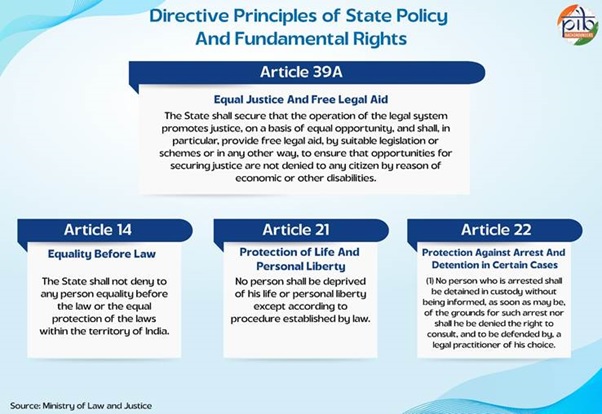
India is the world's largest democracy. Article 39A of our Constitution clearly states that the State shall ensure that no citizen is denied access to justice by reason of economic or other disability.

National-Legal-Services-Day

Establishment of the Legal Aid System

To realize the constitutional ideal of free legal aid, the Legal Services Authorities Act, 1987 was enacted under the guidance of Justice V.R. Krishna Iyer, which came into effect on November 9, 1995. Since then, November 9 is celebrated every year as National Legal Services Day.
Access to Legal Aid

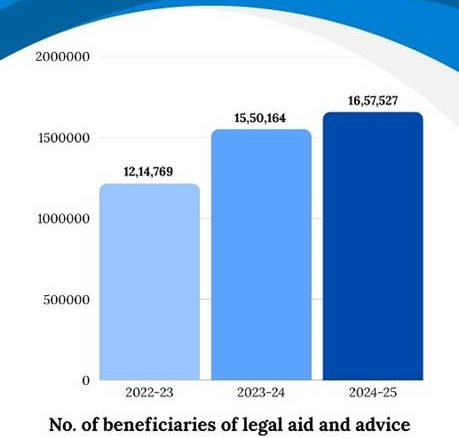
  • By 2022-25, more than 44.22 lakh people received free legal aid.
  • Lok Adalats resolved over 235.8 million cases expeditiously.
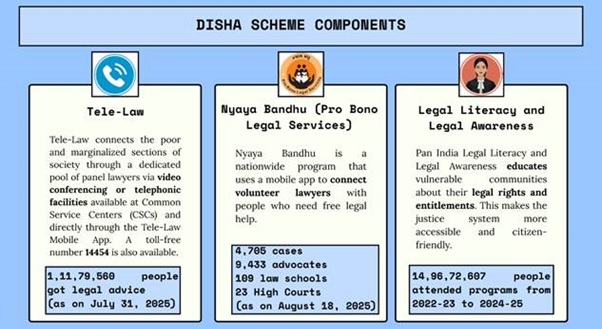
  • Under the Disha Scheme (2021-2026), 21 million people were provided pre-litigation advice, free legal representation, and awareness by February 28, 2025.
  • By 2022-25, 149.7 million people participated in over 138.3 million legal awareness programs.

legal-aid

A Strong Three-Tier Structure

The Legal Services Authorities Act has created a robust three-tier system in the country:

  1. National Legal Services Authority (NALSA): Chaired by the Chief Justice.
  2. State Legal Services Authority: Chaired by the Chief Justice of the High Court.
  3. District Legal Services Authority: Chaired by the District Judge.

These are funded by the central, state, and donations. The number of people receiving legal aid has increased significantly over the past three years.
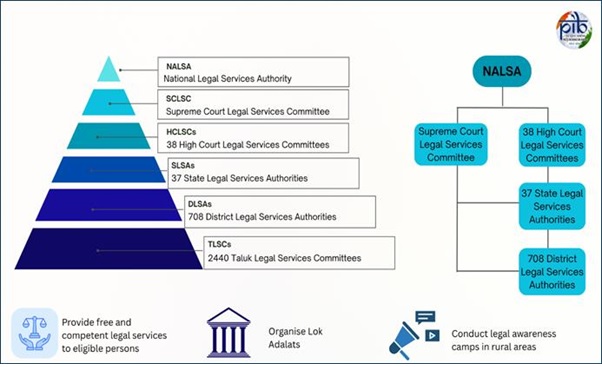
NALSA

Lok Adalats: Extending Justice to the People

Lok Adalats are the most powerful means of conciliation. They resolved 235.8 million cases amicably by 2022-25. They expedite the resolution of both pending and pre-trial cases.
Special Schemes and Initiatives

  • LADCS (Legal Aid Defense Counsel System): Operating in 668 districts. 786,000 out of 114.6 million cases resolved by September 2025. Budget: ₹998.43 crore.
  • Tele-Law Service: Over 4.5 million free consultations at 1.3 million Common Service Centers.
  • Nyay Bandhu App: Connects over 11,000 pro-bono lawyers with poor clients.
  • Fast Track Special Courts (FTSC): 725 courts (including 392 POCSO), 334,000 cases resolved.
  • Gram Nyayalayas: 488 operational by March 2025.
  • Nari Adalats: Pilot projects in 16 states, with 50 panchayats each in Assam and Jammu and Kashmir.

Technology Support

  • Disha Scheme Budget: ₹250 crore.
  • Over 80,000 judgments translated into 18 Indian languages ​​under the e-Courts Mission.
  • 56 TV programs on Doordarshan, 70.70 lakh viewers.
  • 21 webinars on social media, reaching over 1 crore people.

disha-scheme

Challenges

  • 75% of people in rural areas are unaware of their entitlement to free legal aid.
  • Only 20% of panel lawyers have formal training.
  • Lack of legal aid clinics in 40% of district courts.
  • Digital divide and over 4.5 crore pending cases.

The Way Forward

  • A 25% increase in the NALSA budget is needed.
  • Mandatory certification and continuing legal education for all panel lawyers.
  • Expansion of AI-based translation, e-filing, and mobile helpdesks.
  • Incorporating a legal literacy module into NEP 2020.
  • Partnerships with law universities, bar councils, and private firms.

article-39a

Conclusion: Justice is not a charity, it is a right.

The dream of a developed India 2047 will be realized only when even the last woman in the village, the tribal youth, and the poor laborer can seek justice without fear and without cost. National Legal Services Day reminds us that equality before the law is not a slogan, but a living reality; we just need to ensure that it reaches the last person in society.

Dumpsite Remediation Accelerator Program (DRAP) Goal — “Zero Dumpsite India by September 2026”

Mains GS Paper iii –Environment

Solid waste management remains one of the major environmental challenges in Indian cities. Most urban local bodies (ULBs) have legacy dumpsites where waste has been accumulating for decades, leading to severe soil, water, and air pollution.

To address this, the Ministry of Housing and Urban Affairs (MoHUA) has launched the Dumpsite Remediation Accelerator Program (DRAP) — a year-long targeted initiative aimed at achieving the “Zero Dumpsite India” goal by September 2026.
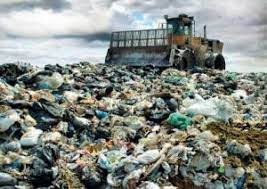
solid-waste-management

Background: Swachh Bharat Mission – Urban (SBM-U) 2.0

  • Launched: 1 October 2021
  • Goal: 100% Garbage-Free Cities
  • Key Objectives:
  1. Scientific reclamation/remediation of all legacy dumpsites
  2. Segregation, recycling, and reuse of solid waste
  3. Development of green zones from reclaimed land

What is DRAP?

The Dumpsite Remediation Accelerator Program (DRAP) is an accelerator initiative under SBM-U 2.0 designed to fast-track the scientific remediation of India’s legacy dumpsites.

Objectives

  • Prioritize high-impact sites
  • Dispose of around 8.8 crore metric tonnes of legacy waste
  • Transform old dumpsites into green zones, parks, or community spaces

Implementing Ministry

  • Ministry of Housing and Urban Affairs (MoHUA)

Eligibility

  • All states and union territories with ongoing legacy waste projects
  • Sites with over 45,000 metric tonnes of waste are prioritized
  • No minimum limit for Union Territories and Northeastern states

Status of Dumpsites in India

Parameter

Data

Total dumpsites

1,428

Fully remediated

1,048

Work in progress

380

Focus sites

214 sites in 202 ULBs

Total legacy waste

8.8 crore MT

What is Legacy Waste?

Legacy waste refers to old municipal solid waste that has accumulated in landfills or dumpsites over the years and has undergone partial or complete decomposition.

It includes:

  • Biodegradable waste
  • Plastics, construction debris, ash, dust, etc.

Major Environmental Risks

  1. Leachate:
    • Contaminated liquid that seeps through the waste
    • Pollutes both surface and groundwater
  2. Landfill Gas:
    • Produced from the decomposition of waste (mainly methane (CH₄) and carbon dioxide (CO₂))
    • Contributes to greenhouse gas emissions and potential fire/explosion hazards

Key Technologies for Dumpsite Management

Technology

Description

Benefits

Limitations

Biocapping

Covering the dumpsite with a soil/biological layer and converting it into a green zone

Controls leachate and gas emissions; stabilizes land

Requires maintenance for 10–15 years

Biomining

Using microorganisms to extract usable materials (e.g., RDF, metals) from waste

Reduces waste volume; reclaims land

Requires technical expertise and close monitoring

Financial and Implementation Aspects

  • Central financial support: 550 per tonne of waste
  • States must prepare Micro Action Plans
  • Real-time monitoring through the DRAP Portal
  • Implementation Model: 5-P Framework
  1. Political Will
  2. Public Finance
  3. Public Advocacy
  4. Project Management
  5. Partnerships (CSR + Private Sector)

Benefits of DRAP

  • Significant reduction in landfill and leachate pollution
  • Reclamation of valuable urban land for parks, housing, or community spaces
  • Reduction in methane emissions, supporting climate change mitigation
  • Employment generation (for waste pickers and recycling industries)
  • Improvement in cities’ Garbage-Free rankings

Challenges

  1. Lack of technical expertise and advanced machinery
  2. Limited financial and managerial capacity of local bodies
  3. Continuous dumping of fresh waste at the same sites
  4. Low private sector participation
  5. Long-term monitoring and maintenance challenges
« »
  • SUN
  • MON
  • TUE
  • WED
  • THU
  • FRI
  • SAT
Have any Query?

Our support team will be happy to assist you!

OR