| (Prelims: Current Affairs) (Mains, General Studies Paper 2: Functions and Responsibilities of the Union and States; Important Aspects of Governance, Transparency, and Accountability) |
The Central Government notified the Digital Personal Data Protection (DPDP) Rules, 2025 in November 2025, marking the full implementation of the DPDP Act, 2023.

This rule is a historic step for India, as India now has a functional data protection law eight years after the Supreme Court declared privacy a fundamental right (in the Puttaswamy case, August 24, 2017).
| (Prelims: Environment and Ecology; Current Affairs) (Mains, General Studies Paper 3: Conservation, Environmental Pollution and Degradation, Environmental Impact Assessment.) |
At the COP30 conference held in Belém, Brazil, more than 35 leading global philanthropic organizations from around the world made an initial commitment of $300 million to address climate-linked health challenges. The Belém Health Action Plan (BHAP) was also launched on the same occasion, which will form the foundation for health-focused climate policies in the coming years.

COP30 made it clear that climate change is no longer just an environmental issue; it has become the single most significant threat to global health security. The Belém Health Action Plan and the global commitment of $300 million are important steps towards placing human health at the center of climate policies. Developing countries like India have an opportunity to develop sustainable and equitable models in both health and climate sectors to ensure a secure future for future generations.
| (Mains – GS Paper 3 :Disaster Management) |
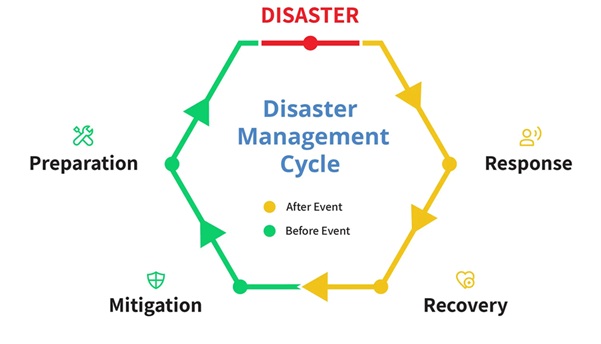
India is a geographically and climatically diverse country, making it highly vulnerable to natural disasters such as earthquakes, floods, cyclones, droughts, landslides, heatwaves, cold waves, and forest fires. According to various reports, disasters cause nearly 2% loss to India’s GDP every year. This underscores the need for a robust, scientific, and community-centered disaster management system.
1. Earthquakes

2. Floods and River Erosion
3. Cyclones and Coastal Hazards
4. Droughts
Approach
National Disaster Management Plan (NDMP) 2019 Vision
Insurance Coverage Gap
Disaster insurance coverage in India is less than 1%, leading to higher losses borne by the state and society.
A. Key Institutions
B. Financial Arrangements
C. NDMA Guidelines
D. Build Back Better (BBB)
India’s disaster management framework has strengthened significantly in the past two decades with NDMA, NDRF, SDMA, NDMP, and PM’s 10-Point Agenda.However, challenges like climate change, urbanization, low insurance coverage, and underinvestment in DRR persist.By adopting the Sendai Framework and Build Back Better approach, India can evolve into a more resilient, prepared, and secure disaster management system, where disasters become not only a challenge but also an opportunity for better development.

Our support team will be happy to assist you!

 Contact Us
  New Batch : 9555124124/ 7428085757
  Tech Support : 9555124124/ 7428085757