
- UPSC Exam
- State PCS
- One Day Exam
- Current Affairs
- PT Quiz
- Downlaods
- About Coaching
- Blog
- Videos

| Prelims: (Ramsar Convention, Ramsar Site + CA) Mains: (GS 3 – Environment & Ecology) |
India has added Siliserh Lake (Rajasthan) and Kopra Jalashay (Chhattisgarh) to the list of Ramsar Sites — wetlands recognised as being of global ecological importance under the Ramsar Convention.
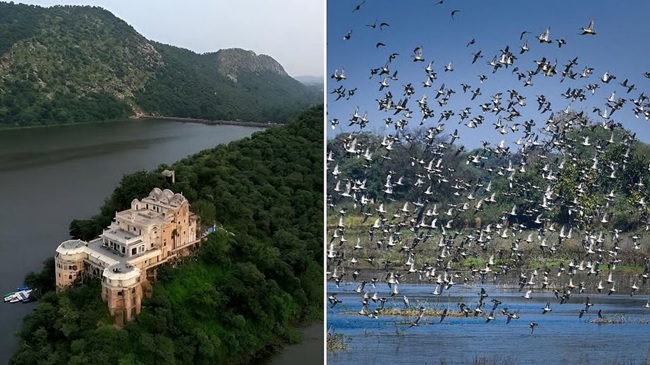
Wetlands are among the most productive ecosystems on earth, serving crucial ecological and socio-economic functions such as water purification, groundwater recharge, flood moderation, carbon storage, and habitat support for biodiversity. Globally, wetlands are under threat from urbanisation, pollution, climate change, and unsustainable land use.
The Ramsar Convention (1971) — formally the Convention on Wetlands of International Importance especially as Waterfowl Habitat — was adopted in Ramsar, Iran, to promote the conservation and wise use of wetlands. India, recognizing the ecological and cultural importance of its wetlands, became a signatory to the convention in 1982.
Ramsar Sites are wetlands identified under the Ramsar Convention as being of international importance owing to their ecological, biodiversity, hydrological, or cultural values. Both natural and human-made wetlands can qualify, provided they meet criteria such as:
Designation as a Ramsar Site encourages signatory countries to adopt “wise use” — sustainable utilisation that maintains the wetland’s ecological character.
As of 2025, India has 75 Ramsar Sites spread across diverse ecosystems — from high-altitude lakes in the Himalayas to mangroves in the Sundarbans and coastal lagoons in the south.
With the inclusion of Siliserh Lake and Kopra Jalashay, the total count of Indian Ramsar Sites stands at 75, reflecting the country’s commitment to wetland conservation.
Historical Background:
Ecological Importance:
Fauna:
Ecological Importance:
Fauna:
FAQsQ1. What qualifies a wetland to be a Ramsar Site? A wetland must have international ecological significance, such as supporting endangered species, hosting waterfowl populations, or providing essential hydrological services. Q2. Do Ramsar Sites receive legal protection? Ramsar designation encourages conservation and wise use, but national and state laws primarily govern legal protection and management actions. Q3. Are only natural wetlands eligible? No. Both natural and human-made wetlands (such as reservoirs or tanks) are eligible if they meet the Ramsar criteria. Q4. How many Ramsar Sites does India have? As of 2025, India has 75 Ramsar Sites. Q5. Does Ramsar status restrict local activities? Ramsar status promotes sustainable use and management; restrictions may arise under national wetland laws or management plans designed to preserve ecological character. |



Our support team will be happy to assist you!

 Contact Us
  New Batch : 9555124124/ 7428085757
  Tech Support : 9555124124/ 7428085757