Prelims: (Defence & Security + CA)
Mains: GS 3 - Science & Technolog |
Why in News?
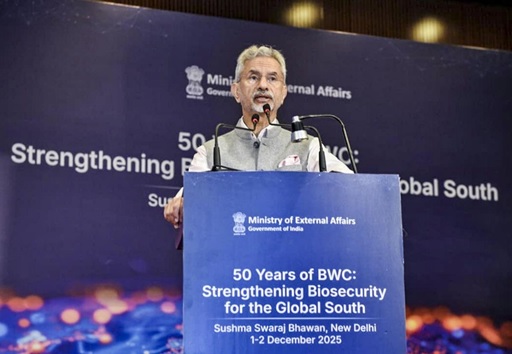
India’s biosecurity preparedness has come under renewed focus following expert assessments warning of rising biological threats driven by rapid advances in biotechnology, increasing capabilities of non-state actors, and structural gaps in India’s existing response systems.
Background & Context
Traditionally, biological threats were viewed largely through the lens of state-sponsored bioweapons. However, the contemporary threat landscape has evolved significantly:
- Advances in synthetic biology, gene editing, and molecular engineering
- Reduced costs and easier access to biotechnology tools
- Growing risks from terror groups, lone actors, and accidental misuse
In this context, biosecurity has emerged as a critical component of national security, public health resilience, and economic stability.
Understanding Biosecurity
Biosecurity refers to policies, practices, and systems designed to prevent the intentional misuse of biological agents, toxins, or technologies.
Key Components of Biosecurity
- Securing laboratories handling dangerous pathogens
- Preventing deliberate outbreaks or sabotage
- Protecting human, animal, and plant health
- Regulating dual-use biological research
- Difference between Biosecurity and Biosafety
- Biosafety: Prevents accidental exposure or release of pathogens
- Biosecurity: Prevents deliberate misuse
Strong biosafety systems are foundational to effective biosecurity.
Evolution of Global Biosecurity Norms
- Biological Weapons Convention (BWC), 1975
- First global treaty banning development, production, and stockpiling of biological weapons
- Mandated destruction of existing stockpiles
- Post-BWC period saw decline in state-led bioweapons programmes
- However, emerging technologies and geopolitical tensions have renewed biosecurity concerns
- Increasing focus on dual-use research, export controls, and surveillance mechanisms
Why India Needs a Stronger Biosecurity System
1. Geographic and Ecological Vulnerability
Vast land borders and coastline
High population density and biodiversity
Faster spread potential for natural or engineered outbreaks
2. High Dependence on Agriculture
- Agriculture supports rural livelihoods and food security
- Biological attacks on crops or livestock could:
- Disrupt food supply chains
- Trigger economic instability
3. Threat from Non-State Actors
- Instances such as alleged preparation of Ricin toxin highlight:
- Growing interest of terror groups in biological tools
- Difficulty of detection compared to conventional weapons
4. Rapid Biotechnology Advancements
- Tools like CRISPR, synthetic genomes, and gene drives offer immense benefits
- Simultaneously raise risks of engineered pathogens and misuse
India’s Existing Biosecurity Architecture
Institutional Framework
- Department of Biotechnology (DBT): Governance of biotech research and biosafety
- National Centre for Disease Control (NCDC): Disease surveillance and outbreak response
- Department of Animal Husbandry & Dairying: Livestock disease monitoring
- Plant Quarantine Organisation of India: Crop and agricultural biosecurity
Legal and Policy Framework
- Environment (Protection) Act, 1986: Regulation of hazardous microorganisms and GMOs
- WMD & Delivery Systems Act, 2005: Criminalises biological weapons
- Biosafety Rules, 1989 and rDNA Guidelines, 2017: Lab containment and genetic research
- NDMA Guidelines: Management of biological disasters
International Engagement
- Member of Biological Weapons Convention (BWC)
- Participant in Australia Group (export controls on dual-use technologies)
Gaps in India’s Biosecurity System
Despite multiple institutions, India lacks a unified national biosecurity framework, resulting in fragmented oversight.
Key Weaknesses
- Outdated legal frameworks not aligned with modern biotech risks
- Weak coordination across human, animal, and environmental health sectors
- Limited high-containment laboratory infrastructure
- Insufficient surveillance for engineered or deliberate biological threats
- India ranks 66th on the Global Health Security Index, with declining response capacity
Global Best Practices and Lessons for India
International Models
- United States: National Biodefense Strategy (2022–28) integrating health, defence, and biotech
- US DNA Screening Guidelines (2024): Mandatory screening of gene synthesis orders
- European Union: Health Security Framework emphasising One Health
- China: Biosecurity Law (2021) treating biotech and genetic data as national security assets
- Australia: Biosecurity Act (2015) covering synthetic biology
- United Kingdom: Biological Security Strategy (2023) focusing on surveillance and rapid response
Key Lessons
- Unified oversight mechanisms
- Proactive regulation of emerging technologies
- Integration of security, health, and research governance
Way Forward
1. Establish a National Biosecurity Framework
- Centralised coordination among health, agriculture, environment, defence, and biotech agencies
2. Upgrade Surveillance and Infrastructure
- Expand genomic sequencing networks
- Strengthen high-containment laboratory capacity
3. Modernise Legal and Regulatory Systems
- Update laws to cover synthetic biology, gene editing, and dual-use research
4. Leverage New-Age Technologies
- Microbial forensics
- AI-driven pathogen detection
- Early-warning systems using digital and social data
5. Strengthen International Cooperation
- Participate in global biosecurity simulations
- Enhance data-sharing and crisis coordination mechanisms
FAQs
Q1. What is biosecurity?
Biosecurity involves measures to prevent deliberate misuse of biological agents and technologies.
Q2. How is biosecurity different from biosafety?
Biosafety prevents accidental exposure; biosecurity prevents intentional misuse.
Q3. Why is India vulnerable to biothreats?
High population density, biodiversity, agricultural dependence, and porous borders increase risks.
Q4. Which global treaty governs biological weapons?
The Biological Weapons Convention (BWC), 1975.
Q5. What approach integrates human, animal, and environmental health?
The One Health Approach.
|






 Contact Us
  New Batch : 9555124124/ 7428085757
  Tech Support : 9555124124/ 7428085757