(Prelims: Current Affairs, Science & Technology)
(Mains, General Studies Paper 3: Indian Achievements in Science & Technology; Internal Security, Indian Military Capabilities, Various Security Forces and Institutions and Their Mandates) |
Context
The Indian Army is undertaking a significant strategic shift in its air defense doctrine. In light of the evolving threat posed by subsonic cruise missiles, the Army is re-optimizing and upgrading its Man-Portable Air Defense Systems (MANPADS) to effectively counter low-flying targets.
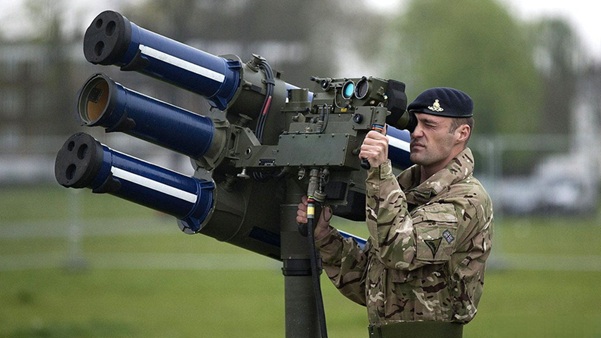
What are MANPADS ?
- MANPADS are surface-to-air missile systems that can be operated by a single soldier or a team of a limited number of soldiers.
- They are often called shoulder-fired anti-aircraft missiles, known for their rapid deployment and high mobility.
- These systems are typically less than two meters long and weigh around 20 kilograms, making them easily transportable even by infantrymen.
Historical Background and Global Use
- In the 1960s, the United States and the then-Soviet Union first developed and deployed MANPADS to provide portable air defense capabilities to their militaries. The United States initially introduced the Redeye system, and the Soviet Union the Strela system.
- Currently, the armies of approximately 105 countries worldwide use MANPADS. However, only 12 countries, including India, produce these systems indigenously.
- The most widely known MANPADS globally include the US Stinger, the Soviet Union's 9K32 Strela-2 (SA-7), and China's modern FN-16.
MANPADS fall into three main categories:
- Command Line-of-Sight (CLOS): In these systems, the missile is guided toward the target by the operator via remote control.
- Laser-Guided or Laser Beam Rider: These systems follow a laser beam projected onto the target.
- Infrared Seeker (Heat-Seeking): The most common MANPADS belong to this category, which locate the target by detecting heat emanating from the aircraft or missile's engine.
Main structural units of a MANPADS:
- A missile packaged in a tube
- A launch mechanism called a gripstock
- A battery that powers the system





 Contact Us
  New Batch : 9555124124/ 7428085757
  Tech Support : 9555124124/ 7428085757