
- UPSC Exam
- State PCS
- One Day Exam
- Current Affairs
- PT Quiz
- Downlaods
- About Coaching
- Blog
- Videos

| Prelims: (Polity & Governance + CA) Mains: (GS 2: International Relations, Government Policies; GS Paper – 3: Nuclear Energy, Infrastructure) |
Parliament has passed the Sustainable Harnessing and Advancement of Nuclear Energy for Transforming India (SHANTI) Bill, 2025, fundamentally restructuring India’s nuclear power framework by allowing private participation in nuclear power plant operations and related activities.
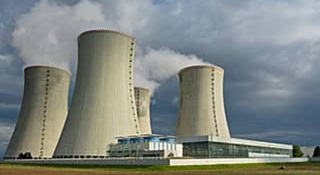
India’s nuclear power sector has historically been state-dominated, governed by the Atomic Energy Act, 1962, with operational control vested in public sector entities. While nuclear energy is crucial for clean baseload power, capacity expansion has remained slow due to capital intensity, liability concerns, and limited public resources.
With India targeting 100 GW of nuclear power capacity by 2047—to meet climate commitments and energy security needs—the government argues that private investment and technology partnerships are essential. The SHANTI Bill seeks to modernise the legal framework to align nuclear power with India’s broader infrastructure and clean energy ambitions.
Certain sensitive functions remain exclusively under Central Government control, including:
Removes the automatic “right of recourse” against equipment suppliers present under the CLNDA, 2010
Operators can claim damages from suppliers only if:
Explicitly provided through written contracts, or
Criminal intent to cause nuclear damage is established
Implication: This shields suppliers from long-term liability linked to latent defects, addressing investor concerns but raising accountability issues.
FAQsQ1. What is the SHANTI Bill, 2025 ? It is a law reforming India’s nuclear energy framework by permitting private participation and replacing older nuclear laws. Q2. Does the Bill allow full foreign investment in nuclear power ? No. Foreign participation is conditional and subject to government notification and security norms. Q3. How does the Bill change nuclear accident liability ? It removes automatic supplier liability and introduces graded liability caps linked to plant capacity. Q4. Who regulates safety under the new law ? The Atomic Energy Regulatory Board (AERB) continues as the primary safety regulator. Q5. Why is the Bill criticised on transparency grounds ? Because it overrides the RTI Act for nuclear-related information without public interest safeguards. |



Our support team will be happy to assist you!

 Contact Us
  New Batch : 9555124124/ 7428085757
  Tech Support : 9555124124/ 7428085757