New
GS Foundation (P+M) - Delhi : 19th Jan. 2026, 11:30 AM New Year offer UPTO 75% + 10% Off | Valid till 06 Jan 26 GS Foundation (P+M) - Prayagraj : 09th Jan. 2026, 11:00 AM New Year offer UPTO 75% + 10% Off | Valid till 06 Jan 26 GS Foundation (P+M) - Delhi : 19th Jan. 2026, 11:30 AM GS Foundation (P+M) - Prayagraj : 09th Jan. 2026, 11:00 AM

Smart Aquaculture for the Future

Prelims: (Economy + CA)
Mains: (GS 2 – Governance; GS 3 - Agriculture, Fisheries, Food Security, Economy)

Why in News ?

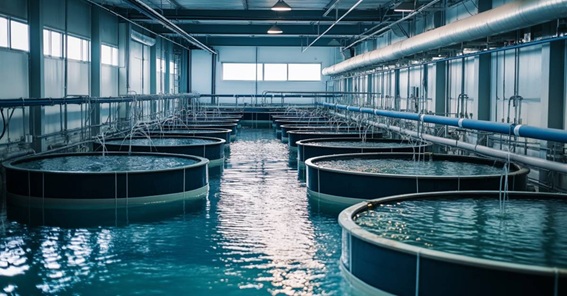
The Union Minister for Fisheries, Animal Husbandry and Dairying is set to inaugurate a state-of-the-art Re-circulatory Aquaculture System (RAS) facility in Hyderabad, Telangana. The initiative reflects India’s push towards technology-driven, sustainable aquaculture under the Blue Economy framework.
Background & Context

India is the third-largest fish-producing country in the world and aquaculture plays a crucial role in nutritional security, rural livelihoods, and exports. However, traditional aquaculture faces challenges such as:

  • High water consumption
  • Disease outbreaks
  • Environmental pollution
  • Land constraints near urban centres

To address these limitations, advanced aquaculture technologies like Re-circulatory Aquaculture Systems are being promoted to ensure resource efficiency, biosecurity, and sustainability.

What is a Re-circulatory Aquaculture System (RAS) ?

A Re-circulatory Aquaculture System is a closed-loop aquaculture technology in which water is continuously recycled and reused after undergoing mechanical and biological filtration.

The system removes suspended solids, toxic metabolites such as ammonia and nitrites, and pathogens, thereby maintaining optimal water quality for fish growth with minimal freshwater usage.

Key Features of Re-circulatory Aquaculture Systems

  • High-Density Fish Culture: Supports intensive aquaculture by maintaining precise control over water parameters.
  • Closed-Loop Operation: Water is recycled after filtration, significantly reducing water consumption compared to traditional pond systems.
  • Advanced Filtration Mechanism: Mechanical filters remove solid waste
    • Biological filters break down harmful metabolites
  • Automated Monitoring: Real-time monitoring of water quality, fish health, and disease indicators reduces manual intervention.
  • Enhanced Biosecurity: Prevents entry of pathogens from external water sources, lowering disease risk.
  • Flexible Location: Can be established indoors, in urban areas, or in regions lacking natural water bodies.

How RAS Differs from Conventional Aquaculture

Aspect

Conventional Aquaculture

RAS

Water Use

High

Very Low

Stocking Density

Low to Moderate

Very High

Disease Risk

High

Low

Land Requirement

Large

Minimal

Environmental Impact

Higher

Controlled & Low

Species Suitable for RAS

RAS can be used for culturing:

  • Tilapia
  • Catfish
  • Shrimp
  • Trout
  • Ornamental fish

This versatility makes RAS suitable for both food fish production and high-value aquaculture.

Significance for India’s Fisheries Sector

  • Water Conservation: Aligns with sustainable water management goals.
  • Urban and Peri-Urban Aquaculture: Enables fish production closer to consumption centres, reducing transport costs.
  • Disease Control: Reduces losses due to outbreaks, a major challenge in aquaculture.
  • Boost to Blue Economy: Supports value addition, exports, and livelihood diversification.
  • Climate Resilience: Less dependent on climatic variability compared to open water systems.

Government Initiatives Supporting RAS

  • Pradhan Mantri Matsya Sampada Yojana (PMMSY) promotes modern aquaculture infrastructure.
  • Establishment of Smart Green Aquaculture Farms and Research Institutes.
  • Focus on technology adoption, skill development, and private sector participation.

The Hyderabad facility serves as a demonstration and research hub for advanced aquaculture practices.

Challenges Associated with RAS

  • High initial capital investment
  • Need for technical expertise and skilled manpower
  • Dependence on uninterrupted power supply
  • Limited awareness among small and marginal fish farmers

Analysis: Why RAS Matters

  • Represents a shift from extensive to precision aquaculture
  • Balances productivity with environmental sustainability
  • Strengthens food security while conserving resources
  • Positions India for next-generation aquaculture exports

RAS reflects the future trajectory of India’s fisheries sector.

Way Forward

  • Provide targeted subsidies and credit support for RAS adoption
  • Strengthen training and capacity-building programmes
  • Promote public–private partnerships in aquaculture technology
  • Integrate renewable energy solutions to reduce operating costs
  • Scale up pilot projects for wider replication

FAQs

Q1. What is the main advantage of Re-circulatory Aquaculture Systems ?

They allow high-density fish farming with minimal water usage and strong biosecurity.

Q2. How does RAS conserve water ?

By continuously recycling and treating water within a closed-loop system.

Q3. Can RAS be set up in urban areas ?

Yes, RAS can operate indoors and in areas without natural water bodies.

Q4. Which government scheme supports RAS in India ?

The Pradhan Mantri Matsya Sampada Yojana (PMMSY).

Q5. What is the biggest challenge in adopting RAS ?

High initial costs and the need for technical expertise.

Have any Query?

Our support team will be happy to assist you!

OR