
New
GS Foundation (P+M) - Delhi : 23rd March 2026, 11:30 AM GS Foundation (P+M) - Prayagraj : 15th March 2026 GS Foundation (P+M) - Delhi : 23rd March 2026, 11:30 AM GS Foundation (P+M) - Prayagraj : 15th March 2026

Current Affairs for 01 March 2026

Meningococcal Infection in Meghalaya:- Symptoms, Treatment and Prevention

  • The Meghalaya government has issued a state-wide health advisory following the death of two Agniveer trainees undergoing training at the Assam Regimental Centre (ARC) in Shillong due to suspected meningococcal bacterial infection.
  • The infection is caused by a bacterium called Neisseria meningitides and is considered a serious, rapidly spreading disease.
  • On February 27, 2026, the state's Health and Family Welfare Department issued a formal advisory urging people to remain vigilant.

meningococcal-infection

What is Meningococcal Infection?

Meningococcal infection is caused by Neisseria meningitidis. It can lead to two serious medical conditions:

  1. Meningitis Infection of the protective membranes (meninges) covering the brain and spinal cord.
  2. Meningococcemia Infection of the bloodstream (blood poisoning), which can be fatal.

The infection spreads through close contact, coughing, sneezing, or exposure to bodily fluids of an infected person.

Possible Symptoms

Meningococcal infection can worsen rapidly. Symptoms include:

  • Sudden high fever
  • Severe headache
  • Neck stiffness
  • Vomiting
  • Rapidly spreading purple rash (that does not fade under pressure)
  • Pale or yellowish skin in later stages
  • Circulatory collapse
  • Shock
  • Multi-organ failure

Immediate medical attention is critical if these symptoms appear.

Treatment and Prevention

  • Immediate hospitalization and antibiotic treatment are essential.
  • Early treatment significantly reduces mortality.
  • Vaccination (Meningococcal vaccine) can prevent the disease, especially among high-risk groups.

Key Government Measures

According to the advisory issued on 26 February by Health & Family Welfare Commissioner-Secretary Zoram Beda:

  • The East Khasi Hills District Surveillance Unit has initiated active epidemiological investigation.
  • Case investigation, contact tracing, laboratory testing, and enhanced surveillance are underway.
  • Close contacts are being identified, monitored, and provided preventive medication where necessary.
  • The situation is currently under control, and no new suspected cases have been reported from other areas.

Public Advisory for Citizens

The government has advised the public to:
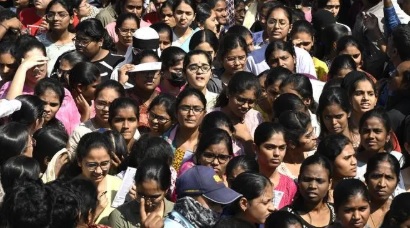
  • Avoid crowded places.
  • Wear masks in crowded settings.
  • Practice proper respiratory hygiene (cover mouth and nose while coughing/sneezing).
  • Wash hands regularly with soap or use sanitizer.
  • Seek immediate medical care if any suspicious symptoms develop.

India's Surplus Labor Trap: Prospects and Challenges

Context

  • The participation of gig workers, contract teachers, and ASHA/Anganwadi workers in the recent nationwide strikes highlighted the severity of the surplus labor trap in India. This situation demonstrates that millions of people are trapped in low-paying and insecure jobs.

surplus-labor-trap

Meaning of the Surplus Labor Trap

  • The surplus labor trap is an economic structure in which a large number of people are trapped in low-paying and low-productivity jobs (such as gig work or subsistence farming). This is primarily due to the lack of sufficient quality jobs created by the formal economy.

State of India's Labor Market

  • Dominance of the informal sector: Nearly 90% of the 650 million workers are employed in the informal sector, which lacks formal contracts or social security.
  • Low labor participation: Nearly 350 million people are not looking for work, indicating a large portion of human capital remains untapped.
  • Low wages: ASHA/Anganwadi workers earn a monthly salary of ₹7,000–₹12,000, often below the minimum wage.
  • Crowding in the public sector: Thousands of graduates apply for low-level government positions (such as watchmen, drivers), indicating that respectable private sector jobs are insufficient.

Prospects in the labor market

  • Demographic advantage: India has the largest young population globally, which can increase productivity with the right training. Example: The Global Capability Center (GCC) in Bengaluru enables Indian talent to contribute to high-quality global services.
  • Expansion of the digital economy: Digital systems can provide new and flexible employment opportunities. Example: ONDC (Open Network for Digital Commerce) is an effort to empower small vendors and delivery partners.
  • Construction and manufacturing sector (China Plus One): Shifts in global supply chains create industrial employment opportunities for surplus agricultural workers. Example: The expansion of Apple's ecosystem (Foxconn/Tata) in Tamil Nadu and Karnataka is creating formal jobs for thousands of women.
  • Green energy transition: Shifting to the renewable energy sector will increase demand for a new green workforce. Example: The PM-Surya Ghar Muft Bijli Yojana will boost demand for solar technicians and installers in rural India.
  • Social infrastructure development: Expansion of the health and education sectors can transform surplus labor into productive care professionals. Example: The expansion of institutions like AIIMS and medical colleges in states is creating formal employment in the health sector.

Key challenges

  • Job insecurity (Gig-ification): Algorithmic management and rapid delivery models focus on speed over worker safety. Example: The Zomato and Blinkit strikes in Gurgaon exposed the lack and risks of accident insurance.
  • Lack of wage stability: Inflation has eroded the purchasing power of low-wage workers. Example: In many states, MNREGA wages are lower than agricultural wages.
  • Skill mismatch: Graduates lack technical skills that do not meet the demands of modern industry. Example: According to the 2024 India Skills Report, only 50% of graduates were actually found employable.
  • Gender inequality: Women face unequal pay and opportunities in informal and volunteer work. Example: Protests by Anganwadi workers in Delhi and Maharashtra.
  • Weak labor law enforcement: Due to complex subcontracting, existing laws are often not followed. Example: The Silkyara tunnel accident exposed the lack of safety and insurance for subcontracted workers.

Solutions and guidance

  • Formalizing the informal sector: Ensuring health and accident insurance for gig and platform workers by implementing the Social Security Code.
  • Investing in human capital: Investing in human infrastructure rather than physical infrastructure, recruiting regular and permanent teachers and health workers.
  • Ensuring livable wages: Elevate ASHA/Anganwadi workers to civil service positions or formal employees.
  • Empowering organized collective negotiations: Enabling workers to form unions and negotiate without fear.
  • Decentralized industrialization: Creating local employment for surplus labor by promoting MSMEs in rural areas, thereby reducing forced urban migration.

Conclusion

  • India is at a juncture where its vast labor force can be both its greatest asset and a socio-economic time bomb. Shifting the economic structure from “replaceable labor” to “dignified employment” is imperative. Only by empowering lower-level workers can India generate the aggregate demand necessary for long-term and sustainable economic growth.

e-Railway Claims Tribunal System (e-RCT): Key Components, Significance and Impact

Recently, the Union Railway Minister launched the e-Railway Claims Tribunal System as the fourth major reform under Indian Railways’ ambitious initiative “52 Improvements in 52 Weeks.” This initiative aims to make the functioning of the Railway Claims Tribunal (RCT) fully digital, transparent, and citizen-friendly.
e-RCT

What is the Railway Claims Tribunal (RCT)?

The Railway Claims Tribunal was established under the Railway Claims Tribunal Act, 1987. Its primary objective is to ensure speedy and fair adjudication of claims filed against the railway administration.

Main Functions:

  • Determining compensation in cases of death or injury due to railway accidents or untoward incidents.
  • Adjudicating claims related to loss, damage, or non-delivery of goods.
  • Hearing cases related to refund of passenger fares and freight charges.

Structure:

  • Each Bench consists of:
    • One Judicial Member
    • One Technical Member
  • Currently, RCT operates through 23 Benches across 21 cities in India.
  • The Principal Bench is located in New Delhi.

e-Railway Claims Tribunal System

The new e-system aims to computerize, digitize, and enable AI-driven processes within the RCT. It ensures faster, more transparent, and accessible claim processing — from filing to final judgment.

Key Objectives:

  • Speedy and efficient claim processing
  • Enhanced transparency and accountability
  • Nationwide online accessibility
  • Reduction of human intervention and procedural delays

Now, a claimant or victim can file a claim electronically:

  • During the journey
  • After reaching the destination
  • Or from any location across the country

Three Major Components of the e-RCT System

1. e-Filing

  • 24×7 online claim filing facility
  • Uploading petitions, affidavits, annexures, and supporting documents
  • Reduced need for physical appearance
  • Saves time and cost

This is particularly beneficial for citizens in remote and rural areas.

2. Case Information System (CIS)

  • Centralized digital database of all cases
  • Auto-allocation of cases to benches
  • Real-time tracking from registration to disposal
  • Transparent and streamlined case management

This system helps monitor pending cases and ensures timely disposal.

3. Document Management System (DMS)

  • Digital storage of pleadings, summons, orders, and judgments
  • Digitally signed records
  • Secure and organized document management
  • Reduced dependence on paper-based systems

Significance and Impact

The e-Railway Claims Tribunal System is a major step toward strengthening Access to Justice in India.

Expected Impact:

  • Faster claim settlements
  • Greater transparency in judicial proceedings
  • Promotion of technology-driven smart governance
  • Enhanced public trust in railway administration

This reform aligns with the broader goals of Digital India and e-Governance, and it represents an important modernization of the judicial framework within Indian Railways.

« »
  • SUN
  • MON
  • TUE
  • WED
  • THU
  • FRI
  • SAT
Have any Query?

Our support team will be happy to assist you!

OR
X