New
GS Foundation (P+M) - Delhi : 05th Jan., 2026 Winter Sale offer UPTO 75% + 10% Off, Valid Till : 5th Dec., 2025 GS Foundation (P+M) - Prayagraj : 15th Dec., 11:00 AM Winter Sale offer UPTO 75% + 10% Off, Valid Till : 5th Dec., 2025 GS Foundation (P+M) - Delhi : 05th Jan., 2026 GS Foundation (P+M) - Prayagraj : 15th Dec., 11:00 AM

Current Affairs for 06 December 2025

National Horticulture Board

(Prelims: Important Organizations and Institutions)

Why in News

On December 4, 2025, the 33rd meeting of the National Horticulture Board (NHB) was held at Krishi Bhavan, New Delhi, under the chairmanship of the Union Minister of Agriculture and Farmers Welfare.
About the National Horticulture Board

  • Established: 1984
  • Legal Form: An Autonomous Society
  • Controlled: Ministry of Agriculture and Farmers Welfare, Government of India
  • Headquarters: Gurgaon (Gurugram), Haryana
  • Objective: To promote the integrated development of the horticulture sector in India, increase production, improve quality, and enhance farmers' income.

Composition: Governing Body

  • Chairman: Secretary/Representative of the Ministry of Agriculture and Farmers Welfare
  • Other Members:
    • Technical Experts
    • Representatives of State Governments
    • Members of Industry and Farmers' Organizations

Role and Functions

  • Promote horticulture development
    • Develop nurseries of fruits, vegetables, flowers, spices, cocoa, coconut, etc.
    • Establish high-quality nurseries.
  • Provide financial assistance
    • Subsidies for cold storage and post-harvest infrastructure.
    • Support for projects such as nurseries, high-tech greenhouses, packhouses, regeneration plants, etc.
  • Quality Control and Certification
    • Promote India GAP and other certification systems.
    • Set quality standards for planting material.
  • Market Development and Marketing Support
    • Strengthen supply chains at the individual and farmer levels.
    • Promote export-oriented production.
  • Data Collection and Analysis
    • Collection, analysis, and publication of data related to the horticulture sector.
    • Support in horticulture statistics and market control.
  • Training and Capacity Building
    • Provide technical training to farmers, entrepreneurs, and FPOs.
    • Promote modern agricultural techniques such as drip irrigation, greenhouses, and tissue culture.
  • Support for Research and Innovation
    • Work on new varieties, advanced technologies, and promotion.
    • Coordination with R&D institutions and universities.
  • Synergy with Horticulture Missions and other government programs
    • National Horticulture Mission (NHM)
    • Mission for Integrated Development of Horticulture (MIDH)
    • Agricultural Export Policy
    • Horticulture Sector-Based Cluster Development Program

India-Russia Bilateral Relations 2025

(Preliminary Examination: Current Affairs; International Relations)
(Mains Examination, General Studies Paper 2: Bilateral, regional, and global groupings and agreements related to and/or affecting India's interests.)

Context

Russian President Vladimir Putin's visit to India in December 2025 and the 23rd India-Russia Annual Summit added a new dimension to the long-standing partnership between the two countries, based on trust, mutual respect, and strategic alignment.
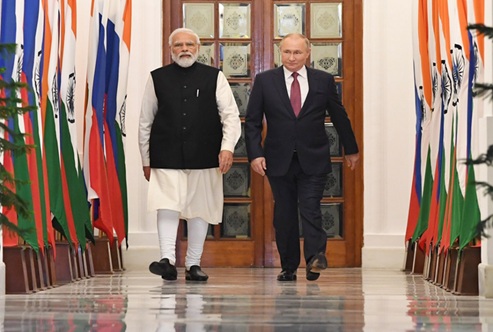
About President Putin's Visit to India

  • Russian President Vladimir Putin visited India on a two-day state visit on December 4-5, 2025, at the invitation of Prime Minister Modi.
  • This was their 23rd Annual Summit.
  • During the visit, the two leaders held bilateral talks, signed several agreements, and issued a joint statement.
  • The opening of Indian Consulates General in Yekaterinburg and Kazan was also mentioned during the visit, which will enhance inter-regional cooperation.

Key Issues

  • Timely achievement of the $100 billion bilateral trade target by 2030
  • Strengthening trade and payment systems in national currencies
  • Cooperation in energy, nuclear, defense, space, and emerging technologies
  • Northern Sea Route, INSTC and connectivity projects such as the Chennai-Vladivostok Corridor
  • Coordination on terrorism, extremism, and the situation in Afghanistan
  • Multilateral cooperation in BRICS, SCO, and G-20

Key Outcomes of the Visit

  • Adoption of a Programme for Strategic Areas of Economic Cooperation until 2030
  • Signing of 15+ Agreements/MoUs on Migration-Mobility, Health, Food Security, Polar Water Training, Fertilizers, and Media Cooperation
  • Russia Decides to Join the International Big Cat Alliance (IBCA)
  • Free 30-day e-visa and group tourist visa facility for Russian citizens
  • Accelerating construction of the remaining units of the Kudankulam Nuclear Project and Discussions on a Relocation

About India-Russia Bilateral Relations

Historical Background

  • India-Russia relations have been a cornerstone of independent India's foreign policy. The two countries have enjoyed a deep friendly relationship since 1947.
  • It was elevated to a strategic partnership in 2000 and to a "Special and Privileged Strategic Partnership" in 2010.
  • This relationship has stood the test of time and remains one of the most stable partnerships in the world.

Political

  • Both countries fully respect each other's sovereignty and territorial integrity.
  • Regular summits, 2+2 dialogues (foreign and defense ministers), National Security Advisor-level talks, and foreign ministry consultations are regular.

Trade

  • Bilateral trade is expected to reach a record $68.7 billion in 2024-25.
  • India imports oil, fertilizers, diamonds, and coal from Russia and exports pharmaceuticals, tea, and textiles.
  • Revised target of $100 billion by 2030.
  • Negotiations on trade in national currencies and the India-Eurasian Economic Union (FTA) are intensifying.

Defense

  • Defense cooperation is the strongest pillar of the partnership.
  • Projects such as the BrahMos missile, Su-30 MKI, T-90 tank, S-400; now emphasizing co-development and co-production.
  • Participation of Indian contingent in the INDRA-2025 joint military exercise and Zapad-2025 in 2025.
  • Manufacturing of components in India and export to third countries under Make in India.

Tourism

  • Sharp increase in tourist arrivals following the introduction of e-visa facility.
  • 30-day free e-visa and new group visa facility for Russians in 2025.
  • More than 8.5 lakh people attended the 'Festival of India' in Moscow in 2025.

Cultural

  • Yoga, Indian films, dance, and literature are extremely popular in Russia.
  •  India was the guest of honor at the Moscow International Book Fair in 2025.
  • The Russian Cultural Center in India and the Jawaharlal Nehru Cultural Center in Russia are active. Film co-productions and participation in international film festivals are increasing.

Diaspora

  • Approximately 15,000 Indians live in Russia and over 5,000 Russians in India.
  • ​​Russian tourists and students in India, while Indian medical students (approximately 20,000) and IT professionals in Russia.
  • A new agreement on the mobility of skilled workers in 2025.

Multilateral Organizations

  • Russia supports India's permanent membership in the United Nations.
  • Close coordination in BRICS, SCO, and G-20.
  • Russia's full support to India's BRICS presidency in 2026.
  • SCO-RATS cooperation in counter-terrorism. and utilizing the BRICS mechanism.

Projects

  • Kudankulam Nuclear Power Plant (6 units operational/under construction)
  • BrahMos missile (exports to third countries)
  • Northern Sea Route and Chennai-Vladivostok Corridor
  • Investments in the Russian Far East and Arctic (2024-2029 program)
  • Russian cooperation in Gaganyaan

Challenges

  • Trade imbalance (India's trade deficit)
  • Payment and logistics constraints due to Western sanctions
  • Competition from third countries (China, US) in some sectors
  • Indirect impact of global polarization due to the Ukraine conflict

Conclusion

Both countries aim to achieve balanced trade and reach $100 billion by 2030. Particular emphasis will be placed on trade in national currencies, new connectivity corridors, emerging technologies (AI, quantum, critical minerals), long-term partnerships in nuclear and space, and Indian investments in the Russian Far East and Arctic. Both countries are united on issues like terrorism, climate change and multipolar world order.
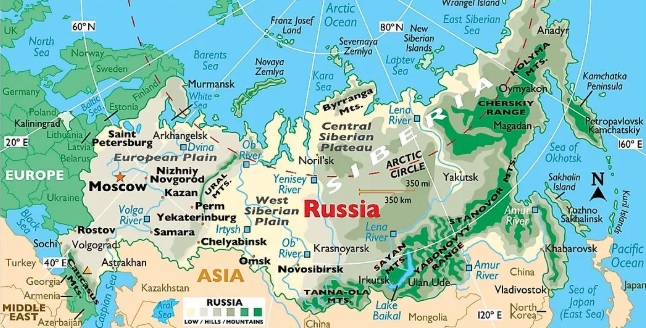
Russia

Country: Russia

  • Capital: Moscow; the world's most populous capital in the Northern Hemisphere and the largest city in Europe (population: approximately 13 million)
  • National Day: June 12 (Russia declared independence from the Soviet Union in 1990)
  • Area: 17,109,242 sq km; The world's largest country (1/8 of the world's total land area)
  • Geographical extent: Spanning 11 time zones (from Kaliningrad to Kamchatka)
  • Location: Located on two continents, Europe and Asia (the Ural Mountains form the borderline)
  • Population (2025 estimate): Approximately 144 million (decreasing)
  • Major ethnic groups: Russian 78%, Tatar 4%, Ukrainian, Chuvash, Bashkir, Chechen
  • Official language: Russian (the most widely spoken Slavic language in the world)
  • Religion: Orthodox Christian majority (70%+), Islam, Buddhism, Jewish minority
  • Currency: Russian ruble (RUB)
  • Government system: Federal semi-presidential republic
  • Current President: Vladimir Vladimirovich Putin (in power since 2000, re-elected in 2024)
  • Highest mountain: Mount Elbrus (5,642 meters) is the highest peak in Europe.
  • Deepest Lake: Lake Baikal; the world's deepest and oldest freshwater lake (1,642 meters deep, 25-30 million years old).
  • Major Rivers: Volga (Europe's longest river), Yenisei, Lena, Ob, Amur.
  • Administrative Divisions: 85 Federal Units – including 22 republics, 9 krais (provinces), 46 oblasts, 3 federal cities, 1 autonomous oblast, and 4 autonomous okrugs.
  • Natural Resources: World's largest natural gas reserves, second-largest coal reserves, leading in oil, diamonds, gold, nickel, platinum, and uranium.
  • Military Power: World's second-largest nuclear power; largest tank fleet, most nuclear weapons (approximately 6,000).

What is Cloudflare? How it Works and Why We Use It?

Prelims: (Cybersecurity + CA)
Mains: (GS 3 – Science and Technology, Economy)

Why in News ?

Cloudflare has emerged as one of the most widely used platforms for website security, performance enhancement, and traffic optimisation. Understanding its role is essential due to its impact on global internet stability, cybersecurity, and digital business operations.

What is Cloudflare ?

Cloudflare is one of the world’s largest Content Delivery Network (CDN) and web security service providers, helping websites speed up loading times and defend against cyber threats.

Founded in 2009, Cloudflare initially focused on combating email spam but has since evolved into a major global cloud network that:

  • Handles 32 million HTTP requests per second
  • Powers services for over 12 million domains
  • Manages nearly 10% of global internet traffic

Organisations worldwide—businesses, government services, bloggers, NGOs—use Cloudflare to secure and accelerate their online platforms.

Key Features of Cloudflare

1. DDoS Protection

Cloudflare blocks over 57 billion attacks per day, protecting websites, applications, and entire networks.

2. Global Load-Balanced CDN

A network of 200+ data centers ensures fast content delivery with no bottlenecks.

3. Static Content Caching

Edge servers store cached site data, reducing latency and speeding up access.

4. Argo Smart Routing

Uses intelligent routing algorithms to deliver traffic through the fastest routes globally.

5. Geo-Based Routing

Delivers content from servers closest to the user, improving speed and reliability.

6. Streaming Services

Provides simple, efficient, and cost-effective video streaming solutions.

7. Mobile Optimisation

Cloudflare Mirage optimizes images for mobile devices through virtualized, lazy-loaded content.

8. Argo Tunnel

Creates encrypted connections between the origin server and Cloudflare, hiding the server’s real IP.

9. Intelligent Threat Detection

Learns from global attack patterns and enhances protection for all sites using its network.

10. China Network

The only CDN with strong network presence inside China, enabling consistent performance there.

11. Advanced Analytics

Provides dashboards, custom insights, and GraphQL-based analytics for website traffic and cache performance.

How Cloudflare Works

Cloudflare acts as a protective gateway between the user and the website's server.

Process:

  1. A user request is routed to Cloudflare’s global network.
  2. Cloudflare analyses it for:
    • IP reputation
    • Browser type
    • Location
    • Volume of requests
  3. Malicious or suspicious traffic is blocked.
  4. Legitimate traffic is forwarded to the origin server.

When Cloudflare proxy is enabled:

  • Your server's real IP remains hidden
  • Attacks targeting server IPs get blocked
  • Only filtered traffic reaches the origin

This significantly reduces server load and prevents downtime.

Why Use Cloudflare ?

  • Free DNS service
  • Free CDN with global availability
  • Free SSL certificate for HTTPS websites
  • Free DDoS protection
  • Automatic content caching for faster loading
  • Firewall rules to block bots, specific IPs, or countries
  • Easy DNS import/export
  • DNS-based load balancing (₹400/month approx) with:
    • Health monitoring
    • Automatic failover
    • Geolocation routing
  • Manage multiple domains from one account
  • No limits on DNS queries, even on free plans

Advantages of Cloudflare

  • 200+ global data centers ensure high speed
  • Comprehensive cybersecurity tools
  • User-friendly dashboard
  • Serves cached pages even when the origin is offline
  • Free plan offers essential security and performance features
  • Strong analytics and performance insights

Disadvantages of Cloudflare

  • DNS zones must be managed through Cloudflare
  • Only one SSL certificate level in free plans
  • Advanced features require paid subscriptions

FAQs

1. What does Cloudflare primarily do ?

It accelerates websites, protects them from cyberattacks, and improves overall performance through CDN, DNS, and security tools.

2. Is Cloudflare free to use ?

Yes. Cloudflare offers a robust free plan including CDN, SSL, DDoS protection, caching, and firewall rules.

3. How does Cloudflare protect websites ?

By inspecting incoming traffic, blocking malicious requests, hiding your server IP, and filtering bot attacks.

4. Does Cloudflare improve website speed ?

Yes. Through caching, smart routing, and a global CDN network, Cloudflare significantly reduces loading time.

5. What is Argo Tunnel ?

A secure, encrypted tunnel connecting your server to Cloudflare, hiding your server’s real IP address.

Supreme Court Seeks Centre’s View on Assam Accord Deadline Amid New Entry Rules

Prelims: (Polity + CA)
Mains: (GS 2 – Governance, Constitution; GS 3 – Security)

Why in News ?

The Supreme Court has asked the Union Government whether its recent order allowing persecuted minorities from neighbouring countries to enter India is in conflict with the Assam Accord, particularly its fixed migration cut-off date of 24 March 1971.
What’s in Today’s Article ?

  • Background of the Assam Accord
  • Key Provisions
    • Citizenship Cut-off Dates
    • Obligations for Detected Foreigners
    • Clause 6 Safeguards
    • Significance of the Accord

What is the Assam Accord ?

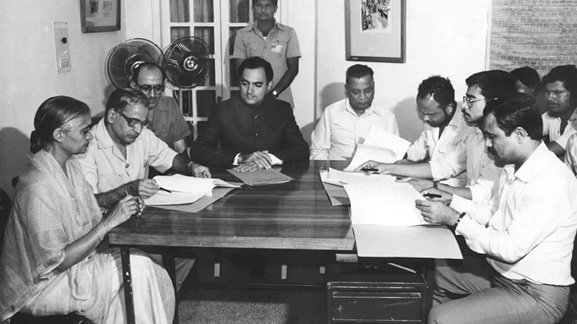
The Assam Accord, signed on 15 August 1985, was an agreement between:

  • The Union Government
  • Government of Assam
  • All Assam Students’ Union (AASU)
  • All Assam Gana Sangram Parishad

It formally ended the 6-year-long Assam Movement (1979–1985), which demanded the identification and removal of foreigners who had migrated to Assam illegally. The primary objective of the Accord was to detect and deport all migrants who entered the state after 24 March 1971, the eve of the Bangladesh Liberation War.

Main Provisions of the Assam Accord

1. Cut-off Dates for Detection of Foreigners

  • 1 January 1966 was set as the base date for identifying foreigners.
  • Anyone who arrived in Assam from the specified territory (then East Pakistan) before 1 January 1966 would be granted citizenship.

2. Migrants Between 1 January 1966 and 24 March 1971

  • Those who entered between 1 Jan 1966 – 24 Mar 1971 were to be:
    • Detected under the Foreigners Act, 1946
    • Declared foreigners by tribunals
    • Their names removed from electoral rolls
    • Required to register under the Registration of Foreigners Act, 1939
  • They would not be deported, but would regain voting rights only after 10 years from being identified as foreigners.

3. Migrants After 25 March 1971

  • All persons entering Assam on or after 25 March 1971 must be:
    • Detected
    • Deleted from electoral rolls
    • Expelled as per law

This cut-off date is central to the Supreme Court’s current query regarding the new entry order.

Clause 6 of the Assam Accord

Clause 6 commits the Government to provide:

  • Constitutional safeguards
  • Legislative protections
  • Administrative measures

These provisions aim to protect and preserve the cultural, linguistic, and social identity of Assamese people, addressing concerns over demographic change caused by migration.

Significance of the Assam Accord

  • Restores demographic balance in Assam
  • Protects indigenous cultural identity
  • Provides a legal mechanism for detection of illegal migrants
  • Serves as a cornerstone of citizenship and immigration policy in the state

FAQs

1. Why is the Supreme Court examining the Assam Accord now ?

Because the Court wants clarity on whether a new government order allowing persecuted minorities entry into India violates the Accord’s fixed deadline of 24 March 1971.

2. What is the central cut-off date under the Assam Accord ?

24 March 1971, the eve of the Bangladesh Liberation War.

3. Are migrants arriving before 1966 treated differently ?

Yes. Those arriving before 1 January 1966 are eligible for citizenship without restrictions.

4. What happens to migrants who entered between 1966 and 1971 ?

They are identified as foreigners, removed from electoral rolls, must register, and regain voting rights only after 10 years.

5. What does Clause 6 guarantee ?

Safeguards to protect the cultural, social, and linguistic identity of the Assamese people.

6. Does the Assam Accord require deportation of all detected foreigners ?

Only those arriving after 25 March 1971 are to be expelled. Earlier migrants face legal restrictions but are not deported.

India–Indonesia Launch 10th Edition of Garuda Shakti Special Forces Exercise

Prelims: (Defence Exercises + CA)
Mains: (GS 2 – Bilateral Relations; GS 3 – Security, Military Cooperation)

Why in News ?

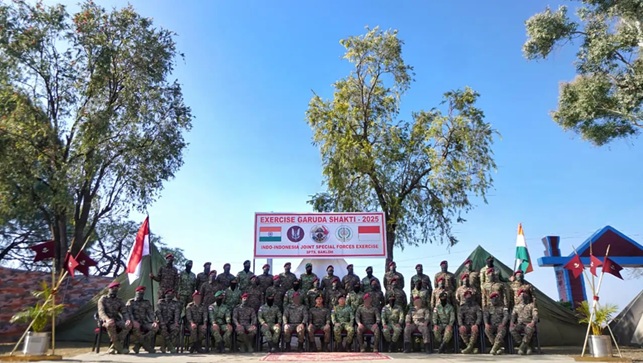
The 10th edition of Exercise Garuda Shakti, the joint Special Forces military exercise between India and Indonesia, has begun at the Special Forces Training School, Bakloh, Himachal Pradesh.
About Exercise Garuda Shakti

Exercise Garuda Shakti is a bilateral Special Forces exercise conducted annually between India and Indonesia, aimed at enhancing defence cooperation and strengthening operational synergy.

Participating Contingents

  • India: Troops from The Parachute Regiment (Special Forces)
  • Indonesia: Special Forces personnel from the Indonesian Army

Aim of the Exercise

The main objective is to:

  • Strengthen mutual understanding
  • Enhance interoperability
  • Improve coordination in Special Forces operations

Focus Areas of Training

The exercise covers an extensive range of counter-terrorism and Special Forces operations, including:

  • Troop-level tactics, techniques and procedures
  • Unarmed combat techniques
  • Combat shooting & sniping
  • Heliborne operations
  • Planning and execution of drone, counter-UAS and loiter-munition strikes
  • Training conducted in semi-mountainous terrain

Key Objectives

  • Exchange of Expertise: Sharing knowledge on weapons, equipment and operational practices.
  • Joint Validation: Conducting simulated real-world operational scenarios.
  • Testing Readiness: Assessing endurance, coordination and combat preparedness.

Significance of the Exercise

  • Deepens India–Indonesia defence cooperation
  • Enhances joint counter-terrorism capabilities
  • Strengthens military diplomacy in the Indo-Pacific
  • Builds long-term trust and operational compatibility between both Special Forces

FAQs

1. What is Exercise Garuda Shakti ?

It is a bilateral Special Forces exercise conducted between the armies of India and Indonesia.

2. Where is the 10th edition being held ?

At the Special Forces Training School, Bakloh, in Himachal Pradesh.

3. Which Indian unit is participating ?

Troops from The Parachute Regiment (Special Forces).

4. What is the main aim of the exercise ?

To strengthen interoperability, coordination, and mutual understanding between the Special Forces of both countries.

5. What are the major training components ?

Combat shooting, sniping, heliborne operations, unarmed combat, drone and counter-UAS training, and counter-terrorism tactics.

India Proposes DHRUVA: A Unified Digital Addressing System for Seamless Services

Prelims: (Digital Governance + CA)
Mains: (GS 2 – Governance; GS 3 – Science & Technology)

Why in News ?

The Department of Posts has released a draft amendment to the Post Office Act, 2023 proposing the creation of an interoperable, standardised, and user-centric digital addressing system known as DHRUVA — Digital Hub for Reference and Unique Virtual Address.

Digital Hub for Reference and Unique Virtual Address (DHRUVA)

DHRUVA is an initiative of the Department of Posts aimed at establishing a nationwide Digital Address Digital Public Infrastructure (DPI).

It envisions an interoperable, standardised, and geocoded digital address system that enables:

  • Secure sharing of address information
  • Consent-based usage of address data
  • Seamless communication between government, businesses, and citizens

At the heart of DHRUVA lies the concept of Address-as-a-Service (AaaS) — a suite of services built around verified, structured, and digitally accessible address data.

The Address-as-a-Service (AaaS) Framework

Key Pillars:

1. Interoperability

Allows addresses to work across different government, private, and logistics systems.

2. Standardisation

Ensures uniform address formats and precise geolocation tagging nationwide.

3. Consent-Based Sharing

Users retain full control over how their address data is accessed and used.

4. Public-Private Integration

Creates space for innovation and integration across sectors such as e-commerce, delivery, digital identity, and urban planning.

DHRUVA positions digital addressing as core national infrastructure, similar to Aadhaar, UPI, and DigiLocker. Its goal is to streamline e-governance, improve logistics efficiency, and support urban planning, emergency services, and digital commerce.

User-Centric & Privacy-First Design

The system empowers users with complete control of their digital address identity:

  • Manage who can access their address
  • Update details digitally
  • Provide verified addresses for services such as KYC, banking, delivery, and government schemes
  • DHRUVA will include:
    • Multilingual support
    • Mobile-first accessibility
    • Integration with Aadhaar and other identity systems
    • Inclusive design for rural, urban, and underserved regions

Integration with DIGIPIN (Digital Postal Index Number)

DHRUVA builds upon the earlier introduction of DIGIPIN, India’s nationwide geocoded addressing grid.

Key Facts About DIGIPIN

  • It is an open-source, geo-coded digital addressing system developed by the Department of Posts, IIT Hyderabad, and NRSC–ISRO.
  • India is divided into grids, each assigned a unique alphanumeric code based on latitude and longitude.
  • DIGIPIN enhances:
    • Emergency response
    • Delivery and logistics accuracy
    • Governance and public service delivery

FAQs

1. What is DHRUVA ?

DHRUVA is a digital addressing system that provides a standardised, geocoded, and interoperable virtual address for citizens and organisations.

2. Why is DHRUVA being introduced ?

To create a national Digital Address DPI that improves service delivery, logistics efficiency, governance, and digital transactions.

3. What is Address-as-a-Service (AaaS) ?

A framework enabling secure, standardised, consent-based access to digital addresses for various government and private use cases.

4. Will citizens have control over their digital address ?

Yes. Users can manage access, update data, and securely share their verified address as needed.

5. What is DIGIPIN and how does it relate to DHRUVA ?

DIGIPIN is a national geo-coded addressing grid. DHRUVA builds on this foundation to create a fully interoperable digital address ecosystem.

Centre Introduces Targeted Cess on Demerit Goods for Health & Security Funding

Prelims: (Economy + CA)
Mains: (GS 3 – economy; GS 2 – Governance)

Why in News ?

The Union Finance Minister has tabled the Health Security Se National Security Cess Bill, 2025 in Parliament, clarifying that the new cess will be imposed only on demerit goods such as pan masala, without affecting essential household commodities.

Health and National Security Cess: An Overview

The proposed cess introduces a new fiscal tool aimed at generating ring-fenced revenue for two priority sectors: national security and public health.

  • It will apply exclusively to demerit goods—products linked to major public health risks such as pan masala.
  • The Finance Minister stated that these goods impose significant health costs on society.
  • The cess aims to both discourage harmful consumption and mobilize funds for essential public programmes.
  • The government assured that essential commodities remain exempt, ensuring no inflationary effect on daily-use items.

Key Features of the Proposed Cess

1. Cess Applicable Only to Demerit Goods

  • Levied on select goods associated with lifestyle and health hazards, such as pan masala.
  • Unlike typical taxes, this cess is capacity-based, not consumption-based.
  • Liability will depend on installed machinery and production capacity, not actual sales.
  • The aim is to curb tax evasion and improve transparency in industries historically prone to underreporting.

2. Revenue Sharing with States

  • A portion of the cess revenue will be shared with states, earmarked for health awareness programmes and healthcare schemes.
  • This is a departure from the usual design of central cesses, which are non-shareable—an issue often debated under fiscal federalism.
  • The provision is intended to strengthen cooperative fiscal federalism.

3. No Interference with the GST Framework

  • The Finance Minister clarified that the proposed cess will not disrupt GST revenue flows.
  • Example:
    • Pan masala currently attracts 28% GST + compensation cess.
    • The new cess is separate, linked to production capacity, not the GST structure.
  • This preserves the integrity of the GST compensation mechanism.

Objectives Behind the Cess

1. Dedicated Funding for National Priorities

The Bill seeks to provide a stable revenue stream for national security and public health, both of which require rising levels of expenditure.

2. Discouraging Harmful Consumption

The cess functions as a targeted deterrent, similar to sin taxes.By raising the effective tax burden on hazardous products, the government aims to reduce their usage over time.

Concerns and Criticisms Raised in Parliament

1. Possible Burden on MSMEs

  • Opposition members warned that capacity-based taxation could disproportionately impact small manufacturing units.
  • MSMEs might struggle to meet compliance standards or modernize machinery.

2. Risk of Reintroducing ‘Inspector Raj’

  • Critics argued that machine-linked assessments could create space for excessive inspection and regulatory overreach.
  • Concerns include harassment, rent-seeking, and operational delays.

3. Debate on Alternatives

  • Some MPs argued that outright bans—as implemented in states like Bihar—may be more effective against harmful products.
  • Others accused the government of encouraging a trend of “cessification of governance,” reducing states’ fiscal space.

Government’s Defence and Rationale

The Treasury benches countered criticism by highlighting:

  • Greater transparency in how revenue will be used—this is among the first legislations mandating clear tracking of funds collected from demerit goods.
  • National interest, stating that health and security funding should be politically non-partisan.
  • Lower tax evasion, particularly in sectors like pan masala manufacturing, through the use of capacity- and machine-based assessment systems.

FAQs

1. What is the purpose of the Health & National Security Cess ?

It aims to mobilize dedicated funds for public health and national security programmes by taxing demerit goods linked to high social and health costs.

2. Will this cess increase the prices of essential goods ?

No. The Finance Minister clarified that the cess does not apply to essential household items, ensuring no inflationary impact.

3. How is this cess different from GST ?

GST is a consumption-based tax, whereas this cess is capacity-based, linked to machinery in manufacturing units. It does not affect GST revenue-sharing mechanisms.

4. Why are only demerit goods targeted ?

Demerit goods such as pan masala impose heavy health burdens; taxing them helps discourage consumption while generating revenue for welfare spending.

5. What concerns have been raised about the new cess ?

Critics fear increased compliance burdens on MSMEs, potential “inspector raj,” and an overreliance on cesses instead of broad-based taxation.

« »
  • SUN
  • MON
  • TUE
  • WED
  • THU
  • FRI
  • SAT
Have any Query?

Our support team will be happy to assist you!

OR