| (Preliminary Examination: Current Events and General Science) (Mains Examination, General Studies Paper-3: Science and Technology - Developments and their Applications and Effects in Everyday Life, Information Technology, Computers) |
Microsoft Chairman and CEO Satya Nadella recently stated that the deployment of Artificial Intelligence (AI) and the applications of Agentic AI are accelerating rapidly in India.
Agentic AI is paving new paths for autonomous intelligence in India. While generative AI focuses on creation and generation, agentic AI transforms this into autonomous decision-making and task execution. This technology has the potential to deliver efficient, faster, and goal-oriented solutions across industries, finance, healthcare, and everyday processes.
Recently, Supriya Sahu, Additional Chief Secretary of the Environment, Climate Change and Forests Department of Tamil Nadu, was awarded the 2025 Champions of the Earth Award by the United Nations Environment Programme (UNEP).

Policy Leadership
Public sector leaders known for driving environmental action at national and global levels. They shape the discourse, lead ambitious commitments, and implement policies for the betterment of the planet.
Inspiration and Action
Leaders recognized for taking bold and impactful steps to protect our planet. They bring about positive change in society, challenge behavioral norms, and inspire millions.
Entrepreneurial Vision
Visionary innovators who dare to disrupt the status quo to build a sustainable and clean future. They develop new systems and technologies and present groundbreaking solutions.
Science and Innovation
Scientists and technical experts who push the boundaries of technology to maximize environmental benefits. Their work brings new dimensions to scientific progress for sustainable development.
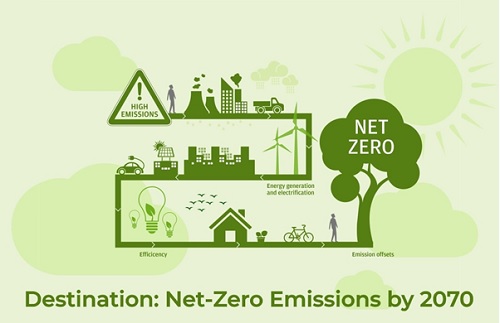
India’s energy transition has reached a critical juncture. Despite rapid expansion of renewable energy, challenges such as baseload power deficits, grid instability, and deep decarbonisation requirements have brought nuclear energy back to the centre of policy discourse.
In this context, the Nuclear Energy Bill, 2025, approved by the Union Cabinet, is being viewed as a historic reform in one of India’s most closed sectors—the civil nuclear energy domain.

Status quo till now:
Proposed reforms:
Problematic clause – Operator’s Right of Recourse:
Proposed solutions:
These reforms would unlock the commercial potential of the India–US Civil Nuclear Agreement (2008).
|
Year |
Nuclear Capacity |
|
Present |
< 8 GW |
|
Target (2047) |
100 GW |
Global Comparison
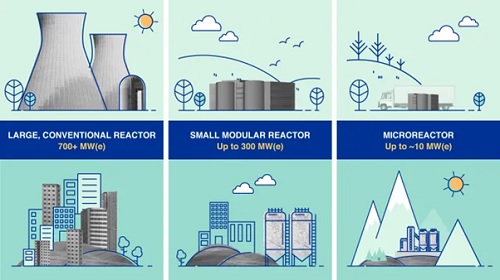
Small Modular Reactors (SMRs) are advanced nuclear reactors that:
These developments position India as a future exporter of nuclear technology.
Interested Private Players
Proposed Model
Key Challenges
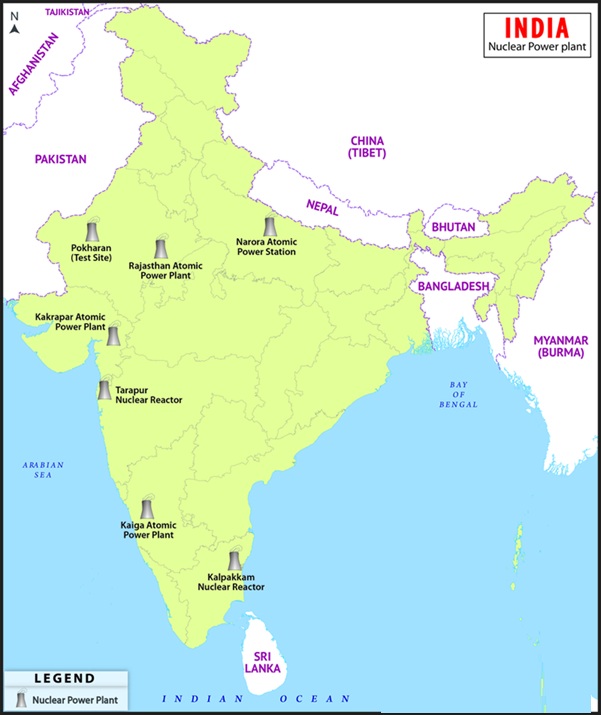
All commercial nuclear power plants in India are operated by NPCIL – Nuclear Power Corporation of India Limited (under the Department of Atomic Energy).
|
S. No. |
Nuclear Power Plant |
State |
Reactor Type |
Units |
Capacity (MW) |
Key Facts |
|
1 |
Tarapur Atomic Power Station (TAPS) |
Maharashtra |
BWR + PHWR |
4 |
1400 |
India’s first nuclear power plant (1969) |
|
2 |
Rajasthan Atomic Power Station (RAPS) |
Rajasthan (Rawatbhata) |
PHWR |
6 |
1180 |
Highest number of PHWR units |
|
3 |
Madras Atomic Power Station (MAPS) |
Tamil Nadu (Kalpakkam) |
PHWR |
2 |
440 |
First nuclear plant in South India |
|
4 |
Narora Atomic Power Station (NAPS) |
Uttar Pradesh |
PHWR |
2 |
440 |
Located on the bank of the Ganga River |
|
5 |
Kakrapar Atomic Power Station (KAPS) |
Gujarat |
PHWR |
4 |
1140 |
Features 700 MW indigenous PHWR reactors |
|
6 |
Kaiga Generating Station (KGS) |
Karnataka |
PHWR |
4 |
880 |
Located in a dense forest region |
|
7 |
Kudankulam Nuclear Power Plant (KKNPP) |
Tamil Nadu |
LWR (VVER – Russia) |
2 (operational) |
2000 |
Largest nuclear power plant in India |
|
Units 3, 4, 5 & 6 |
— |
Under construction / proposed |
||||
|
8 |
Gorakhpur Haryana Anu Vidyut Pariyojana (GHAVP) |
Haryana |
PHWR |
2 |
1400 |
Under construction, emerging nuclear hub of North India |
| Prelims: (Polity + CA) Mains: (GS 2 – Governance) |
In response to a question in the Lok Sabha, the Minister of State for Information & Broadcasting informed that 1,469 film titles, amounting to nearly 4.3 lakh minutes of cinematic content, have been digitised so far under the National Film Heritage Mission (NFHM).

India is one of the world’s largest film-producing nations, with over a century of cinematic history spread across multiple languages and regions. However, much of this heritage has remained vulnerable due to:
Recognising cinema as an important component of India’s cultural heritage, the government launched the National Film Heritage Mission (NFHM) to systematically restore, preserve, and digitise India’s film legacy for future generations.
The mission is India’s first comprehensive, structured effort to safeguard the nation’s cinematic heritage using modern archival and digital technologies.
FAQsQ1. What is the National Film Heritage Mission (NFHM) ? It is a government initiative launched in 2015 to restore, preserve, and digitise India’s film heritage. Q2. Which agency implements NFHM? The National Film Archive of India (NFAI), Pune. Q3. How many films have been digitised under NFHM so far? 1,469 titles, covering around 4.3 lakh minutes of film content. Q4. Why is digitisation of films important? It prevents irreversible loss due to deterioration of celluloid, ensures long-term preservation, and enables wider access. Q5. What role does NFAI play beyond preservation? NFAI also promotes film culture through screenings, training, research, and film appreciation programmes. |
| Prelims: (Polity + CA) Mains: (GS 2 – Governance, GS 3 – Technology) |
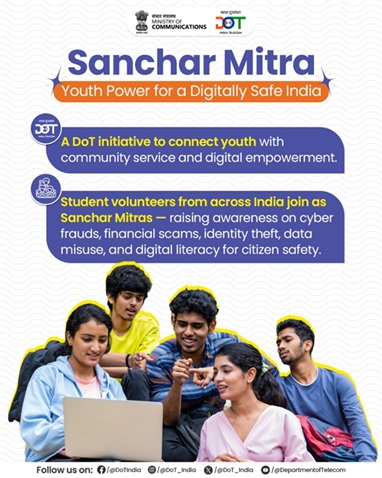
In a written reply in the Lok Sabha, the Minister of State for Communications and Rural Development informed that 222 educational institutions are currently participating in the Sanchar Mitra Scheme, a youth-centric digital awareness initiative of the Department of Telecommunications (DoT).
India’s rapid digitalisation, expansion of mobile connectivity, and adoption of online services have been accompanied by a sharp rise in telecom frauds, cyber scams, misinformation, and unsafe digital practices. While regulatory and technological solutions are essential, the government has increasingly recognised the need for grassroots awareness and behavioural change.
Against this backdrop, the Sanchar Mitra Scheme was conceptualised as a people-centric and youth-driven outreach programme, leveraging students as trusted community messengers to promote safe and responsible use of telecom and digital services.
Under the scheme, selected student volunteers are designated as “Sanchar Mitras” (Friends of Communication).
Top-performing Sanchar Mitras may receive, on a best-effort basis:
Recognition and incentives are coordinated through DoT units using existing institutional resources and partnerships.
FAQsQ1. What is the main aim of the Sanchar Mitra Scheme ? To spread awareness about digital safety, telecom fraud prevention, and responsible use of telecom services through trained student volunteers. Q2. Who implements the Sanchar Mitra Scheme ? The Department of Telecommunications (DoT), Ministry of Communications. Q3. Who can become a Sanchar Mitra ? Students from technical institutions offering courses related to telecom, IT, electronics, cybersecurity, or allied fields. |
| Prelims: (Society + CA) Mains: (GS 1 – Indian Society; GS 2 – Welfare Schemes; GS 3 – Poverty) |
A recent research paper by Arvind Panagariya, Chairman of the 16th Finance Commission, concludes that India has “virtually eliminated” extreme poverty between 2011–12 and 2023–24, with extreme poverty levels declining to around 2%. The findings have renewed debate on poverty measurement, welfare effectiveness, and the future focus of India’s social policy.
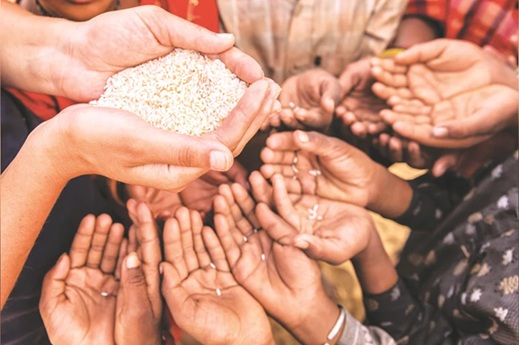
Poverty reduction has remained a central objective of India’s development strategy since Independence. While early decades focused on food security and basic needs, the post-2000 period witnessed a shift toward targeted welfare delivery, consumption growth, and multidimensional approaches.
In the absence of official poverty estimates after 2011–12, recent academic and policy studies — including this paper — have attempted to reassess poverty trends using consumption data, welfare coverage, and non-monetary indicators.
1. Extreme Poverty Nearly Eliminated
2. Broad-Based Decline Across Social Groups
3. Narrowing Religious Poverty Gaps
4. Faster Poverty Reduction in Rural India
5. Near-Zero Poverty States and UTs
Poverty is defined as “pronounced deprivation in well-being”, where individuals lack sufficient income or consumption to meet basic needs.
Global MPI
National MPI (India)
Inequality Trends
|
Type |
Definition |
|---|---|
|
Extreme Poverty |
Living below USD 3/day (PPP) |
|
Relative Poverty |
Compared to average societal income |
|
Multidimensional Poverty |
Multiple deprivations beyond income |
|
Consumption-based Poverty |
Based on household expenditure |
FAQs1. Has India eliminated extreme poverty ? Extreme poverty has declined to around 2%, indicating near-elimination but not complete eradication. 2. Why is rural poverty declining faster than urban poverty ? Due to stronger welfare coverage, food security schemes, and consumption growth in rural areas. 3. What is the difference between MPI and income poverty ? MPI measures multiple deprivations (health, education, living standards), while income poverty focuses only on expenditure or income. 4. Why was the Rangarajan Committee not adopted ? Due to methodological concerns and lack of political consensus. 5. What remains India’s biggest poverty challenge ? Regional disparities, informal employment, climate vulnerability, and gender inequality. |

Our support team will be happy to assist you!


 Contact Us
  New Batch : 9555124124/ 7428085757
  Tech Support : 9555124124/ 7428085757