New
GS Foundation (P+M) - Delhi : 05th Jan., 2026 Winter Sale offer UPTO 75% + 10% Off, Valid Till : 5th Dec., 2025 GS Foundation (P+M) - Prayagraj : 15th Dec., 11:00 AM Winter Sale offer UPTO 75% + 10% Off, Valid Till : 5th Dec., 2025 GS Foundation (P+M) - Delhi : 05th Jan., 2026 GS Foundation (P+M) - Prayagraj : 15th Dec., 11:00 AM

Current Affairs for 14 November 2025

Ramsar Convention

Why in Discussion ?

  • Recently, several new wetlands in India have been designated as “Ramsar Sites.”
  • With these additions, India now has a total of 94 Ramsar Sites.

About the Ramsar Convention

The Ramsar Convention (1971) is an intergovernmental treaty aimed at the conservation and wise use of wetlands.

  • Adopted in Ramsar, Iran, and came into force in 1975.
  • The Convention defines “wise use” as the sustainable utilization of wetlands while maintaining their ecological character, emphasizing ecosystem-based management for sustainable development.

Ramsar List

The Convention identifies wetlands of international importance that meet at least one of the nine criteria, such as:

  • Providing habitat for threatened or endangered species
  • Conserving important ecological systems
  • Supporting large populations of waterbirds

Major Ramsar Sites in India

First Ramsar Sites (1981):

  • Chilika Lake (Odisha)
  • Keoladeo National Park (Rajasthan)

Newest Ramsar Sites (2025):

  • Gokul Reservoir (Buxar, Bihar) 93rd Ramsar Site
  • Gogabeel Lake (Katihar, Bihar)94th Ramsar Site

Wetland City Accreditation (WCA-29): India has two Wetland-Friendly Cities:

  • Indore
  • Udaipur

Montreux Record:

  • A list of Ramsar Sites where ecological character is at risk due to human activities, pollution, or infrastructure development.
  • In India:
    • Loktak Lake (Manipur)
    • Keoladeo National Park (Rajasthan)

Importance of the Ramsar Convention

  1. Contribution to Sustainable Development Goals (SDGs) Wetlands are directly linked to:
    • SDG-6: Clean Water and Sanitation
    • SDG-13: Climate Action
    • SDG-14/15: Biodiversity Conservation: Wetlands help in water quality maintenance, groundwater recharge, flood control, food security, and climate resilience.
  2. Scientific Research and Data Sharing The Convention promotes:
    • Collaborative research
    • Wetland management training
    • Data and best practice exchange
      → Strengthening conservation strategies
  3. International Cooperation
    • Provides financial and technical support to communities dependent on wetlands (e.g., fishing and agricultural communities).
  4. Balancing Ecology and Human Development
    • Recognizes the interdependence of nature and society
    • Integrates conservation with socio-economic development

Key Challenges

  1. Implementation Gaps: Many member countries are reluctant to fulfill obligations such as:
    • Reviewing national laws
    • Transparent reporting
    • Data sharing
  2. Ambiguity
    • Terms like wetland restoration and specific responsibilities are not clearly defined, hampering effective implementation.
  3. Lack of Dispute Resolution Mechanism
    • No formal mechanism in the Convention for dispute settlement
    • Weakens compliance and accountability
  4. National-Level Recognition and Protection Deficit Wetlands continue to face threats from:
    • Land-use change
    • Urbanization
    • Pollution
    • Illegal encroachments

Way Forward

  1. Expand Regional and International Cooperation
    • Strengthen technical guidance, joint monitoring, and training programs among member countries.
  2. Local Community Participation
    • Wetland conservation succeeds only when local communities, urban authorities, farmers, and fishers are active stakeholders.
  3. Awareness and Social Consensus
    • Raising public awareness about wetlands is critical, as most damage occurs locally.
  4. Monitoring and Environmental Assessment
    • Mandatory Environmental Impact Assessments (EIA) and regular monitoring for activities such as dredging, construction, forestry, and agricultural expansion.

Conclusion

Wetlands provide essential ecosystem services:

  • Flood control
  • Water purification
  • Climate regulation
  • Biodiversity conservation

These services reduce the cost of disaster management and water treatment, strengthening both local and national economies. The Ramsar Convention serves as a global platform for cooperation, scientific management, and sustainable use. For a biodiversity-rich country like India, it is crucial for water security, climate resilience, and biodiversity conservation.

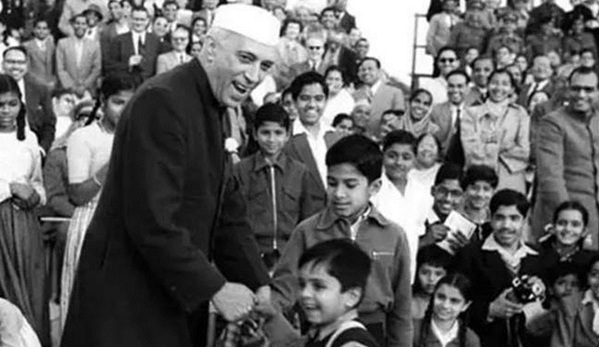
Children’s Day & P. Jawaharlal Nehru

  • In India, Children’s Day is celebrated annually on 14th November.
  • This day is observed in honor of Pandit Jawaharlal Nehru, the first Prime Minister of India.
  • The United Nations has observed Universal Children’s Day on 20th November since 1956.
  • After Nehru’s death in 1964, the Government of India decided to celebrate his birthday as Children’s Day.
  • Since then, every year 14th November is celebrated as Children’s Day in India.

Jawaharlal Nehru:

  • Born: 14 November 1889, Allahabad
  • Education: Bachelor’s degree in Natural Sciences from Cambridge University
  • 1912: Participated as a delegate in the Bankipur Congress Session
  • 1919: Secretary of the Allahabad Home Rule League
  • 1923: General Secretary of the All India Congress Committee (AICC)
  • 1928: Founded the ‘Indian Independence League’ and became its General Secretary
  • Objective: To achieve complete independence from British rule
  • 1929: President of the Lahore Session of Congress (Purna Swaraj Resolution)
  • 1946: Head of the Interim Government
  • 1947: First Prime Minister of independent India
  • 1955: Awarded the Bharat Ratna
  • Died: 27 May 1964
  • Loved children dearly, earning him the nickname “Chacha Nehru”.

What is Children’s Day ?

Children’s Day, celebrated annually on 14th November in India, is a national occasion to promote children’s rights—education, health, safety, and overall development. The celebration is not just a day of fun, but also a reminder of society’s responsibility toward the welfare of children.

Why 14th November ?

  • It is Jawaharlal Nehru’s birthday, who had a special love for children.
  • Nehru believed that children are the future builders of the nation.
  • Earlier, India also celebrated 20th November as Children’s Day, in line with the UN Universal Children’s Day and Declaration of Children’s Rights.
  • Since 1964, India officially observes 14th November as National Children’s Day.

History

  • Since 1956, the United Nations General Assembly has declared 20th November as Universal Children’s Day.
  • Initially, India also organized awareness programs on this date.
  • However, due to Nehru’s dedication to children, India decided to honor him by celebrating his birthday as Children’s Day.
  • The main objective was to give national priority to children’s development and rights.

Objectives

The main objectives of celebrating Children’s Day are:

  • To focus on children’s education, health, and human rights
  • To encourage sports, creativity, and independent thinking
  • To develop self-confidence, leadership skills, and social responsibility in children
  • To remind society that: “Today’s children are tomorrow’s India.”

How is it Celebrated ?

  • Schools organize drawing competitions, essay writing, sports events, plays, and cultural programs.
  • Children are given gifts, awards, and sweets.
  • In some schools, teachers symbolically take the role of students for the day.
  • Government and non-government organizations run awareness programs on children’s safety, education, and rights.
  • Media and social platforms share messages, stories, and inspirational thoughts about children.

Message for Us

  • We must ensure every child has access to education, nutrition, safety, and affection.
  • Children’s imagination, energy, and innocence make our society vibrant.
  • This day reminds us that:

Investing in children is investing in the future.

  • It should be celebrated not only as a festival but also as a commitment to the well-being and rights of children.

Conclusion

  • Children’s Day symbolizes our commitment to the new generation of India.
  • It emphasizes the importance of providing children with the right opportunities, a safe environment, and quality education.
  • By empowering children today, India will be progressive, sensitive, and strong tomorrow.

Human–Wildlife Conflict (HWC): Definition, Situation in India, Causes, Impacts, and More

GS-III : (Environment)

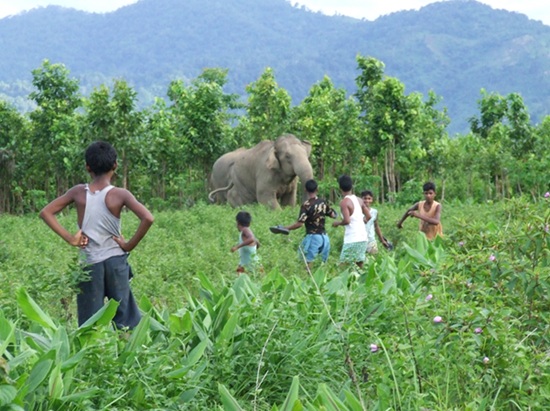
Human–Wildlife Conflict (HWC) is emerging as a major challenge worldwide for biodiversity conservation, human safety, and economic stability. In a biodiversity-rich country like India, where millions of people live near forested areas, incidents of HWC are on the rise.
What is Human–Wildlife Conflict ?

According to the World Wide Fund for Nature (WWF): HWC occurs when interactions between humans and wildlife produce negative outcomes, such as:

  • Loss of human life
  • Damage to property or crops
  • Killing of livestock
  • Wildlife entering human settlements

Examples:

  • In 2024, wolves attacked several children in Bahraich, Uttar Pradesh.
  • Elephants, leopards, tigers, monkeys, and nilgai damaging crops, homes, or livestock.

Situation of HWC in India

  • In India, HWC mainly involves species like elephants, tigers, leopards, bears, monkeys, nilgai, and wolves.
  • In 2022, 1,510 human deaths occurred due to wildlife attacks (Accidental Deaths & Suicides in India – 2022).
  • Kerala recently declared HWC a state-specific disaster.
  • Addressing HWC is primarily the responsibility of state and union territory governments.

Major Causes of HWC

(A) Ecological Causes

  • Climate change / Seasonal variation: Rising temperatures and altered rainfall patterns force wildlife into new areas.
  • Extreme weather events: For example, melting Arctic ice has increased human–polar bear conflicts.
  • Habitat fragmentation: Disruption and shrinking of wildlife habitats.

(B) Anthropogenic / Human-Induced Causes

  • Land-use changes, urbanization, and illegal encroachment.
  • Expansion of agriculture and attraction of crops to wildlife.
  • Conservation success increasing wildlife populations (e.g., tiger populations in Sundarbans reaching carrying capacity).

(C) Wildlife-Induced Causes

  • Changes in animals’ life cycles (reproduction, foraging strategies).
  • Altered migration patterns.
  • Limited ability to adapt to new landscapes.

Impacts of HWC

1. Social / Psychological Impacts

  • Fear, stress, and uncertainty
  • Mental trauma in forest-adjacent communities

2. Economic Impacts

  • Crop losses
  • Livestock predation → financial losses
  • Retaliatory killings of wildlife → adverse effects on biodiversity

3. Health Impacts

  • Spread of zoonotic diseases (e.g., Nipah virus)

4. Ecological Impacts

  • Disruption of predator-prey balance
  • Habitat shrinkage due to human activity → threat to endangered species

Legal and Policy Framework

(A) Constitutional Provisions

  • Forests and wildlife fall under the Concurrent List (List III) → responsibility shared by central and state governments

(B) Major Laws

  • Wildlife Protection Act, 1972
    • Protection of wildlife, plants, and habitats
    • Establishment of protected areas (PAs)
    • Strict penalties for offenses

(C) Policy Initiatives

  1. Standard Operating Procedures (SOPs) for HWC:
    • Human–Elephant Conflict
    • Human–Tiger Conflict
    • Human–Leopard Conflict
  2. National Wildlife Action Plan (NWAP) 2017–2035
  3. National Human–Wildlife Conflict Mitigation Strategy and Action Plan (2021–26)

Recent Technical and Behavioral Interventions

  • Project RE-HAB (Reducing Elephant–Human Attacks Using Bees): Using beehives to keep elephants away from villages.
  • GPS Collaring: Monitoring movements of elephants and tigers.
  • Digital Databases: Hotspot mapping of conflict zones.
  • Solar fencing / physical barriers: Crop protection
  • Early-warning systems: SMS or app-based alerts

Way Forward

  1. Science-Based Management
    • NWAP 2017–2035 emphasizes species-specific and region-specific strategies.
    • Scientific assessment of carrying capacity.
  2. Community Participation
    • Leveraging local and tribal knowledge
    • Role of eco-development committees
    • Transparent crop compensation and insurance mechanisms
  3. Technological Solutions
    • Drone-based monitoring
    • Smart fencing
    • Availability of hospitals and rescue centers
  4. Better Land-Use Planning
    • Restoration of wildlife corridors
    • Scientific evaluation of urban and industrial expansion
  5. Education and Awareness
    • HWC training in schools and panchayats
    • Practical guidelines for communities

Conclusion

Human–Wildlife Conflict is not limited to forest-adjacent communities. It is a multi-dimensional issue affecting India’s biodiversity, food security, economic stability, and public health. Effective mitigation requires a combination of:

    • Legal frameworks
    • Technological innovation
    • Community engagement
    • Scientific management

Reducing HWC can significantly contribute to achieving Sustainable Development Goals (SDGs), especially SDG-13 (Climate Action) and SDG-15 (Life on Land).


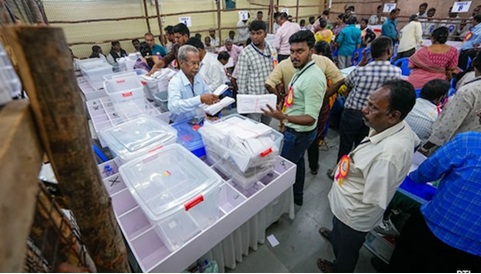
How Election Vote Counting is Done

  • On the day of counting, the strong room is unlocked in the presence of candidates or representatives from all contesting parties.
  • The Returning Officer and the Election Commission's Special Observer are also present during this process and are the ones who open the lock.
    • The entire process is videographed.
    • Counting begins at 8:00 AM.
  • The Returning Officer and his/her colleagues are the first to take an oath of secrecy in front of everyone.
  • Before counting begins, all EVMs are checked in the presence of the Returning Officer.
  • Candidates from political parties have the right to be present at the counting centers with their counting agents.
  • Counting agents can observe the vote count.
  • Only counting staff, the Returning Officer, security personnel, and agents are allowed inside the counting center.
  • No candidate's agent is allowed to leave until the vote counting is complete.
  • No one except those on duty is allowed to bring a mobile phone inside.
  • Postal ballots are counted first.
  • After the postal ballot counting begins, the EVM vote count begins 30 minutes later.
  • The EVM control unit is brought to the counting table for counting.
    • This is monitored by CCTV cameras and videography.
  • After placing it on the table, the unique ID and seal of each control unit are matched and then shown to each candidate's polling agent.
  • After this, by pressing a button on the control unit, each candidate's vote appears next to their name in the EVM.
  • EVMs, arranged in a row according to polling stations, record the total votes cast and then the votes received by different candidates.
  • The EVM data from all polling stations is then combined.
  • According to the Election Commission, after the EVM count is complete, the EVMs will be matched with the VVPAT slips.
  • Each counting hall will have a dedicated VVPAT booth for this purpose.
  • In the event of any dispute or technical glitch, it is the responsibility of the Returning Officer to immediately report the matter to the Election Commission.
  • The Election Commission, taking cognizance of complaints from the Returning Officer, can either order the counting to continue, cancel the counting, and order a re-poll.
  • If the counting is completed without any complaints or if no further instructions are issued by the Election Commission, the Returning Officer can announce the results.
  • After the counting is complete, the EVMs are placed back in the strong room.
  • According to the rules, EVMs must be kept in the strong room for 45 days after the counting, so that if any candidate demands a recount, the votes can be recounted after an official order.
  • After this, the EVMs are sent to another location.
« »
  • SUN
  • MON
  • TUE
  • WED
  • THU
  • FRI
  • SAT
Have any Query?

Our support team will be happy to assist you!

OR