New
GS Foundation (P+M) - Delhi : 05th Jan., 2026 Winter Sale offer UPTO 75% + 10% Off, Valid Till : 5th Dec., 2025 GS Foundation (P+M) - Prayagraj : 15th Dec., 11:00 AM Winter Sale offer UPTO 75% + 10% Off, Valid Till : 5th Dec., 2025 GS Foundation (P+M) - Delhi : 05th Jan., 2026 GS Foundation (P+M) - Prayagraj : 15th Dec., 11:00 AM

Current Affairs for 15 November 2025

Mangrove Conservation and india

Mangroves are unique littoral plant communities found along tropical and subtropical coastal regions worldwide. They are also referred to as coastal forests, tidal forests, or mangrove forests. These salt-tolerant plants thrive in high temperatures (26–35°C), high rainfall (1,000–3,000 mm), and intertidal zones.

In India, mangrove ecosystems are prominently developed in regions such as Sundarbans (West Bengal), M.P.T.R. (Andaman & Nicobar Islands), Bhitarkanika (Odisha), the Maitri River region (Gujarat), and the Godavari–Krishna delta (Andhra Pradesh).
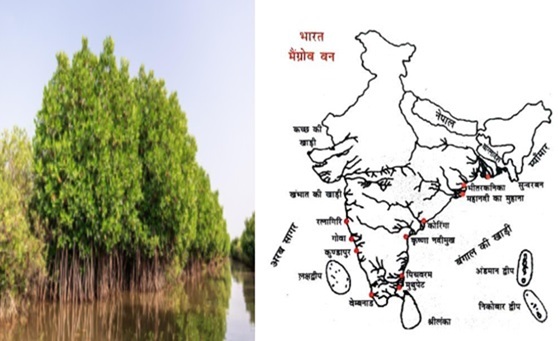
Extent of Mangroves in India

According to ISFR 2023:

  • Total mangrove cover in India: 0.15% of the geographical area
  • India’s contribution to global mangrove area: ~3%
  • Recent increases in mangrove areas have been mainly recorded in Andaman & Nicobar, Odisha, and Maharashtra.

Ecosystem Services of Mangroves

  1. Carbon Sequestration (Blue Carbon Ecosystem)
    • Mangroves store 3 times more carbon than other tropical forests of similar size.
    • They have a higher capacity for long-term carbon burial in soil.
  2. Protection from Natural Disasters
    • They reduce wave energy by 60–70% during storms, cyclones, and floods.
    • Studies show they can reduce flood depth by 15–20%.
  3. Livelihoods for Coastal Communities
    • Provide opportunities in fisheries, honey production, nursery farming, and eco-tourism.
    • Thousands of families in India directly depend on these ecosystems.
  4. Biodiversity Hotspot
    • Indian mangroves host over 5,700 plant and animal species.
    • Species include fiddler crabs, mudskippers, kingfishers, crocodiles, and tigers (Sundarbans).

Threats to Mangroves

Global Context (Global Mangrove Alliance, 2024)

  • Half of the world’s mangroves are threatened (IUCN Red List of Ecosystems).
  • Rising sea levels and pollution are major causes.

Major Threats in India

  1. Anthropogenic Development Activities
    • Expansion of industrial shrimp aquaculture (AP, WB, Gujarat).
    • Conversion of mangrove land for oil palm plantations and paddy cultivation.
    • Port development, coastal road construction, and real estate expansion.
  2. Climate Change
    • Rising sea levels, coastal erosion, and increased cyclone intensity.
  3. Coastal Pollution
    • Black carbon, especially from Kolkata–Ganga–Sindhu region.
    • Wastewater discharge and plastic pollution.
    • Groundwater Extraction and Salinity Changes
    • Coastal groundwater pumping alters soil salinity.
  4. Local Biological Pressure
    • Illegal logging, charcoal production, and unsustainable fishing.

India’s Initiatives for Mangrove Conservation

  1. MISHTI — Mangrove Initiative for Shoreline Habitats & Tangible Income
    • Launched in Union Budget 2023–24.
    • Focus on mangrove plantation and restoration in coastal states/UTs.
    • Emphasizes income generation for local communities.
  2. SAIME — Sustainable Aquaculture in Mangrove Ecosystem
    • Promotes sustainable shrimp/fish farming among mangroves.
    • Successful model in West Bengal.
  3. National Coastal Mission (NCM)
    • Conservation and management of mangroves and coral reefs.
    • Identification of ecologically sensitive coastal areas.
  4. Magical Mangroves Campaign
    • Community-based awareness and ecological education.
  5. CAMPA Fund
    • Used for mangrove restoration projects.

Global Initiatives

  1. Mangrove Breakthrough (Global Mangrove Alliance)
    • Goal: Protect and restore 15 million hectares of mangroves by 2030.
  2. Mangrove Climate Alliance
    • Led by UAE and Indonesia.
    • Promotes international Blue Carbon trade.
  3. UN Decade on Ecosystem Restoration (2021–2030)
    • Encourages restoration of degraded coastal ecosystems.
  4. Ramsar Convention & CBD
    • Prioritize mangroves in coastal wetland conservation.

Challenges

  • Lack of data and health mapping of mangroves.
  • Poor coordination among fisheries, coastal development, and forest departments.
  • Limited effectiveness of conservation without community participation.
  • Insufficient priority in coastal planning.
  • Pressure from blue economy projects on mangrove lands.

Way Forward

  1. Strengthen Legal Frameworks
    • Strengthen provisions for mangrove conservation under:
      • Forest Conservation Act, 1980
      • Environment Protection Act, 1986 (EIA)
      • Indian Forest Act, 1927
  2. Link Mangroves with Terrestrial Forests (Landscape-level Management)
    • Example: Connect Sundarbans mangroves with Sundarbans National Park for a large protected ecosystem.
  3. Establish Mangrove Germplasm Conservation Centers
    • Protect seeds, tissue culture, and nursery resources of endangered species.
  4. Community-Based Management (CBM)
    • Livelihood-integrated conservation: eco-friendly aquaculture, honey value chains, ecotourism.
  5. Scientific Restoration
    • Nature-based solutions and hydrology-based restoration (tidal flow restoration).
  6. National Mangrove Mapping Mission
    • Drone, LiDAR, and GIS-based national mangrove health index.
  7. International Collaboration
    • Strengthen India’s role in Blue Carbon markets.
    • Collaborate with IORA and ASEAN countries. 

Conclusion

Mangroves are vital ecosystems that combat climate change, protect coastal communities, and conserve biodiversity. Initiatives like MISHTI and SAIME have begun to make an impact in India, but population pressure, developmental projects, and climate change remain major challenges. For the future, India must focus on policy-sensitive planning, community participation, and scientific restoration techniques to ensure mangroves remain protected for coming generations.

US-Taiwan Military Cooperation

(Prelims: Current Affairs)

Why in the News

Recently, the US approved the sale of military equipment and components worth $330 million to Taiwan.

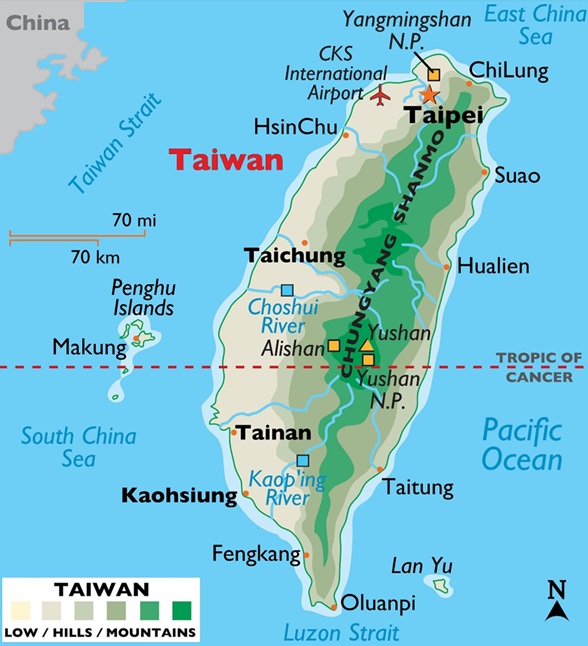
US-Taiwan Defense Cooperation: Key Points

  • The approval of the recent defense deal is the first military deal since Donald Trump's return to the White House.
  • Taiwan has sought non-standard components, spare parts, and repair support for F-16, C-130, and Indigenous Defense Fighter (IDF) aircraft.
  • The US is Taiwan's largest arms supplier and is considered a key security pillar against potential Chinese aggression.
  • Taiwan's President Lai Ching-te is seeking to increase the defense budget to 5% of GDP by 2030 and increase investment in the US.

Significance and Implications

  • This military package from the US will strengthen Taiwan's air defense capabilities.
  • Given China's increasing military activities, this deal enhances Taiwan's deterrence capabilities.
  • Amid China-Taiwan tensions, this US move has wide-ranging implications for the Indo-Pacific security architecture, the strategic interests of the Quad countries, and the regional balance of power.
  • China considers this deal a violation of its sovereignty. Consequently, this move could further escalate tensions between Beijing and Washington.
  • Japan's recent statement on the possibility of sending troops to defend Taiwan under "collective self-defense" has further angered China.
  • In such an environment, US arms sales further intensify strategic competition in the Indo-Pacific.

Did you know?

India does not maintain formal diplomatic relations with Taiwan. India adheres to the "One China Policy," meaning India recognizes China as a sovereign state. Therefore, India does not have an embassy in Taiwan and does not officially call Taiwan a "country."

India-Canada Economic Cooperation

(Prelims: Current Affairs)

Why in News

The 7th India-Canada Ministerial Dialogue on Trade and Investment was held in New Delhi on November 13, 2025.

India-Canada Economic Dialogue

  • This dialogue was part of the New Roadmap 2025, designed to accelerate trade and investment relations between the two countries.
  • India's Commerce and Industry Minister Piyush Goyal and Canada's Minister of International Trade and Economic Development Maninder Sidhu participated in it.

Key Points

Strengthened Partnership on Critical Minerals

  • In a joint statement, the two countries announced that they will develop a long-term supply chain partnership in critical minerals.
    • It is noteworthy that critical minerals are essential for the global energy transition, battery manufacturing, electric vehicles, and new-generation technologies.
  • This partnership will significantly benefit India in energy security and industrial expansion, while for Canada it provides an opportunity to connect with a reliable and rapidly growing market.

Joint Work Cooperation Areas

  • Clean Energy
  • Energy Transition
  • New-age Industrial Expansion

These sectors are considered the backbone of the future global economy, and India-Canada cooperation holds strategic importance for both countries.

Opportunities in Aerospace and Dual-use Capabilities

  • The two Ministers also agreed to identify and expand investment and business opportunities in the aerospace sector and dual-use technologies.
  • Drones, defense-use technologies, space cooperation, and high-performance materials could be covered under this partnership.

Electronics Development Fund (EDF)

(Prelims: Current Affairs)

Why in the News

The Central Government has supported 128 start-ups across the country with an investment of ₹257.77 crore under the Electronics Development Fund (EDF) until October 2025.

About EDF

  • On February 15, 2016, the Government of India established the Electronics Development Fund (EDF) to strengthen design, manufacturing, and technological innovation-led growth.
  •  It functions under the Ministry of Communications and Information Technology.
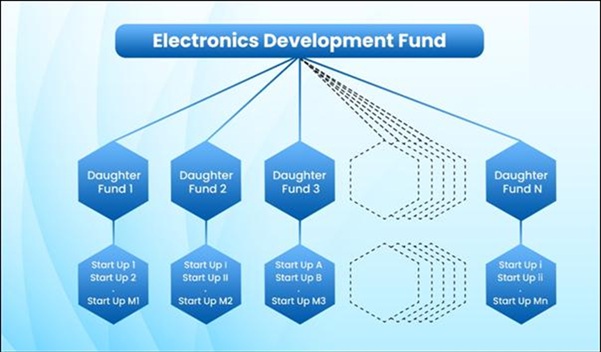
  • It is based on a Fund of Funds model, meaning it does not invest directly in startups but instead invests capital in professionally managed 'daughter funds' (e.g., angel venture funds, early-stage investment funds).
  • These daughter funds further invest in startups and technology companies.
  •  In this way, EDF helps create a self-reliant and innovation-oriented electronics ecosystem in India.

Key Goals

  • Fostering innovation and research
  • Supporting daughter funds
  • Developing new products and technologies
  • Strengthening domestic design capabilities
  • Creating a national intellectual property (IP) pool
  • Strategic technology acquisitions

Fund Operations

EDF operates through a transparent, flexible, and professional structure.
Key Features

  • EDF's investments are made on a non-exclusive basis, allowing for greater collaboration.
  • EDF's share in each daughter fund is determined based on market needs and the fund manager's capabilities.
  • EDF generally holds a minority stake to ensure greater participation from private investors.
  • The fund manager is given considerable autonomy in raising funds, investing, and monitoring the progress of startups.
  • All daughter funds must be registered in India under the SEBI AIF Regulations 2012 (Category I or II).
  • The investment scope covers the entire value chain of electronics, IT, robotics, AI, cybersecurity, and related sectors.

Achievements and Impact (as of September 30, 2025)

  • EDF invested ₹257.77 crore in 8 daughter funds.
  • These daughter funds further invested ₹1,335.77 crore in 128 startups.
  • Supported startups include companies in emerging sectors such as IoT, robotics, drones, healthtech, cybersecurity, AI/ML.
  • More than 23,600 high-tech jobs created so far.
  • A total of 368 intellectual properties (IPs) created or acquired.
  • Successful exits from 37 investments in 128 startups.
  • EDF received a return of ₹173.88 crore from exits and partial exits.

Conclusion

The Electronics Development Fund has played a key role in fostering innovation and entrepreneurship in India's electronics and IT sectors. By enabling access to risk capital, it has supported startups working on advanced technologies and contributed to the expansion of domestic design and intellectual property creation.

Wetland Conservation in India

Wetlands are areas that are permanently or seasonally saturated with water. They include marshes, peatlands, floodplains, swamps, lakes, riverine and coastal areas, as well as saline or freshwater zones and coastal waters up to 6 meters deep. Although wetlands cover only about 6% of the Earth’s surface, they provide habitat for 40% of global biodiversity and are often called the natural “ecological kidneys” of the planet.
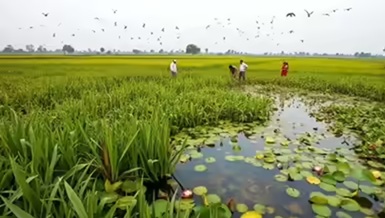
Current Status in India

  • India has more than 7 lakh wetlands.
  • Total area is approximately 16 million hectares, around 4.86% of the country’s geographical area.
  • According to Wetlands International South Asia, 2 out of every 5 wetlands have been lost over the past three decades.
  • Tamil Nadu has the highest number of Ramsar sites, followed by Uttar Pradesh.

Importance of Wetlands

(A) Ecological and Environmental Importance

  • Carbon sink: Absorb carbon and help mitigate climate change.
  • Natural disaster mitigation: Provide protection against floods, coastal erosion, and storm surges.
  • Water purification: Act as natural filters by trapping pollutants in sediments and vegetation.
  • Biodiversity hotspot: Support diverse species of birds, fish, amphibians, and plants.

(B) Socio-Economic Importance

  • Provide livelihoods through fisheries, agriculture, handicrafts, and tourism.
  • Serve as centers of cultural, spiritual, and recreational activities.

Major Causes of Wetland Degradation

  1. Encroachment and land-use change: Urban expansion, illegal construction, and infrastructure projects.
  2. Excessive water extraction and salinization: Groundwater over-extraction and saltwater intrusion.
  3. Pollution: Discharge of urban/industrial waste, agricultural runoff, and untreated sewage.
  4. Invasive species: e.g., water hyacinth and Salvinia, which damage water quality and biodiversity.
  5. Unsustainable exploitation: Overuse of fish, timber, sand, and water resources.
  6. Unregulated tourism: Expansion of tourism infrastructure without proper management.
  7. Climate change: Sea-level rise, droughts, and harmful algal blooms (HABs).

Government Initiatives in India

1. Policies and Regulations

  • Wetlands (Conservation and Management) Rules, 2017: Notifications, management plans, and monitoring committees at state and central levels.
  • National Plan for Conservation of Aquatic Ecosystems (NPCA): Centrally sponsored scheme for the protection of lakes and wetlands.
  • Central Wetland Conservation and Management (cWCM) Programme: Provides scientific guidance, capacity building, and policy support.

2. Water Conservation Missions

  • National Mission for Clean Ganga (NMCG): Focuses on restoration of wetlands associated with the Ganga river basin.

3. International Cooperation

  • Ramsar Convention (since 1982): India currently has 94 Ramsar sites (as of 2025).

4. Other Initiatives

  • Blue Flag Beach Certification: Implemented at 12 Indian beaches.
  • AMRUT Heritage Initiative: Community-based wetland conservation models.

Challenges

  • Lack of scientific data and standard monitoring protocols.
  • Poor coordination among different government departments.
  • Limited community participation.
  • Weak regulation of land-use changes.
  • Environmental conservation often sidelined due to political/economic priorities.

Way Forward

  1. Integrated and science-based management
    • Integrated Wetland Management Plans (IWMPs): Address hydrology, biodiversity, land use, and livelihoods together.
  2. Ecosystem-based management
    • Establish buffer zones, restore native vegetation, and build coastal protection structures.
  3. Community participation
    • Involve self-help groups, local forest committees, and eco-tourism committees.
    • Expand models like the AMRUT Heritage Initiative.
  4. Pollution control
    • Treat urban sewage and implement strict pollution standards with penalties for violations.
  5. Monitoring and data systems
    • GIS-based wetland inventories, health cards, and ecosystem health assessment protocols.
  6. Climate adaptation strategies
    • Restore coral reef areas, coastal wetlands, and mangroves to enhance resilience.

Conclusion

Wetlands form the foundation of India’s ecological and economic security. Their degradation poses serious threats to biodiversity, livelihoods, water security, and climate stability. Successful conservation requires strengthening legal frameworks, promoting community-based models, and using scientific monitoring to safeguard wetlands as valuable natural capital.

« »
  • SUN
  • MON
  • TUE
  • WED
  • THU
  • FRI
  • SAT
Have any Query?

Our support team will be happy to assist you!

OR