New
GS Foundation (P+M) - Delhi : 05th Jan., 2026 New Year offer UPTO 75% + 10% Off | Valid till 03 Jan 26 GS Foundation (P+M) - Prayagraj : 15th Dec., 11:00 AM New Year offer UPTO 75% + 10% Off | Valid till 03 Jan 26 GS Foundation (P+M) - Delhi : 05th Jan., 2026 GS Foundation (P+M) - Prayagraj : 15th Dec., 11:00 AM

Current Affairs for 18 December 2025

India's First Lithium Refinery in Telangana

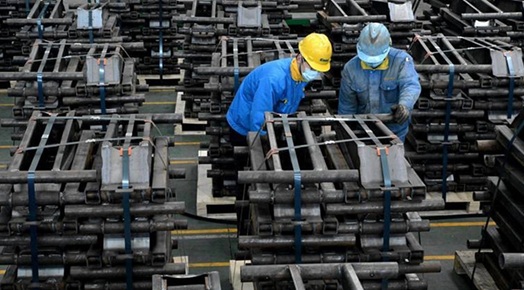
In a historic step towards making India self-reliant in clean energy, Singareni Collieries Company (SCCL) and Altmin have signed a Memorandum of Understanding (MoU) to set up the country's first large-scale battery-grade lithium refinery in Hyderabad.
Key facts about the project

  • The partnership was announced in the presence of Chief Minister A. Revanth Reddy during the Telangana Rising Summit. Key highlights of the project are:
  • Total investment: ₹2,250 crore
    • Production capacity: 30,000 tonnes per annum (lithium carbonate)
    • Operational target: Refinery expected to be operational by 2027
    • Partnership: Joint Venture between SCCL and Altmin
  • Its objective is to develop lithium refining domestically and implement advanced technologies based on global standards in India.

Strategic Importance: Reducing Import Dependence

Currently, India relies heavily on imports to meet its lithium needs. This refinery will play a significant role in changing this scenario, as follows:

  • Clean Energy Transition: This refinery will ensure the availability of battery-grade lithium for electric vehicles (EVs) and energy storage systems (ESS).
  • Energy Security: Ensuring long-term supplies of raw materials from global resources will strengthen India's energy security. Additionally, dependence on refined lithium imports will significantly reduce.
  • Local Manufacturing: Importing global refining technology into India will provide new impetus to the 'Make in India' and 'Atmanirbhar Bharat' campaigns.

Project Benefits

  • Integrated Ecosystem: The establishment of the refinery will attract significant investment in cell manufacturing, advanced materials, and clean mobility.
  • Employment Generation: It will enable the development of high-level technical skills and the creation of thousands of new employment opportunities.
  • Government Support: The state government will provide full support to the project through infrastructure assistance, rapid approvals, and ecosystem coordination.

Lithium

Lithium is a critical mineral that is central to electric vehicles, energy storage systems, and the clean energy transition. According to the government, developing battery-grade lithium refining in the country will help accelerate the growth of the EV and advanced battery manufacturing ecosystem.

Microprocessor Development in India and Dhruv64

(Preliminary Examination: General Science)
(Mains Examination, General Studies Paper 3: Achievements of Indians in Science and Technology; Indigenous Development of Technology and Development of New Technology; Information Technology, Computers)

Context

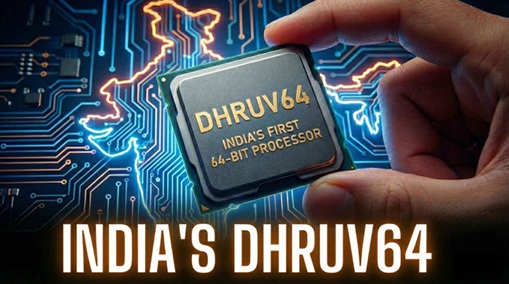
  • Recently, India achieved a historic milestone in the field of indigenous semiconductor technology by launching the DHRUV64 microprocessor. This processor was developed by the Centre for Development of Advanced Computing (C-DAC) under the Microprocessor Development Programme (MDP).
  • Designed entirely in-house, the DHRUV64 provides India with a reliable and self-reliant processor technology capable of meeting strategic as well as commercial requirements. This achievement demonstrates India's commitment to becoming self-reliant in advanced chip design.

About Microprocessors

  • Microprocessors currently form the backbone of modern electronic devices such as mobile phones, computers, automobiles, medical devices, defense systems, and satellites.
  • For a rapidly growing digital and electronics market like India, it is crucial to avoid dependence on foreign suppliers for these core technologies. The DHRUV64 is a decisive step in this direction.

Technical Features of the DHRUV64

  • The DHRUV64 has been developed with cutting-edge architectures. This processor delivers high efficiency, superior multitasking capability, and enhanced reliability.
  • Its modern design enables seamless integration with various external hardware systems.
  • By leveraging advanced manufacturing techniques used in high-performance chips, the DHRUV64 is ideally suited for areas such as 5G infrastructure, automotive systems, consumer electronics, industrial automation, and the Internet of Things (IoT).

Strategic and Economic Importance for India

  • The DHRUV64 is a significant milestone towards building a secure and self-reliant semiconductor ecosystem in India. It not only strengthens the country's indigenous capabilities in advanced processor development but also reduces long-term dependence on imported microprocessors, supporting critical digital infrastructure.
  • India currently consumes approximately 20% of microprocessors manufactured globally. The development of the DHRUV64 provides a new direction to the country's semiconductor ecosystem by combining India's vast technical talent base with modern processor platforms.

The Continuing Journey of Indigenous Processor Development

  • Even before the DHRUV64, India has made significant progress in the field of indigenous microprocessor development. Prominent among these are:
    • Shakti (2018, IIT Madras): Developed for strategic, space, and defense applications
    • Ajit (2018, IIT Bombay): Designed for industrial and robotics applications
    • Vikram (2025, ISRO-SCL): For space tasks such as navigation, guidance, and mission operations, and capable of operating in extreme space conditions
    • Tejas 64 (2025, C-DAC): Processor developed for industrial automation
  • In fact, processors like Shakti, Ajit, Vikram, Tejas, and now the DHRUV64 are laying the foundation for a strong and self-reliant processor ecosystem in India, which is of vital national importance.

Research, Innovation, and Future Prospects

  • The DHRUV64 provides startups, academic institutions, and industries with the opportunity to develop, test, and scale indigenous computing products without relying on foreign processors.
  • It also helps develop prototypes of new system architectures at low cost. India already has approximately 20% of the world's chip design engineers.
  • The DHRUV64 will further empower this talent pool, contributing to the creation of a strong pipeline of skilled semiconductor professionals. Furthermore, its success paves the way for the development of future Dhanush and Dhanush+ processors, which are currently in development.

BharatNet: Bridging India’s Rural Digital Divide

Prelims: (Digital India + CA)
Mains: (GS 2 - Government Policies & Interventions; GS 3 – Science & Technology)

Why in News ?

The Minister of State for Communications and Rural Development informed the Lok Sabha that the BharatNet Project is being implemented in a phased manner to ensure broadband connectivity to all Gram Panchayats (GPs) across the country.
Background and Context

Digital connectivity has become a critical enabler of inclusive growth, governance delivery, and economic participation. However, India’s rural and remote regions have historically faced limited access to high-speed internet due to geographical, economic, and infrastructural constraints.

Launched as part of the Digital India programme, BharatNet aims to address this gap by creating a nationwide optical fibre network reaching the grassroots level of governance. The project is central to enabling e-governance, telemedicine, online education, digital payments, and rural entrepreneurship.

What is the BharatNet Project ?

  • Nature: Flagship rural broadband connectivity initiative of the Government of India
  • Objective: Provide high-speed broadband connectivity to all Gram Panchayats
  • Scale: Among the largest rural telecom projects in the world
  • Core Principle: Create a non-discriminatory, open-access network for all telecom and internet service providers

Key Purpose

BharatNet is designed to provide unrestricted access to broadband infrastructure for:

  • Mobile network operators
  • Internet Service Providers (ISPs)
  • Cable TV operators
  • Content and service providers

This enables the rollout of services such as:

  • E-health and telemedicine
  • E-education and digital classrooms
  • E-governance and digital public service delivery
  • Rural BPOs and digital livelihoods

Institutional Framework and Implementation

  • Executing Agency: Bharat Broadband Network Limited (BBNL)
  • Legal Status: Special Purpose Vehicle (SPV) incorporated in 2012 under the Companies Act, 1956
  • Oversight: Ministry of Communications

Phased Implementation

  • Phase I: Completed in 2017
  • Phase II: Ongoing
  • Phase III: Ongoing

Each phase focuses on expanding fibre reach, upgrading network quality, and improving service reliability.

What is the Amended BharatNet Program (ABP) ? 

The Amended BharatNet Program (ABP) introduces key design and operational improvements to enhance network resilience and service quality.

Key Features

  • Optical Fibre Connectivity to 2.64 lakh Gram Panchayats using ring topology, ensuring redundancy and reduced downtime
  • On-demand fibre connectivity to non-GP villages
  • Deployment of IP-MPLS network with routers at Block and GP levels
  • 10-year operation and maintenance provision
  • Power backup systems for uninterrupted connectivity
  • Remote Fibre Monitoring System (RFMS) for real-time fault detection and maintenance

Significance of BharatNet

  • Digital Inclusion: Bridges the rural–urban digital divide
  • Governance Delivery: Strengthens last-mile e-governance and DBT frameworks
  • Economic Empowerment: Supports rural startups, MSMEs, and digital services
  • Social Development: Enables access to education, healthcare, and information
  • Infrastructure Backbone: Acts as the foundation for 5G backhaul and future digital services in rural areas

Challenges and Way Forward

  • Delays in execution due to terrain, coordination issues, and right-of-way constraints
  • Need for last-mile connectivity beyond Gram Panchayats
  • Ensuring service quality, sustainability, and effective utilisation

Greater involvement of States, local bodies, and private service providers will be key to unlocking BharatNet’s full potential.

FAQs

Q1. What is the main objective of the BharatNet Project ?

To provide high-speed broadband connectivity to all Gram Panchayats in India.

Q2. Who implements BharatNet ?

Bharat Broadband Network Limited (BBNL), a Government of India SPV.

Q3. What is ring topology under BharatNet ?

A network design where nodes form a circular loop, ensuring redundancy and reducing service disruption.

Q4. How does BharatNet support Digital India ?

It enables e-governance, digital services, rural entrepreneurship, and social inclusion.

Q5. What is new in the Amended BharatNet Program ?

Improved network design, IP-MPLS architecture, long-term maintenance, power backup, and real-time fibre monitoring.

DHRUV64 Microprocessor: India’s Indigenous Computing Leap

Prelims: (Technology + CA)
Mains: (GS Paper 2: Government Policies & Interventions; GS 3 - Science and Technology Developments)

Why in News ?

India has unveiled DHRUV64, its first fully indigenously developed 64-bit microprocessor, marking a significant milestone in the country’s journey towards technological self-reliance in semiconductors and advanced computing.

Background and Context

Semiconductors and microprocessors form the backbone of modern digital economies—powering everything from smartphones and data centres to defence systems and 5G networks.

India has historically depended on imported processors, making its digital ecosystem vulnerable to supply chain disruptions, export controls, and geopolitical risks. Recognising this strategic vulnerability, the government launched multiple initiatives such as Digital India, Make in India, Atmanirbhar Bharat, and the India Semiconductor Mission.

Within this broader push, the Microprocessor Development Programme (MDP) was conceptualised to design and develop indigenous processor architectures that can cater to India’s strategic, industrial, and commercial needs. DHRUV64 is the most advanced outcome of this long-term effort.

What is DHRUV64 ?

DHRUV64 is a fully indigenously designed 64-bit microprocessor, developed by the Centre for Development of Advanced Computing (C-DAC) under the Microprocessor Development Programme (MDP).

It represents a shift from mere software strength to full-stack technological capability, covering hardware design, processor architecture, and system integration.

Key Features of DHRUV64

1. Processor Architecture

  • 64-bit dual-core processor
  • Clock speed of 1.0 GHz
  • Designed to handle multitasking and moderate-to-high computing workloads efficiently

2. Advanced Execution Capabilities

  • Superscalar execution: Enables the processor to execute multiple instructions simultaneously, improving performance.
  • Out-of-order execution: Allows instructions to be processed based on readiness rather than strict order, enhancing efficiency and reducing idle cycles.

3. Packaging and Integration

  • Integrated communication and control functions
  • Uses an advanced FCBGA (Flip-Chip Ball Grid Array) package
  • Compact design suitable for embedding into diverse electronic systems

4. Indigenous Design Stack

  • Developed using domestic design expertise
  • Reduces dependence on foreign intellectual property (IP) cores
  • Strengthens India’s sovereign control over critical computing technologies

Potential Applications of DHRUV64

Strategic Applications

  • Secure communication systems
  • Defence electronics
  • Strategic data processing platforms where trust and security are paramount

Commercial and Civil Applications

  • 5G and telecom infrastructure
  • Automotive electronics (control systems, infotainment, embedded computing)
  • Industrial automation
  • Consumer electronics
  • Internet of Things (IoT) devices

Ecosystem Enablement

  • Provides a homegrown processor platform for:
    • Startups
    • Academia
    • Research institutions
    • Indian industry
  • Enables low-cost prototype development and experimentation with new system architectures
  • Encourages indigenous product design without reliance on imported processors

Strategic Significance for India

  • Technological Sovereignty: Reduces dependence on foreign chipmakers and external supply chains.
  • National Security: Enhances trust in hardware used for sensitive and critical applications.
  • Innovation Ecosystem: Acts as a foundation for indigenous hardware startups and R&D.
  • Economic Impact: Supports India’s ambition to become a global semiconductor and electronics manufacturing hub.
  • Alignment with National Missions: Complements Digital India, Atmanirbhar Bharat, and the India Semiconductor Mission.

Challenges Ahead

  • Scaling manufacturing from prototype to mass production
  • Ensuring software and compiler ecosystem maturity
  • Competing with established global processors in performance-per-watt and cost
  • Integrating DHRUV64 into commercial supply chains

Addressing these challenges will require sustained policy support, industry collaboration, and investment in fabrication and design ecosystems.

FAQs

Q1. What is DHRUV64 ?

DHRUV64 is India’s first fully indigenously developed 64-bit microprocessor, designed by C-DAC under the Microprocessor Development Programme.

Q2. Why is DHRUV64 important for India ?

It enhances technological self-reliance, strengthens national security, and reduces dependence on foreign processors.

Q3. Which organisation developed DHRUV64 ?

The Centre for Development of Advanced Computing (C-DAC).

Q4. What are the main applications of DHRUV64 ?

It can be used in 5G infrastructure, defence systems, automotive electronics, industrial automation, consumer electronics, and IoT.

Q5. How does DHRUV64 support startups and academia ?

It provides a low-cost, indigenous processor platform for prototyping, research, and development of new computing systems.

PM’s 3-Nation Tour Concludes with Oman Visit

Prelims: (Bilateral Diplomacy + CA)
Mains: (GS 2: International Relations; GS 3: Economic Development, Energy Security, Maritime Strategy)

Why in News ?

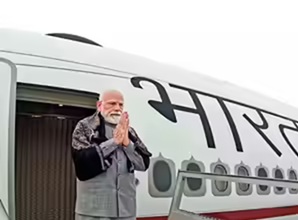
Narendra Modi wrapped up a whirlwind three-nation tour — visiting Jordan, Ethiopia and Oman — culminating with his landing in Oman’s Muscat on December 17, 2025. His visit to Oman marks the final leg of the tour, and underscores New Delhi’s renewed push to deepen strategic, economic and cultural ties with West Asia and Africa. 
Background & Context

  • The tour started December 15, 2025, with India seeking to strengthen diplomatic ties with Jordan (marking 75 years of formal ties), engage with Ethiopia — part of India’s Africa outreach, and finally visit Oman under a “Comprehensive Strategic Partnership”. 
  • India–Oman relations go back decades, anchored in historical maritime trade, a large Indian expatriate community, and strategic location — making Oman a cornerstone of India’s Gulf and Indian Ocean diplomacy. 
  • The visit comes amid global geopolitical flux in West Asia and growing importance of Gulf ties for energy, trade, security and diaspora links for India. 

About Oman 

  • Capital: Muscat
  • Location: Southeast Arabian Peninsula; controls access near the Strait of Hormuz.
  • Political System: Monarchy
  • Strategic Importance for India: Maritime security, energy supplies, access to Duqm Port.
  • Indian Diaspora: ~7 lakh, strengthening people-to-people ties.

India–Oman Relations: Snapshot

  • Historical Links: Over 2,000 years of Indian Ocean trade.
  • Diplomatic Ties: Established in 1955.
  • Defence Cooperation: Defence pact (2005); naval exercises; Duqm port access.
  • Economic Ties: Energy cooperation; growing trade, logistics, and infrastructure links.
  • Current Status: Evolving strategic partnership, with talks on India–Oman CEPA.

What Happened During the Oman Visit

  • On arrival in Muscat, PM Modi was received by Oman’s Deputy Prime Minister for Defence Affairs with ceremonial honours. 
  • The visit coincides with the 70th anniversary of diplomatic relations between India and Oman — a symbolic backdrop underlining the long-standing partnership. 
  • Key agenda items include signing (or finalising) a major trade pact — the India-Oman Comprehensive Economic Partnership Agreement (CEPA) / Free Trade Agreement (FTA), aimed at deepening trade, investment, energy, and strategic cooperation. 
  • Talks will cover a broad spectrum: trade & commerce, energy, defence & security cooperation, technology collaboration, investment flows, diaspora engagement, and regional/global geopolitical issues. 
  • The PM is also expected to address the Indian diaspora in Oman — a significant community that plays a role in bilateral socio-economic links. 

Significance of the Visit

  • Strategic Diversification: With stagnation in broader multilateral institutions and shifting Gulf geopolitics, bilateral ties with Oman give India flexibility and access to critical energy, maritime routes, and defense cooperation. 
  • Economic Expansion: The proposed CEPA/FTA is expected to boost trade in key sectors — energy, hydrocarbons, maritime services, labour, and investible flows. It helps India deepen its Gulf trade beyond oil-centric cooperation. 
  • Diaspora Diplomacy & Soft Power: With a large Indian community in Oman, engaging diaspora strengthens cultural bonds and reflects India’s people-centred diplomacy. 
  • Geopolitical Outreach: The visit reinforces India’s growing global outreach to West Asia–Africa corridor, aligning with its vision of being a stable partner in a volatile region. 

FAQs

Q1. Why was Oman chosen as the final leg of the three-nation tour ?

Because Oman holds strategic importance for India’s Gulf engagement, energy security, maritime connectivity, and has a large Indian expatriate community. The timing aligns with 70 years of India–Oman diplomatic relations.

Q2. What’s the likely outcome of the visit ?

A Comprehensive Economic Partnership Agreement (CEPA) / FTA between India and Oman, along with enhanced cooperation across trade, energy, security and diaspora engagement.

Q3. How does this visit fit into India’s broader foreign policy ?

It reflects India’s pivot to bilateral/multilateral engagements with West Asia and Africa — strengthening ties beyond traditional diplomacy, and diversifying strategic partnerships.

Q4. What sectors could benefit from India–Oman economic cooperation ?

Energy, hydrocarbons, maritime trade, shipping, labour services, remittances, trade in goods & services, investments, and emerging sectors like renewables and logistics.

Q5. Why is diaspora engagement significant in such visits ?

Indian expatriates contribute substantially to Oman’s economy and act as living links between the two countries — enhancing people-to-people ties, cultural connections, and bilateral goodwill.

Desert Cyclone-II: India–UAE Army Exercise

Prelims: (Military Exercises + CA)
Mains: (GS 2: International Relations; GS Paper 3: Internal Security)

AWhy in News ?

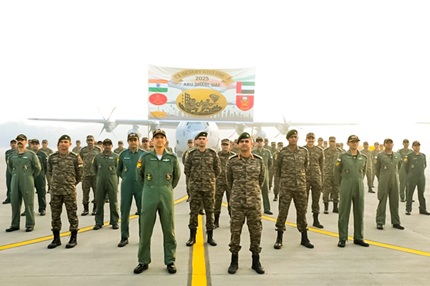
An Indian Army contingent has departed for the United Arab Emirates (UAE) to participate in the second edition of the India–UAE Joint Military Exercise “DESERT CYCLONE-II”, scheduled to be held in Abu Dhabi from December 18 to 30.
Background and Context

India and the UAE share a Comprehensive Strategic Partnership, with defence cooperation emerging as a key pillar of bilateral relations. Over the past decade, both countries have steadily expanded military engagement through joint exercises, training exchanges, defence dialogues, and high-level visits.

With growing urbanisation, asymmetric threats, and peacekeeping commitments worldwide, modern militaries increasingly focus on sub-conventional operations, counter-terrorism, and urban warfare scenarios. Joint exercises like Desert Cyclone reflect this shift, aligning military cooperation with evolving security challenges, including UN peacekeeping mandates and stability operations.

The first edition of Exercise Desert Cyclone laid the foundation for structured Army-to-Army cooperation, and Desert Cyclone-II builds upon this momentum amid intensified India–UAE strategic engagement.

About Exercise Desert Cyclone-II

  • Type: Bilateral Joint Military Exercise
  • Participants:
    • India: 45-member contingent, primarily from the Mechanised Infantry Regiment
    • UAE: Unit of similar strength from the 53 Mechanised Infantry Battalion, UAE Land Forces
  • Venue: Abu Dhabi, United Arab Emirates
  • Duration: December 18–30
  • Edition: Second

Objectives of the Exercise

  • Enhance interoperability between the Indian Army and UAE Land Forces
  • Strengthen defence cooperation and military-to-military ties
  • Train for sub-conventional operations under a United Nations mandate
  • Develop joint capabilities for urban combat and peace support operations

Key Training Components

1. Urban Warfare Operations

  • Fighting in Built-Up Areas (FIBUA)
  • Room intervention drills and close-quarter battle techniques
  • Joint tactical planning for dense urban environments

2. Heliborne Operations

  • Insertion and extraction of troops using helicopters
  • Rapid deployment and mobility in urban conflict zones

3. Mission Planning & Command Integration

  • Joint operational planning exercises
  • Decision-making under simulated UN peacekeeping scenarios

4. Integration of Emerging Technologies

  • Use of Unmanned Aerial Systems (UAS) for surveillance and reconnaissance
  • Counter-UAS techniques to neutralise drone-based threats in urban settings

Strategic Significance

Deepening India–UAE Defence Ties

  • The exercise follows high-level military exchanges, including:
    • Visit of the Commander of the UAE Land Forces (October)
    • Visit of the Commander of the UAE Presidential Guard (December)
  • Reinforces trust and operational synergy between the two armed forces

Regional Security and Stability

  • Enhances preparedness for peacekeeping and stability operations
  • Contributes to security cooperation in the West Asian region

Defence Diplomacy

  • Reflects India’s proactive defence engagement with key partners
  • Aligns with India’s broader West Asia outreach and strategic balancing

FAQs

Q1. What is Exercise Desert Cyclone-II ?

It is the second edition of the bilateral joint military exercise between the Indian Army and the UAE Land Forces.

Q2. Where is Desert Cyclone-II being conducted ?

In Abu Dhabi, United Arab Emirates.

Q3. Which Indian Army unit is participating ?

A 45-member contingent primarily from the Mechanised Infantry Regiment.

Q4. What is the focus of the exercise ?

Urban warfare, sub-conventional operations under UN mandate, heliborne operations, and UAS/counter-UAS integration.

Q5. Why is this exercise important ?

It enhances interoperability, strengthens India–UAE defence ties, and contributes to regional security and stability.

Apache Boost for Army Aviation

Prelims: (Defence + CA)
Mains: (GS 2 - International Relations; GS 3 - Defence Technology, Security)

Why in News ?

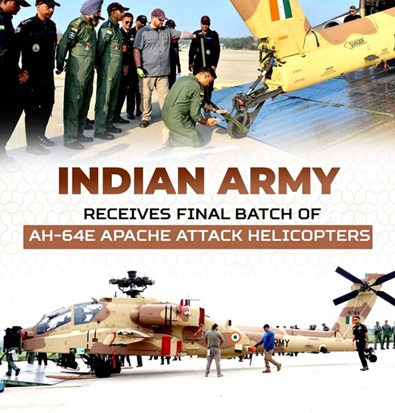
The Indian Army has received the final batch of three AH-64E Apache attack helicopters, completing its six-helicopter fleet under a 2020 procurement deal. The helicopters will be inducted into the 451 Army Aviation Squadron, based in Jodhpur, Rajasthan, significantly enhancing the Army’s combat aviation capabilities.
Background and Context

India has been steadily upgrading its rotary-wing combat fleet to meet evolving battlefield requirements, particularly along its western and northern borders. While the Indian Air Force (IAF) inducted AH-64E Apaches earlier, this marks a key milestone for the Army Aviation Corps, which is transitioning from light utility roles to offensive combat operations.

The acquisition reflects:

  • Growing emphasis on jointness between the Army and Air Force
  • Need for precision strike, close air support, and battlefield dominance
  • Strengthening of India–US defence cooperation under platforms like DTTI

About AH-64E Apache Attack Helicopter

  • Type: Multi-role attack helicopter
  • Also Known As: Apache Guardian
  • Country of Origin: United States
  • Manufacturer: Boeing
  • Latest Variant: AH-64E (used by the US Army)

Global Operators

India, Egypt, Greece, Indonesia, Israel, Japan, South Korea, Kuwait, Netherlands, Qatar, Saudi Arabia, Singapore, UAE, UK, among others.

Apache Helicopters in Indian Armed Forces

  • Indian Army: 6 AH-64E Apaches (451 Army Aviation Squadron, Jodhpur)
  • Indian Air Force: 22 AH-64E Apaches
  • Procurement Deal: Signed in 2020
  • Delivery Timeline:
    • First batch: July 2025
    • Final batch: Recently delivered (delayed by ~15 months)

Key Features and Capabilities

  • Maximum Speed: ~300 km/h
  • Engines: Twin-engine configuration
  • Weapons Suite:
    • Hellfire anti-tank missiles
    • 30 mm chain gun
    • Stinger short-range air-to-air missiles
  • Advanced Sensors:
    • Longbow fire-control radar
    • Integrated infrared laser for target designation
    • Enhanced night-fighting and all-weather capability
  • Combat Edge:
    • Can track up to 128 targets per minute
    • Prioritises threats automatically
    • Capable of controlling unmanned aerial systems (UAS) for network-centric warfare

Why Apaches Matter for India

  • Close Air Support: Vital in high-intensity and sub-conventional operations
  • Precision Strike Capability: Effective against armour, troop formations, and logistics hubs
  • Force Multiplier: Enhances Army–Air Force interoperability
  • Deterrence Value: Strengthens India’s offensive posture along sensitive borders

The induction also complements India’s push for indigenous platforms like the LCH Prachand, with plans to induct around 90 more LCH helicopters in the coming years.

Challenges and Delays

  • Delivery delays caused by global supply-chain disruptions
  • Squadron activation delayed since March 2024, making the final induction a critical operational milestone

FAQs

Q1. What is the AH-64E Apache used for ?

It is used for reconnaissance, precision strikes, close air support, and anti-armour warfare.

Q2. How many Apaches does India operate ?

India operates 28 AH-64E Apaches — 22 with the IAF and 6 with the Army.

Q3. Why is the AH-64E called the Apache Guardian ?

“Guardian” refers to the latest AH-64E variant featuring enhanced sensors, networking, and drone-control capabilities.

Q4. Which Indian Army unit operates the Apache helicopters ?

The 451 Army Aviation Squadron, based in Jodhpur, Rajasthan.

Q5. How does Apache induction fit into India’s defence modernisation ?

It enhances precision warfare, jointness, and complements indigenous platforms like the LCH Prachand.

« »
  • SUN
  • MON
  • TUE
  • WED
  • THU
  • FRI
  • SAT
Have any Query?

Our support team will be happy to assist you!

OR