
- UPSC Exam
- State PCS
- One Day Exam
- Current Affairs
- PT Quiz
- Downlaods
- About Coaching
- Blog
- Videos

| Prelims: (Military Exercises + CA) Mains: (GS 2: International Relations; GS Paper 3: Internal Security) |
An Indian Army contingent has departed for the United Arab Emirates (UAE) to participate in the second edition of the India–UAE Joint Military Exercise “DESERT CYCLONE-II”, scheduled to be held in Abu Dhabi from December 18 to 30.
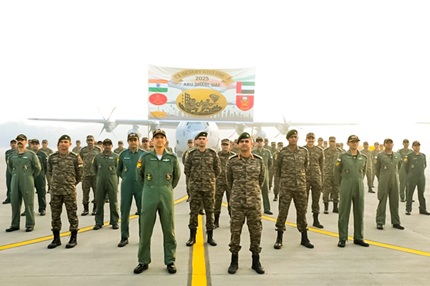
India and the UAE share a Comprehensive Strategic Partnership, with defence cooperation emerging as a key pillar of bilateral relations. Over the past decade, both countries have steadily expanded military engagement through joint exercises, training exchanges, defence dialogues, and high-level visits.
With growing urbanisation, asymmetric threats, and peacekeeping commitments worldwide, modern militaries increasingly focus on sub-conventional operations, counter-terrorism, and urban warfare scenarios. Joint exercises like Desert Cyclone reflect this shift, aligning military cooperation with evolving security challenges, including UN peacekeeping mandates and stability operations.
The first edition of Exercise Desert Cyclone laid the foundation for structured Army-to-Army cooperation, and Desert Cyclone-II builds upon this momentum amid intensified India–UAE strategic engagement.
1. Urban Warfare Operations
2. Heliborne Operations
3. Mission Planning & Command Integration
4. Integration of Emerging Technologies
Deepening India–UAE Defence Ties
Regional Security and Stability
Defence Diplomacy
FAQsQ1. What is Exercise Desert Cyclone-II ? It is the second edition of the bilateral joint military exercise between the Indian Army and the UAE Land Forces. Q2. Where is Desert Cyclone-II being conducted ? In Abu Dhabi, United Arab Emirates. Q3. Which Indian Army unit is participating ? A 45-member contingent primarily from the Mechanised Infantry Regiment. Q4. What is the focus of the exercise ? Urban warfare, sub-conventional operations under UN mandate, heliborne operations, and UAS/counter-UAS integration. Q5. Why is this exercise important ? It enhances interoperability, strengthens India–UAE defence ties, and contributes to regional security and stability. |



Our support team will be happy to assist you!

 Contact Us
  New Batch : 9555124124/ 7428085757
  Tech Support : 9555124124/ 7428085757