New
GS Foundation (P+M) - Delhi : 05th Jan., 2026 Winter Sale offer UPTO 75% + 10% Off, Valid Till : 5th Dec., 2025 GS Foundation (P+M) - Prayagraj : 15th Dec., 11:00 AM Winter Sale offer UPTO 75% + 10% Off, Valid Till : 5th Dec., 2025 GS Foundation (P+M) - Delhi : 05th Jan., 2026 GS Foundation (P+M) - Prayagraj : 15th Dec., 11:00 AM

Current Affairs for 19 November 2025

Export Promotion Mission and Strengthening India's Export Competitiveness

(Prelims: Current Events of National Importance, Economic and Social Development)
(Mains, General Studies Paper 3: Topics Related to Indian Economy and Planning, Resource Mobilization, Growth, Development, and Employment)

Context

Amidst growing global trade uncertainties and the imposition of a 50% tariff on Indian goods by the US, the Union Cabinet has approved a comprehensive Export Promotion Mission (EPM) worth ₹25,060 crore.
Export

About the Export Promotion Mission

  • The Union Cabinet has approved the Export Promotion Mission (EPM), which was announced in the Union Budget 2025-26.
  • It is a major initiative to strengthen India's export competitiveness, especially for MSMEs, first-time exporters, and labor-intensive sectors.

Features of the Export Promotion Mission

  • It will provide a comprehensive, flexible, and digitally driven framework for export promotion.
  • It will be operated with a funding of ₹25,060 crore for the period 2025-26 to 2030-31.
  • It marks a strategic shift from multiple fragmented schemes to a single, results-based, and adaptable mechanism.
  • Its collaborative framework includes the Department of Commerce, Ministry of MSME, Ministry of Finance, and other key stakeholders. Its implementing agency is the Directorate General of Foreign Trade (DGFT).
  • It consolidates key export support schemes such as the Interest Equalization Scheme (IES) and the Market Access Initiative (MAI) and aligns them with contemporary trade needs.
  • The scheme will provide priority support to sectors affected by the recent global tariff increases, such as textiles, leather, gems and jewellery, engineering goods, and marine products.

Sub-Schemes under the Export Promotion Mission

  • Export Promotion: This focuses on improving access to affordable trade finance for MSMEs through various instruments such as interest subvention, export factoring, collateral guarantees, etc.
  • Export Direction: This focuses on non-financial enablers that enhance market readiness and competitiveness, such as export quality and compliance assistance, support for international branding, packaging, export warehousing and logistics, etc.

Background of the Scheme – Tariff Pressure and Export Slowdown

  • The United States, India's largest export destination, has imposed a 50% tariff effective August 27, 2025, making Indian goods among the most taxed goods globally after China.
  • India's exports to the United States declined by 12% in September 2025. Engineering goods declined by 9.4%.
  • 28% of textile and apparel exports go to the US, which declined by 10.34% year-on-year in September 2025.
  • The government's initiative, the Export Promotion Mission (EPM), is a strategic response to protect jobs, maintain export momentum, and diversify into new markets.

Objectives of the Export Promotion Mission

  • To help exporters, especially MSMEs. Increasing credit availability and reducing credit costs
  • Addressing non-tariff barriers, logistics constraints, branding and market access challenges
  • Enabling diversification into new and high-risk markets

Implementation Framework for the Export Promotion Mission

  • The Directorate General of Foreign Trade (DGFT) will manage the mission, which will be implemented through two sub-schemes:
    • Export Promotion (₹10,401 crore): Focuses on financial interventions and includes interest subvention, export factoring, credit guarantees, credit cards for e-commerce exporters, and credit enhancement tools. It aims to improve access to trade finance and working capital liquidity
    • Export Direction (₹14,659 crore): The focus will be on non-financial interventions and will include international branding, packaging, trade fairs, warehousing, logistics support, inland transport reimbursement, and capacity building initiatives.
  • Digital and Flexible Framework: This mission provides a digitally driven, comprehensive, and flexible framework to meet contemporary trade needs and align export support with dynamic global conditions.

Other Cabinet Decisions Related to This

  • The ₹20,000 crore Credit Guarantee Scheme for Exporters (CGSE) aims to provide additional working capital and collateral-free credit to exporters up to 20% of the sanctioned limit.
  • Its coverage includes 100% guarantee by the National Credit Guarantee Trustee Company (NCGTC) to lending institutions. This includes MSMEs. Exporters, including the Ministry of Textiles and Textiles, are beneficiaries, and its validity is until March 2026.
  • It is expected to enhance liquidity, support diversification, and ensure smooth business operations.

Sectoral Impact and Stakeholder Reactions

  • Textile and Apparel Sector: The Confederation of Indian Textile Industry (CITI) welcomed the mission, stating that it will make Indian textiles globally competitive and help leverage free trade agreements (FTAs) for market expansion.
  • MSME Empowerment: The Federation of Indian Export Organisations (FIEO) praised the integrated financial and non-financial framework of the EPM, stating that it addresses long-standing challenges such as high compliance costs, weak branding, and logistics inefficiencies.
  • Gems and Jewellery Sector: The Gems and Jewellery Export Promotion Council (GJEPC) appreciated measures such as interest subvention and expanded trade fair support, calling them crucial for first-time exporters and MSMEs.

Indian Export Performance

  • Overall Growth: India's total exports (goods and services) grew by 5.19% in April-August 2025 compared to the same period last year.
  • Total Value: The combined export value in April-August 2025 was US$ 346.10 billion.
  • Merchandise Exports: During April-August 2025, it witnessed a growth of 2.31%, reaching US$ 183.74 billion.
  • Non-petroleum and non-gems and jewellery exports: It registered a robust growth of 7.76%, reaching US$ 146.70 billion during the same period.
  • Growth Drivers: Key sectors contributing to growth include engineering goods, electronics, pharmaceuticals, and chemicals.
  • Challenges: The goods trade deficit widened (in September 2025) due to a faster increase in imports compared to exports.

Way Forward

  • Strengthening Trade Finance: Ensuring timely and affordable credit access for MSMEs through digital platforms
  • Enhancing Market Intelligence: Creating a data-driven mechanism to identify new export destinations
  • Promoting Brand India: Investing in global marketing, packaging, and e-commerce support
  • Addressing Structural Bottlenecks: Improving Logistics Infrastructure and Reducing Compliance Burdens
  • Leveraging FTAs: Leveraging Existing and Upcoming Trade Agreements to Expand Export Markets

Precision Biotherapeutics: New India, New Hope

(Preliminary Exam: Current Affairs)
(Main Exam, General Studies Paper 3: Achievements of Indians in Science and Technology; Indigenous Technology Development and Development of New Technologies)

Context

  • Currently, more than 65% of deaths in India each year are due to non-communicable diseases such as diabetes, heart disease, and cancer. Older medicines only suppress the symptoms, not cure the root cause of the disease. Now, new technologies such as CRISPR, CAR-T cell therapy, and mRNA vaccines have proven that it is possible to eradicate disease at the genetic level.
  • The Government of India has declared “Precision Biotherapeutics” as one of the six thrust areas in the BioE3 policy for the year 2024. This year, ImmunoACT launched India's first CAR-T cell therapy, NexCAR19, which costs 8-10 times less than international therapies.

What is Precision Biotherapeutics?

This is a new medical approach that creates a unique drug or treatment based on a patient's genetic information (DNA), protein status, and lifestyle. While standardized drugs are the same for everyone, precision drugs are tailored to each patient.

Key Tools

  • Gene editing (CRISPR-Cas9): Repairing faulty genes by cutting them out
  • mRNA therapy: Teaching cells to make the correct protein or stop making the wrong one
  • CAR-T cell therapy: Removing a patient's immune cells, training them to recognize cancer and then reintroducing them
  • Monoclonal antibodies: Lab-made proteins that attack specific targets
  • Artificial intelligence: Predicting how a drug will work

Why is it needed in India?

  • India has a lot of genetic diversity; the same drug may work in Punjab but may not in Kerala.
  • Thalassemia, sickle cell anemia, and some types of cancer are prevalent in the Indian population.
  • Foreign drugs are very expensive (30-40 crore rupees per dose) and cannot be used in India.
  • The IndiGen and GenomeIndia projects have mapped the genomes of over 20,000 Indians; now they need to be used for treatment.
  • In the future, treatment will shift from hospitals to “predictive and preventive.”

Current Situation in India

Government Initiatives

  • The Department of Biotechnology (DBT) and BIRAC prioritized this in the BioE³ policy.
  • Research is underway at IGIB Delhi, NIBMG Kalyan (West Bengal), and THSTI Faridabad.

Private Sector Pioneers

  • ImmunoACT: India's first CAR-T therapy (costing just ₹4.2 million)
  • 4baseCare: AI-based genetic testing for cancer.
  • Biocon, Dr. Reddy's, Zydus: Working on biosimilars and gene therapy
  • Bugworks: New antibiotics
  • Immuneel: Immuno-oncology

Challenges

  • Lack of clear legislation: CDSCO does not have separate regulations for gene therapy
  • Expensive drugs: Still beyond the reach of the common man
  • Lack of biomanufacturing: Most materials come from abroad
  • Privacy of genetic data: Fear of misuse
  • Lack of training: Doctors and scientists lack training in new technologies

Global initiatives

  • US: 30+ gene-cell therapies approved, Zolgensma, Casgevy (first CRISPR therapy in 2023)
  • China: More than 800 clinical trials underway
  • Japan and Korea: Faster approval process
  • Singapore: Emerging as a biomanufacturing hub

Way forward

  • At CDSCO A separate "Gene and Cell Therapy Wing" should be established.
  • A biobanking law should ensure data security and donor consent.
  • Expensive gene therapies should be included in Ayushman Bharat.
  • Establish 5-10 biomanufacturing parks across the country (like those proposed in Hyderabad, Bengaluru, and Pune).
  • Establish a National Bioethics Committee to monitor genetic data and treatments.
  • Teach genetics and biotech in simple language in schools and colleges.

Conclusion:

Precision biotherapeutics is not just a new technology, but a path to move India from "treatment after illness" to "prevention before illness." If India invests now, by 2030 we will not only be able to provide affordable treatment to our patients but also export affordable gene therapies to the world. This could become the strongest pillar of a self-reliant India and a developed India @ 2047.

Know this too!

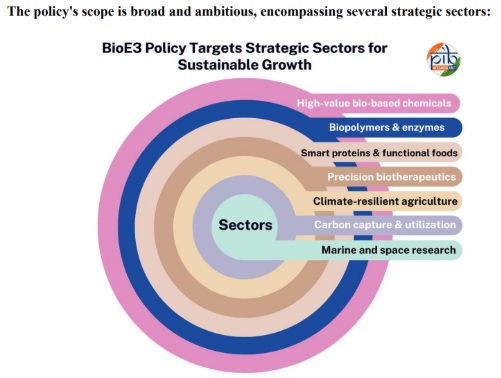
About the BioE3 Policy

  • BioE3 stands for Biotechnology for Economy, Environment and Employment.
  • Nodal Department: Department of Biotechnology (DBT) and Biotechnology Industry Research Assistance Council (BIRAC) to launch in 2024.
  • Objective: To make India a global biotech hub, foster innovation, create jobs, and make emerging biotechnologies safe and accessible.

6 Key Focus Areas of the BioE3 Policy

  1. Precision Biotherapeutics

  • Promote gene therapy, cell therapy, mRNA treatments, monoclonal antibodies, and disease-specific targeted drugs.
  • Develop personalized and targeted treatments based on genetic diversity in India.
  1.  Bio-manufacturing and Bio-foundries

  • Increase indigenous production of biologics, vaccines, enzymes, and biomaterials on a large scale.
  • Making India a low-cost global biomanufacturing hub.
  • Enhancing collaboration between startups, industry, and research institutions.
  1. Clean and Green Biotechnology

  • Promoting environmentally friendly technologies such as biofuels, bioplastics, and bioremediation.
  • Developing alternative bio-resources to reduce carbon emissions in industry and agriculture
  1. Agricultural and Nutrition Biotechnology

  • High-yield crops, pest-resistant seeds, biofertilizers, and biopesticides.
  • Development of nutrient-rich (biofortified) crops.
  • Promoting food security and climate-resilient agriculture.
  1. Microbiome and One Health

  • Treatments and diagnostics based on the microbiome of humans, animals, and the environment.
  • Addressing antimicrobial resistance (AMR).
  • Efforts to integrate health, environment, and veterinary medicine.
  1. Biosecurity, Biosafety, and Emerging Technologies

  • Developing regulatory frameworks for technologies such as gene editing, synthetic biology, and AI-biology.
  • Strengthening biological hazard, pandemic risk, and lab safety standards.
  • Ensuring safe and responsible use of biotechnology

Bio3_Policy

Kwar Hydroelectric Project: Fire Incident Highlights Safety Concerns in Himalayan Infrastructure

(Preliminary Examination: Current Affairs)
(Mains: GS Paper 2 – International Relations/Governance, GS Paper 3 – Geography)

Why in the News?

Several labourers were recently rescued safely after a truck caught fire inside a tunnel at the Kwar Hydroelectric Power Project on the Chenab River in Kishtwar district, Jammu & Kashmir.
The incident has raised questions about safety preparedness in large infrastructure and hydroelectric projects in the Himalayan region.

About the Kwar Hydroelectric Project

  • Capacity: 540 MW
  • Type: Run-of-the-river hydroelectric project
  • Location: Chenab River, Kishtwar district, Jammu & Kashmir
  • Implementing Agency: Chenab Valley Power Projects Pvt. Ltd. (CVPPL)
  • Ownership Structure:
    • NHPC Ltd: 51%
    • J&K State Power Development Corporation (JKSPDC): 49%
  • Expected Generation: 1,975.54 million units (MU) in a 90% dependable year
  • Government Financial Support:
    • ₹69.80 crore—Enabling infrastructure
    • ₹655.08 crore—Grant for JKSPDC’s equity share (49%)

Backstory 

  • The Chenab basin in J&K is considered the “Hydropower Capital of India”, with multiple projects such as Pakal Dul, Kiru, Ratle, Dul Hasti, and Bursar.
  • The region is geologically sensitive with young, fragile Himalayas, making tunneling and hydro-infrastructure prone to risks.
  • The Kwar project, approved as part of the government’s strategy to harness the hydropower potential of the Chenab, forms part of the 8500 MW hydro-development initiative in the region.
  • The recent fire incident is not isolated—past infrastructure accidents in Himalayan tunnels have highlighted the need for advanced safety, evacuation mechanisms, and disaster-resilient engineering.

Importance of the Project

1. Enhancing India’s Clean Energy Capacity

  • Hydropower is essential for peak load management, grid stability, and balancing renewable energy sources like solar and wind.

2. Boosting J&K’s Power Availability

  • J&K currently faces chronic power shortages.
  • Projects like Kwar will help improve energy security, reduce dependency on imported power, and promote industrial growth.

3. Strategic Significance

  • Hydropower development in the Chenab basin is strategically important given:
    • Proximity to the India-Pakistan border
    • Water rights under the Indus Waters Treaty (IWT)
  • India has the right to develop run-of-the-river projects on the western rivers (Indus, Jhelum, Chenab), strengthening India’s leverage under IWT.

4. Economic Development

  • Creates employment for local workers.
  • Improves infrastructure such as roads, bridges, and service networks.

Issues & Concerns

1. Safety Risks in Tunnel-Based Projects

  • The fire incident underscores gaps in:
    • Emergency response systems
    • Fire safety mechanisms inside tunnels
    • Worker safety protocols

2. Environmental Vulnerability

  • Projects in the seismically active Himalayas face threats like:
    • Landslides
    • Tunnel collapses
    • Flooding
    • River sedimentation

3. Social Impact and Rehabilitation

  • Displacement of local communities
  • Impact on traditional livelihoods
  • Rehabilitation often remains slow or inadequate

4. Cumulative Ecological Impact

  • Multiple hydropower projects in the Chenab basin may alter:
    • River flow regimes
    • Aquatic ecology
    • Downstream hydrology

Relevance & Discussion

National Perspective

  • Part of India’s strategy to meet 500 GW non-fossil energy capacity by 2030.
  • Essential for achieving Net Zero by 2070.
  • Improves power infrastructure in remote Himalayan regions.

Local Perspective

  • Helps J&K’s transition toward energy surplus status.
  • A significant contributor to regional development and employment.

Disaster Management Angle

  • Highlights the need for:
    • Safety audits
    • Hazard vulnerability assessments
    • Strict enforcement of construction standards
    • Better coordination between NDRF, SDRF, and local authorities

FAQs

1. What is the Kwar Hydroelectric Project?

The Kwar Hydroelectric Project is a 540 MW run-of-the-river scheme being built on the Chenab River in Kishtwar, Jammu & Kashmir. It is part of a series of hydropower developments planned in the Chenab basin to expand India’s clean energy generation.

2. Who is implementing the project and how is it financed?

The project is being developed by Chenab Valley Power Projects Pvt. Ltd., a joint venture between NHPC and the J&K State Power Development Corporation. The central government is providing financial support both for enabling infrastructure and for covering JKSPDC’s equity share.

3. Why is the project important for Jammu & Kashmir?

Kwar is expected to generate nearly 2,000 million units of power annually, which can help reduce J&K’s electricity deficit, improve energy reliability, and support economic development in a region that suffers from chronic power shortages.

4. What concerns has the recent incident highlighted?

The fire accident inside the project tunnel has renewed concerns about worker safety, emergency preparedness, and the broader risks associated with constructing large hydro projects in the fragile Himalayan terrain.

5. Why is this topic relevant for UPSC?

It connects to areas such as hydropower development, Himalayan ecology, disaster management, federal coordination in infrastructure, and India’s rights under the Indus Waters Treaty—making it important for both Prelims and Mains.

Centre Proposes ₹ 30,000-Crore Modified UDAN Scheme

(Preliminary Examination: Current Affairs)
(Mains: GS Paper 1, GS Paper2 - Governance, GS Paper 3 - Disaster Management, GS Paper 4 – Public Ethics)

Why in the News

The Government of India has proposed a ₹ 30,000-crore outlay for a revamped version of the UDAN (Ude Desh Ka Aam Nagrik) regional connectivity scheme, with the aim to extend the initiative beyond April 2027 and significantly expand air access to underserved and remote regions.

Backstory / Evolution of the UDAN Scheme

  1. Origin & Rationale
    • UDAN was launched in October 2016 under the National Civil Aviation Policy (NCAP) 2016 to make air travel affordable and promote regional connectivity. 
    • The first UDAN flight operated in April 2017 (Shimla-Delhi). 
  2. Implementation So Far
    • As of now, over 619 (or more) RCS routes have been operationalised, connecting 88–93 unserved / underserved airports, including heliports and water aerodromes. 
    • Total passenger traffic under the scheme has crossed 1.4–1.5 crore so far. 
    • Viability Gap Funding (VGF) of more than ₹ 3,900–4,000 crore has been disbursed to airlines. 
    • The number of operational airports (including regional airstrips) has grown: from 74 in 2014 to nearly 160 as of early 2025
  3. Challenges Identified
    • Some UDAN routes were discontinued prematurely, before completing the originally planned VGF-supported window. 
    • Limited operational viability for certain regional routes due to low demand, infrastructure constraints (like lack of navigational aids), and shortage of suitable small aircraft.
    • The VGF support period was limited (originally up to 3 years), which may not have been sufficient for airlines to stabilize on such routes.

What’s New: Key Features of the Modified UDAN Scheme

  1. Expanded Funding & Time Horizon
    • A proposal for ₹ 30,000 crore to be dedicated to the revamped scheme.
    • The scheme is slated to be extended significantly, beyond its previous horizon (current scheme was to run till April 2027). 
  2. Infrastructure Support (₹ 18,000 crore)
    • Capital outlay for new airport development, including greenfield airports, refurbishment of existing small airstrips, and construction of heliports in hilly/remote areas.
  3. Viability Gap Funding (₹ 12,000 crore)
    • Substantial VGF to incentivize airlines to operate on low-demand regional routes, making them financially viable.
    • There is talk of extending VGF period from 3 years to 4–5 years, to give airlines more runway to become self-sustaining. 
  4. Target Areas
    • 120 new destinations over the next decade. 
    • Focus on hilly / remote regions, aspirational districts, North-Eastern states, smaller towns, helipads, water aerodromes, etc. 
    • Special push for Bihar: greenfield airports will be facilitated there (in addition to expanding Patna and building a brownfield airport at Bihta). 
  5. Passenger Projection
    • The government aims to benefit an additional 4 crore (40 million) passengers over the next 10 years. 
  6. Regulatory / Operational Ease
    • The scheme seeks to simplify processes to encourage private sector participation (e.g., aircraft leasing, operator permits, route bidding).
    • Incentives for state governments and airport operators: reduced airport charges, priority parking, faster regulatory clearances, possibly tax reductions, etc. (though details are likely to evolve).

Need / Significance of the Modified Scheme

  1. Bridging Regional Disparities
    • Many remote, hilly, and underdeveloped regions remain poorly connected. The modified UDAN aims to bring these areas into the aviation grid.
    • It will enhance accessibility in aspirational districts, which could spur economic development, tourism, and social inclusion.
  2. Strengthening Aviation Infrastructure
    • By investing in greenfield airports and upgrading airstrips and heliports, the scheme will build a holistic regional aviation infrastructure, not just subsidize flights.
  3. Sustaining Airlines on Less Profitable Routes
    • Longer VGF support and larger funding pool can help regional airlines survive until they achieve commercial viability.
    • This could also encourage the acquisition of appropriate aircraft (e.g., turboprops) suitable for short-haul, low-demand routes.
  4. Socio-Economic Benefits
    • Improved connectivity → better access to health care (medical evacuations), faster logistics, and greater mobility for people.
    • Job creation: airport construction, airline operations, associated services (tourism, hospitality, ground transport).
    • Balanced development: by focusing on Northeast, hill states, remote districts, the modified UDAN contributes to more equitable regional growth.

Potential Risks / Challenges

  • Financial sustainability: Even with VGF, maintaining long-term demand and profitability may be tough on very remote routes.
  • Land & regulatory hurdles: Greenfield airport projects often face land acquisition, environmental clearances, and state-level coordination issues.
  • Aircraft availability: Finding or financing suitable small aircraft (especially 20–70 seater turboprops) can be challenging.
  • Competition from other transport modes: Rail (especially trains like Vande Bharat) or road connectivity might compete with short regional flights in cost or convenience. Indeed, some analysts have pointed out that rail connectivity may limit the uptake of UDAN routes. 
  • Implementation capacity: Ensuring timely construction of airports, heliports, and water aerodromes requires efficient governance, robust monitoring, and multi-stakeholder cooperation.

FAQs

1. What is the Modified UDAN Scheme?

It is an upgraded version of the UDAN (Ude Desh Ka Aam Nagrik) regional air connectivity scheme with a proposed ₹30,000-crore outlay, aimed at expanding affordable air travel and strengthening aviation infrastructure in underserved regions.

2. Why was a modified version needed?

Because several challenges—land issues, low passenger demand, lack of suitable aircraft, and limited VGF period—restricted full-scale implementation of the original scheme. The modified version addresses these gaps with greater funding, longer subsidies, and infrastructure support.

3. What is the funding breakup of the ₹30,000 crore plan?

  • ₹18,000 crore → Development of airports, heliports, water aerodromes.
  • ₹12,000 crore → Viability Gap Funding (VGF) for airlines operating regional routes.

4. What is Viability Gap Funding (VGF) in UDAN?

VGF is a financial support mechanism where the government subsidizes a portion of airline operational costs so they can run flights on low-demand regional routes without incurring heavy losses.

5. How many additional passengers are expected to benefit?

The government targets 4 crore (40 million) additional passengers over the next decade through enhanced regional connectivity.

First-Time Inclusion of Women Soldiers in TA’s Home & Hearth Units

(Preliminary Examination: Current Affairs)
(Mains: GS Paper 1: Society, GS Paper 2: Polity & Governance, GS Paper 3: Internal Security, GS Paper 4: Ethics, Essay)

Why in News?

The Directorate General of the Territorial Army (TA) has approved the induction of women soldiers into the Home & Hearth (H&H) Infantry Battalions for the first time. This marks a major step towards gender inclusion, expanded operational roles, and a more representative defence framework.

Background: Territorial Army (TA)

About the TA

  • A part-time, voluntary reserve force supporting the Regular Indian Army.
  • Works on the Citizen-Soldier model—volunteers serve while maintaining their professions.
  • Governed under the Territorial Army Act, 1948.

Historical Evolution

  • Origin in Volunteer Forces of 1857, post First War of Independence.
  • 1917: Universities asked to raise defence units (Bose & Nehru served in Calcutta University Corps).
  • 1948: Territorial Army Act passed.
  • 1949: TA officially inaugurated — celebrated as TA Raising Day (9 October).

Current Composition

Includes:

  • Infantry Battalions (incl. H&H units in J&K & NE)
  • Ecological Battalions
  • Engineer units (LoC fencing)
  • Railway, Oil, and other departmental units
  • Composite Eco-Task Forces under Namami Gange

Significance of Territorial Army

  • Frees Regular Army from static duties to focus on core combat operations.
  • Supports counter-insurgency, internal security, and community outreach.
  • Acts during natural disasters, industrial unrest, and service restoration.
  • Major contributor to afforestation and ecological restoration.
  • Functions as a reserve force during emergencies.
  • Enhances civil–military coordination.

Induction of Women into TA’s H&H Battalions — Why It Matters

1. Expanding Operational Roles

Women officers have served in TA’s ecological, railway, and oil-sector units since 2019.
Now, for the first time, women enter Infantry-linked H&H battalions, widening their exposure to security operations.

2. Strengthening Internal Security & Local Engagement

H&H battalions operate in Jammu & Kashmir and the North-East, supporting:

  • Area domination
  • Intelligence coordination
  • Road-opening duties
  • Disaster relief & civil administration tasks

3. Gender Mainstreaming in Defence

  • Reinforces India’s “Nari Shakti” vision.
  • Encourages meaningful, combat-support level integration of women.
  • Supports a modern, inclusive force structure.

Women in Indian Defence Forces — A Quick Timeline

Early Roles

  • 1888: Military Nursing Service
  • 1958: Women doctors in Army Medical Corps

Modern Entry & Reforms

  • 1992: Women Special Entry Scheme (non-combat branches)
  • 2005: Short Service Commission (SSC) formalised
  • 2008: First Permanent Commission (JAG, AEC)
  • 2020: SC’s Babita Puniya judgment — PC for women in all SSC-eligible arms

Combat & New Opportunities

  • 2016: Women fighter pilots in IAF
  • 2022: Scheme made permanent
  • 2022: Agnipath opened soldier-level roles to women

Current Status

  • Women ≈ 4% of Indian Army
  • Indian Navy: all branches open, incl. submarines

Notable Achievements

  • Women-led CI operations (e.g., Col Sofiya Qureshi).
  • Women officers completed Navika Sagar Parikrama II (global circumnavigation).

Importance of This Reform

Strategic Benefits

  • Adds manpower in sensitive regions.
  • Enhances intelligence and ground-level interaction.
  • Supports hybrid-threat environments with community engagement.

Institutional & Social Impact

  • Breaks gender barriers in infantry-linked roles.
  • Strengthens India’s commitment to gender equality.
  • Encourages more women to join armed forces.

Challenges Going Forward

  • Gender-sensitive infrastructure in field locations.
  • Integration into traditionally male-dominated battalions.
  • Training synchronisation and role adjustment.
  • Long-term retention & career growth pathways.

FAQs

1.What is the Territorial Army (TA)?

The Territorial Army is a part-time, voluntary reserve force that supplements the Regular Army, operating under the Territorial Army Act, 1948. It follows the Citizen-Soldier model, allowing civilians to serve in military roles while pursuing their professions.

2. What are Home & Hearth (H&H) Battalions in the TA?

H&H Battalions are infantry-linked Territorial Army units raised primarily in Jammu & Kashmir and the North-East. Their tasks include:

  • Area domination
  • Intelligence coordination
  • Road-opening and security
  • Civil-military cooperation
  • Disaster relief

3. Why is the induction of women soldiers into TA significant?

Because it:

  • Expands operational roles for women in sensitive regions
  • Enhances manpower for internal security duties
  • Promotes gender inclusion in defence forces
  • Breaks long-standing gender restrictions in infantry-support units

4. Have women served in the Territorial Army before?

Yes, but only as officers and in limited sectors such as:

  • Ecological Task Forces
  • Railway units
  • Oil sector units
    Induction as soldiers in H&H battalions is a first-ever development.

5. What legal decisions paved the way for women’s wider military induction?

The 2020 Supreme Court judgment (Babita Puniya case) mandated Permanent Commission for women in all branches where SSC exists, strengthening gender equality in the armed forces.

Rising Popularity of RBI’s Floating Rate Bonds (FRBs) Amid Shifting Investment Trends

(Preliminary Examination: Current Affairs)
(Mains: General Studies Paper 3 : Economy)

Why in the News?

RBI’s Floating Rate Bonds (FRBs) have recently seen a surge in investor demand, as individuals move away from equities, gold, and traditional bank deposits toward safer, government-backed instruments offering higher and market-linked returns.

The sharp increase in demand is mainly due to the attractive interest payout, which is currently pegged to the National Savings Certificate (NSC) rate + 35 basis points (bps).

Background

  • India introduced Floating Rate Bonds in 1995 to diversify government borrowing instruments.
  • They gained prominence after the government withdrew 7.75% Savings (Taxable) Bonds in 2020, introducing a retail-friendly FRB variant.
  • A rising interest-rate environment has made FRBs particularly attractive because their coupon adjusts automatically with benchmark rates, reducing interest-rate risk.
  • Global trends show increased investor preference for inflation- and interest-linked securities during times of economic uncertainty.

What are RBI’s Floating Rate Bonds (FRBs)?

About

  • FRBs are government securities whose coupon rate varies periodically instead of remaining fixed.
  • The coupon is reset at pre-announced intervals (usually every 6 months or 1 year).
  • Designed to provide protection against interest-rate volatility.

Eligibility

  • Available to:
    • Individuals (single/joint)
    • Hindu Undivided Families (HUFs)
  • Not available to NRIs, even on a repatriation/non-repatriation basis.

Interest Rate Mechanism

  • The coupon rate is linked to a market benchmark, commonly:
    • The average yield of three recent 182-day T-Bill auctions, or
    • A base rate + fixed spread determined through auction.
  • For retail FRBs, the coupon is linked to the NSC rate + 35 bps.
  • As interest rates rise, FRB returns rise automatically, unlike fixed-rate bonds.

Significance

  • Protects investors from interest-rate risk and enhances portfolio stability.
  • Acts as a diversification tool for investors with heavy exposure to fixed-income products.
  • Offers sovereign guarantee, making it a risk-free investment option.

National Savings Certificate (NSC) Scheme

About

The NSC Scheme, run by the Department of Economic Affairs (Ministry of Finance), aims to promote small savings and long-term financial discipline among citizens.

Features

  • Tenure: 5-year maturity
  • Interest Rate: 7.7% compounded annually (subject to quarterly revisions)
  • Eligibility:
    • Resident Indians
    • Guardians for minors (above 10 years) or individuals of unsound mind
  • Deposit Limits:
    • Minimum: 1,000
    • No maximum limit
    • Multiple accounts allowed

Additional Benefits

  • NSCs can be pledged as security for bank loans.
  • Absence of a deposit ceiling makes it ideal for large long-term savings.

Why Are FRBs Trending Now?

  • Interest rates globally—and in India—have been rising.
  • Investors prefer instruments that adjust to market conditions.
  • FRBs offer higher returns without market volatility, unlike equity or gold.

Economic Significance

  • Supports the government’s market-based borrowing strategy.
  • Helps deepen India’s bond market.
  • Encourages a culture of safe, long-term retail investment.
  • Aligns with financial inclusion initiatives.

Potential Concerns

  • Returns fall if interest rates decline.
  • Limited liquidity compared to market-traded bonds.
  • Not tax-advantaged like certain small savings schemes.

FAQs

1. What are FRBs?

Ans. FRBs are government bonds with interest rates that reset periodically instead of staying fixed.

2. Why are FRBs trending now?

Ans. They offer rising returns in a high interest-rate environment, making them safer and more attractive than equities or gold.

3. Can NRIs invest in FRBs?

Ans. No, FRBs are only for resident individuals and HUFs.

4. What is the key benefit of FRBs?

Ans. They protect investors from interest-rate risk and carry a sovereign guarantee.

5. What is a major drawback of FRBs?

Ans.  Returns fall when interest rates decline, and liquidity is limited.

National Gopal Ratna Awards 2025: Recognising Excellence in India’s Dairy Sector

(Preliminary Examination: Current Affairs)
(Mains: GS Paper 2 – Governance, GS Paper 3 – Environment, GS Paper 4 – Ethics)

Why in the News?

The Department of Animal Husbandry & Dairying (DAHD) has announced the winners of the National Gopal Ratna Awards (NGRA) 2025, India’s highest civilian recognition in the livestock and dairy sector.

About National Gopal Ratna Awards (NGRA)

Overview

  • NGRA is one of the highest national honours in India’s livestock and dairy sector.
  • Instituted by the Department of Animal Husbandry & Dairying, Ministry of Fisheries, Animal Husbandry & Dairying.

Launch & Background

  • Introduced in 2021 under the Rashtriya Gokul Mission (RGM).
  • RGM focuses on:
    • Conservation of indigenous cattle & buffalo breeds.
    • Genetic improvement and productivity enhancement.
    • Strengthening dairy infrastructure and scientific breeding.

Objectives of NGRA

  • Promote excellence and innovation in dairy farming.
  • Encourage:
    • Milk-producing farmers
    • Dairy Cooperatives (DCS)
    • Milk Producer Companies (MPCs)
    • Farmer Producer Organisations (FPOs)
    • Artificial Insemination Technicians (AITs)
  • Support sustainable dairy development, especially in vulnerable regions like NER and Himalayan States.

Award Categories

  1. Best Dairy Farmer
    • Farmers rearing indigenous cattle/buffalo breeds.
  2. Best Dairy Cooperative Society / MPC / Dairy FPO
  3. Best Artificial Insemination Technician (AIT)
  4. Special Category
    • For North-Eastern Region (NER) & Himalayan States to boost dairy activities in remote areas.

Award Components

For Best Dairy Farmer & Best DCS/MPC/FPO

Rank

Cash Prize

Award Components

1st

₹5,00,000

Cash + Certificate + Memento

2nd

₹3,00,000

Cash + Certificate + Memento

3rd

₹2,00,000

Cash + Certificate + Memento

Special Award (NER)

₹2,00,000

Certificate + Memento

For Best AIT

  • Certificate of Merit + Memento
  • (No cash prize)

Significance of the Awards

1. Boost to Indigenous Breeds

  • Encourages adoption and conservation of native cattle and buffalo breeds.
  • Supports genetic diversity and climate resilience.

2. Incentivises Cooperative Strengthening

  • Enhances efficiency of rural dairy supply chains.
  • Promotes collective farmer empowerment.

3. Recognition of Technological Adoption

  • Highlights role of Artificial Insemination Technicians in improving breed quality.
  • Encourages scientific dairy farming.

4. Regional Inclusivity

  • Special focus on NER & Himalayan states, where dairy infrastructure is limited.
  • Improves livelihood opportunities for remote communities.

5. Income & Livelihood Enhancement

  • Supports small and marginal dairy farmers.
  • Acts as a motivational tool to improve management practices.

Broader Context: National Milk Day

  • Awards are presented annually on 26 November during National Milk Day.
  • This day honours Dr. Verghese Kurien, architect of India’s White Revolution.

Challenges

  • Limited awareness among remote farmers.
  • No cash incentives for AITs may reduce motivation.
  • Need for long-term support to awardees beyond recognition.
  • Monitoring of award impact remains limited.

Way Forward

  • Strengthen awareness campaigns, especially in backward districts.
  • Introduce financial incentives for AITs.
  • Provide training modules & mentoring to awardees.
  • Develop a nationwide database of best dairy practices.

FAQs

1. What are the National Gopal Ratna Awards?

The NGRA are India’s highest national honours in the livestock and dairy sector, instituted by the Department of Animal Husbandry & Dairying to promote excellence in dairy farming, cooperatives, and artificial insemination services.

2. Under which scheme were the NGRA launched?

They were launched in 2021 under the Rashtriya Gokul Mission (RGM), which focuses on the conservation and genetic improvement of indigenous cattle and buffalo breeds.

3. Who can apply for the NGRA?

Eligible applicants include dairy farmers, Dairy Cooperative Societies (DCS), Milk Producer Companies (MPCs), Dairy FPOs, and Artificial Insemination Technicians (AITs).

4. What are the award components?

Winners in the Farmer and Cooperative categories receive ₹5 lakh, ₹3 lakh, or ₹2 lakh, along with a certificate and memento, while AITs receive a certificate and memento only.

5. Why is there a special category for the North-Eastern and Himalayan regions?

The special award aims to encourage dairy development in regions with challenging terrain, weaker dairy infrastructure, and limited access to modern breeding technologies, promoting balanced regional growth.

« »
  • SUN
  • MON
  • TUE
  • WED
  • THU
  • FRI
  • SAT
Have any Query?

Our support team will be happy to assist you!

OR