New
Final Result - UPSC CSE Result, 2025 GS Foundation (P+M) - Delhi : 23rd March 2026, 11:30 AM Navratri offer UPTO 75% + 10% Off | Valid till 26th March GS Foundation (P+M) - Prayagraj : 17th March 2026 Final Result - UPSC CSE Result, 2025 GS Foundation (P+M) - Delhi : 23rd March 2026, 11:30 AM Navratri offer UPTO 75% + 10% Off | Valid till 26th March GS Foundation (P+M) - Prayagraj : 17th March 2026

Current Affairs for 21 March 2026

CAPF Bill 2026 – Codifying IPS Deputation

Prelims : (Polity & Governance + CA)
Mains : (GS 2 – Governance, Civil Services, Federalism; GS 3 – Internal Security)

Why in News?

The Union government has proposed the Central Armed Police Forces (General Administration) Bill, 2026 to provide a statutory framework for the deputation of Indian Police Service (IPS) officers to CAPFs, in line with recent directions of the Supreme Court.

Background and Context

India’s internal security framework relies heavily on the Central Armed Police Forces (CAPFs), which include :

  • Central Reserve Police Force (CRPF)
  • Border Security Force (BSF)
  • Indo-Tibetan Border Police (ITBP)
  • Central Industrial Security Force (CISF)
  • Sashastra Seema Bal (SSB)

These forces are responsible for :

  • Border guarding
  • Counter-insurgency operations
  • Internal security and law & order support

Evolution of Leadership Structure

Historically, leadership in CAPFs has been shared between :

  • Cadre officers → Direct recruits within CAPFs
  • IPS officers on deputation

IPS officers, as part of an All India Service under Article 312, have traditionally occupied senior positions to :

  • Ensure coordination between Centre and States
  • Bring administrative experience from state policing

Existing System of Deputation

Before the proposed Bill :

  • IPS deputation was governed by executive instructions, not law
  • Around : 
    • 20% of DIG-level posts are reserved for IPS officers
    • 50% of IG-level posts are filled via IPS deputation

Key Issues:

  • Lack of a statutory framework
  • Ambiguity in appointments and promotions
  • Frequent litigation and service disputes
  • Perceived imbalance between IPS officers and CAPF cadre officers

Key Issues Involved

The Bill addresses critical governance and administrative concerns :

  • Whether IPS dominance affects career progression of CAPF cadre officers
  • Need for clarity and transparency in deputation policies
  • Balancing : 
    • Central control
    • Institutional autonomy of CAPFs

Key Features of the Proposed Bill

  1. Statutory Backing
    • Provides legal recognition to IPS deputation in CAPFs
    • Replaces executive instructions with formal legislation
  2. Defined Quotas and Structure
    • Codifies the proportion of posts reserved for IPS officers
  3. Standardised Appointment Process
    • Establishes clear procedures for : 
      • Selection
      • Tenure
      • Repatriation
  4. Dispute Reduction Mechanism
    • Reduces ambiguity, thereby limiting litigation
  5. Alignment with Judicial Directions
    • Incorporates principles laid down by the Supreme Court on service matters

Broader Administrative Debate

The Bill has revived debates on civil services reform, particularly :

1. Role of All India Services

  • Whether IPS officers should continue dominating leadership roles in specialised forces

2. Autonomy of CAPFs

  • Demand for greater internal cadre-based promotions
  • Need to strengthen institutional identity of forces

3. Career Progression

  • Concerns among CAPF officers about : 
    • Limited upward mobility
    • Unequal opportunities compared to IPS officers

Significance of the Bill

1. Legal Clarity and Transparency

  • Ends reliance on executive orders
  • Brings predictability in appointments

2. Strengthening Internal Security Governance

  • Improves coordination between : 
    • Central armed forces
    • State police systems

3. Reduction in Service Disputes

  • Minimises litigation through clear statutory provisions

4. Balancing Federal and Administrative Interests

  • Reinforces Centre-State coordination via IPS
  • While addressing concerns of CAPF cadres

5. Civil Services Reform Momentum

  • Acts as a step towards : 
    • Rationalising roles of All India Services
    • Modernising personnel management in security forces

Way Forward

  • Ensure balanced representation between IPS and CAPF cadre officers
  • Introduce merit-based promotion pathways within CAPFs
  • Periodically review deputation quotas based on operational needs
  • Strengthen training and leadership development within CAPFs
  • Build consensus through consultation with stakeholders

FAQs

1. What is the CAPF Bill, 2026 ?

It is a proposed law to provide a statutory framework for IPS deputation in Central Armed Police Forces.

2. Why was this Bill needed ?

Because deputation was earlier governed only by executive orders, leading to ambiguity and disputes.

3. What are CAPFs ?

They are central forces like CRPF, BSF, CISF, ITBP, and SSB responsible for internal security and border management.

4. What is the main controversy around IPS deputation?

It concerns the dominance of IPS officers in senior posts and its impact on CAPF officers’ career growth.

5. What is the broader significance of the Bill ?

It improves governance, reduces disputes, and contributes to ongoing civil services reforms in India.

Government Push to Curb “Digital Arrest” Scams via Platform Accountability

Prelims: (Polity & Governance + Internal Security + CA)
Mains: (GS 2 – Governance, Cyber Laws, Accountability; GS 3 – Internal Security, Cybercrime)

Why in News?

The Union Home Ministry has directed WhatsApp to implement measures such as blocking device IDs, strengthening AI tools, and enhancing user safety features to combat the growing threat of “digital arrest” scams in India.

A high-level Inter-Departmental Committee (IDC), constituted in December 2025, recently reviewed the issue with platform representatives and sought time-bound compliance.

What is a Digital Arrest Scam ?

A digital arrest scam is a form of cyber fraud where criminals :

  • Impersonate law enforcement agencies such as : 
    • Police
    • ATS
    • Central Bureau of Investigation
  • Contact victims via video calls
  • Claim the victim is under investigation for serious crimes
  • Create fear and psychological pressure
  • Coerce victims into transferring money to avoid “arrest”

Key Fact :
No legitimate law enforcement agency conducts arrests over video calls—these claims are entirely fraudulent.

Scale and Magnitude of the Problem

  • Over 1.23 lakh cases reported in 2024
  • Nearly 3 times increase compared to 2022
  • Estimated losses: ₹3,000 crore

Institutional Concern

  • The Supreme Court took suo motu cognizance in October 2024
  • Expressed grave concern over the rise of such cyber frauds

Modus Operandi

  • Use of mule accounts (third-party bank accounts)
  • Rapid fund transfers across states
  • Difficult traceability due to digital layering

Background and Context

Government’s Institutional Response

  • Formation of an Inter-Departmental Committee (IDC) (December 2025)
  • Aim : 
    • Multi-agency coordination
    • Strengthening cybercrime response
  • Involves : 
    • Ministry of Home Affairs
    • Telecom authorities
    • Digital platforms

Legal and Regulatory Framework

  • Governed by : 
    • Information Technology Rules, 2021
    • Cybercrime provisions under IPC and IT Act
  • However, rapid technological changes have : 
    • Outpaced enforcement capacity
    • Enabled anonymity and cross-border fraud

Key Measures Proposed for Platforms

1. Blocking Device IDs of Repeat Offenders

  • Identification and blocking of unique device IDs
  • Prevents re-registration using same devices
  • Proposal expected within 45 days

2. Introduction of Enhanced Safety Features

  • Features similar to Skype : 
    • Caller identification transparency
    • Warning signals for suspicious accounts
    • Detection of scam networks

3. Retention of Deleted Account Data

  • Mandatory storage of data for 180 days
  • Helps law enforcement in investigation
  • Compliance with IT Rules, 2021

4. Blocking Malicious APK Files

  • APKs used to : 
    • Install malware
    • Gain remote access to devices
  • Platforms must : 
    • Detect and block harmful files
    • Strengthen content filtering systems

5. AI & Machine Learning-Based Detection

  • Identification of:
    • Impersonation of police/CBI
    • Misuse of official logos
    • Deepfake and synthetic media
  • Existing tools include:
    • Logo detection systems
    • Media matching algorithms

SIM Binding Directive (Related Reform)

  • Issued by Department of Telecommunications (November 2025)
  • Applies to platforms like : 
    • WhatsApp
    • Telegram
    • Signal
    • Snapchat

Key Feature :

  • SIM binding → linking app usage to a single verified SIM

Significance :

  • Eliminates anonymity
  • Improves traceability
  • Enhances national security

Platform Commitments

WhatsApp has committed to :

  • Faster response to fraud reports
  • Compliance with IT Rules on deepfake identification
  • Cooperation with investigative agencies
  • Submission of Action Taken Report (ATR)

Key Issues and Challenges

  • Balancing privacy vs surveillance
  • Ensuring data protection while enabling enforcement
  • Tackling cross-border cybercrime networks
  • Addressing digital literacy gaps among users

Significance of the Measures

1. Strengthening Cybersecurity Framework

  • Enhances technological safeguards against emerging frauds

2. Platform Accountability

  • Shifts responsibility to digital intermediaries
  • Promotes proactive monitoring

3. Protection of Citizens

  • Reduces financial fraud and psychological exploitation

4. Advancing Internal Security

  • Cybercrime increasingly linked to organized networks

5. Regulatory Evolution

  • Marks transition from reactive policing to preventive digital governance

Way Forward

  • Strengthen cyber awareness campaigns among citizens
  • Develop real-time fraud detection systems
  • Enhance inter-agency coordination
  • Introduce stricter penalties for cyber fraud networks
  • Promote global cooperation to tackle cross-border scams

FAQs

1. What is a digital arrest scam ?

It is a cyber fraud where criminals impersonate law enforcement officials and extort money by falsely claiming legal action.

2. Why has the government intervened ?

Due to a sharp rise in cases, financial losses, and concerns over national security and public safety.

3. What is SIM binding ?

It is a mechanism linking an app to a specific verified SIM card to prevent anonymous misuse.

4. How will AI help in tackling scams ?

AI can detect impersonation, fake logos, deepfakes, and suspicious behavioral patterns in real time.

5. What is the broader significance of these measures ?

They strengthen cyber governance, enhance platform accountability, and protect citizens from digital fraud.

EC’s Transfer Powers During Elections Under Scrutiny

Prelims : (Polity & Govenance + CA)
Mains : (GS 2 – Governance, Federalism, Electoral Reforms)

Why in News?

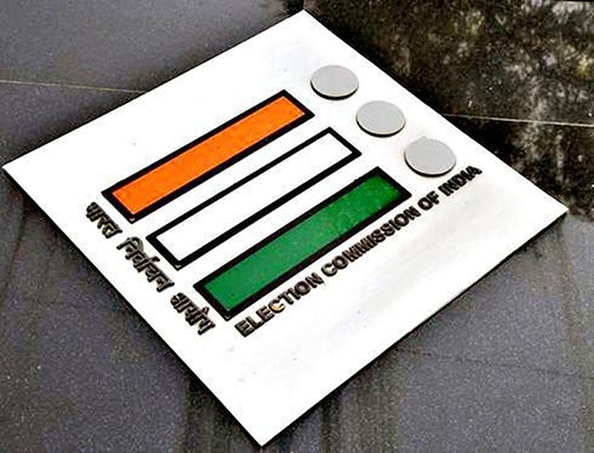
The transfer of senior officials by the Election Commission of India (ECI) during Assembly elections has sparked controversy, with the Chief Minister of West Bengal raising concerns over alleged unilateral actions.
Background and Context

Free and fair elections are the cornerstone of India’s democratic system. To ensure impartiality in electoral processes, the Constitution vests wide-ranging powers in the Election Commission.

During elections, administrative machinery—including civil servants and police officials—plays a crucial role in maintaining neutrality. However, concerns often arise when the Election Commission exercises its authority to transfer or replace officials, leading to tensions between the Centre (ECI) and State governments.

Such disputes highlight the delicate balance between :

  • Electoral integrity
  • Administrative autonomy
  • Federal principles

Role of the Election Commission of India

  • A constitutional body established under Article 324
  • Responsible for conducting elections to : 
    • Parliament
    • State Legislatures
    • Offices of President and Vice-President

Powers of ECI

  • Superintendence, direction, and control of elections
  • Deployment of central forces
  • Enforcement of electoral rules
  • Transfer or removal of officials to ensure neutrality

Transfer of Officials During Elections

Rationale

  • Prevent misuse of administrative machinery
  • Ensure neutrality of officials
  • Avoid bias in favour of any political party

Common Grounds for Transfer

  • Long tenure in a particular district
  • Perceived political affiliations
  • Complaints of bias or misconduct

Model Code of Conduct (MCC) and Administrative Control

  • The Model Code of Conduct (MCC) comes into force immediately after election announcement

Key Provisions

  • Restricts misuse of government machinery
  • Ensures level playing field
  • Regulates behaviour of political parties and candidates

Impact on Administration

  • ECI assumes enhanced oversight over :
    • Civil administration
    • Police machinery
  • Officials are expected to function in a :
    • Neutral
    • Non-partisan manner

Issues and Concerns

1. Federal Tensions

  • States may view transfers as interference in their administrative domain
  • Raises Centre–State friction

2. Allegations of Arbitrary Action

  • Accusations of unilateral decision-making by ECI
  • Lack of consultation with State governments

3. Administrative Instability

  • Frequent transfers disrupt governance continuity
  • Affect efficiency of administration

4. Perception of Bias

  • Political parties may question neutrality of decisions
  • Impacts public trust

Significance of ECI’s Powers

1. Ensuring Free and Fair Elections

  • Maintains integrity of electoral process
  • Prevents misuse of power

2. Upholding Administrative Neutrality

  • Ensures officials act without political influence

  • Strengthens democratic institutions

3. Strengthening Electoral Credibility

  • Builds public confidence in election outcomes

4. Safeguarding Level Playing Field

  • Prevents ruling party from gaining undue advantage

5. Constitutional Mandate

  • Reinforces ECI’s authority under Article 324

Way Forward

  • Enhance transparency in transfer decisions
  • Develop clear guidelines for administrative reshuffles
  • Strengthen Centre–State coordination mechanisms
  • Ensure minimal disruption to governance
  • Promote institutional trust through accountability

FAQs

1. Why does the Election Commission transfer officials during elections ?

To ensure neutrality and prevent misuse of administrative machinery.

2. Under which provision does ECI get its powers ?

Article 324 of the Constitution.

3. What is the Model Code of Conduct (MCC) ?

It is a set of guidelines to ensure fair conduct of elections.

4. Why do such transfers create controversy ?

They may be seen as interference in state administration or politically motivated.

5. What is the importance of administrative neutrality in elections ?

It ensures free, fair, and credible elections without bias.

SC Expands Maternity Leave Rights for Adoptive Mothers

Prelims : (Polity & Governance + CA)
Mains : (GS 2 – Constitution, Fundamental Rights; GS 1 – Society, Women Issues)

Why in News?

The Supreme Court of India has struck down a rule denying maternity leave to government employees adopting children older than three months, terming it unconstitutional and discriminatory in Hamsaanandini Nanduri v. Union of India.

Background and Context

India’s maternity benefits framework has evolved from the Maternity Benefit Act, 1961 to the broader Code on Social Security, 2020, incorporating provisions for adoptive and commissioning mothers.

However, Section 60(4) of the Social Security Code restricted maternity leave benefits only to women adopting children below three months of age.

This provision created a practical barrier because adoption procedures under the Juvenile Justice (Care and Protection of Children) Act, 2015 often take time, meaning many children exceed this age limit before adoption is legally finalised.

Petitioners challenged this restriction as arbitrary and violative of Article 14.

Key Issue Before the Court

  • Whether restricting maternity leave to adoption of children below 3 months : 
    • Violates equality principles
    • Discriminates against adoptive mothers
    • Undermines child welfare and caregiving needs

Supreme Court’s Observations

1. Redefining Maternity

  • The Court held that “maternity” is not limited to childbirth
  • It includes the state of being a mother, encompassing adoptive motherhood

2. Emotional and Developmental Needs

  • Recognised that children in institutional care develop bonds with caregivers
  • Emphasised the need for time and care to build emotional attachment in adoptive families

3. Rejection of Government’s Argument

  • Government suggested :
    • Adoptive mothers of older children can rely on crèche facilities
  • Court rejected this as :
    • Insufficient
    • Ignoring emotional and psychological needs of children

Key Legal Findings

1. “Impossible Criteria” Doctrine

  • Adoption process delays mean : 
    • By the time a child is legally available, the 3-month limit is often exceeded
  • Hence, the provision becomes “inoperative in practice”

2. Violation of Article 14

  • Classification must be :
    • Reasonable
    • Based on intelligible differentia
  • Court found :
    • No rational basis for distinction between adoptive mothers

3. Expansion of Article 21

  • Article 21 includes :
    • Reproductive autonomy
    • Right to dignity and bodily integrity
  • Adoption recognised as :
    • A valid form of reproductive choice, not secondary to biological parenthood

4. Recognition of Shared Parenthood

  • Court emphasised : 
    • Parenthood is a shared responsibility, not solely maternal

Purpose of Maternity Leave: Court’s Interpretation

1. Biological and Emotional Care

  • Time to build a bond between mother and child

2. Family Integration

  • Particularly crucial in adoption cases
  • Legal procedures already consume initial months

Wollstonecraft Dilemma

  • The Court referred to the Wollstonecraft Dilemma
  • Highlights : 
    • Tension between workplace equality and caregiving responsibilities

Significance of the Verdict

1. Strengthening Equality and Non-Discrimination

  • Ensures equal treatment for adoptive and biological mothers
  • Eliminates arbitrary classification

2. Recognition of Adoptive Parenthood

  • Acknowledges emotional and caregiving dimensions of adoption
  • Validates diverse family structures

3. Advancement of Women’s Rights

  • Expands workplace protections
  • Promotes gender equality

4. Promotion of Adoption

  • Encourages adoption as a socially supported institution
  • Reduces stigma around adoptive parenting

5. Constitutional Morality and Social Justice

  • Reinforces principles of : 
    • Equality
    • Dignity
    • Inclusivity

Way Forward

  • Amend statutory provisions to align with judicial interpretation
  • Extend similar benefits to private sector employees
  • Strengthen adoption processes for faster placement
  • Promote awareness about adoptive rights
  • Ensure workplace policies are inclusive and gender-sensitive

FAQs

1. What did the Supreme Court rule in this case ?

It struck down the rule denying maternity leave for adoption of children older than three months.

2. Why was the rule considered unconstitutional ?

It violated Article 14 by creating arbitrary and unreasonable classification.

3. What is meant by reproductive autonomy in this context ?

It includes the right to become a parent through adoption, not just biological means.

4. What is the “impossible criteria” identified by the Court ?

The age limit becomes impractical due to delays in legal adoption procedures.

5. What is the broader impact of the judgment ?

It strengthens women’s rights, promotes adoption, and ensures equality in maternity benefits.

Ras Laffan Attack

Prelims : (Economy + Environment + CA)
Mains : (GS 3 – Infrastructure, Energy, Industrial Policy, Renewable Energy)

Why in News?

The Government of India has expanded domestic sourcing norms in the solar sector to include wafers and ingots, effective from June 2028, as part of efforts to reduce dependence on imports, particularly from China, and strengthen domestic manufacturing.

Background and Context

India is one of the fastest-growing renewable energy markets, with ambitious targets under its clean energy transition strategy.

Solar power plays a central role in achieving :

  • Energy security
  • Climate commitments (Net Zero goals)
  • Reduced fossil fuel dependence

However, India’s solar sector has been heavily dependent on imports, especially from China, which dominates the global solar supply chain.

While India has developed strong capacity in solar modules and cells, upstream components like polysilicon, ingots, and wafers remain underdeveloped.

To address this, the government has progressively introduced localisation policies through schemes like the Production Linked Incentive Scheme and initiatives such as PM Surya Ghar.

Key Policy Change: Expansion of Domestic Sourcing Norms

  • Domestic sourcing requirement now extended to :
    • Wafers and ingots (effective June 2028)
  • Applies mainly to :
    • Government-backed projects
    • Utility-scale solar installations
    • Commercial solar projects
  • Earlier mandate covered :
    • Primarily solar PV modules
  • Additional rule :
    • Mandatory use of domestic solar cells from June (earlier timeline)

Understanding the Solar Manufacturing Value Chain

Solar panel manufacturing involves multiple stages :

  1. Polysilicon (raw material)
  2. Ingots (solid blocks formed from polysilicon)
  3. Wafers (thin slices of ingots)
  4. Solar Cells
  5. Solar Modules (Panels)

-Strengthening wafer and ingot production is crucial for complete supply chain self-reliance.

Domestic Wafer Rollout Norms

As per the Ministry of New and Renewable Energy :

  • A domestic wafer manufacturer list will be notified only when :
    • At least 3 independent manufacturers exist
    • Combined capacity reaches 15 GW
  • Creation of a new :
    • ALMM List-III (for wafers)
  • Requirement :
    • Manufacturers must also have matching ingot production capacity

ALMM Framework for Solar Supply Chain

The Approved List of Models and Manufacturers (ALMM) ensures domestic sourcing :

  • List-I : Solar Modules
  • List-II : Solar Cells
  • List-III : Solar Wafers (newly introduced)

Cascading Requirement

  • Modules → from List-I
  • Cells → from List-II
  • Wafers → from List-III

Transitional Provisions

Exemptions

  • Projects are exempt if :
    • Bid submitted before cut-off date
    • Cut-off = 7 days after first ALMM wafer list
  • Projects with existing PPAs remain exempt

Post Cut-Off Compliance

  • Mandatory sourcing from ALMM Lists I, II, III
  • Tender documents must include these conditions

Upstream Challenges in India’s Solar Sector

1. Limited Manufacturing Capacity

  • Modules: ~172 GW
  • Cells: ~27.2 GW
  • Wafers & Ingots: ~2 GW

2. High Capital Requirements

  • Significant investment needed for : 
    • Polysilicon plants
    • Wafer manufacturing units

3. Competition from Cheap Imports

  • Chinese imports are cheaper due to scale and subsidies
  • Makes domestic production less competitive

Performance of PLI Scheme

  • Launched in 2021 with ₹24,000 crore outlay
  • Target: 65 GW capacity creation

Progress Status (as of June 2025)

  • Overall achievement: 29%

Segment-wise :

  • Modules: 59%
  • Cells: 22%
  • Wafers/Ingot: 10%
  • Polysilicon: 14%

- Indicates major gaps in upstream manufacturing

Continued Import Dependence

India still relies heavily on imports 

  • Solar Cells: $1,641 million
  • Wafers: $156 million
  • Polysilicon: Minimal but critical

- Highlights vulnerability in critical supply chain components

Significance of the Policy Move

1. Reducing Import Dependence

  • Cuts reliance on foreign suppliers
  • Enhances supply chain resilience

2. Boost to Domestic Manufacturing

  • Encourages investment in upstream segments
  • Strengthens “Make in India” initiative

3. Strategic Energy Security

  • Ensures availability of critical solar components
  • Reduces geopolitical risks

4. Employment Generation

  • Promotes industrial growth and job creation
  • Supports manufacturing ecosystem

5. Strengthening Renewable Energy Goals

  • Facilitates sustainable and self-reliant energy transition

Way Forward

  • Introduce targeted capital subsidies for upstream segments
  • Improve ease of doing business for solar manufacturers
  • Enhance R&D in solar technologies
  • Strengthen global partnerships for technology transfer
  • Ensure policy stability to attract long-term investments

FAQs

1. What is the new solar sourcing policy about ?

It expands domestic sourcing requirements to include wafers and ingots to reduce import dependence.

2. What is ALMM ?

Approved List of Models and Manufacturers ensures that solar components are sourced from approved domestic producers.

3. Why are wafers important in solar manufacturing ?

They are an essential intermediate stage between ingots and solar cells.

4. What challenges does India face in solar manufacturing ?

Limited upstream capacity, high capital costs, and competition from cheaper imports.

5. What is the goal of this policy change ?

To achieve self-reliance in the solar supply chain and strengthen domestic manufacturing.

India Probes Dumping of Ethyl Chloroformate Imports

Prelims : (Economy + CA)
Mains : (GS 3 – Indian Economy, Industrial Policy; GS 3 – Science & Technology)

Why in News ?

India has initiated an anti-dumping investigation into imports of Ethyl Chloroformate from China, following allegations by domestic producers that the chemical is being sold at unfairly low prices in the Indian market.

Background and Context

Dumping refers to the practice of exporting goods at prices lower than their normal value, often to gain market share and undermine domestic industries.

India frequently uses anti-dumping measures under the framework of the World Trade Organization (WTO) to ensure fair competition and protect local manufacturers.

The chemical sector is particularly sensitive, as it forms a backbone for industries like pharmaceuticals, agriculture, and specialty chemicals.

The investigation reflects India’s increasing vigilance against unfair trade practices, especially in strategic and industrial inputs.

About Ethyl Chloroformate

  • It is a colourless to yellowish liquid with a pungent odour
  • Belongs to the class of organic chemical intermediates
  • Widely used in industrial chemical synthesis

Properties of Ethyl Chloroformate

  • Hydrolyses in the presence of water
  • Highly toxic by inhalation and corrosive to metals and tissues
  • Vapours are heavier than air
  • Highly flammable and emits hydrogen chloride (HCl) fumes on contact with moist air
  • Undergoes exothermic decomposition
  • Slightly soluble in water but soluble in :
    • Ethanol
    • Ether

Storage Requirements

  • Should be stored in :
    • Cool and dry conditions
    • Well-ventilated areas
    • Airtight containers
  • Must be kept away from :
    • Heat sources
    • Moisture
    • Incompatible substances

Uses of Ethyl Chloroformate

  • Used in the synthesis of nitrile oxides
  • Serves as an important intermediate in :
    • Pharmaceutical manufacturing
    • Agrochemicals
    • Specialty chemical production

Health and Environmental Impact

  • Exposure risks :
    • Short-term high exposure → severe respiratory damage
    • Long-term low exposure → chronic health effects
  • Can cause :
    • Irritation to eyes and skin
    • Lung damage upon inhalation
  • Requires strict adherence to industrial safety protocols

Anti-Dumping Investigation: Mechanism

  • Conducted by relevant authorities under WTO norms
  • Involves :
    • Determining whether dumping has occurred
    • Assessing injury to domestic industry
    • Calculating dumping margin
  • Possible outcomes :
    • Imposition of anti-dumping duties
    • Safeguarding domestic manufacturers

Significance of the Investigation

1. Protection of Domestic Industry

  • Prevents unfair pricing practices
  • Supports growth of Indian chemical manufacturers

2. Ensuring Fair Trade Practices

  • Aligns with WTO principles
  • Maintains a level playing field in international trade

3. Strategic Industrial Security

  • Reduces overdependence on imports for key chemicals
  • Strengthens domestic supply chains

4. Economic Stability

  • Prevents market distortion and price undercutting
  • Protects employment in chemical industries

5. Public Health and Safety

  • Encourages regulation of hazardous chemical imports
  • Ensures compliance with safety standards

Way Forward

  • Strengthen domestic manufacturing capacity in specialty chemicals
  • Enhance regulatory mechanisms for hazardous substances
  • Promote research in safer chemical alternatives
  • Improve monitoring of imports and pricing trends
  • Encourage international cooperation for fair trade enforcement

FAQs

1. What is Ethyl Chloroformate ?

It is an organic chemical used as an intermediate in pharmaceuticals, agrochemicals, and specialty chemicals.

2. Why is India investigating its imports ?

Due to allegations of dumping—selling at unfairly low prices—by exporters from China.

3. What are the major uses of Ethyl Chloroformate ?

It is used in organic synthesis, especially in making drugs and agrochemicals.

4. Is Ethyl Chloroformate hazardous ?

Yes, it is toxic, flammable, and can cause serious health issues upon exposure.

5. What is the purpose of anti-dumping measures ?

To protect domestic industries from unfair competition and ensure fair trade practices.

« »
  • SUN
  • MON
  • TUE
  • WED
  • THU
  • FRI
  • SAT
Have any Query?

Our support team will be happy to assist you!

OR
X