New
GS Foundation (P+M) - Delhi : 05th Jan., 2026 Winter Sale offer UPTO 75% + 10% Off, Valid Till : 5th Dec., 2025 GS Foundation (P+M) - Prayagraj : 15th Dec., 11:00 AM Winter Sale offer UPTO 75% + 10% Off, Valid Till : 5th Dec., 2025 GS Foundation (P+M) - Delhi : 05th Jan., 2026 GS Foundation (P+M) - Prayagraj : 15th Dec., 11:00 AM

Current Affairs for 25 November 2025

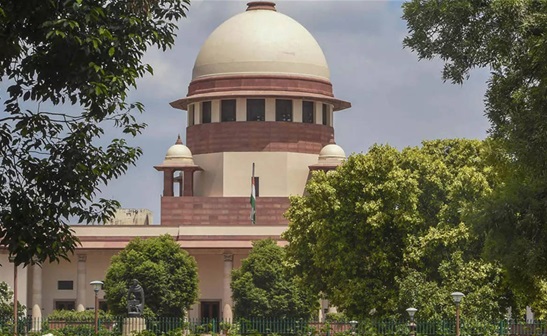
Supreme Court Issues Advisory on the Constitutional Powers of Governors

Prelims: (Polity + CA)
Mains: (GS 2 – Governance, Constitution)

Why in the News?

The Supreme Court has delivered a major advisory opinion under Article 143 in response to a Presidential reference. The reference was triggered after the Supreme Court’s April 2025 judgment in State of Tamil Nadu vs. Governor of Tamil Nadu, which dealt with delays in granting assent to State Bills. The advisory clarifies the scope of the Governor’s powers, justiciability of delays, and limits on judicial timelines regarding assent procedures.
Background to the Presidential Reference

The reference stemmed from controversies created by the Supreme Court’s April 2025 ruling, which:

  • Mandated a three-month timeline for Governors/President to act on Bills,
  • Declared such delays judicially reviewable,
  • Used Article 142 to grant “deemed assentto several pending Tamil Nadu Bills.

This created constitutional uncertainty and raised three major questions:

  1. Can courts impose timelines for assent?
  2. Can Presidential/Governor inaction be judicially reviewed?
  3. Can Article 142 override constitutional procedures?

The Union Government therefore invoked Article 143 seeking clarity.

Scope of Questions Before the Constitution Bench

The Presidential reference placed 14 constitutional questions before the Supreme Court, dealing with:

  • Interpretation of Articles 200 and 201 (assent procedures),
  • Whether courts can intervene before a Bill becomes law,
  • Extent of judicial review over Governor/President’s delays,
  • Boundaries of Article 142 powers.

These issues are fundamental to India’s federal structure, legislative functioning, and Centre–State relations.

Key Takeaways From the Supreme Court’s Advisory Opinion

The five-judge Bench provided a comprehensive clarification of the constitutional design regarding State Bills.

1. Governor’s Options Under Article 200

The Court reaffirmed that a Governor has three constitutionally recognised choices:

  1. Assent to the Bill,
  2. Reserve the Bill for Presidential consideration,
  3. Withhold assent and return the Bill with observations (except Money Bills).

No other options — including judicially created ones like “deemed assent” — are permissible.

2. Discretion of the Governor

  • The Court held that the Governor does have discretion in matters of assent.
  • The Governor is not bound by the advice of the Council of Ministers in choosing among the three options.

This marks a major departure from the logic of earlier landmark rulings such as:

  • Shamsher Singh (1974)
  • Nabam Rebia (2016)

which stressed the primacy of ministerial advice.

3. Limited Justiciability

  • Governor’s actions under Article 200 are generally not subject to judicial review.
  • However, the Court added a narrow exception:
    • In cases of “prolonged, unexplained inaction”, courts may issue a limited mandamus directing the Governor to act, but cannot dictate the outcome.

This preserves judicial oversight without intruding into executive discretion.

4. No Judicial Timelines

The Court set aside the April 2025 ruling that prescribed a three-month limit.

  • If the Constitution is silent, courts cannot invent timelines.
  • The judiciary cannot create procedural rules that substitute the constitutional design.

5. No Use of Article 142 to Create ‘Deemed Assent’

  • The Court rejected the idea of “deemed assentcreated by judicial order.
  • Assent is a constitutional executive function that cannot be performed by the judiciary.

This marks a clear boundary on Article 142.

Issues Arising from the Opinion

1. Legislative Intent May Be Undermined

  • The judgment expands Governor’s discretion, potentially enabling obstruction of State legislative agendas.
  • This contradicts:
    • Sarkaria Commission (1987)recommended reserving Bills only in rare cases.
    • Earlier Supreme Court precedents requiring Governors to follow ministerial advice.

2. Absence of Timelines Can Enable Delays

  • The Punchhi Commission (2010) recommended a six-month limit.
  • Courts previously used purposive interpretation to create timelines in other contexts (e.g., K.M. Singh on Speakers’ disqualification decisions).
  • Critics argue that timelines are essential to prevent constitutional paralysis.

3. Federal Concerns

  • Over-expansion of the Governor’s discretion risks upsetting the balance of power between elected State governments and the Union.

Significance of the Advisory Opinion

Clarifies Constitutional Boundaries

  • Provides long-awaited clarity on Articles 200 and 201.

Defines the Limits of Judicial Intervention

  • Strengthens separation of powers.

Reconfigures Centre–State Dynamics

  • Expands the Governor’s functional autonomy, impacting federal relations.

Rejects Judicial Overreach

  • Reinforces that courts cannot assume executive functions.

Guides Future Constitutional Practice

  • Sets a precedent for how delays and assent procedures should be handled.

Challenges Ahead

  • Risk of political misuse of gubernatorial powers.
  • Increased potential for legislative deadlock in politically sensitive States.
  • Ambiguity remains regarding what constitutesunexplained delay.”
  • Greater friction between State governments and Governors may arise.

Way Forward

  • Governors must exercise discretion with constitutional morality and responsible urgency.
  • The Union Government must ensure that the Governor’s office is not used to impede elected State governments.
  • Judicial oversight should remain a safety valve, preventing constitutional breakdown without intruding into executive authority.
  • Parliament may consider codifying timelines for assent to maintain democratic functioning.

FAQs

1. What triggered the Presidential reference under Article 143?

A 2025 Supreme Court judgment that introduced timelines and “deemed assent,” creating constitutional uncertainties.

2. What powers does the Governor have under Article 200?

Three: assent, reserve for the President, or return the Bill.

3. Can courts impose timelines for assent?

No. The Court clarified that judiciary cannot create timelines where the Constitution is silent.

4. Can courts review delays by the Governor?

Only in rare cases of prolonged, unexplained inaction, and even then only to direct the Governor to act, not decide.

5. Can Article 142 be used to grant “deemed assent”?

No. Assent is an executive function and cannot be substituted by a judicial decree.

Lachit Borphukan: Celebrating the Legacy of Assam’s Iconic Warrior

Prelims: (Indian History + CA)
Mains: (GS 1 – Indian Heritage & Culture, History)

Why in the News ?

On the occasion of Lachit Diwas, the Prime Minister paid homage to Lachit Borphukan, honouring him as a timeless symbol of courage, leadership, patriotism, and military excellence.
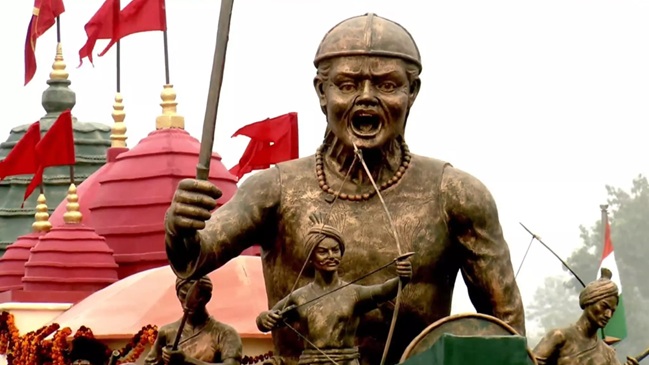
Early Life of Lachit Borphukan

  • Born: 24 November 1622, at Charaideo, the first capital of the Ahom Kingdom in Assam.
  • He was the youngest son of Momai Tamuli Borbarua, a distinguished military and administrative officer under Ahom King Pratap Singha.
  • From a young age, he received training in:
    • Administration
    • Military warfare
    • Diplomatic strategy
    • Scriptures and statecraft

Growing up during continuous Ahom–Mughal conflicts, he developed a strong strategic mindset.

Rise to Leadership

  • His talents led to his appointment as the Borphukan (Commander-in-Chief) of the Ahom forces.
  • His primary mission was to reclaim areas of Assam lost to Mughal occupation, especially after the Mir Jumla invasion.

Battle of Saraighat (1671)

The Battle of Saraighat, fought on the Brahmaputra River, remains one of India’s most celebrated military victories.

Key Aspects

  • The Mughal army, led by Raja Ram Singh I, launched a large-scale campaign to conquer Assam.
  • Lachit Borphukan countered them using:
    • Guerrilla tactics
    • Riverine naval warfare
    • Defensive fortifications
  • Strategic mobility aided by local terrain knowledge

Outcome

  • Lachit’s leadership ensured a decisive Ahom victory, forcing the Mughal forces to retreat.
  • The victory:
    • Prevented Mughal expansion into Northeast India,
    • Preserved Assamese sovereignty,
    • Marked one of the greatest naval engagements in Indian history.

Legacy and Recognition

End of an Era

  • Lachit Borphukan passed away in 1672, shortly after his greatest victory.
  • A memorial known as Lachit Maidan stands near Jorhat to honour him.

National Recognition

  • Lachit Diwas is observed on 24 November annually.
  • The prestigious Lachit Borphukan Gold Medal at the National Defence Academy (NDA) is awarded to the best cadet in “leadership and excellence”.

Symbol of Inspiration

Lachit Borphukan is remembered for:

  • Unmatched bravery
  • Remarkable military strategy
  • Dedication to his motherland
  • Defence of cultural and political identity

He remains an enduring figure of national pride.

Significance of Lachit Borphukan 

  • Highlights regional resistance to imperial expansion in medieval India.
  • Demonstrates indigenous models of naval warfare and asymmetric strategy.
  • Crucial for understanding Ahom administrative and military structures.
  • Represents India's long tradition of defence leadership and patriotism.

FAQs

1. Who was Lachit Borphukan?

An Ahom general and Commander-in-Chief who led the resistance against the Mughal invasion during the Battle of Saraighat.

2. Why is the Battle of Saraighat important?

It halted Mughal expansion into the Northeast and showcased exemplary river-based military strategy.

3. When is Lachit Diwas celebrated?

Every year on 24 November.

4. What award is named after him?

The Lachit Borphukan Gold Medal at the NDA.

5. Where was Lachit Borphukan born?

At Charaideo, Assam.

Dubai Air Show and Tejas Fighter Jet

(Prelims: Current Affairs)

During the Dubai Air Show, the Indian Air Force's (IAF) indigenous fighter jet, the Tejas, crashed during an aerial display. The pilot was killed. This incident has shocked both the country and the Air Force. A safety review of the Tejas aircraft is also being felt.
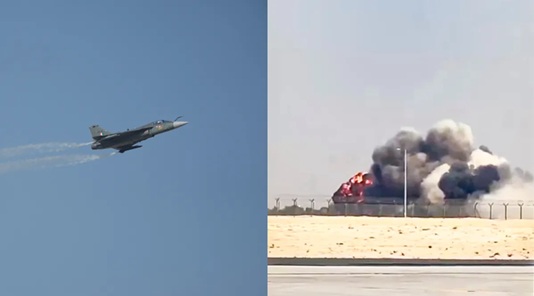
About the Tejas Fighter Jet

  • Tejas is India's indigenously developed Light Combat Aircraft (LCA), jointly developed by HAL and the Aeronautical Development Agency (ADA).
  • It is a state-of-the-art, lightweight, multi-role fighter aircraft of the Indian Air Force, and this is only the second accident in its 24 years, highlighting its excellent safety record.

Key Features

  • Multi-role fighter jet: Capable of air-to-air and air-to-ground missions
  • State-of-the-art avionics: Glass cockpit, digital fly-by-wire system
  • High maneuverability: Low weight and aerodynamic design
  • Advanced weapon systems: BVR missiles, laser-guided bombs, 23mm cannon
  • Indigenous technology: Use of over 60% indigenous components
  • Excellent safety record: Only two accidents in 24 years
  • Commendable performance at air shows: Its capabilities recognized internationally

Impact of the accident

  • Technical and operational investigation: This accident will lead to a detailed investigation into the Tejas jet's flight safety, display rules, and mission planning. However, initial reports suggest that it is not a technical malfunction, but rather appears to be related to a high-speed and low-altitude error during a flight maneuver (barrel roll).
  • Impact on International Image: Tejas is an aircraft with export potential in the international market. The accident may temporarily impact its safety assessment in some countries. However, its strong record will maintain its reliability.
  • Impact on Air Force Morale: The loss of a pilot is a significant loss for the Air Force. Such incidents impact morale but also motivate scrutiny and safety improvements.
  • Impact on Future Air Show Performances: The height, speed limit, and flight patterns of aerobatic displays at international air shows will now be more strictly prescribed.
  • Impact on the Tejas Program: This accident will not impact the program as India's strategic and long-term focus remains on the Tejas project. However, safety audits and demo flight protocols will be improved.

G20: A New Direction for India-Australia Relations

(Prelims: Contemporary International Events)

Prime Minister Narendra Modi and Australian Prime Minister Anthony Albanese held an important bilateral meeting on the sidelines of the G20 Summit 2025 in Johannesburg, South Africa. The two leaders reviewed the significant progress made in bilateral relations over the past five years.
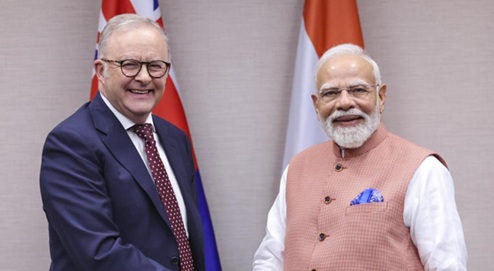

About G20 Summit 2025

  • This is the first time the G20 Summit has been held on the African continent.
  • The theme of this summit, chaired by South Africa, was 'Solidarity, Equality, Sustainability'.
  • G20 member countries account for approximately 85% of global GDP and 75% of world trade.
  • Prime Minister Modi is highlighting issues related to India and the Global South at this meeting, held between November 21–23.

India-Australia Bilateral Meeting

  • During their meeting in Johannesburg, the two leaders expressed satisfaction with the growing strategic partnership between India and Australia.
  • ​​Cooperation has deepened in several areas since the relationship was elevated to a Comprehensive Strategic Partnership (CSP) in 2020.
  • PM Albanese expressed condolences on the recent terrorist incidents in India and emphasized the need to enhance cooperation in the global fight against terrorism.
  • Both leaders expressed a desire to further strengthen ties in defense, energy, trade, education, technology, and people-to-people ties.

Key Outcomes

  1. Boosting Defense and Security Cooperation
    • Both countries emphasized enhancing defense cooperation for security and stability in the Indo-Pacific region.
    • Maritime Security
    • Joint Military Exercises
    • High-Tech Defense Partnership
  2. New Dialogue in the Energy and Nuclear Sector
    • Prime Minister Modi stated that nuclear energy and the clean energy transition could become key areas of India-Australia partnership.
  3. Expanding Trade and Investment
    • Cooperation on Critical Minerals
    • Technological Investment
    • Agreement to Reduce Trade Barriers
  4. Education, Mobility, and Cultural Relations
    • Discussion on Facilitating the Movement of Students and Professionals
    • Agreement on Expanding Cooperation in the Cultural and Tourism Sectors
  5. Joint Commitment to Combat Terrorism
    • The Australian Prime Minister expressed deep condolences on the recent terrorist attacks in India, and both leaders reiterated the need to strengthen global counter-terrorism efforts.
  6.  High-Level Meetings Add Momentum
    • Both leaders acknowledged that regular high-level dialogues over the past year have provided unprecedented momentum to bilateral relations.

India–Bhutan Collaboration Advances Dorjilung Mega Hydropower Project

Prelims: (International Relations, Geography)
Mains: (GS 2 – International Relations; GS 3 – Infrastructure, Security)

Why in the News?

Tata Power Company Ltd has signed commercial agreements with Druk Green Power Corporation Ltd (DGPC) for jointly developing the 1,125 MW Dorjilung Hydroelectric Power Project in eastern Bhutan. This agreement marks one of the largest India–Bhutan hydropower collaborations and strengthens regional clean-energy cooperation.
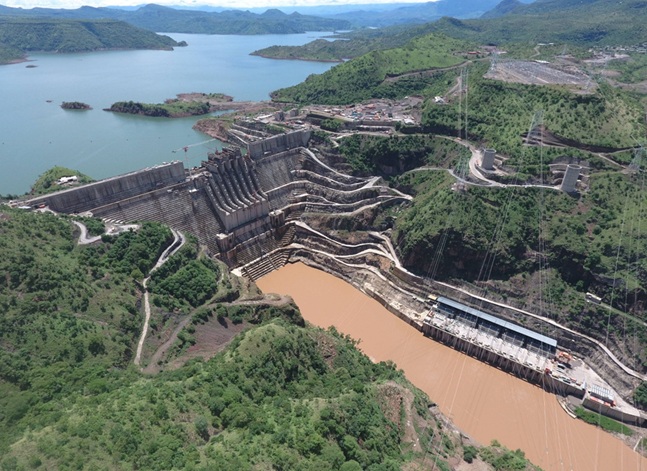
About Dorjilung Hydroelectric Power Project

Location & Type

  • A planned 1,125 MW run-of-river hydropower project.
  • Situated in Lhuentse and Mongar districts of eastern Bhutan.
  • Located on the Kurichhu River, a tributary of the Drangmechhu, which eventually flows into India.

Technical Features

  • A 139.5 m high concrete-gravity dam.
  • Designed to channel ~287 m³/s of water.
  • Water is diverted through a 15 km headrace tunnel to an underground powerhouse.
  • Powerhouse will host six Francis turbines.
  • Annual generation capacity: ~4.5 TWh.

Project Scale & Cost

  • Total cost estimated at ₹13,100 crore.
  • Will be Bhutan’s second-largest hydropower project.
  • Also the largest Public–Private Partnership (PPP) hydropower project ever undertaken in Bhutan.

Institutional Framework

  • Financed by the World Bank.
  • November 2024: DGPC signed an MoU with Tata Power for joint development.
  • Implementation via a Special Purpose Vehicle (SPV):
    • DGPC – 60% equity
    • Tata Power – 40% equity

Timeline

  • Expected commissioning: Early 2032.

Significance of the Project

Strengthening India–Bhutan Energy Partnership

  • Enhances long-standing hydropower cooperation between the two countries.
  • Supports regional clean energy stability and cross-border electricity trade.

Boost to Bhutan’s Economy

  • Hydropower is Bhutan’s largest revenue source; Dorjilung will significantly expand export capacity.
  • Creates jobs and stimulates infrastructure growth in eastern Bhutan.

Clean Energy Transition

  • Supports low-carbon power generation in the Himalayan region.
  • Contributes to India’s renewable energy commitments by enabling future power imports.

Strategic Value

  • Reinforces India’s role as Bhutan’s key development partner.
  • Counters external geopolitical influence in Bhutan’s energy sector.

Challenges

  • High construction complexity in rugged Himalayan terrain.
  • Climate-related risks such as glacial melt and sediment load.
  • Large capital requirement and need for timely funding disbursement.
  • Ensuring environmental safeguards and community engagement.

Way Forward

  • Strengthen India–Bhutan institutional coordination for smooth project execution.
  • Ensure transparent environmental and social assessments.
  • Improve regional transmission infrastructure for future power export.
  • Incorporate climate-resilient engineering practices.

FAQs

1. Where is the Dorjilung Hydropower Project located?

In the Lhuentse and Mongar districts of eastern Bhutan on the Kurichhu River.

2. Who is developing the project?

DGPC and Tata Power through an SPV, with 60:40 equity sharing.

3. What is the project capacity?

1,125 MW, generating approximately 4.5 TWh annually.

4. When will the project be commissioned?

By early 2032.

5. Why is the project significant?

It enhances India–Bhutan energy cooperation, expands Bhutan’s revenue base, and boosts clean energy capacity.

HMDA Introduces Advanced Bioremediation to Restore Hussain Sagar Lake

Prelims: (Environment + CA)
Mains: (GS 3 – Environment)

Why in the News?

To address the recurring issues of algal blooms, foul odour, and deteriorating water quality in Hyderabad’s Hussain Sagar Lake, the Hyderabad Metropolitan Development Authority (HMDA) has proposed an advanced bioremediation process.

The restoration strategy includes the use of enzyme-based solutions and biochar Bokashi balls to naturally clean the lake and accelerate microbial decomposition of pollutants.
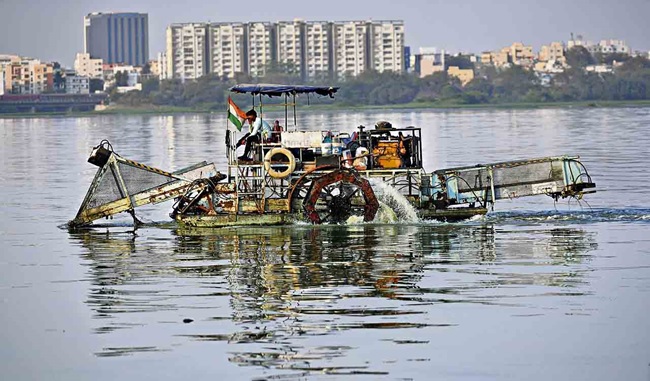
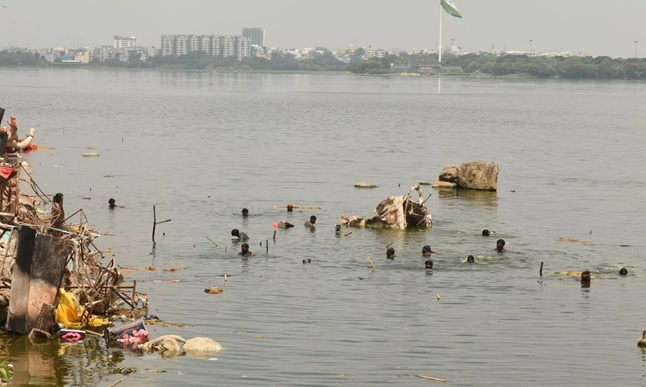
foul-odour

About Hussain Sagar Lake

Location & Background

  • A historic artificial lake situated in Hyderabad, Telangana.
  • Commonly referred to as Tank Bund.
  • Lies on a tributary of the River Musi.

Key Features

  • Covers 5.7 sq. km, making it one of Asia’s largest man-made lakes.
  • Recognised as the largest heart-shaped mark among 78 heart-shaped lakes and 9 such islands across the world.
  • Constructed in 1562 during the reign of Ibrahim Quli Qutb Shah by Hussain Shah Wali.

Cultural & Urban Significance

  • Famous for the massive monolithic Buddha statue installed at the lake’s centre.
  • Historically important for connecting the twin cities of Hyderabad and Secunderabad.
  • Served as a major source of drinking water and irrigation until 1930.

Pollution Concerns

  • Over the years, the lake has been severely polluted due to:
    • Untreated sewage inflow
    • Industrial effluents
    • Discharge through surrounding nalas
  • This has led to:
    • High organic load
    • Frequent algal blooms
    • Decline in dissolved oxygen
    • Persistent foul smell

Hussain-Sagar-Lake

HMDA’s New Bioremediation Initiative

Enzyme-Based Treatment

  • Enzyme solutions accelerate the natural breakdown of organic waste.
  • Help reduce sludge, improve water clarity, and suppress algal growth.

Biochar-Based Bokashi Balls

  • A mixture of biochar, beneficial microbes, and organic nutrient material.
  • When released into the lake, these balls:
    • Enhance microbial activity
    • Break down pollutants
    • Reduce foul odour
    • Restore ecological balance

Expected Impact

  • Reduction in algal blooms and eutrophication
  • Improved dissolved oxygen and overall water quality
  • Long-term ecological restoration of the lake
  • Lower foul odour around urban neighbourhoods

Significance of the Move

  • Strengthens urban lake conservation efforts in India.
  • Promotes nature-based solutions for water pollution.
  • Supports sustainable tourism around Tank Bund.
  • Revives an important historic and cultural landmark.

Challenges

  • Continuous inflow of untreated sewage remains a major barrier.
  • Need for strict monitoring to prevent industrial discharge.
  • Urban population density increases pollution pressure.
  • Long-term success depends on source reduction, not just treatment.

Way Forward

  • Strengthen sewerage systems to stop untreated inflows.
  • Implement stricter regulatory checks on industries.
  • Promote community involvement in lake protection.
  • Expand bioremediation to feeder nalas.
  • Develop a long-term integrated lake management plan.

FAQs

1. What is the purpose of the new bioremediation initiative?

To reduce pollution, algal blooms, and odour using enzyme solutions and biochar-based Bokashi balls.

2. Who is implementing the project?

The Hyderabad Metropolitan Development Authority (HMDA).

3. Why is Hussain Sagar polluted?

Due to inflow of untreated sewage, industrial waste, and runoff through surrounding nalas.

4. What is special about the lake?

It is one of Asia’s largest man-made lakes and features the iconic monolithic Buddha statue.

5. What UPSC topics is this linked to?

Prelims – Lakes, Environment;
Mains GS-3 – Pollution, Urban Environment, Conservation.

India–Australia Maritime Partnership Strengthens Through AUSINDEX 2025

Prelims: (Defence Exercises, International Relations + CA)
Mains: (GS 2 - International Relations, GS-3: Security)

Why in News?

The Indian Naval Ship INS Sahyadri recently participated in AUSINDEX 2025, held in the Northern Pacific region. The exercise forms a key component of India–Australia defence cooperation and aims to boost interoperability between the two navies.
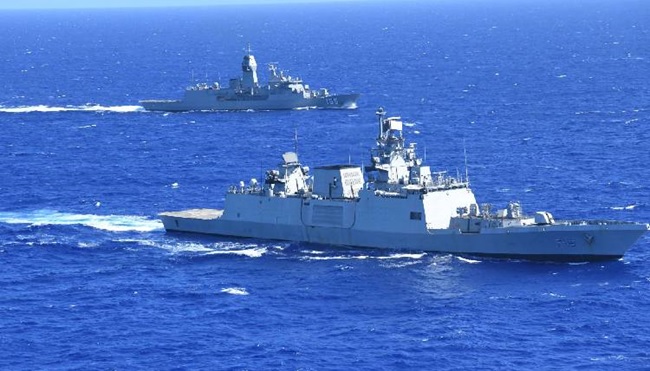
Indian-Naval-Ship-INS-Sahyadri

About Exercise AUSINDEX

Overview

  • AUSINDEX is a bilateral maritime exercise conducted between the Indian Navy and the Royal Australian Navy.
  • It is a biennial (every two years) exercise, first held in 2015.
  • It focuses on strengthening the India–Australia strategic and security partnership in the Indo-Pacific.

Aim

  • To enhance interoperability,
  • Deepen maritime domain cooperation,
  • Improve coordination in air, surface, and subsurface operations.

Key Highlights of AUSINDEX 2025

  • Warships and aircraft from both navies conducted complex joint operations, including:
    • Anti-submarine warfare drills
    • Gunnery exercises
    • Advanced flying operations
    • Surface tracking and manoeuvre exercises
  • The participating platforms included:
    • INS Sahyadri (Indian Navy)
    • HMAS Ballarat (Royal Australian Navy)

These drills strengthen operational synergy for real-world contingencies in the Indo-Pacific.
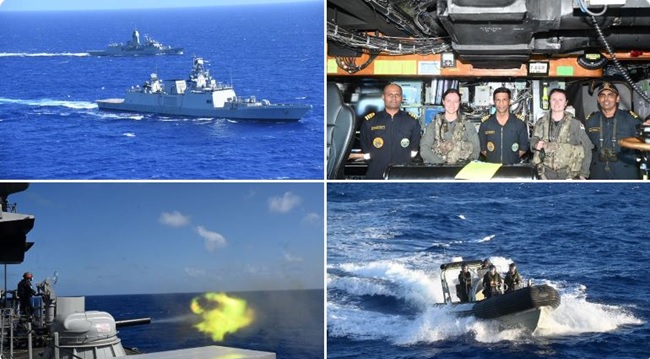
INS-Sahyadri

Significance of AUSINDEX

Enhances India–Australia Strategic Ties

  • Reinforces cooperation under the Comprehensive Strategic Partnership (CSP).
  • Supports both nations’ commitment to a free, open, and rules-based Indo-Pacific.

Strengthens Maritime Security

  • Enhances preparedness against maritime challenges such as:
    • Submarine threats
    • Illegal fishing
    • Maritime terrorism
    • Freedom of navigation issues

Improves Warfighting Readiness

  • Interoperability in multi-domain operations improves:
    • Tactical coordination
    • Information sharing
    • Maritime domain awareness

Supports Broader Multilateral Frameworks

  • Complements other platforms like:
    • Quad
    • Malabar Exercise
    • Indian Ocean Region (IOR) collaborations

Challenges

Operational and Logistical Complexities

  • Conducting exercises in remote regions like the Northern Pacific requires:
    • Long-range deployments
    • Multi-layer coordination
    • High resource allocation

Security Dynamics in the Indo-Pacific

  • Increasing geostrategic competition, especially involving:
    • China
    • US alliance systems
    • AUKUS developments

creates a complex security backdrop.

Technology Interoperability Limitations

  • Differences in naval platforms, data systems, and communication protocols still require harmonisation.

Way Forward

Enhance Frequency & Scope of Exercises

  • Expand AUSINDEX to include more advanced operations such as:
    • Underwater autonomous systems
    • Joint ISR operations
    • Carrier/air combat integration

Strengthen Indo-Pacific Coalition Building

  • Deepen synergy with Quad partners for secure maritime commons.

Boost Defence Industrial Collaboration

  • Promote co-development in:
    • Maritime surveillance systems
    • ASW technologies
    • Naval drones

Expand Maritime Domain Awareness (MDA) Sharing

  • Real-time intelligence exchange can improve regional maritime security.

Other Defence Exercises Between India & Australia

Exercise

Domain

Nature

AUSTRA HIND

Army

Bilateral

Pitch Black

Air Force

Multilateral (hosted by Australia)

Malabar

Navy

Multilateral (India, Australia, US, Japan)

Quad Naval Cooperation

Navy

Multilateral

FAQs

1. What is AUSINDEX?

A bilateral naval exercise between India and Australia, conducted biennially since 2015.

2. What is the purpose of AUSINDEX 2025?

To enhance interoperability and strengthen maritime cooperation through anti-submarine warfare, gunnery, and flying operations.

3. Which ships participated in AUSINDEX 2025?

INS Sahyadri (India) and HMAS Ballarat (Australia).

4. Why is India–Australia naval cooperation significant?

Both countries are key partners in maintaining stability, security, and freedom of navigation in the Indo-Pacific region.

5. What other exercises do India and Australia conduct together?

AUSTRA HIND, Pitch Black, Malabar, and Quad naval engagements.

« »
  • SUN
  • MON
  • TUE
  • WED
  • THU
  • FRI
  • SAT
Have any Query?

Our support team will be happy to assist you!

OR