New
GS Foundation (P+M) - Delhi : 05th Jan., 2026 Winter Sale offer UPTO 75% + 10% Off, Valid Till : 5th Dec., 2025 GS Foundation (P+M) - Prayagraj : 15th Dec., 11:00 AM Winter Sale offer UPTO 75% + 10% Off, Valid Till : 5th Dec., 2025 GS Foundation (P+M) - Delhi : 05th Jan., 2026 GS Foundation (P+M) - Prayagraj : 15th Dec., 11:00 AM

Current Affairs for 29 November 2025

India Strengthens Momentum in Quantum Science & Indigenous Cryogenic Technology

Prelims: (Science & Technology + CA)
Mains: (GS 3 – Science & Technology)

Why in the News ?

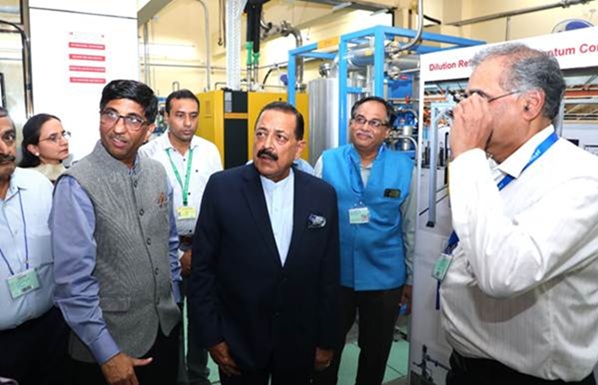
The Union Minister of Science & Technology visited the Quantum Research Laboratories at IIT Bombay and inaugurated the institute’s Liquid Helium Facility, marking a major advancement in India’s quantum technology, cryogenics, and high-precision materials research ecosystem.
Recent Milestones in India’s Quantum R&D

Liquid Helium Facility

  • Establishes the base for indigenous dilution refrigeration units, essential for ultra-low-temperature quantum computing.
  • Strengthens India’s capabilities in cryogenics, superconductivity, photonics, quantum computing, sensing, advanced materials, and technologies for green energy and healthcare (e.g., MRI).
  • Quantum computers operate at extremely low temperatures (below –272°C), and the ability to produce Liquid Helium indigenously marks a leap toward self-reliant quantum hardware development.
  • Helium liquefies at –268.93°C, enabling superconductivity, superfluidity, and other quantum phenomena required for next-generation computing.

QMagPI – India’s First Portable Magnetometer

  • QMagPI measures ultra-low magnetic fields in nanotesla (nT).
  • Has applications in defence, geophysics, mineral exploration, space sciences, and high-precision research.
  • Places India among the select few nations with indigenous portable magnetometer technology.

Quantum Diamond Microscope (QDM)

  • India’s first indigenous QDM, developed by IIT Bombay.
  • Enables nanoscale, 3D magnetic field imaging.
  • Integrated with AI/ML, it supports:
    • Neuroscience research
    • Material sciences
    • Advanced semiconductor testing
  • Enhances India's long-term technological leadership in quantum-grade imaging systems.

Q-Confocal System

  • A homegrown confocal microscope designed to detect intracellular processes such as Reactive Oxygen Species (ROS).
  • Helps support early-stage cancer diagnostics and cellular-level biomedical research.
  • Confocal microscopes use a pinhole optical system to filter out-of-focus light, producing high-resolution and high-contrast images.

Understanding Quantum Technology

About

Quantum Technology harnesses the principles of quantum mechanics—superposition, entanglement, tunneling, coherence—to perform tasks classical devices cannot execute efficiently.

Core Quantum Principles

  • Superposition: Quantum particles may exist in multiple states simultaneously until measured.
  • Entanglement: Linked particles remain interconnected; the state of one instantly affects the other.
  • Tunneling & Coherence: Enables particles to pass through barriers and maintain stable quantum states required for computing and sensing.

Classical vs Quantum Computing

  • Classical computers: Operate on bits = 0 or 1.
  • Quantum computers: Use qubits that follow probabilistic behavior and can exist as 0, 1, or both simultaneously → enabling exponentially faster computation for certain tasks.

Applications of Quantum Technology

  • Pharmaceuticals: Simulates molecular structures, accelerating drug discovery for complex diseases (e.g., Alzheimer’s, Parkinson’s).
  • Disaster Management: Enhances modeling of tsunamis, droughts, earthquakes, floods and improves climate data processing.
  • Secure Communication: Basis for quantum-safe satellites and communication networks; enables ultra-secure military and cyber systems.
  • Quantum Cryptography: Provides unbreakable encryption, vital for financial institutions, government security, and future-proofing data.

National Quantum Mission (NQM)

  • A flagship initiative (2023–24 to 2030–31) under the Ministry of Science & Technology.
  • Supports ecosystem building in quantum computing, quantum materials, quantum communication, sensing, and metrology.
  • Aims to elevate India as a global leader in quantum technologies through indigenous innovation and advanced R&D.

FAQs

1. What was recently inaugurated at IIT Bombay ?

The Liquid Helium Facility, a key component for indigenous quantum hardware development.

2. Why is Liquid Helium important for quantum technology ?

It enables ultra-low temperatures necessary for superconductivity and quantum computing.

3. What is QMagPI?India’s first portable magnetometer capable of measuring extremely low magnetic fields.

4. What is special about the Quantum Diamond Microscope ?

It provides 3D nanoscale imaging of magnetic fields and supports advanced chip testing and neuroscience.

5. What does the National Quantum Mission aim to achieve ?

To develop indigenous capabilities across quantum computing, communication, sensing, and materials.

Tewary Commission Findings Revive Debate on the 1983 Nellie Tragedy

Prelims: (Indian Polity + CA)
Mains: (GS 2 – Governance, Constitution; GS 2 – India & Neighbourhood)

Why in the News ?

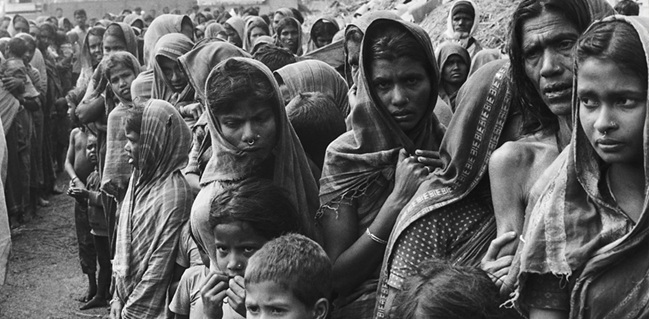
The recently released Tewary Commission Report on the 1983 Nellie Massacre has revived national debate on the Assam Agitation and the administrative lapses that allowed one of India’s worst episodes of ethnic violence to unfold. The report states that the massacre was “avoidable” and that ignored intelligence warnings, delayed preventive measures, and weak coordination between civil and police authorities led to the scale of the tragedy.
What Was the Nellie Massacre? — A Brief Context

About

  • The Nellie Massacre occurred on 18 February 1983, during the peak of the Assam Movement.
  • Violence took place in and around Nellie, Morigaon district, targeting primarily Bengali-origin Muslim communities.
  • Official estimates recorded over 2,000 deaths, though unofficial counts place the toll significantly higher.
  • The massacre occurred during elections boycotted by movement leaders, who saw the polls as legitimising “illegal voters.”

Assam Agitation (Assam Movement): Background & Drivers

About

  • A socio-political movement spanning 1979–1985, centred on fears of:
    • Demographic change in Assam
    • Loss of indigenous identity
    • Political marginalisation due to alleged large-scale migration from Bangladesh
  • Led by the All Assam Students’ Union (AASU) and All Assam Gana Sangram Parishad (AAGSP).

Core Demands – The “Three Ds”

  • Detect illegal immigrants who entered after 1951
  • Delete their names from electoral rolls
  • Deport them from India

Key Concerns Fueling the Movement

  • Sharp rise in population in several districts bordering Bangladesh
  • Perception that illegal immigration affected land ownership, employment opportunities, and political representation
  • Fear that Assamese language and culture were being diluted

Tewary Commission’s Key Findings

1. Tragedy Was Preventable

  • The report notes that authorities had credible intelligence about rising tensions in the region before the massacre.
  • Multiple warnings were ignored or insufficiently acted upon.

2. Administrative Failure

  • Poor coordination between district administration and police forces
  • Inadequate deployment of security personnel despite warning signs
  • Slow response once violence began

3. Lack of Timely Intervention

  • The Commission highlights that preventive arrests, area domination, and communication with community leaders could have reduced tensions.

4. Failure in Protecting Vulnerable Groups

  • Populations known to be at higher risk did not receive adequate protection or evacuation support.

Outcome of the Assam Movement: The Assam Accord (1985)

About

  • Signed on 15 August 1985 by the Central Government, Government of Assam, and leaders of AASU–AAGSP.
  • It provided a framework to resolve concerns over migration and safeguard Assamese identity.

Major Provisions of the Assam Accord

1. Cut-off Date for Identifying Illegal Immigrants

  • 25 March 1971 fixed as the legal cut-off date for detection and expulsion of foreigners — linked to the start of the Bangladesh Liberation War.

2. Citizenship Provisions

  • Entry between 1 January 1966 and 24 March 1971:
    • Persons to be identified as foreigners
    • Names removed from voter lists for 10 years
    • Citizenship and voting rights restored after this period
  • Entry on or after 25 March 1971:
    • Classified as illegal migrants
    • To be detected and deported

3. Constitutional, Legislative & Administrative Safeguards

  • Protection of Assamese cultural and linguistic identity
  • Steps to promote Assamese language
  • Economic development initiatives for indigenous communities

Significance of the Tewary Commission Report Today

  • Reopens conversations on accountability and justice, as no major convictions followed the massacre.
  • Highlights the need for stronger early-warning and conflict-prevention systems.
  • Brings renewed focus on the unfinished agenda of the Assam Accord, including detection and deportation mechanisms.
  • Raises concerns about citizenship, migration, and the impact on community relations—relevant amid ongoing debates on NRC and CAA.

FAQs

1. Why is the Nellie Massacre back in public discussion now ?

Because the Assam government has released the Tewary Commission Report, which had remained largely inaccessible for decades.

2. What did the Tewary Commission conclude ?

The massacre was avoidable, and administrative lapses, ignored intelligence, and poor coordination worsened the situation.

3. What sparked the Assam Agitation ?

 Fears over illegal immigration, changing demographics, and the perceived threat to Assamese identity.

4. What is the legal cut-off date under the Assam Accord ?

25 March 1971 for identifying illegal immigrants.

5. What happened to those who entered between 1966 and 1971 ?

They were detected as foreigners, barred from voting for 10 years, and later given full citizenship rights.

Govt Pushes UNESCO Nomination for Sirpur: Major Conservation & Tourism Revamp Announced

Prelims: (History + CA)
Mains: (GS 1 – Indian Heritage & Culture; GS 2 – Governance; GS 3 – Biodiversity)

Why in the News ?

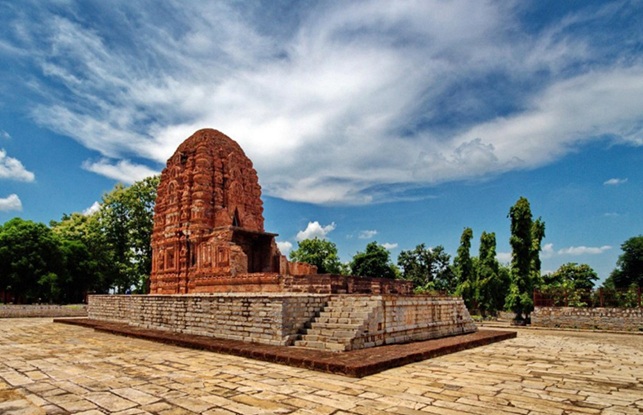
Sirpur, an ancient 5th–12th century archaeological complex in Chhattisgarh, is undergoing a major restoration push as the Government advances its bid for UNESCO World Heritage Site status. A recent joint inspection by the Archaeological Survey of India (ASI) and the Sirpur Special Area Development Authority (SADA) marks a significant step toward formal nomination.

Located along the Mahanadi River, about two hours from Raipur, Sirpur houses 34 monuments representing Hindu, Buddhist, and Jain traditions. The government’s new plan includes battery-powered mobility options, digital storytelling systems, and enhanced visitor infrastructure to strengthen its UNESCO credentials.
What is a UNESCO World Heritage Tag ?

  • UNESCO designates sites of “Outstanding Universal Value”—cultural, natural, or mixed—significant to all humanity.
  • The World Heritage Committee evaluates nominations from member nations.
  • Benefits of being listed include:
    • International visibility
    • Tourism boost
    • Funding and technical assistance
    • Stronger preservation requirements
  • Inscription also places obligations on governments to ensure long-term protection, conservation, and sustainable management.
  • Overall, the UNESCO tag enhances global prestige and supports research, heritage protection, and local development.

Historical Significance of Sirpur

A Multi-Religious Urban Centre

  • Known historically as Shripur/Sripura, Sirpur thrived between the 5th and 12th centuries.
  • First documented by Alexander Cunningham in 1882.
  • Excavations (1950s–2000s) uncovered:
    • 22 Shiva temples
    • 5 Vishnu temples
    • 10 Buddhist viharas
    • 3 Jain viharas
  • Served as the capital of Dakshina Kosala under the Panduvanshi and Somavamshi dynasties.
  • Archaeological remains include palaces, marketplaces, stupas, meditation cells, and ancient water systems.

Notable Architectural Marvels

  • Lakshmana Temple (7th century): Among India’s finest brick temples dedicated to Vishnu.
  • Surang Tila: A dramatic high-rise temple complex with 37 steep steps and a panchayatana layout (five-shrine design).
  • Buddhist viharas such as Tivaradeva Mahavihara highlight Sirpur’s prominence as a Buddhist learning centre.

A Riverine Cultural Landscape

  • Situated by the Mahanadi, Sirpur’s ghats, temples, and ancient settlements form a unique cultural-natural heritage landscape.
  • This strengthens its eligibility under UNESCO’s mixed heritage category.

What the Government Plans to Implement

1. Improved Visitor Access & Mobility

  • Presently, tourists spend nearly three hours navigating village paths to cover the monuments.
  • Government aims to reduce this by one hour, introducing:
    • Heritage pathways
    • Paved access routes
    • Eco-friendly battery-operated vehicles

2. Thematic Clustering of Monuments

Sirpur will be developed into four interconnected heritage zones:

  1. Buddhist Monastic Cluster
  2. Hindu Temple Cluster
  3. Civic–Administrative Cluster
  4. Riverine Sacred Landscape

A primary pathway will connect all clusters, with secondary pathways ensuring last-mile access.

3. Land Transfer & Strengthened Site Management

  • ASI has sought 30 hectares of additional state land to unify:
    • Monument surroundings
    • Approach roads
    • Buffer areas
    • Conservation infrastructure
  • Archaeological mounds with high potential will undergo new surveys and excavations to uncover more structures—boosting Sirpur’s UNESCO nomination.

FAQs 

1. Where is Sirpur located ?

In Mahasamund district, Chhattisgarh, along the Mahanadi River.

2. Why is Sirpur historically important ?

It was a multi-religious urban centre (Hindu–Buddhist–Jain) from the 5th–12th century with major temples, viharas, and palace complexes.

3. Why is Sirpur being upgraded now ?

To strengthen its chances of securing UNESCO World Heritage status.

4. Which agencies are involved in the project ?

The ASI and the Sirpur Special Area Development Authority (SADA).

5. What infrastructure upgrades are planned ?

Heritage pathways, digital exhibits, battery-operated carts, and integrated cluster-based site management.

Etalin Hydropower Project: Key Tribal, Ecological & Governance Concerns Resurface

Prelims: (Geography + CA)
Mains: (GS 1 – Geography; GS 2 – Governance; GS 3 – Environment)

Why in the News?

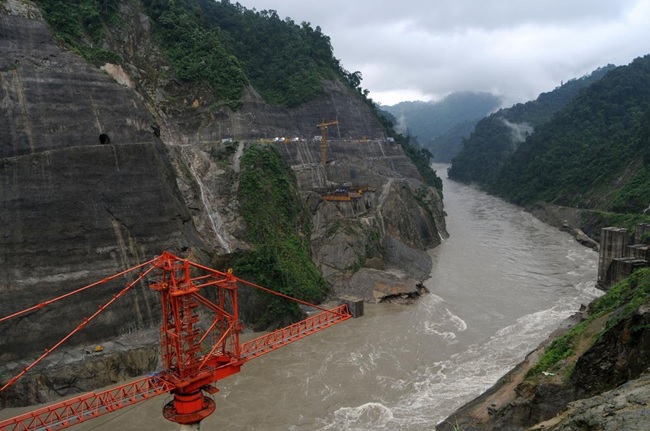
The Project Affected Peoples Forum (PAPF) of Arunachal Pradesh has asked NHPC Ltd to re-employ all local workers previously engaged in the Etalin Hydroelectric Project (EHEP). This follows the Central Government’s recent decision to transfer the project from SJVN Limited to NHPC, reviving local livelihood and rehabilitation concerns.
Etalin-Hydropower-Project

What is the Etalin Hydroelectric Project?

About

  • The Etalin Hydroelectric Project (EHEP) is a proposed 3,097 MW hydropower project in the Dibang Valley, Arunachal Pradesh.
  • It is planned on the Dri and Talo rivers, both tributaries of the Dibang River.
  • It is one of India’s largest proposed hydropower projects in terms of installed capacity.

Design & Technical Features

  • EHEP consists of two run-of-the-river schemes, designed to maximise generation while reducing large reservoir impacts.
  • The project includes two concrete gravity dams.
  • Execution responsibility has been transferred to NHPC Limited.

Ecological Importance of the Region

  • The project site lies in the richest biogeographical province of the Himalayan zone, considered part of a global mega-biodiversity hotspot.
  • The Dibang Valley hosts rare flora and fauna, including several endemic, endangered, and climate-sensitive species.
  • Forest diversion concerns have been raised repeatedly due to the presence of old-growth subtropical and temperate forests.

Socio-Cultural Significance

  • The area is predominantly inhabited by the Idu-Mishmi tribe, one of Arunachal Pradesh’s major indigenous communities.
  • Local groups have consistently highlighted issues of:
    • Livelihood loss
    • Cultural disruption
    • Ecological risks affecting traditional lands
  • Re-employment and adequate local participation remain key demands.

FAQs 

1. Where is the Etalin Hydroelectric Project located?

In Dibang Valley, Arunachal Pradesh, on the Dri and Talo rivers.

2. Who is implementing the project?

NHPC Limited, after the project’s transfer from SJVN.

3. What is the installed capacity of EHEP?

3,097 MW, making it one of India’s largest proposed hydropower projects.

4. What type of hydropower design is proposed?

A combination of two run-of-the-river schemes with two concrete gravity dams.

5. Why is the region ecologically sensitive?

It lies in a Himalayan biodiversity hotspot with rich forests and endemic species.

Sujalam Bharat Summit 2025: National Roadmap for Water Security & Sustainable Management

Prelims: (Environment + CA)
Mains: (GS 2 – Government Policies & Interventions; GS 3 – Environment)

Why in the News?

The Ministry of Jal Shakti will host the Vision for Sujalam Bharat Summit 2025 in New Delhi, aimed at creating a unified, action-oriented framework for national water security and sustainable water governance.

Sujalam-Bharat-Summit-2025

About the Sujalam Bharat Summit 2025

Origin

  • The Summit was initiated in alignment with the Prime Minister’s vision of convening platforms that integrate Central and State officers, including field-level functionaries.
  • It seeks to strengthen cooperation across all administrative levels.

Objective

  • To accelerate water sustainability in India through:
    • Evidence-based policy design
    • Sectoral reforms
    • Cooperative federalism
    • Improved implementation pathways in water resource management

Scope

The Summit focuses on six critical thematic pillars:

  1. Rejuvenation of Rivers & Springs : Wetland restoration, catchment protection, riverine ecosystems, community-led river stewardship.
  2. Greywater Management : Circular water use, pricing reforms, nature-based solutions, septage and wastewater treatment.
  3. Technology-Driven Water Management : AI-enabled monitoring, precision agriculture, micro-irrigation, pipeline leak detection systems.
  4. Water Conservation : Aquifer recharge, revival of traditional water bodies, LiFE-aligned behavioural change for responsible water use.
  5. Sustainable Drinking Water Supply : Climate-resilient infrastructure, source sustainability, community-led operations and maintenance.
  6. Community Engagement : Empowering PRIs, SHGs, and urban/rural local bodies to ensure long-term sustainability of water assets.

National Priorities Identified

The Ministry has synthesized inputs from various stakeholders into five strategic national priorities:

  1. Source Sustainability
  2. Groundwater Recharge Enhancement
  3. Modern & Nature-Based Water Solutions
  4. Strengthened Community Institutions
  5. Inter-Departmental Convergence for Water Security

Significance

  • Adopts a whole-of-government approach, bridging policymakers, experts, and field implementers.
  • Designed to convert national strategies into effective, on-ground action.
  • Aims to accelerate India’s journey toward a Sujalam (clean, water-secure) and Sustainable Bharat, supporting climate resilience and long-term water availability.

FAQs

1. Who is organising the Sujalam Bharat Summit 2025?

The Ministry of Jal Shakti.

2. What is the core aim of the Summit?

To develop a national water security framework through evidence-based policies and cooperative federalism.

3. What are the key thematic areas covered?

River rejuvenation, greywater management, tech-driven water solutions, conservation, drinking water systems, and community engagement.

4. What national priorities were identified?

Source sustainability, groundwater recharge, modern/nature-based solutions, community institutions, and departmental convergence.

5. Why is the Summit significant?

It links policy formulation with implementation, advancing the goal of a Sujalam and Sustainable Bharat.

« »
  • SUN
  • MON
  • TUE
  • WED
  • THU
  • FRI
  • SAT
Have any Query?

Our support team will be happy to assist you!

OR