Prelims: (Social Issues + CA)
Mains: (GS 2: Issues Related to Women, Government Policies & Interventions) |
Why in News ?
The acquittal of the accused in the 2009 Shaheen Malik acid attack case, after a prolonged 16-year legal battle, has reignited concerns over India’s response to acid violence. The case exposed systemic failures in police investigation, prosecution, judicial sensitivity, and survivor rehabilitation, despite the existence of strong laws and Supreme Court directives.
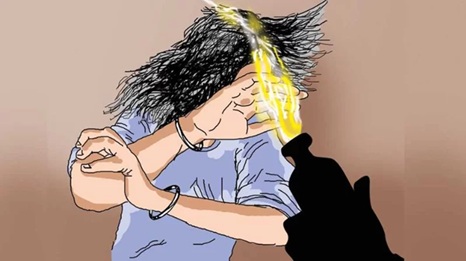
Background and Context: Acid Violence in India
Acid attacks represent one of the most brutal forms of gender-based violence, aimed not merely at harming but at permanently disfiguring, disabling, and socially isolating the victim.
In India, such attacks are deeply embedded in patriarchal notions of control, revenge, and punishment, often linked to rejection of marriage proposals, dowry disputes, or perceived dishonour.
Although India criminalised acid attacks as a distinct offence and introduced victim-centric safeguards following judicial interventions, implementation remains weak, allowing impunity to persist.
What is an Acid Attack ?
Definition: An acid attack involves the intentional throwing or administering of corrosive substances—such as sulphuric, hydrochloric, or nitric acid—causing severe burns, permanent disfigurement, blindness, or disability.
Beyond Physical Harm:
- Long-term psychological trauma
- Social ostracisation and stigma
- Loss of livelihood and economic dependency
- Prolonged legal battles for justice and compensation
The Law Commission of India (226th Report, 2009) recognised acid attacks as crimes causing irreversible physical and psychological damage, calling for special penal provisions and rehabilitation measures.
Scale and Pattern of Acid Attacks in India
- NCRB Data (2023):
- 207 acid attacks reported
- 65 attempted attacks
- Underreporting: Independent estimates suggest ~1,000 attacks annually, due to fear, stigma, and family pressure.
- Worst-Affected States: West Bengal, Uttar Pradesh, Gujarat
- Higher incidence linked to easy availability of acid and weak enforcement.
Victim–Perpetrator Profile:
- Victims: Predominantly women and young girls
- Perpetrators: Mostly men
- Motives: Personal relationship conflicts, dowry disputes, domestic violence
Legal Framework Against Acid Attacks
1. Bharatiya Nyaya Sanhita (BNS), 2023
- Section 124:
- Minimum 10 years imprisonment, extendable to life
- Fine to cover medical expenses
- Attempted Acid Attack: 5–7 years imprisonment
- Mandatory free medical treatment in all hospitals
2. Supreme Court Interventions
- Laxmi vs Union of India (2013):
- Recognised acid attack as a distinct offence
- Minimum compensation of ₹3 lakh
- Regulated acid sale through identity verification
- Parivartan Kendra Case (2015):
- Flagged poor enforcement of acid sale rules
3. Acid Sale Regulation
- Model Poisons Possession and Sale Rules, 2013
- Framed under the Poisons Act, 1919
- States responsible for enforcement
- Implementation remains patchy and ineffective
4. Legal Aid
- NALSA Scheme (2016):
- Priority legal services to acid attack survivors
Judicial Trends and Structural Gaps
- Low Conviction Rates:
- 2023: Only 16 convictions against 703 pending cases
- Delayed Trials:
- Survivors often wait over a decade for verdicts
- Victim-Blaming & Insensitivity:
- Intrusive questioning
- Character assassination in court
The Shaheen Malik case exemplifies how procedural delays erode faith in justice, turning legal pursuit into a second form of victimisation.
Challenges Faced by Survivors
- Weak and delayed police investigations
- Failure to trace source of acid
- Poor forensic evidence collection
- Pressure for out-of-court settlements
- Delayed and inadequate compensation
- Limited psychological and livelihood support
Way Forward: Preventing Acid Attacks and Supporting Survivors
1. Prevention
- Strict regulation or ban on retail acid sale
- Administrative accountability for enforcement
- Learn from Bangladesh, which reduced attacks from 494 (2002) to 13 (2024)
2. Justice Delivery
- Fast-track courts for acid attack cases
- Mandatory gender-sensitisation of judges and prosecutors
- Penalise unreasonable judicial delays
3. Survivor-Centric Rehabilitation
- Time-bound compensation
- Functional disability-based assessment
- Lifelong medical, psychological, and livelihood support
4. Institutional Reforms
- National survivor fund (Justice Verma Committee recommendation)
- Integrated coordination between police, hospitals, courts, and legal services
FAQs
1. Why are acid attacks considered a gender-based crime ?
Because the majority of victims are women and motives are rooted in patriarchal control, rejection, and honour-based violence.
2. What is the punishment for acid attacks under current law ?
Under BNS, a minimum of 10 years imprisonment, extendable to life, along with compensation for medical expenses.
3. Why are conviction rates so low in acid attack cases ?
Due to poor investigation, weak evidence, prolonged trials, and victim intimidation.
4. How does Bangladesh’s model help reduce acid attacks ?
Through strict regulation of acid sale, quick sealing of illegal shops, and awareness campaigns.
5. What is the biggest challenge faced by survivors post-attack ?
Delayed justice and compensation, coupled with lifelong medical, psychological, and social rehabilitation needs.
|






 Contact Us
  New Batch : 9555124124/ 7428085757
  Tech Support : 9555124124/ 7428085757