
New
GS Foundation (P+M) - Delhi : 19th Jan. 2026, 11:30 AM Republic Day offer UPTO 75% + 10% Off, Valid Till : 28th Jan., 2026 GS Foundation (P+M) - Prayagraj : 09th Jan. 2026, 11:00 AM Republic Day offer UPTO 75% + 10% Off, Valid Till : 28th Jan., 2026 GS Foundation (P+M) - Delhi : 19th Jan. 2026, 11:30 AM GS Foundation (P+M) - Prayagraj : 09th Jan. 2026, 11:00 AM

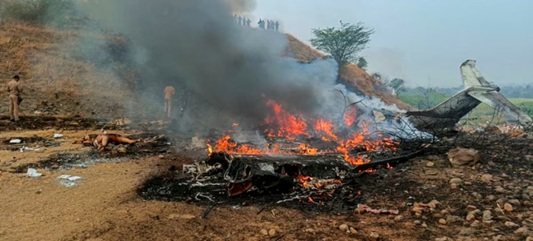
Baramati Air Crash: Exposing Structural Gaps in India’s Aviation Safety Framework

Prelims: (Polity & Governance + CA)
Mains: (GS 2 – Governance, Accountability, Institutions; GS 3 – Infrastructure, Aviation Safety, Disaster Management)

Why in News ?

A plane crash in Baramati that killed Maharashtra Deputy Chief Minister Ajit Pawar has reignited concerns over India’s civil aviation safety framework, particularly in the non-scheduled aviation sector. The tragedy closely mirrors warnings issued months earlier by a Parliamentary Standing Committee in its August 2025 report, which cautioned that India’s rapid aviation growth was outpacing regulatory oversight, safety enforcement, and institutional capacity.

The committee had specifically flagged vulnerabilities in private jets and charter aircraft operations, highlighting uneven compliance, weak monitoring, and structural gaps when compared to scheduled commercial airlines.
Significance of the Issue

  • Public Safety and Trust: The crash has shaken public confidence in aviation safety, especially for non-commercial flights involving political leaders, business executives, and emergency travel.
  • Regulatory Credibility: It raises questions about the effectiveness of India’s aviation regulator, the Directorate General of Civil Aviation (DGCA), and the implementation of Parliamentary oversight recommendations.
  • Growth-Safety Trade-off: India is one of the fastest-growing aviation markets globally. Without proportionate strengthening of safety systems, regulatory institutions, and infrastructure, growth risks becoming unsafe and unsustainable.
  • Policy and Governance Implications: The incident underscores the need for stronger institutional accountability, inter-agency coordination, and rule-based governance in high-risk sectors.

Key Components and Takeaways

1. Private and Charter Aircraft Safety Under Scrutiny

  • Concerns over Maintenance and Safety Practices: The Parliamentary Committee noted serious deficiencies in maintenance standards, documentation, and operational controls among non-scheduled operators. Many charter firms operate with limited technical staff, weakening maintenance planning and safety assurance.
  • Need for Stronger DGCA Oversight: The committee urged the DGCA to intensify surveillance through surprise inspections, frequent audits, and stricter enforcement of safety regulations.
  • Gaps in Operational Support Systems: Unlike scheduled airlines, private operators often lack layered operational control centres that assist pilots during weather disruptions, diversions, or emergencies—an absence flagged as a major vulnerability.
  • Mandatory Safety Management Systems (SMS): The panel recommended making fully functional Safety Management Systems compulsory across all non-scheduled operators, ensuring safety culture parity with commercial airlines.
  • Flight Planning and Risk Assessment Deficiencies: Weaknesses were identified in weather assessment, alternate airport planning, and pre-departure risk evaluation, increasing exposure to operational hazards.

2. Aviation Regulator Under Institutional Strain

  • Overburdened DGCA: The committee highlighted chronic manpower shortages and expanding responsibilities at the DGCA, which often force it into reactive rather than preventive safety oversight.
  • Need for Capacity Building: Recommendations included strengthening technical staffing, enhancing inspector training, and adopting data-driven and predictive safety risk assessment tools.
  • Mismatch Between Growth and Oversight: Rapid fleet expansion, rising aircraft movements, and the proliferation of airports require commensurate strengthening of surveillance mechanisms, failing which safety margins will continue to shrink.

3. ATC Capacity and Fatigue Risks

  • Controllers Under Rising Workload: Air Traffic Control (ATC), the backbone of aviation safety, is under strain, especially at major airports where traffic density has increased without proportional manpower expansion.
  • Fatigue and Human Error Risks: High workloads, long shifts, peak-hour pressures, and adverse weather conditions contribute to fatigue and stress, significantly raising the probability of human error.
  • Staffing and System Modernisation: The committee recommended faster recruitment, improved rostering practices to reduce fatigue, and accelerated modernisation of communication, navigation, and surveillance (CNS) systems.
  • Redundancy and Civil–Defence Coordination: Emphasis was placed on building system redundancy and strengthening civil–military airspace coordination to ensure safer and more resilient air traffic management.

4. Learning from Past Aviation Accidents

  • Human Factors and Training Gaps: Accident investigations repeatedly point to human error, inadequate training, and flawed decision-making under pressure as key causal factors.
  • Implementing Safety Recommendations: The committee stressed that safety advisories and recommendations from crash investigation reports must be systematically tracked, audited, and enforced, not merely recorded.
  • Centralised Compliance Monitoring: It called for a centralised mechanism to monitor compliance with safety recommendations across airlines, charter operators, airports, and regulators.
  • Upgrading Infrastructure at Smaller Airports: With expanding operations under regional connectivity schemes, smaller airports need better runway safety areas, navigational aids, fire and rescue services, and emergency response systems.

5. Growth Must Not Outpace Aviation Safety

  • Safety as a Foundational Pillar: The Parliamentary panel warned that aviation expansion must be matched—if not exceeded—by investments in safety systems, regulatory capacity, and institutional accountability.
  • Risks of Unchecked Expansion: Growth without strengthening oversight, ATC capacity, operator discipline, and safety culture—especially in private aviation—could heighten systemic risks.
  • Balancing Market Expansion and Public Safety: The incident reinforces the principle that aviation safety is a public good and a non-negotiable prerequisite for sustainable sectoral growth.

Challenges and Way Forward

  • Strengthening DGCA Capacity: Recruit more technical inspectors, enhance training, and institutionalise predictive, risk-based oversight models.
  • Regulating the Non-Scheduled Sector: Introduce stricter licensing, auditing, and safety compliance requirements for charter and private operators, aligned with commercial airline standards.
  • Enhancing ATC Infrastructure and Staffing: Accelerate recruitment, modernise CNS systems, improve fatigue management, and expand system redundancy.
  • Institutionalising Accident Learning: Create a legally mandated, centralised system to track and enforce implementation of safety recommendations.
  • Upgrading Regional Aviation Infrastructure: Invest in safety infrastructure at smaller airports, including navigation aids, runway safety areas, and emergency response capabilities.
  • Embedding a Safety-First Culture: Promote organisational safety culture across airlines, regulators, and service providers through training, accountability mechanisms, and performance audits.

FAQs

1. Why has the Baramati plane crash raised concerns about aviation safety ?

Because it occurred despite prior Parliamentary warnings about regulatory gaps, particularly in private and charter aviation, highlighting systemic weaknesses rather than isolated failures.

2. Which segment of aviation is considered most vulnerable ?

The non-scheduled aviation sector, including private jets and charter aircraft, due to uneven compliance, weaker oversight, and limited operational support systems.

3. What are the main challenges faced by the DGCA ?

Manpower shortages, expanding regulatory responsibilities, limited predictive oversight tools, and the need to shift from reactive to preventive safety regulation.

4. How does ATC fatigue affect aviation safety ?

High workloads, long shifts, and stress increase the likelihood of human error, which can compromise flight safety, especially during peak traffic and adverse weather conditions.

5. What is the key lesson from this incident for India’s aviation sector ?

That rapid growth must be matched by stronger safety institutions, regulatory capacity, infrastructure investment, and a safety-first governance culture to ensure sustainable and secure aviation expansion.

Have any Query?

Our support team will be happy to assist you!

OR


