
- UPSC Exam
- State PCS
- One Day Exam
- Current Affairs
- PT Quiz
- Downlaods
- About Coaching
- Blog
- Videos

| Prelims: (Science & Technology + CA) Mains: (GS 3 – Infrastructure, Environment, Indigenous Technology, Climate Change) |
India has taken a major step towards sustainable infrastructure as the Union Minister of State for Science and Technology announced the successful technology transfer of “Bio-Bitumen via Pyrolysis: From Farm Residue to Roads.” This breakthrough signals the beginning of a “Clean, Green Highways” era, reducing dependence on petroleum-based materials while tackling agricultural waste and carbon emissions.
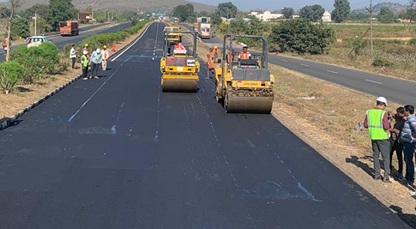
India has one of the world’s largest road networks, and bitumen—a petroleum-derived binder—is a critical input for highway construction.
However, conventional bitumen poses three major challenges:
Simultaneously, India faces a persistent problem of post-harvest residue burning, particularly rice straw in northern States, contributing to severe air pollution. The convergence of these challenges created an opportunity for indigenous, climate-friendly alternatives, leading to the development of bio-bitumen technology.
Bio-bitumen is a sustainable alternative to petroleum-based bitumen, manufactured using renewable organic materials such as:
Through controlled processing, these materials are converted into a binder with properties comparable to conventional bitumen.
The technology “Bio-Bitumen via Pyrolysis: From Farm Residue to Roads” is an indigenously developed innovation by:
FAQs1. What is bio-bitumen ? Bio-bitumen is a renewable, low-carbon alternative to petroleum-based bitumen made from biomass such as agricultural waste and plant oils. 2. Which institutions developed India’s bio-bitumen technology ? CSIR-CRRI and CSIR-IIP jointly developed the indigenous bio-bitumen via pyrolysis technology. 3. How much conventional bitumen can bio-bitumen replace ? Studies show that 20–30% replacement is possible without compromising road performance. 4. How does bio-bitumen help address stubble burning ? It creates economic demand for crop residues like rice straw, reducing the incentive to burn them. 5. Why is bio-bitumen important for India’s green highways vision ? It lowers carbon emissions, reduces oil imports, and promotes sustainable, climate-resilient infrastructure. |



Our support team will be happy to assist you!

 Contact Us
  New Batch : 9555124124/ 7428085757
  Tech Support : 9555124124/ 7428085757