|
Keywords: CAMPA, River Dolphin Conservation, Project Snow Leopard Phase-II, Indian Rhinoceros Conservation, Wild Water Buffalo Conservation, Sangai Conservation, Sacred Groves, Aastha Van Sanrakshan Yojana, Compensatory Afforestation, NPV, Biodiversity Conservation, Forest Restoration, MoEFCC, GIS Lab, MISHTI, Mangrove Restoration.
Focus Area Prelims: Environment & Ecology, Government Schemes Mains (GS-3): Biodiversity Conservation, Wildlife Protection, Forest Governance, Compensatory Afforestation, Ecosystem Restoration, Climate Change, and Community-Based Conservation.
|
Why in News?
- The Governing Body of the National Compensatory Afforestation Fund Management and Planning Authority (CAMPA), chaired by Union Environment Minister Bhupendra Yadav, approved several major biodiversity conservation initiatives during its 7th meeting held in Coimbatore on 10 July 2026.
- The meeting approved four new national wildlife conservation projects, extended support for Sangai conservation, launched a new scheme for protecting sacred groves, reviewed compensatory afforestation progress across India, and expanded mangrove restoration efforts.

Key Highlights
CAMPA Approves Four New National Conservation Projects
Four major species-specific conservation programmes received approval.
|
Project
|
Objective
|
|
River Dolphin Conservation Project
|
Recovery Action Plan and Scientific Study
|
|
Project Snow Leopard Phase-II
|
Population Estimation & Habitat Conservation
|
|
Indian Rhinoceros Conservation Action Plan
|
Long-term Rhino Conservation
|
|
Wild Water Buffalo Conservation Programme
|
Pan-India Conservation Strategy
|
These projects were recommended by the Executive Committee of National CAMPA before receiving final approval.
What is CAMPA?
CAMPA (Compensatory Afforestation Fund Management and Planning Authority) is the statutory authority responsible for managing funds collected from agencies diverting forest land for non-forest purposes.
It ensures that ecological losses caused by forest diversion are compensated through afforestation, restoration, and wildlife conservation activities.
Objectives of CAMPA
- Compensatory Afforestation: To create new forests to compensate for forest land diverted for non-forest purposes.
- Wildlife Conservation: To protect endangered species and strengthen their habitats through conservation measures.
- Forest Restoration: To restore degraded forests and improve their ecological health and productivity.
- Catchment Treatment: To reduce soil erosion and improve water retention in river and reservoir catchment areas.
- Assisted Natural Regeneration: To support the natural recovery of forests through protection and scientific management.
- Biodiversity Conservation: To conserve native flora, fauna, and ecosystems while maintaining ecological balance.
- Soil and Water Conservation: To prevent land degradation, conserve soil, and enhance groundwater recharge.
- Forest Fire Prevention: To reduce the incidence and impact of forest fires through infrastructure, monitoring, and awareness.
- Eco-restoration: To rehabilitate damaged ecosystems and restore their natural ecological functions and biodiversity.
What is Net Present Value (NPV) ?
Whenever forest land is diverted for projects like roads, mines, dams or industries, the user agency must pay:
- Cost of compensatory afforestation
- Net Present Value (NPV)
NPV represents the economic value of ecological services lost due to forest diversion. These funds are managed under CAMPA.
Why is this Important ?
The decisions reflect a shift from plantation-centric forestry towards landscape-level ecosystem restoration and species-specific conservation. The approval of dedicated projects for river dolphins, snow leopards, rhinos, and wild water buffalo strengthens India's commitment to achieving the targets of the Kunming-Montreal Global Biodiversity Framework, while initiatives such as Aastha Van Sanrakshan Yojana, GIS-based monitoring, mangrove restoration, and urban forestry promote technology-driven and community-led conservation.
Project-wise Details
1. River Dolphin Conservation Project
Objective
Prepare India's first comprehensive Recovery Action Plan for river dolphins.

Focus Areas
- Population assessment
- Habitat mapping
- River health monitoring
- Threat identification
- Conservation corridors
- Pollution assessment
- Community participation
Importance
River dolphins are considered indicators of healthy freshwater ecosystems.
Species Covered
- Gangetic River Dolphin
- Indus River Dolphin (limited distribution)
2. Project Snow Leopard Phase-II
This is the second phase of India's flagship high-altitude conservation programme.

|
Major Components
- Second nationwide snow leopard population estimation
- Habitat connectivity
- Human-wildlife conflict reduction
- Community-based conservation
- Scientific monitoring using camera traps
- Climate change impact assessment
|
States Covered
- Ladakh
- Jammu & Kashmir
- Himachal Pradesh
- Uttarakhand
- Sikkim
- Arunachal Pradesh
|
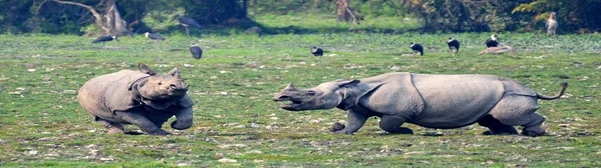
3. Indian Rhinoceros Conservation Action Plan
Objective
Strengthen conservation of India's one-horned rhinoceros
.
|
Focus Areas
- Population monitoring
- Habitat restoration
- Anti-poaching measures
- Corridor development
- Genetic diversity
- Disease surveillance
|
Major States
- Assam
- West Bengal
- Uttar Pradesh (reintroduced population)
|
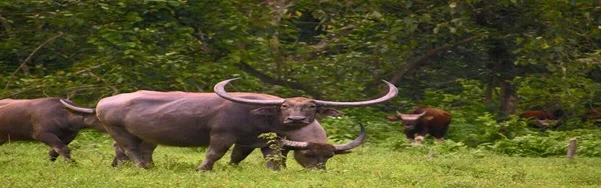
4. Wild Water Buffalo Conservation Programme
India approved its first Pan-India Conservation Approach
|
Focus
- Population recovery
- Habitat restoration
- Prevent hybridisation with domestic buffaloes
- Strengthen protected areas
- Improve genetic diversity
|
Major States
- Assam
- Chhattisgarh
- Arunachal Pradesh
|
Continued Support for Sangai Conservation
CAMPA also approved continued funding for the conservation of Sangai, the famous brow-antlered deer of Manipur.
Why Important ?
- State Animal of Manipur
- Found naturally only in Keibul Lamjao National Park
- Lives on floating biomass called Phumdis
- Critically important endemic species
Aastha Van Sanrakshan Yojana
One of the biggest announcements of the meeting.
Features
- Initial corpus: ₹3,000 crore
- Duration: 2026–27 to 2030–31
- Target: Conservation of 15,000 Sacred Groves
Why Sacred Groves Matter ?
Sacred groves act as:
- Biodiversity Hotspots: They provide habitat for a rich variety of plant and animal species, including many endemic and threatened species.
- Gene Banks: They preserve the genetic diversity of native flora and fauna, ensuring long-term species survival.
- Carbon Sinks: They absorb and store atmospheric carbon dioxide, helping mitigate climate change.
- Water Conservation Sites: They protect watersheds, improve groundwater recharge, and regulate the natural water cycle.
- Climate Buffers: They moderate local temperatures, reduce the impacts of extreme weather events, and enhance ecosystem resilience.
CAMPA GIS Lab
The Governing Body reviewed the establishment of a dedicated GIS Monitoring Laboratory.
Purpose
The GIS Lab will monitor:
- Compensatory afforestation
- Forest restoration
- CAMPA-funded projects
- NPV utilisation
Technologies Used
- Satellite imagery
- GIS Mapping
- Field verification
- Digital dashboards
- Geo-tagging
Benefits
- Transparency
- Real-time monitoring
- Scientific evaluation
- Better accountability
Digital Annual Plan System
States and Union Territories will now submit their Annual Plans of Operation (APOs) exclusively through an online portal.
Expected Benefits
- Faster approvals
- Better transparency
- Uniform reporting
- Improved fund utilisation
Mangrove Restoration Gets Major Boost
The Governing Body reviewed progress under the Mangrove Initiative for Shoreline Habitats and Tangible Incomes (MISHTI).
- ₹88.40 crore released
- Six States/UTs covered
- Programme extended till 2029
- Additional allocation: ₹500 crore
- Total Outlay: ₹600 crore
Objectives
- Coastal Ecosystem Restoration: Restores degraded mangroves and coastal habitats to improve ecological health and biodiversity.
- Climate Resilience: Strengthens the ability of coastal ecosystems and communities to withstand cyclones, sea-level rise, and climate change.
- Livelihood Enhancement: Supports income and employment opportunities for coastal communities through sustainable resource management.
- Carbon Sequestration: Captures and stores atmospheric carbon in mangrove ecosystems, helping reduce greenhouse gas emissions.
Nagar Van Yojana Progress
CAMPA reviewed progress of urban forestry.
Achievements
- 652 Nagar Vans/Vatikas developed
- Funds released: ₹571.50 crore
CAMPA Fund Review
- The Governing Body reviewed:
- Net Present Value (NPV) collections
- Compensatory afforestation activities
- Fund transfers
- State-wise utilisation
- Annual Plan implementation
Conclusion
The recent CAMPA decisions reflect India's shift from compensatory afforestation to ecosystem-based biodiversity conservation through species-specific projects, technology-driven monitoring, and community participation. For UPSC Prelims, aspirants should focus on CAMPA, the Compensatory Afforestation Fund Act, 2016, flagship conservation projects, and protected species. For GS Paper III (Environment), the topic is important for themes such as forest governance, ecological restoration, climate resilience, and sustainable development. It can also be linked with India's commitments under the Kunming–Montreal Global Biodiversity Framework and the Sustainable Development Goals (SDGs), making it highly relevant for both UPSC and State PCS examinations.
Exam Facts
- CAMPA is a statutory authority under the Ministry of Environment, Forest and Climate Change (MoEFCC).
- Compensatory Afforestation Fund Act, 2016 provides the legal framework for CAMPA.
- National CAMPA manages funds collected from the diversion of forest land for non-forest purposes.
- Net Present Value (NPV) is the monetary value paid to compensate for the loss of ecological services of forests.
- Gangetic River Dolphin is India's National Aquatic Animal and is listed in Schedule I of the Wildlife (Protection) Act, 1972.
- Snow Leopard is found in the Himalayan region of Ladakh, J&K, Himachal Pradesh, Uttarakhand, Sikkim, and Arunachal Pradesh.
- Indian One-Horned Rhinoceros is found mainly in Assam, with smaller populations in West Bengal and Uttar Pradesh.
- Wild Water Buffalo is the State Animal of Chhattisgarh and is classified as Endangered by the IUCN.
- Sangai (Brow-Antlered Deer) is the State Animal of Manipur and is found only in Keibul Lamjao National Park, the world's only floating national park.
- Sacred Groves are community-protected forest patches that conserve biodiversity and traditional ecological knowledge.
- MISHTI stands for Mangrove Initiative for Shoreline Habitats and Tangible Incomes.
- Nagar Van Yojana aims to develop urban forests to improve green cover and urban biodiversity.
- ICFRE (Indian Council of Forestry Research and Education) is an autonomous body under MoEFCC that promotes forestry research and education.
Prelims MCQ
|
Q. Consider the following statements regarding the National CAMPA:
- It manages funds collected for compensatory afforestation after diversion of forest land for non-forest purposes.
- It functions under the Ministry of Environment, Forest and Climate Change.
- It was established under the Compensatory Afforestation Fund Act, 2016.
Which of the statements given above is/are correct?
A. 1 only
B. 1 and 2 only
C. 1, 2 and 3
D. 2 and 3 only
Mains Practice Question
Discuss the role of the Compensatory Afforestation Fund Management and Planning Authority (CAMPA) in biodiversity conservation and ecological restoration. How can technology and community participation improve its effectiveness?
|
FAQs
Q1. What is CAMPA?
Answer: CAMPA (Compensatory Afforestation Fund Management and Planning Authority) is a statutory body under the Ministry of Environment, Forest and Climate Change that manages funds collected for compensatory afforestation after the diversion of forest land for non-forest purposes.
Q2. What is the Compensatory Afforestation Fund Act, 2016?
Answer: The Act provides the legal framework for managing and utilizing CAMPA funds for afforestation, forest conservation, wildlife protection, and ecological restoration.
Q3. What is Net Present Value (NPV) in forest conservation?
Answer: NPV is the monetary value paid by agencies diverting forest land to compensate for the loss of ecological services provided by forests.
Q4. Why river dolphins are considered indicator species?
Answer: River dolphins indicate the health of freshwater ecosystems because they require clean water, adequate fish populations, and an undisturbed river habitat.
Q5. Why are sacred groves important for UPSC?
Answer: Sacred groves are community-protected forest patches that conserve biodiversity, protect water sources, preserve indigenous traditions, and act as natural carbon sinks.
|






 Contact Us
  New Batch : 9555124124/ 7428085757
  Tech Support : 9555124124/ 7428085757