New
GS Foundation (P+M) - Delhi : 19th Jan. 2026, 11:30 AM Republic Day offer UPTO 75% + 10% Off, Valid Till : 28th Jan., 2026 GS Foundation (P+M) - Prayagraj : 09th Jan. 2026, 11:00 AM Republic Day offer UPTO 75% + 10% Off, Valid Till : 28th Jan., 2026 GS Foundation (P+M) - Delhi : 19th Jan. 2026, 11:30 AM GS Foundation (P+M) - Prayagraj : 09th Jan. 2026, 11:00 AM

Centre Notifies Eco-Sensitive Zone Around Kumbhalgarh Sanctuary to Protect Aravalli Ecosystem

Prelims: (Environment + CA)
Mains: (GS 3 – Environment, Conservation, Sustainable Development, Climate Change)

Why in News?

  • The Central Government has declared the biodiversity-rich area ranging from 0 to 1 km around the Kumbhalgarh Wildlife Sanctuary in Rajasthan as an Eco-Sensitive Zone (ESZ).
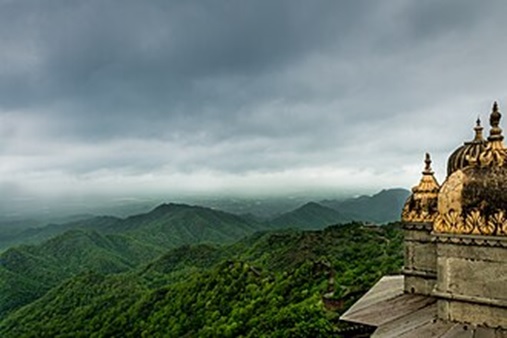
  • The sanctuary lies in one of the most fragile ecological landscapes of the Aravalli Range, and the notification aims to regulate human activities and strengthen conservation in the region.

eco-sensitive-zone

Background: Kumbhalgarh Wildlife Sanctuary

  • The Kumbhalgarh Wildlife Sanctuary is located in Rajasthan and derives its name from the historic Kumbhalgarh Fort, a UNESCO World Heritage Site that lies within its boundaries.
  • The sanctuary is part of the Aravalli mountain ecosystem, one of the oldest mountain ranges in the world, known for its ecological sensitivity and biodiversity significance.

Geographical Setting and Drainage Pattern

Drainage Systems

  • Eastern Section:
    • Serves as the origin point of the Banas River, which ultimately flows into the Bay of Bengal via the Chambal and Yamuna river systems.
  • Western Slopes:
    • Rainwater forms small rivers such as Sukdi, Sumer, Mithdi, and Kot.
    • These rivers are tributaries of the Luni River, which flows toward the Arabian Sea.

This dual drainage system highlights the sanctuary’s hydrological importance in linking eastern and western river basins.

Flora of the Sanctuary

The sanctuary’s vegetation is dominated by dry deciduous forest and scrubland species, adapted to the semi-arid climate of the Aravallis.

Major Floral Species

  • Herbs and shrubs dominate the landscape.
    • Tree species such as:
    • Churel,
    • Dhok,
    • Khair,
    • Salar,
      grow abundantly.

These plant communities support soil stability, groundwater recharge, and wildlife habitat.

Fauna of the Sanctuary

Kumbhalgarh Wildlife Sanctuary serves as a natural refuge for a wide range of wildlife, including both carnivores and herbivores.

Key Faunal Species

  • Carnivores: Wolf, Leopard, Sloth Bear, Hyena, Jackal, Jungle Cat
  • Herbivores: Sambar, Nilgai, Chinkara, Hare
  • Unique species: Chausingha (Four-horned antelope) — a rare and regionally significant species.

The presence of top predators and rare herbivores reflects the sanctuary’s ecological integrity.

Eco-Sensitive Zone (ESZ): Concept and Purpose

What is an ESZ?

Eco-Sensitive Zones are areas notified around protected areas to act as buffer zones, regulating development and human activities to minimise ecological damage.

Objectives of Declaring ESZ Around Kumbhalgarh

  • Prevent habitat degradation and fragmentation,
  • Regulate mining, construction, and industrial activity,
  • Promote sustainable livelihoods and eco-tourism,
  • Protect water sources and biodiversity corridors.

The 0–1 km ESZ around Kumbhalgarh aims to balance conservation with community development.

Ecological and Strategic Significance

The Aravalli Range plays a crucial role in:

  • Preventing desertification,
  • Regulating regional climate,
  • Acting as a natural groundwater recharge zone.

Protecting Kumbhalgarh and its surrounding areas strengthens:

  • Landscape-level conservation,
  • Wildlife corridors,
  • Long-term ecological resilience in north-western India.

Way Forward

Effective implementation of the ESZ notification requires:

  • Strong coordination between central, state, and local authorities,
  • Community participation in conservation,
  • Sustainable livelihood alternatives,
  • Continuous ecological monitoring.

Such measures will ensure that development proceeds without compromising ecological security.

FAQs

1.Where is Kumbhalgarh Wildlife Sanctuary located?

It is located in Rajasthan and includes the historic Kumbhalgarh Fort within its boundaries.

2. Why has an Eco-Sensitive Zone been declared around it?

To regulate human activities, protect biodiversity, and conserve the fragile Aravalli ecosystem.

3. Which rivers originate from the sanctuary region?

The Banas River originates from the eastern section, while western slopes feed tributaries of the Luni River.

4. What are some important animals found in the sanctuary?

Leopard, Sloth Bear, Wolf, Hyena, Chausingha, Sambar, Nilgai, and Chinkara.

5. What is the significance of ESZs around protected areas?

They act as buffer zones to minimise ecological damage and promote sustainable development.

Have any Query?

Our support team will be happy to assist you!

OR