New
Hindi Medium: (Delhi) - GS Foundation (P+M) : 8th June 2026, 6:30 PM Hindi Medium: (Prayagraj) - GS Foundation (P+M) : 1st June 2026, 5:30 PM English Medium: (Prayagraj) - GS Foundation (P+M) : 7th June 2026, 8:00 AM Hindi Medium: (Delhi) - GS Foundation (P+M) : 8th June 2026, 6:30 PM Hindi Medium: (Prayagraj) - GS Foundation (P+M) : 1st June 2026, 5:30 PM English Medium: (Prayagraj) - GS Foundation (P+M) : 7th June 2026, 8:00 AM

Current Affairs for 01 June 2026

Skycast System: Fog and bad weather will no longer halt flights, India launches state-of-the-art weather monitoring system

Why in the news ?

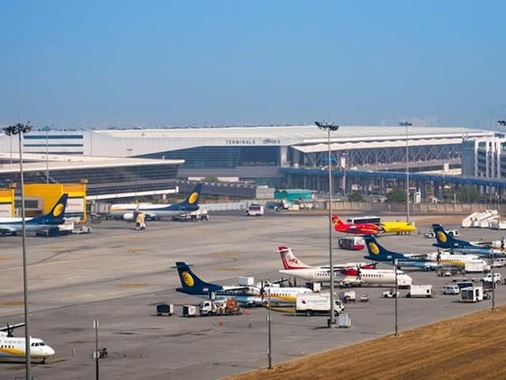
A state-of-the-art Skycast system has been installed at Delhi's Indira Gandhi International Airport (IGI Airport). With the implementation of this technology, India has become the 19th country in the world to adopt it. The system was developed under the central government's ambitious Mission Mausam initiative. Its aim is to improve flight safety and operational efficiency during weather-related challenges such as dense fog, low visibility, strong winds, and atmospheric turbulence.
What is the SkyCast System ?

  • SkyCast is an advanced weather monitoring and forecasting system that provides real-time information on atmospheric conditions. It analyzes subtle changes in weather using various modern sensors and scientific instruments to provide accurate forecasts.
  • This system will provide pilots, Air Traffic Control (ATC), and airport management with quick and accurate weather information, making flight operations safer and more efficient.

How does the SkyCast system work ?

SkyCast monitors the weather by integrating several modern technologies.

Its key components are:

1. Radar Wind Profiler

  • This instrument analyzes wind speed, direction, and atmospheric activity up to an altitude of approximately 3 kilometers. This allows predictions of sudden weather changes.

2. SODAR

  • Sonic Detection and Ranging technology studies the structure and air flow of the lower atmosphere using sound waves.

3. Microwave Radiometer

  • It measures temperature and humidity levels in the atmosphere, increasing the accuracy of weather forecasts.

4. Ground-Based Fog Aerosol Spectrometer (GFAS)

  • It helps predict fog formation and density by studying fog droplets and aerosol particles.

5. CL61 Lidar-Based Ceilometer

  • This instrument monitors the vertical structure of fog and clouds and provides real-time visibility information.

Technical foundation provided by the WiFEX project

  • The SkyCast system is developed based on the experiences and research findings of the Winter Fog Experiment (WiFEX) project. Launched in 2015, the project aimed to scientifically study the dense winter fog at Indian airports.
  • The project was jointly conducted by the Indian Institute of Tropical Meteorology (IITM), Pune, and the India Meteorological Department (IMD).

Key Benefits of the SkyCast System

  • Increased flight safety
    • Pilots will receive accurate real-time weather information, reducing the risk of accidents and accidents.
  • Improved operations during fog
    • Many airports in North India, including Delhi, are affected by dense fog during winter. SkyCast will play a key role in addressing this challenge.
  • Reduced flight delays and cancellations
    • Improved weather forecasting will enable airlines to plan more timely, providing relief to passengers.
  • Improved air traffic management
    • Air traffic control will receive more reliable weather data, making flight operations safer and more efficient.
  • Enhanced weather forecasting capabilities
    • This system will help strengthen India's weather monitoring and forecasting capabilities to global standards.

Why is this system important for India ?

  • India is one of the world's fastest-growing aviation markets. Millions of passengers travel by air every year. In such a situation, it is extremely important to minimize weather-related disruptions and ensure flight safety.
  • The Skycast system will not only modernize the aviation sector but will also elevate India's technological capabilities in the field of meteorology to new heights.

Conclusion

The SkyCast system is an excellent example of technological innovation in India's aviation and meteorology sectors. With state-of-the-art sensors, real-time data analysis, and accurate weather forecasting, this system will play a vital role in mitigating the impact of adverse weather, enhancing flight safety, and providing a better travel experience for passengers. This initiative, under Mission Mausam, is a major step towards establishing India's position as a global leader in aviation safety and weather forecasting.

The world economy may weaken, but India and the US are in a strong position: WEF

Why in the news ?

The World Economic Forum recently released its Chief Economists Outlook Report (May 2026). The report predicts a weakening of global economic growth. However, India and the United States are identified as relatively strong economies. The report also highlights the West Asia crisis, the blockade of the Strait of Hormuz, inflation, and the impact of artificial intelligence (AI).
Key Findings of the Report

1. Growing Concerns About Global Economic Growth

  • Nearly 90% of economists surveyed believe that global economic growth will remain weak in the coming years.
  • Geopolitical tensions, trade barriers, and supply chain disruptions are cited as the main reasons.

2. Impact of the Strait of Hormuz Crisis

  • Escalating conflict in West Asia and disruptions in the Strait of Hormuz have impacted global energy supplies.
  • Oil and gas prices have risen and global market volatility has increased.
  • Experts say the impact could be even more severe than the tariff crisis of 2025.

3. Chances of a Global Recession Currently Low

  • 58% of economists believe that a global recession is unlikely in the near future.
  • However, economic growth is likely to remain slow.

4. The Growing Impact of Artificial Intelligence (AI)

  • More than 90% of economists expect the use of AI to increase by 2026.
  • AI is considered a major source of long-term productivity growth.

What does the report say about India ?

  • According to the report, India has the strongest growth prospects among the world's major economies. The World Economic Forum estimates that India's economic growth rate could be around 6.5 percent in the fiscal year 2026-27. Strong domestic demand, rising investment, and consumption expenditure are driving economic activity. Furthermore, most economists expect moderate to high employment growth over the next 12 months, reflecting the strength of the Indian economy.
  • However, the report also points to some significant challenges facing India. The ongoing conflict in West Asia and uncertainty in the Strait of Hormuz could increase pressure on energy imports, impacting India's energy security. Furthermore, the continued weakness of the rupee and the increasing pressure on foreign exchange reserves remain a concern. Rising unemployment rates in urban areas and declining labor force participation also pose challenges to the economy. Additionally, persistent inflationary pressures could pose challenges for both consumers and policymakers.
  • Under these circumstances, India will need to strengthen energy security, diversify import and export markets, and strengthen domestic manufacturing and supply chains. Furthermore, special attention will need to be paid to job creation, skills development, inflation control, and financial stability to maintain economic growth momentum despite global uncertainties.

World Economic Forum (WEF)

  • The World Economic Forum (WEF) is an international non-profit organization founded in 1971 by German economist and engineer Klaus Schwab. Its headquarters are located in Cologny. The WEF's primary objective is to provide a common platform for addressing global, regional, and industrial challenges by fostering cooperation between governments, industry, academia, international organizations, and civil society.
  • The World Economic Forum is particularly renowned for its annual meeting, the World Economic Forum Annual Meeting, held annually in Davos. This conference is attended by world leaders, policymakers, industrialists, economists, and experts from various fields to discuss important issues such as the global economy, trade, climate change, technology, and sustainable development.
  • The WEF also periodically publishes important reports, such as the Global Risks Report, the Global Competitiveness Report, and the Chief Economist's Outlook, which play a key role in global policymaking and economic discourse.

Conclusion

The World Economic Forum's (WEF) Chief Economists Outlook Report 2026 indicates that the global economy is facing a period of uncertainty due to increasing geopolitical competition, supply chain disruptions, energy insecurity, and inflationary pressures. Although the likelihood of a global recession appears limited in the near future, the pace of economic growth remains vulnerable. In this challenging global landscape, India is emerging as a major growth center in the global economy due to its strong domestic demand, investment-led growth, demographic dividend, and policy reforms. However, to maintain this momentum, India will need to continue focusing on energy security, job creation, inflation control, and strengthening its participation in global supply chains. Thus, a balanced management of opportunities and challenges for India amid global uncertainties will be the key to sustainable and inclusive economic growth.

PM SVANidhi Scheme: Benefits, Loan Amounts and Key Features

Why in News

PM SVANidhi has emerged as a major initiative supporting vendors working across India’s informal urban economy. Beyond providing collateral-free loans, the scheme has encouraged digital adoption, improved access to institutional credit and expanded social security coverage. 


Key Points

  • Since its launch in 2020, more than 1.12 crore loans have already been disbursed. The initiative has benefited over 75 lakh beneficiaries across cities and towns. Loans worth over ₹17,800 crore have been provided under the scheme.
  • Its impact is visible not only in official numbers but also in the everyday journey of vendors building stronger and more sustainable livelihoods.

Scheme Profile

  • Prime Minister Street Vendor’s AtmaNirbhar Nidhi (PM SVANidhi) was launched in June 2020.
  • It is a Central Sector Scheme.
  • It is implemented by MoHUA and the Department of Financial Services (DFS).

Financial Inclusion Measures

  • It provides collateral-free working capital loans of ₹15,000, ₹25,000 and ₹50,000 in progressive tranches.
  • Beneficiaries receive interest subsidy and credit guarantee support.
  • Eligible vendors can obtain UPI-linked RuPay Credit Cards with limits up to ₹30,000.

Digital Empowerment

  • Vendors receive cashback incentives of up to ₹1,600 for digital transactions.
  • The scheme promotes digital literacy and financial inclusion.
  • It encourages adoption of UPI-based payments.

Social Security Linkages

  • Under SVANidhi se Samriddhi (SSS), beneficiaries are linked with multiple Central welfare schemes.
  • Socio-economic profiling helps create a comprehensive social protection network.
  • Vendors receive training in financial literacy and food safety in collaboration with FSSAI.

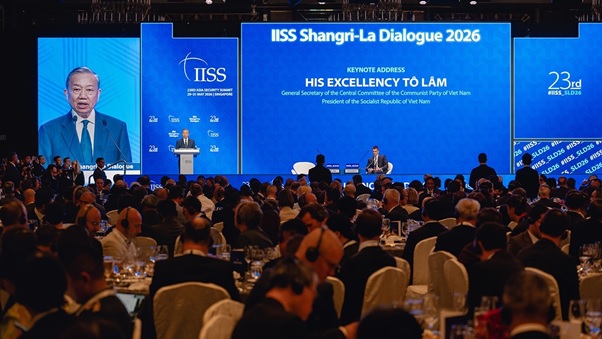
Shangri-La Dialogue 2026: Key Facts, Significance and India’s Participation

Why in News

The Defence Secretary of India held bilateral meetings during the Shangri-La Dialogue 2026 in Singapore to enhance defence cooperation and maritime security.

Institutional Profile

  • The Shangri-La Dialogue is Asia’s premier defence and security summit.
  • It is also known as the Asia Security Summit.
  • It has been held annually since 2002.
  • The event takes place at the Shangri-La Hotel, Singapore.

Organisational Framework

  • It is organised by the International Institute for Strategic Studies (IISS), London.
  • It is co-organised by the Ministry of Defence, Singapore.
  • The dialogue includes plenary sessions, breakout sessions, and bilateral meetings.
  • Defence ministers, military chiefs, policymakers, and strategic experts participate in the summit.

Strategic Significance

  • It is regarded as the most influential multilateral security platform in the Indo-Pacific region.
  • Discussions cover territorial disputes, maritime security, and military cooperation.
  • The agenda also includes cybersecurity, terrorism, and climate-related security challenges.
  • It promotes defence diplomacy and regional stability.

India’s Engagement

  • India regularly participates through the Defence Minister, Chief of Defence Staff (CDS), or senior military officials.
  • India’s Raisina Dialogue is modelled on the Shangri-La Dialogue.
« »
  • SUN
  • MON
  • TUE
  • WED
  • THU
  • FRI
  • SAT
Have any Query?

Our support team will be happy to assist you!

OR