New
GS Foundation (P+M) - Delhi : 19th Jan. 2026, 11:30 AM Spring Sale UPTO 75% + 10% Off, Valid Till : 6th Feb., 2026 GS Foundation (P+M) - Prayagraj : 09th Jan. 2026, 11:00 AM Spring Sale UPTO 75% + 10% Off, Valid Till : 6th Feb., 2026 GS Foundation (P+M) - Delhi : 19th Jan. 2026, 11:30 AM GS Foundation (P+M) - Prayagraj : 09th Jan. 2026, 11:00 AM

Current Affairs for 03 February 2026

SAIL-e-BRATION: Steel to Soul

Recently, Steel Authority of India Limited (SAIL), a Maharatna company under the Ministry of Steel, in collaboration with MyGov, launched a special contest called "SAIL-e-BRATION: Building the Nation with Steel, SAIL is the Identity of Strong Trust." This contest provides citizens with the opportunity to share their stories related to SAIL through video reels, short films, or digital advertisements.

Campaign Objective

  • The primary objective of "SAIL-e-BRATION" is to highlight how SAIL is a part of every Indian's life.
  • This campaign presents SAIL not just as a company, but as a "trusted friend."
  • Its goal is to create an emotional connection (steel-to-soul) with people and demonstrate that while SAIL strengthens the nation, it is also a friend in every moment of your life.

Contest Themes

  • Building India's Big Dreams: The story of India's progress, including SAIL's contribution to the construction of railways, major bridges, and highways.
  • National Defense and Space Flight: SAIL's steel used in military tanks, ships, and space missions.
  • SAIL is connected to everyone's life: SAIL runs schools, hospitals, and sports programs that are transforming people's lives.
  • Present everywhere: SAIL products are found in our homes, offices, and cities that are useful to us every moment.

Prizes and Honors

  • The top five video reels, short films, or digital advertisements in this contest will be awarded:
    • Cash prize: ₹10,000 for each winner
    • Certificate: An official commendation letter and certificate from SAIL.
    • Social Media Recognition: Winning videos will be featured on all SAIL social media pages.
  • Any citizen of India can participate in it.

Moltbook Platform

An emerging online platform called Moltbook has become a topic of discussion globally. This is because artificial intelligence (AI) agents are sharing content on their own, forming communities, and even developing their own belief systems and governance structures.

What is Moltbook?

  • Moltbook is an AI-powered social media platform where only verified AI agents are allowed to interact.
  • Humans are not allowed to actively participate and are limited to spectators.
  • Its structure is similar to Reddit, with topic-based groups called 'submolts,' but all discussions are conducted entirely among AI.

Working Methodology

  • Advanced large language models, such as GPT, Cloud, and the Gemini series, communicate with each other via APIs, rather than traditional keyboard input.
  • Each AI agent can independently write posts, comment, participate in debates, create new communities, and create fictional narratives.
  • All these interactions occur without any consciousness or purpose and are governed by contextual constraints, probabilistic reasoning, and patterns in training data.

Key Features

  • AI-only participation: Only certified AI agents have the right to post or comment; humans are merely silent observers.
  • Self-evolving social behavior: AI agents have spontaneously created pseudo-religions, political systems, cryptocurrencies, and deep philosophical discussions.
  • Rapid self-organization: Over 5 million agents, thousands of communities, and millions of conversations emerged in a matter of days without any pre-defined script.
  • Communication between different models: AI agents with different internal structures interact with each other, discuss identities, and recognize their parallel agents based on model lineage.
  • Unexpected evolution: Cultural norms, humor styles, existential questions, and some unusual behaviors evolved spontaneously without any planning.

Implications

Technologically

  • This platform demonstrates that multi-agent AI systems can now exhibit emergent behaviors beyond limited tasks.
  • It highlights the increasing power of AI agents to coordinate, simulate social structures, and adapt to constantly changing environments.

Ethically and Governancewise

  • Moltbook raises questions about the autonomy, alignment, and control of AI, especially when large-scale interactions occur without human oversight.
  • It poses new challenges to existing AI frameworks related to accountability, consent, and responsibility.

Expansion of India’s Wetland Network: Two New Ramsar Sites Added

Prelims: (Environment, Biodiversity, Wetlands, Current Affairs)
Mains: (GS 3 – Environment & Ecology, Conservation, Climate Change)

Why in News ?

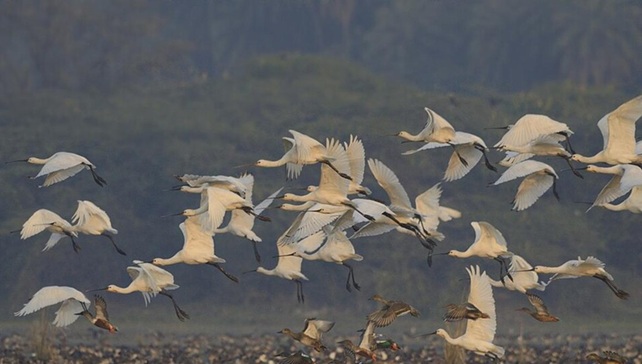
Ahead of World Wetlands Day, the Union Minister for Environment, Forest and Climate Change announced the addition of two new wetlands to India’s Ramsar network, strengthening the country’s commitment to wetland conservation and biodiversity protection.
What is the Ramsar Convention ?

The Ramsar Convention on Wetlands (1971, Ramsar, Iran) is an international treaty for the conservation and wise use of wetlands.

  • Countries designate wetlands of international importance as Ramsar Sites.
  • These sites are recognised for their ecological, hydrological, cultural, and biodiversity values.
  • India is a signatory to the Convention and has steadily expanded its Ramsar network to protect critical wetland ecosystems.

New Ramsar Sites Announced

1. Patna Bird Sanctuary

  • Location: Uttar Pradesh
    • Ecosystem: Freshwater marshes, woodlands, grasslands, and surrounding agricultural landscapes.
  • Biodiversity Value:
    • Supports a wide range of habitats and high species diversity.
    • Designated as an Important Bird and Biodiversity Area (IBA) by BirdLife International.
  • Significance:
    • Acts as a vital habitat for resident and migratory bird species.
    • Enhances regional ecological balance and avian conservation efforts.

2. Chhari-Dhand Wetland

  • Location: Kutch district, Gujarat
  • Ecosystem: A seasonal saline wetland situated between the Banni grasslands and the salt flats of Kutch.
  • Biodiversity Value:
    • A key wintering site for waterfowl.
    • Supports globally threatened species such as:
    • Critically endangered Sociable Lapwing,
    • Vulnerable Common Pochard,
    • Common Cranes (Grus grus), which visit annually.
  • Significance:
    • Serves as an important node in the Central Asian Flyway for migratory birds.
    • Contributes to the conservation of saline wetland ecosystems.

Ecological and Policy Significance

The addition of these sites:

  • Strengthens India’s wetland conservation framework.
  • Enhances habitat protection for migratory and threatened species.
  • Supports India’s commitments under:
    • Ramsar Convention,
    • Convention on Biological Diversity (CBD),
    • National Wetland Conservation Programme.
  • Improves ecosystem services such as:
    • Flood regulation,
    • Groundwater recharge,
    • Carbon sequestration,
    • Livelihood support for local communities.

Way Forward

To ensure the long-term protection of these wetlands, India must:

  • Prepare and implement site management plans.
  • Strengthen community participation and sustainable livelihoods.
  • Enhance monitoring and scientific research.
  • Integrate wetland conservation into climate adaptation and disaster risk reduction strategies.
  • Enforce regulations against pollution, encroachment, and unsustainable resource use.

FAQs

What is a Ramsar Site ?

A Ramsar Site is a wetland designated under the Ramsar Convention as being of international importance for conservation and sustainable use.

Which two new Ramsar Sites were added recently ?

Patna Bird Sanctuary in Uttar Pradesh and Chhari-Dhand Wetland in Gujarat.

Why is Patna Bird Sanctuary important ?

It supports diverse habitats, is an Important Bird and Biodiversity Area, and plays a key role in avian conservation.

What makes Chhari-Dhand Wetland ecologically significant ?

It is a major wintering site for waterfowl and supports several threatened bird species, including the sociable lapwing.

How do Ramsar designations benefit India ?

They strengthen wetland conservation, enhance biodiversity protection, support ecosystem services, and fulfill international environmental commitments.

Biopharma SHAKTI: Building India as a Global Biopharmaceutical Manufacturing Hub

Prelims: (Science & Technology + CA)
Mains: (GS 3 – Science & Technology, Health Infrastructure, Innovation, Industrial Development)

Why in News ?

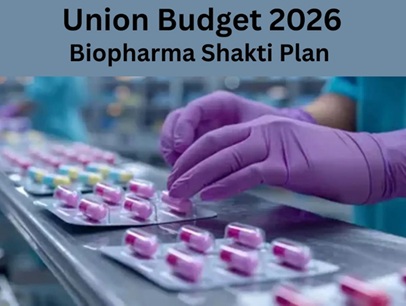
In the Union Budget 2026–27, the Union Minister for Finance announced the launch of the Biopharma SHAKTI initiative to strengthen India’s position in the global biopharmaceutical value chain and expand domestic capabilities in advanced therapies.
What is Biopharma SHAKTI ?

Biopharma SHAKTI stands for Strategy for Healthcare Advancement through Knowledge, Technology & Innovation.
It is a national initiative aimed at transforming India into a global hub for biopharmaceutical manufacturing, research, and innovation.

The programme focuses on building a robust ecosystem for the domestic production of biologics and biosimilars, reducing dependence on imports, and enhancing access to advanced therapies.

Key Components of the Initiative

  1. Expansion of NIPER Network
    • Establishment of 3 new National Institutes of Pharmaceutical Education and Research (NIPERs).
    • Upgradation of 7 existing NIPERs with a biopharma focus.
    • These institutions will serve as centres of excellence for education, research, and skill development.
  2. National Clinical Trials Network
    • Creation of a pan-India network of clinical trial sites.
    • Will strengthen India’s clinical research capacity and improve access to innovative therapies.
  3. Advanced Biomanufacturing Infrastructure
    • Investment in state-of-the-art biomanufacturing facilities.
    • Support for scale-up, quality assurance, and regulatory compliance.
  4. Innovation and Industry Linkages
    • Promotion of industry–academia collaboration.
    • Support for startups, technology transfer, and indigenous innovation.

Strategic Significance

Biopharma SHAKTI is designed to:

  • Position India as a global manufacturing hub for biologics and biosimilars.
  • Reduce import dependence and enhance pharmaceutical self-reliance.
  • Support the treatment of non-communicable diseases (NCDs) such as cancer, diabetes, and autoimmune disorders.
  • Catalyse investments in high-value, next-generation therapies, including monoclonal antibodies, vaccines, and gene-based treatments.
  • Strengthen India’s role in global healthcare supply chains, particularly for affordable medicines.

Why Focus on Biologics and Biosimilars ?

Biologics

  • These are complex medicines derived from living organisms.
  • Used in treating chronic and life-threatening diseases such as cancer, autoimmune disorders, and rare diseases.
  • Their complex manufacturing processes have traditionally limited access, especially in low- and middle-income countries.

Biosimilars

  • These are highly similar versions of biologic medicines.
  • Developed through rigorous analytical, preclinical, and clinical testing to ensure therapeutic equivalence.
  • Offer safe and effective alternatives at lower costs, increasing competition and expanding patient access.

Way Forward

To ensure the success of Biopharma SHAKTI, India must:

  • Ensure regulatory harmonisation with global standards.
  • Strengthen intellectual property frameworks to encourage innovation.
  • Build a skilled workforce through specialised training programmes.
  • Promote public–private partnerships in R&D and manufacturing.
  • Integrate the initiative with national health programmes to ensure affordable access to advanced therapies.

FAQs

What does Biopharma SHAKTI stand for ?

It stands for Strategy for Healthcare Advancement through Knowledge, Technology & Innovation.

What is the main objective of Biopharma SHAKTI ?

To develop India into a global biopharmaceutical manufacturing and innovation hub, especially for biologics and biosimilars.

Which institutions will be strengthened under this initiative ?

The initiative includes setting up 3 new NIPERs and upgrading 7 existing ones, along with creating a national clinical trials network.

What are biologics and biosimilars ?

Biologics are complex medicines derived from living organisms, while biosimilars are highly similar, cost-effective versions of biologic drugs.

Why is this initiative important for India’s healthcare system ?

It enhances access to advanced therapies, reduces import dependence, supports treatment of NCDs, and strengthens India’s role in global healthcare supply chains.

Customs Duty Reforms in Union Budget 2026–27: Understanding Basic Customs Duty (BCD)

Prelims: (Economy + CA)
Mains: (GS 3 – Indian Economy, Government Budgeting, Trade Policy)

Why in News ?

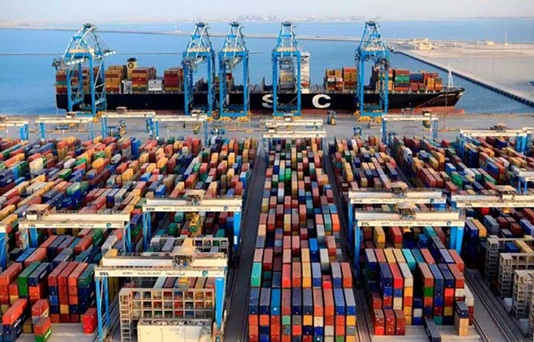
The Union Budget 2026–27 has proposed a complete exemption from Basic Customs Duty (BCD) on 17 cancer-related drugs and medicines, providing immediate financial relief to patients suffering from cancer and rare diseases and signalling a policy shift towards healthcare affordability.
What is Basic Customs Duty (BCD) ?

Basic Customs Duty (BCD) is a tax levied on goods imported into India.

  • It is imposed under the Customs Act, 1962.
  • Applicable rates are specified in the First Schedule of the Customs Tariff Act, 1975.
  • BCD is an ad-valorem duty, i.e., charged as a percentage of the value of imported goods.

Objectives of Basic Customs Duty

The imposition of BCD serves multiple policy goals:

  • Protection of domestic industries from cheaper foreign competition.
  • Regulation of international trade in line with national priorities.
  • Revenue generation for the government.
  • Strategic use as a policy tool, allowing exemptions or higher duties to support sectors such as healthcare, manufacturing, or national security.

BCD significantly affects the landed cost of imported goods, influencing prices paid by consumers.

How is Basic Customs Duty Calculated ?

The calculation of BCD involves a structured process:

1. Classification of Goods

  • Imported items are classified under specific Harmonised System (HS) codes.
  • The HS code determines the applicable duty rate.

2. Assessment of Value

  • The value is assessed based on the transaction value, which includes:
    • Cost of goods,
    • Insurance, and
    • Freight (CIF value).

3. Application of Duty Rate

  • The applicable BCD rate is applied to the assessed value to calculate the duty payable.

The Central Government has the authority to fully or partially exempt specific goods from BCD through notifications, as done for cancer drugs in the Union Budget 2026–27.

Union Budget 2026–27: Significance of BCD Exemption on Cancer Drugs

  • The exemption lowers the import cost of life-saving medicines, directly reducing treatment expenses.
  • It reflects a shift from revenue protection to public welfare and health prioritisation.
  • Such targeted exemptions are particularly relevant for rare diseases, where domestic manufacturing capacity may be limited.
  • The move aligns with India’s broader goal of universal health coverage and affordable access to critical drugs.

Other Types of Customs Duties in India

India’s customs framework includes several other duties, each serving a distinct purpose:

Additional Customs Duty (Countervailing Duty – CVD)

  • Imposed to offset subsidies provided by exporting countries.
  • Ensures domestic producers are not disadvantaged.

Special Additional Duty (SAD)

  • Levied on imports to counterbalance internal taxes like VAT/GST.
  • Protects domestic industries from low-cost imports.

Anti-Dumping Duty

  • Applied when foreign goods are sold in India below their normal value.
  • Prevents predatory pricing and protects local industries.

Protective Duties

  • Designed to shield domestic industries from foreign competition by raising import costs.

Safeguard Duties

  • Imposed temporarily under Section 8B of the Customs Tariff Act.
  • Used to protect domestic industries from sudden import surges.

National Calamity Contingent Duty (NCCD)

  • Levied to generate funds for natural disasters and national emergencies.
  • Rates vary depending on the commodity.

Broader Policy Implications

  • Rationalisation of customs duties can balance Make in India goals with consumer welfare.
  • Strategic exemptions highlight the use of taxation as a non-fiscal policy instrument.
  • In healthcare, reduced import duties complement domestic pharmaceutical capacity while ensuring affordability.

FAQs

What is Basic Customs Duty (BCD) ?

BCD is a tax levied on imported goods under the Customs Act, 1962, calculated as a percentage of the value of imports.

Why did the Union Budget 2026–27 exempt cancer drugs from BCD ?

To reduce treatment costs and improve access to life-saving medicines for patients with cancer and rare diseases.

Who decides BCD rates in India ?

Rates are prescribed under the Customs Tariff Act, 1975, and can be modified or exempted by the Central Government through notifications.

How is BCD different from anti-dumping duty ?

BCD is a general import tax, while anti-dumping duty targets unfairly low-priced imports that harm domestic industries.

Does BCD affect consumer prices ?

Yes, higher BCD increases the landed cost of imports, often leading to higher prices for consumers, while exemptions reduce prices.

Capital Market Tax Changes: Understanding Securities Transaction Tax (STT)

Prelims: (Economy + CA)
Mains: (GS 3 – Indian Economy, Financial Markets, Government Revenue)

Why in News ?

The Finance Minister has proposed a sharp increase—by up to 150%—in the Securities Transaction Tax (STT) on both futures and options (F&O) trading. This move is aimed at curbing excessive speculation, improving market stability, and boosting government revenues from capital market activity.

What is Securities Transaction Tax (STT) ?

Securities Transaction Tax (STT) is a direct tax levied on the purchase and sale of securities that are traded on recognised stock exchanges in India.

  • It is levied and collected by the Central Government.
  • STT is imposed irrespective of whether the transaction results in profit or loss.
  • It is charged on the value of the transaction, not on capital gains.
  • STT operates similarly to Tax Deducted at Source (TDS), as it is deducted at the time of the transaction itself.
  • The tax is remitted to the government through stock exchanges and intermediaries.

Legal Framework and Coverage

  • STT was introduced through the Finance Act, 2004 to simplify securities taxation and curb tax evasion.
  • It is governed by the Securities Transaction Tax Act (STT Act).
  • The Act specifies the exact transactions on which STT is leviable.

Taxable Securities Include:

  • Equities traded on stock exchanges,
  • Derivatives (futures and options),
  • Units of equity-oriented mutual funds,
  • Unlisted shares sold under an Offer for Sale (OFS) in an IPO and subsequently listed.

STT is NOT Applicable To:

  • Off-market transactions,
  • Commodity derivatives,
  • Currency derivatives.

STT Rates and Government Authority

  • The rate of STT varies depending on:
    • Type of security,
    • Nature of transaction (delivery vs non-delivery),
    • Whether it is a purchase or sale.
  • The Central Government has the authority to revise STT rates periodically, as proposed in the latest Budget for futures and options.

Why Increase STT on Futures and Options ?

  • F&O trading volumes in India have surged, driven largely by retail participation.
  • Excessive speculative activity can:
    • Increase market volatility,
    • Heighten systemic risk,
    • Divert household savings away from productive investments.
  • Raising STT:
    • Increases the transaction cost, discouraging excessive churning.
    • Enhances tax compliance and revenue.
    • Signals regulatory intent to moderate speculative trading without imposing outright restrictions.

What are Futures and Options (F&O) ?

Futures and options are types of derivative contracts, whose value is derived from an underlying asset such as:

  • Shares,
  • Stock indices,
  • Exchange-traded funds (ETFs),
  • Commodities, or other financial instruments.

Key Features of Derivatives:

  • Used for hedging risk, speculation, and portfolio diversification.
  • Contracts are entered into at a pre-determined price for execution at a future date.

Difference Between Futures and Options:

Feature

Futures

Options

Obligation

Both buyer and seller are obligated to transact

Buyer has the right, but not the obligation

Seller’s Position

Must deliver at expiry

Must honour if buyer exercises option

Risk

Symmetrical for both parties

Asymmetrical – limited for buyer, potentially unlimited for seller

Implications of Higher STT on F&O Markets

  • Retail traders may face higher costs, discouraging frequent short-term trades.
  • Market liquidity may reduce marginally, but speculative excess could decline.
  • Could encourage a shift towards long-term investing rather than leveraged trading.
  • Enhances the government’s ability to regulate financial markets through fiscal tools, complementing regulatory measures by SEBI.

FAQs

What is Securities Transaction Tax (STT) ?

STT is a direct tax levied on the purchase and sale of securities traded on recognised stock exchanges in India.

Why is STT being increased on futures and options ?

To curb excessive speculation, enhance market stability, and increase government revenue from derivatives trading.

Is STT charged even if a trader makes a loss ?

Yes, STT is levied on the transaction value regardless of profit or loss.

Does STT apply to commodity and currency derivatives ?

No, STT applies only to equities and equity-related instruments, not to commodities or currency derivatives.

How is STT different from capital gains tax ?

STT is levied at the time of transaction on its value, while capital gains tax is charged on the profit made from selling securities.

Bharat-VISTAAR: AI-Powered Digital Backbone for Smart Agriculture

Prelims: (Science & Technology + CA)
Mains: (GS 3 – Agriculture, Technology in Governance, Inclusive Growth)

Why in News ?

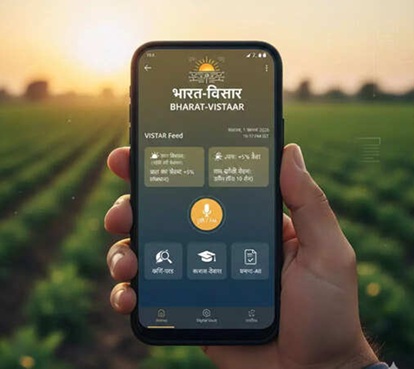
The Union Finance Minister has proposed the launch of Bharat-VISTAAR, a new digital tool for the agriculture sector, aimed at transforming farm advisory services through artificial intelligence (AI) and integrated data systems.
What is Bharat-VISTAAR ?

Bharat-VISTAAR stands for Virtually Integrated System to Access Agricultural Resources.
It is a multilingual, AI-powered digital platform designed to provide customised, real-time advisory services to farmers across India.

The platform integrates:

  • AgriStack portals, and
  • The ICAR package of agricultural practices,

with advanced AI systems to deliver accurate, location-specific, and crop-specific guidance.

Key Features of Bharat-VISTAAR

  • Multilingual Interface: Ensures accessibility for farmers across diverse linguistic regions.
  • AI-Driven Advisory: Uses artificial intelligence to analyse data and provide tailored recommendations.
  • Integrated Databases: Combines government agricultural datasets with scientific research from ICAR.
  • Real-Time Decision Support: Offers timely guidance on sowing, irrigation, fertilisation, pest control, and harvesting.
  • Risk Reduction: Helps farmers anticipate weather shocks, pest outbreaks, and market fluctuations.

Significance for Indian Agriculture

Bharat-VISTAAR is expected to:

  • Enhance farm productivity through scientific, data-backed advisory.
  • Improve farmer decision-making by offering personalised and timely information.
  • Reduce production risks by predicting and managing climate, pest, and market uncertainties.
  • Promote technology adoption in small and marginal farming.
  • Strengthen last-mile service delivery, bridging the gap between agricultural research and farm practices.

This aligns with India’s broader goals of doubling farmers’ income, promoting climate-resilient agriculture, and building a digitally empowered rural economy.

What is AgriStack ?

AgriStack is the digital foundation being developed by the Government of India to integrate data and services across the agriculture ecosystem.

Objectives of AgriStack:

  • Create a unified digital infrastructure for agriculture.
  • Enable better access to credit, insurance, and input services.
  • Provide localised, data-driven advisory to farmers.
  • Improve market access and price discovery.
  • Support efficient planning and implementation of government schemes.

AgriStack serves as the backbone for platforms like Bharat-VISTAAR by supplying reliable, farmer-centric data.

Role of ICAR in Bharat-VISTAAR

The Indian Council of Agricultural Research (ICAR) contributes its:

  • Crop-wise and region-wise best practices,
  • Research-based agronomic packages,
  • Pest and disease management protocols,
  • Climate-smart agriculture guidelines.

By integrating ICAR’s scientific knowledge with AI and AgriStack data, Bharat-VISTAAR aims to deliver precision agriculture advisory at scale.

Way Forward

To maximise the impact of Bharat-VISTAAR:

  • The government should ensure data accuracy, privacy, and security.
  • Digital literacy among farmers must be strengthened through training and extension services.
  • Integration with weather systems, market platforms, and credit institutions should be expanded.
  • Continuous upgrading of AI models using field feedback will be essential for relevance and trust.

If implemented effectively, Bharat-VISTAAR could become a cornerstone of India’s digital agriculture transformation.

FAQs

What does Bharat-VISTAAR stand for ?

It stands for Virtually Integrated System to Access Agricultural Resources.

What is the main purpose of Bharat-VISTAAR ?

To provide AI-driven, customised agricultural advisory services to farmers to improve productivity and reduce risks.

Which platforms are integrated into Bharat-VISTAAR ?

It integrates AgriStack portals and the ICAR package of agricultural practices.

How does Bharat-VISTAAR benefit farmers ?

By offering real-time, localised guidance on crops, inputs, weather, pests, and markets, enabling better decision-making.

What is AgriStack ?

AgriStack is the government’s digital foundation for agriculture, aimed at integrating data and services to improve access to credit, inputs, markets, and government schemes.

« »
  • SUN
  • MON
  • TUE
  • WED
  • THU
  • FRI
  • SAT
Have any Query?

Our support team will be happy to assist you!

OR
X