New
Hindi Medium: (Delhi) - GS Foundation (P+M) : 8th June 2026, 6:30 PM Hindi Medium: (Prayagraj) - GS Foundation (P+M) : 1st June 2026, 5:30 PM English Medium: (Prayagraj) - GS Foundation (P+M) : 7th June 2026, 8:00 AM Hindi Medium: (Delhi) - GS Foundation (P+M) : 8th June 2026, 6:30 PM Hindi Medium: (Prayagraj) - GS Foundation (P+M) : 1st June 2026, 5:30 PM English Medium: (Prayagraj) - GS Foundation (P+M) : 7th June 2026, 8:00 AM

Current Affairs for 03 June 2026

New Digital Maritime Initiatives of the Ministry of Ports, Shipping and Waterways

Why in News ?

Recently, the Ministry of Ports, Shipping and Waterways (MoPSW) launched several digital initiatives to strengthen service delivery, transparency, and accountability in the maritime sector. These digital governance platforms have been developed by the Directorate General of Shipping (DGS).

Major Digital Initiatives

1. Unified Ship Recycling Credit Note Module

  • The government has launched a portal under the new Ship Recycling Credit Scheme
  • Under this scheme, ship owners recycling vessels at Hong Kong Convention (HKC)-compliant Indian ship recycling yards will receive a credit note equivalent to 40% of the vessel’s scrap value
  • The credit note can be redeemed for new shipbuilding projects in India
  • The scheme is part of the ₹70,000 crore Maritime Development Package announced in 2025. 

Significance

  • Encourages domestic shipbuilding. 
  • Promotes a circular maritime value chain and sustainable recycling practices. 

2. Hong Kong International Convention (HKC)

  • A global convention developed under the International Maritime Organization (IMO), effective from June 2025
  • Aims to ensure that ship recycling is conducted in a manner that is safe for human health and the environment. 
  • Ships of 500 Gross Tonnage (GT) and above must maintain an Inventory of Hazardous Materials (IHM)
  • Recycling is permitted only at authorized and compliant ship recycling facilities

3. 24×7 Grievance Redressal Module (e-Navik)

  • Indian seafarers can now register complaints through: 
    • e-Navik Portal 
    • WhatsApp 
    • Toll-free Helpline 
    • E-mail 
  • Enables quicker resolution of grievances from any location. 
  • Strengthens India's commitment to the Maritime Labour Convention (MLC)

4. Ship Registration Module (e-Samudra)

  • Digitizes and simplifies the ship registration process. 
  • Aims to align India’s maritime administration with global standards. 
  • Enhances efficiency and ease of doing business in the shipping sector. 

5. Medical Practitioner Module

  • Streamlines the registration and monitoring of doctors authorized to issue medical certificates to seafarers. 
  • Helps prevent the issuance of fraudulent medical certificates. 
  • Improves transparency and reliability in maritime medical certification. 

Logistics Port Performance Index (LPPI) 2024–25

On the same occasion, the Union Minister released the Logistics Port Performance Index (LPPI) 2024–25 under the Sagar Aankalan Framework.

What is LPPI ?

  • A national benchmarking tool for evaluating and improving the operational performance of Indian ports. 
  • Designed to enhance the efficiency and competitiveness of ports. 

Key Objectives

LPPI supports the following national initiatives:

  • PM Gati Shakti National Master Plan 
  • Maritime India Vision 2030 
  • Maritime Amrit Kaal Vision 2047 

Assessment Parameters

Ports are evaluated on the basis of:

  • Cargo Handling Performance 
  • Vessel Turnaround Time 
  • Berth Idle Time 
  • Other Operational Efficiency Indicators 

The index assigns equal weightage to:

  • Absolute Performance 
  • Year-on-Year Improvement 

Top Performing Ports (2024–25)

Cargo Category

Top Performer

Dry Bulk Cargo

Paradip Port, Odisha

Liquid Bulk Cargo

Sikka Port, Gujarat

Container Cargo

Mundra Port, Gujarat

AUKUS: A New Dimension of Strategic Security Cooperation in the Indo-Pacific Region

Why in the News ?

Recently, AUKUS member countries announced plans to further strengthen maritime cooperation. This initiative will develop state-of-the-art underwater drones and deploy US nuclear-powered submarines to Australia from 2027. This move is considered significant amid growing strategic challenges in the Indo-Pacific region.

What is AUKUS ?
  • AUKUS is a trilateral security and defense partnership established between Australia, the United Kingdom (UK), and the United States of America (USA).
  • It was established in September 2021.
  • Its objective is to strengthen the defense capabilities of member countries and promote security and stability in the Indo-Pacific region.

Why was AUKUS needed ?

  • The Indo-Pacific region has become a major hub for global trade, maritime routes, and strategic competition. Recognizing emerging security challenges in the region and the growing role of advanced military technologies, the three countries established a long-term defense partnership.
  • The objective of AUKUS is not limited to military cooperation, but also to promote the development and shared use of advanced defense technologies.

Key objectives of AUKUS

  • Strengthening the defense capabilities of member countries.
  • Joint development of advanced military technologies.
  • Promoting defense industrial cooperation.
  • Ensuring stability and security in the Indo-Pacific region.
  • Enhancing maritime security and surveillance capabilities.
  • Developing collective solutions to emerging security challenges.

Two Key Pillars of AUKUS

Pillar I: Nuclear-Powered Submarine Program

  • Under Pillar I, the United States and the United Kingdom will provide technical, training, and industrial support to Australia to develop a nuclear-powered attack submarine (SSN) capability.
  • Under this arrangement, Australia will develop its first nuclear-powered submarine capability. Additionally, US nuclear-powered submarines will be forward-deployed in Western Australia from 2027, significantly enhancing the maritime surveillance, strategic presence, and deterrence capabilities of all three countries.

Pillar II: Advanced Defense Technologies

  • Under Pillar II, AUKUS member countries are collaborating on the joint development, research, and use of cutting-edge defense and military technologies. This includes areas such as artificial intelligence (AI), autonomous military systems, underwater drones, quantum technology, cybersecurity, electronic and electromagnetic warfare, modeling and simulation, and advanced information sharing technologies.
  • Its objective is to maintain the technological superiority of member countries and develop advanced military capabilities to effectively address future security challenges.

Significance of the Recent Announcement

  • Recently, AUKUS member countries announced plans to develop state-of-the-art underwater drones and deploy US nuclear-powered submarines in Australia, further strengthening maritime security cooperation. This initiative aims to strengthen maritime surveillance, intelligence gathering, and strategic deterrence capabilities in the Indo-Pacific region.
  • The forward deployment of US submarines in Western Australia from 2027 will strengthen AUKUS's strategic presence in the region. It will also significantly improve maritime surveillance, rapid military response to potential security challenges, and operational coordination and interoperability among member countries.
  • This move is considered significant in further strengthening AUKUS's long-term security strategy in the Indo-Pacific.

Significance for the Indo-Pacific Region

  • AUKUS has emerged as a key strategic security architecture amid emerging security challenges in the Indo-Pacific. This partnership plays a vital role in strengthening maritime security in the region, promoting the development of advanced defense technologies, and strengthening the collective deterrence capabilities of member countries.
  • AUKUS strengthens the security of key maritime trade routes, helping to ensure the uninterrupted flow of global supply chains and international trade. Furthermore, it maintains regional power balance, promotes defense technical cooperation, and strengthens the ability to effectively address maritime security, cyber threats, and emerging military challenges. Thus, AUKUS has emerged as an important platform for promoting stability, security, and strategic cooperation in the Indo-Pacific region.

Significance for India

  • Although India is not a member of AUKUS, this alliance is important from the perspective of India's strategic, economic, and security interests. India considers the Indo-Pacific region a key focus of its foreign and security policy, and any strategic changes in the region have a direct or indirect impact on its interests.
  • AUKUS is likely to promote maritime security and stability in the Indo-Pacific, which is important for India as most of its trade and energy supply routes pass through this region. Furthermore, this partnership appears to be consistent with India's vision of a "Free, Open, and Inclusive Indo-Pacific." Furthermore, arrangements like AUKUS influence regional power balances, defense cooperation, and security dynamics, which India closely monitors in light of its long-term strategic interests.

Challenges and Criticisms

  • While AUKUS is seen as an initiative to strengthen security cooperation in the Indo-Pacific region, it has also raised several concerns and criticisms. Experts believe that the transfer of nuclear-powered submarine technology to Australia could spark a new debate about nuclear proliferation. Although these submarines will not carry nuclear weapons, some countries consider the transfer of sensitive nuclear technology a concern.
  • Furthermore, there are fears that AUKUS could intensify military competition and an arms race in the Indo-Pacific. Some countries believe that this arrangement could promote the militarization of the region and affect the balance of power. Furthermore, this alliance also has the potential to increase geopolitical competition and tensions between major powers, potentially impacting regional stability. Therefore, while AUKUS is considered an important platform for security cooperation, there is ongoing global debate about its long-term strategic implications.

Conclusion

AUKUS is not just a defense alliance, but a long-term strategic partnership centered on advanced military technologies, strategic cooperation, and maritime security. Through cooperation in areas such as nuclear-powered submarines, artificial intelligence, quantum technology, and autonomous military systems, the alliance is reshaping the security architecture of the Indo-Pacific region. Although concerns are raised about nuclear proliferation, regional militarization, and geopolitical tensions, AUKUS is considered one of the most important defense and technology initiatives of the 21st century. In the future, its role could become even more significant in influencing Indo-Pacific stability, maritime security, and the global strategic balance.

Andhra Pradesh's Natural Farming Programme Receives Prestigious Food Planet Award 2026

Why in the News ?

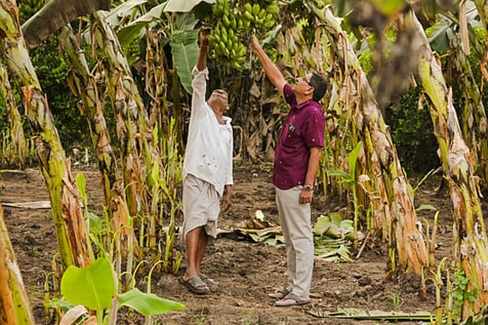
  • Andhra Pradesh Community Managed Natural Farming (APCNF) has been awarded the 2026 Food Planet Prize. This award is considered one of the world's most prestigious environmental awards for promoting food systems transformation and sustainable agriculture.
  • The award was presented at a ceremony held in Båstad, Sweden, on June 2, 2026. The award provides a sum of US$1.5 million (USD) to the winning initiative.

What is the Food Planet Prize ?

  • The Food Planet Prize is established by the Curt Bergfors Foundation of Sweden.
  • Its aim is to encourage initiatives that contribute to making global food systems more sustainable, environmentally friendly, and climate-resilient.
  • More than 1,000 nominations were received from around the world for the year 2026.
  • Of these, 35 initiatives from 19 countries and six continents were longlisted, with APCNF among the four finalists.

What is APCNF ?

  • The Andhra Pradesh Community Managed Natural Farming Programme (APCNF) was launched in 2016 by Rythu Sadhikara Samstha (RySS), a charity under the Agriculture Department of the Government of Andhra Pradesh.
  • The program aims to encourage farmers to adopt natural farming while reducing their dependence on chemical fertilizers and pesticides.
  • Today, this initiative is considered one of the largest community-led agroecology movements in the world.

Key Features of the Program

  • Approximately 1.8 million farmer families are involved in the program.
  • 3.4 lakh women self-help groups (SHGs) are key partners.
  • More than 10,000 Community Resource Persons (CRPs) are employed to support and train farmers.
  • Farmer scientists and mentors play an active role in documenting and disseminating natural farming techniques.
  • The program promotes sustainable agriculture by reducing dependence on chemical inputs.

Key Reasons for the Award

  • The Food Planet Award jury honored APCNF for the following achievements:
    • Improving soil health.
    • Conserving biodiversity.
    • Making agriculture more resilient to climate change.
    • Reducing farmers' production costs.
    • Promoting conservation of natural resources.
    • Developing community-based agricultural models.

Andhra Pradesh Government's Response

  • Andhra Pradesh Chief Minister N. Chandrababu Naidu described this as a historic achievement for India, saying the state aims to achieve a "100 percent natural Andhra Pradesh by 2047."
  • State Agriculture Minister Kinjarapu Atchannaidu said the program has significantly contributed to reducing farmers' costs and increasing their net income. He also pointed out that more than 60 percent of the community resource persons training farmers are women.

National and International Impact

  • APCNF's agricultural practices are now being shared with 22 states in India.
  • Countries such as Sri Lanka and Zambia have also shown interest in this model and are working towards adopting it.
  • This program has the potential to give India global leadership in the field of natural farming.

Significance for Farmers

  • This program has provided small and marginal farmers with the opportunity to adopt sustainable agriculture at low costs. Farmers are benefiting from chemical-free production, improved soil health, and stable income.
  • According to Kuruda Radha, a farmer from Alluri Sitarama Raju district, natural farming has provided her family with chemical-free food and reduced her farming costs.

Conclusion

Andhra Pradesh's Community Managed Natural Farming Programme (APCNF) has emerged as a successful model for sustainable development, environmental protection, and farmer welfare in the agricultural sector. The 2026 Food Planet Prize is a testament to the fact that agriculture can be made more sustainable, profitable, and climate-resilient through community participation and natural farming practices. This initiative is an inspiring example not only for India but also for the world.

« »
  • SUN
  • MON
  • TUE
  • WED
  • THU
  • FRI
  • SAT
Have any Query?

Our support team will be happy to assist you!

OR