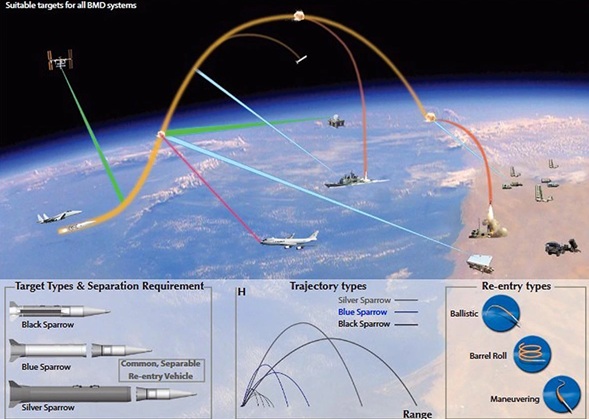
Recently, international media reports have suggested that Israel may have used the Blue Sparrow missile in an attack that allegedly resulted in the death of Iran’s Supreme Leader Ali Khamenei. However, this claim has not been independently confirmed. The discussion has nevertheless brought the Blue Sparrow missile back into the spotlight.
The Blue Sparrow missile is actually part of Israel’s advanced missile testing system, developed to simulate the threat of enemy ballistic missiles.
The Blue Sparrow missile belongs to Israel’s Sparrow missile family, which includes three major missiles:
These missiles were developed by the Israeli defense technology company Rafael Advanced Defense Systems.
Their primary purpose is to act as target missiles for testing Israel’s missile defense system, the Arrow missile defense system, by simulating real ballistic missile threats.
The Blue Sparrow is an air-launched target ballistic missile. This means it is launched from a fighter aircraft to mimic the behavior of an enemy ballistic missile, allowing missile defense systems to be tested under realistic conditions.
It is typically launched from Israeli Air Force fighter jets such as the McDonnell Douglas F-15 Eagle.
The Blue Sparrow missile incorporates several modern technologies that allow it to replicate the flight characteristics of real ballistic missiles.
Main technical specifications:
Unlike conventional missiles, the Blue Sparrow follows a semi-ballistic flight path.
Its flight phases typically include:
Because it exits and re-enters the atmosphere, intercepting it with air defense systems becomes more complex.
| Prelims : (Economy + CA) Mains : (GS 2 – Welfare Schemes; GS 3 – Financial Inclusion, Labour Welfare) |
The Employees’ Provident Fund Organisation (EPFO) has approved auto-settlement of small inoperative Provident Fund (PF) accounts with balances of ₹1,000 or less. The decision was taken during the 239th meeting of the Central Board of Trustees (CBT).
This step aims to address the growing number of dormant accounts and ensure that small unclaimed balances are automatically transferred to members’ bank accounts linked with Aadhaar and EPFO records.

India’s formal workforce benefits from a statutory retirement savings system known as the Employees’ Provident Fund (EPF). The scheme was created to provide long-term financial security to workers in the organised sector.
The EPF operates under the Employees’ Provident Funds and Miscellaneous Provisions Act, 1952 and is administered by the Employees’ Provident Fund Organisation (EPFO).
The scheme plays a crucial role in ensuring income security after retirement for millions of workers.
The Employees’ Provident Fund Organisation is a statutory body under the Government of India responsible for managing provident fund and pension schemes.
It is governed by the Central Board of Trustees (CBT), which includes representatives from the government, employers, and employees.
The organisation manages three key social security schemes :
The EPFO operates through a nationwide network of 147 offices across India to administer these schemes and provide services to workers and employers.
An inoperative EPF account refers to a provident fund account in which no interest is credited after a specified period due to inactivity.
An EPF account typically becomes inoperative when :
However, if the member is below 55 years of age, the account continues to earn interest until the age of 58, even if no contributions are made.
As of March 31, 2025, the EPFO recorded :
These figures exclude accounts belonging to international workers.
The large number of dormant accounts highlights challenges such as :
To address the issue of dormant accounts, the Central Board of Trustees of EPFO approved a pilot project for auto-settlement of inoperative accounts with small balances.
The initial phase will cover :
If the pilot project proves successful, the auto-settlement system may later be extended to accounts with balances above ₹1,000.
The EPFO is one of the largest social security organisations in the world.
The organisation manages a massive corpus exceeding ₹28.34 lakh crore.
Among the 31.83 lakh inoperative accounts, inactivity periods vary significantly.
These figures show that many provident fund accounts remain unclaimed for long periods.
The analysis of inoperative accounts also reveals a significant imbalance in fund distribution.
Most inoperative accounts contain relatively small balances.
In contrast, a small number of accounts contain a large share of funds.
This indicates that substantial amounts remain locked in a limited number of dormant accounts.
To implement the auto-settlement mechanism effectively, the EPFO conducted a Know Your Customer (KYC) verification exercise.
The pilot project focuses on accounts that meet the following criteria :
The analysis identified :
These accounts will be eligible for automatic settlement.
The EPFO is conducting a pilot validation study across 10 regional offices.
The pilot will examine accounts with balances up to ₹50,000 to evaluate operational feasibility.
For balances above ₹1,001, the following accounts have been identified :
These accounts may be included in future phases of the auto-settlement programme.
The initiative helps ensure that workers receive their rightful savings without complex claim procedures, particularly for small balances.
Automatic settlement reduces the workload of EPFO offices by eliminating the need for manual claim processing for small accounts.
Large amounts of retirement savings remain unclaimed in inactive accounts. The initiative helps return these funds to beneficiaries.
The use of Aadhaar-linked bank accounts and digital verification systems supports the government’s push toward transparent and efficient service delivery.
By simplifying withdrawal processes, the policy may increase public confidence in statutory social security schemes.
Despite its benefits, the initiative faces several challenges :
Outdated contact details and incomplete KYC records may limit successful auto-settlement.
Many workers may remain unaware of their EPF balances and entitlements.
Large-value dormant accounts may require additional verification before settlement.
Frequent job changes can result in multiple PF accounts, complicating fund consolidation.
To address the issue of dormant provident fund accounts more effectively, the following measures may be considered :
These measures could significantly improve the efficiency and accessibility of India’s social security framework.
FAQs1. What is the Employees’ Provident Fund (EPF) ? The EPF is a government-backed retirement savings scheme in which both employees and employers contribute a portion of the employee’s salary to build a retirement corpus. 2. What is an inoperative EPF account ? An EPF account becomes inoperative when no contributions are made for three consecutive years after the member retires or turns 55. 3. What is EPFO’s new auto-settlement initiative ? EPFO has approved automatic settlement of inoperative accounts with balances of ₹1,000 or less by transferring the amount directly to the member’s Aadhaar-linked bank account. 4. Why do many EPF accounts become inactive ? Accounts may become inactive due to job changes, retirement without claim submission, lack of updated KYC details, or unawareness among workers. 5. Will auto-settlement be extended to larger balances ? If the pilot project is successful, EPFO may expand the auto-settlement mechanism to cover accounts with balances above ₹1,000 in future phases. |
| Prelims : (International Relations + CA) Mains : (GS 2 – International Relations, Social Justice, Women Empowerment) |
The Minister of State for Women and Child Development will participate in the 70th session of the Commission on the Status of Women (CSW-70) at the United Nations Headquarters in New York.
The annual session brings together global leaders, policymakers, civil society organisations, and activists to review progress on gender equality and women’s empowerment and to strengthen international commitments toward advancing women's rights.

Gender equality and women’s empowerment have long been central goals of the international community. Following the establishment of the United Nations in 1945, member states recognised the need for a specialised global body to address discrimination against women and promote gender equality.
In response, the Commission on the Status of Women (CSW) was created in 1946 through a resolution of the United Nations Economic and Social Council (ECOSOC).
The commission was established to focus specifically on promoting women's rights across political, economic, civil, social, and educational spheres.
Over time, the CSW evolved into the principal global intergovernmental body dedicated to gender equality and the empowerment of women and girls.
It plays a critical role in shaping global norms, policies, and standards aimed at eliminating discrimination and improving women's participation in all aspects of society.
The Commission on the Status of Women works as a policy-making and monitoring body within the United Nations system.
Its core objectives include :
The commission promotes equal rights and opportunities for women in areas such as:
It gathers and analyses data regarding the conditions and challenges faced by women and girls worldwide, helping inform policy decisions.
The commission contributes to the development of international legal and policy frameworks that promote women’s rights and gender equality.
It reviews progress made by countries in implementing international commitments related to gender equality.
In 1996, the United Nations Economic and Social Council expanded the mandate of the CSW to strengthen its role in global gender governance.
The Commission was assigned a leading responsibility to :
The Beijing Declaration and Platform for Action, adopted in 1995 during the Fourth World Conference on Women in Beijing, remains the most comprehensive global agenda for women’s empowerment.
Adopted by 189 countries, it outlines a roadmap for achieving gender equality in areas such as :
The CSW plays a central role in reviewing the implementation of this agenda and identifying emerging challenges.
The Commission on the Status of Women consists of 45 member states at any given time.
Members are elected by the United Nations Economic and Social Council (ECOSOC).
Seats are allocated based on equitable geographical distribution to ensure balanced global representation.
Representation generally follows this pattern :
Member states serve four-year terms on the commission.
The 70th session of the commission continues the tradition of annual global meetings to review progress on gender equality.
These sessions bring together :
The sessions include :
Discussions focus on emerging challenges, policy innovations, and global strategies to accelerate gender equality.
The CSW serves as the primary global intergovernmental forum dedicated to advancing women’s rights.
It shapes international norms and policy commitments aimed at eliminating discrimination.
The commission reviews implementation of major global agreements such as :
The commission’s recommendations influence national policies related to :
The CSW provides a platform for countries to exchange best practices, share experiences, and collaborate on gender equality initiatives.
Despite decades of international commitments, significant challenges remain.
Women continue to face discrimination in employment, political representation, and access to resources.
Violence against women remains a major global human rights issue.
Women are disproportionately represented in informal employment and low-paying sectors.
Women have lower access to digital technologies, internet connectivity, and digital skills, limiting their participation in the digital economy.
Strengthening the impact of global forums such as the Commission on the Status of Women requires :
Advancing gender equality remains essential not only for social justice but also for sustainable economic development and inclusive governance worldwide.
FAQs1. What is the Commission on the Status of Women (CSW) ? It is the principal global intergovernmental body within the United Nations dedicated to promoting gender equality and empowering women and girls. 2. When was the Commission on the Status of Women established ? The commission was established in 1946 through a resolution of the United Nations Economic and Social Council (ECOSOC). 3. What is the main role of the CSW ? Its main role is to promote women’s rights, monitor progress on gender equality, and shape global policies related to women’s empowerment. 4. What is the Beijing Declaration and Platform for Action ? It is a landmark global framework adopted in 1995 that outlines comprehensive strategies to achieve gender equality and empower women and girls. 5. How many member states serve on the CSW ? The commission consists of 45 member states, elected by ECOSOC for four-year terms based on geographical representation. |
| Prelims : (Sports Governance + CA) Mains : (GS 2 – Welfare of Scheduled Tribes; GS 3 – Sports Development, Inclusive Growth) |
The Union Minister for Youth Affairs and Sports recently announced that the inaugural edition of the Khelo India Tribal Games will be held from March 25 to April 6, marking a major initiative aimed at promoting sports among India’s tribal communities.
The event will be hosted in the state of Chhattisgarh, bringing together tribal athletes from across the country and providing them with a national platform to showcase their sporting talent.
India has increasingly recognised sports as an important tool for social inclusion, youth development, and national integration. Tribal communities, which constitute a significant portion of India’s population, possess rich traditions of physical endurance, agility, and indigenous sports.
However, many tribal athletes often face limited access to infrastructure, training facilities, and national sporting platforms.
To address these gaps, the Government of India launched the Khelo India Scheme, a flagship initiative of the Ministry of Youth Affairs and Sports, aimed at identifying and nurturing sporting talent at the grassroots level.
Within this broader framework, the Khelo India Tribal Games has been conceptualised as a dedicated sporting event to encourage participation from tribal youth and integrate them into India’s sports ecosystem.
The Khelo India Tribal Games (KITG) is a national-level sporting event specifically designed to provide tribal athletes with opportunities to compete, gain recognition, and pursue professional sporting careers.
The inaugural edition will be hosted by Chhattisgarh, a state known for its large tribal population and strong sporting culture.
The games will witness participation from athletes representing most states and Union Territories of India, reflecting the diversity of tribal communities across the country.
The event will be jointly managed by multiple organisations, including :
This collaborative structure ensures professional management and adherence to national sporting standards.
The inaugural edition will include seven medal sports, representing a mix of traditional and modern competitive sports.
These sports have been selected due to their popularity and the strong presence of tribal athletes in these disciplines.
The event will also feature two demonstration sports :
Demonstration sports aim to promote indigenous and traditional sporting practices.
The official mascot of the Khelo India Tribal Games is “Morveer.”
The name is derived from two culturally significant words in Chhattisgarhi :
The mascot represents the spirit, resilience, and strength of tribal communities.
The Khelo India Scheme is a flagship Central Sector Scheme launched by the Government of India to promote sports at the grassroots and elite levels.
The scheme aims to :
The programme includes several initiatives such as :
In 2020, the Khelo India Games were declared an “Event of National Importance” under the Sports Broadcasting Signals (Mandatory Sharing with Prasar Bharati) Act, 2007, ensuring wider broadcasting and public visibility
The initiative provides a dedicated national platform for tribal athletes to showcase their talent, many of whom traditionally excel in sports requiring endurance and agility.
The games can help identify talented athletes who may later represent India in national and international competitions.
By focusing on tribal communities, the programme supports inclusive development and empowerment of marginalised groups.
Inclusion of demonstration sports such as Mallakhamb and Kabaddi helps preserve and promote traditional Indian sports.
Hosting the event in Chhattisgarh highlights the role of sports in regional development, tourism, and community engagement.
Despite initiatives like the Khelo India Tribal Games, several challenges remain :
Many tribal regions lack adequate training facilities and stadiums.
Tribal athletes often do not have access to high-quality coaching and sports science support.
Financial barriers may prevent talented athletes from pursuing sports careers.
Remote tribal areas often face connectivity challenges that restrict participation in national competitions.
To maximize the impact of the Khelo India Tribal Games, the government can focus on :
By encouraging participation and recognising talent from tribal communities, the initiative can contribute to inclusive sporting excellence in India.
FAQs1. What are the Khelo India Tribal Games ? The Khelo India Tribal Games are a national sporting event aimed at promoting sports participation and talent among India’s tribal communities. 2. Which state will host the first Khelo India Tribal Games ? The inaugural edition of the games will be hosted by the state of Chhattisgarh. 3. Which sports will be included in the Khelo India Tribal Games ? Seven medal sports will be featured: athletics, football, hockey, weightlifting, archery, swimming, and wrestling. 4. What is the mascot of the Khelo India Tribal Games ? The mascot is “Morveer,” symbolising courage, pride, and the spirit of tribal communities. 5. Under which scheme are the Khelo India Tribal Games organised ? The event is organised under the Khelo India Scheme, a flagship initiative of the Ministry of Youth Affairs and Sports aimed at promoting sports development in India. |
| Prelims : (Defence & Security + CA) Mains : (GS 3 – Defence Technology, Internal Security; GS 2 – International Relations, Global Security Architecture) |
Recent reports suggest that Iran has destroyed a key radar system associated with the Terminal High Altitude Area Defense (THAAD) deployed by the United States in the Middle East.
The radar forms a crucial component of the THAAD missile defence network that detects and tracks incoming ballistic missiles. The development has drawn attention to the strategic importance of missile defence systems in modern warfare and regional security dynamics.
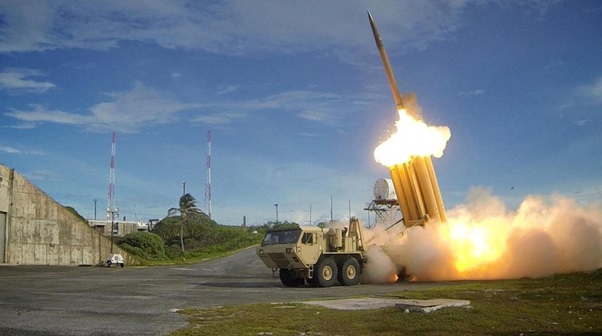
Ballistic missiles have become one of the most significant threats in modern warfare because they can carry conventional, nuclear, chemical, or biological warheads across long distances at extremely high speeds.
To counter this threat, several countries have developed Ballistic Missile Defence (BMD) systems, which are designed to detect, track, and intercept incoming missiles before they reach their targets.
The United States has developed a layered missile defence architecture known as the Ballistic Missile Defense System (BMDS).
This system integrates multiple defence layers, including :
Within this architecture, THAAD provides a critical upper-tier defence layer designed to intercept ballistic missiles during the final phase of their flight trajectory.
The Terminal High Altitude Area Defense (THAAD) is one of the most advanced missile defence systems developed by the Lockheed Martin for the United States.
The system is specifically designed to detect, track, and intercept short-range, medium-range, and limited intermediate-range ballistic missiles during their terminal phase.
Unlike traditional missile defence systems that rely on explosive warheads, THAAD uses a direct kinetic impact technique, making it more precise and reducing collateral damage.
The system is deployed by the United States and several allied countries to protect strategic locations, military bases, and population centres from missile threats.
THAAD is designed to intercept missiles during the terminal stage of their trajectory, just before they reach their intended targets.
It can destroy incoming threats :
This capability provides an additional defensive layer beyond traditional missile defence systems.
One of the defining features of THAAD is its “hit-to-kill” technology.
Instead of using explosive warheads, the interceptor missile destroys the incoming target by directly colliding with it at extremely high speeds.
The impact generates immense kinetic energy that destroys the target missile.
Advantages of this approach include :
The THAAD system can intercept ballistic missile targets at a range of approximately 150–200 kilometres.
This range allows the system to defend large areas and strategic installations against missile attacks.
A complete THAAD battery consists of several integrated components that work together to detect and destroy incoming missiles.
These missiles are designed to collide with incoming ballistic missiles using kinetic energy.
They are equipped with advanced guidance systems that allow precise targeting.
THAAD interceptors are deployed using mobile truck-mounted launchers, which increase operational flexibility and allow rapid deployment to strategic locations.
Each launcher typically carries eight interceptor missiles.
The AN/TPY-2 Radar is a powerful long-range radar that plays a crucial role in detecting and tracking incoming ballistic missiles.
Functions of the radar include :
Because of its long detection range, the radar also contributes to regional missile surveillance and early warning networks.
This unit serves as the command and control centre of the THAAD system.
It coordinates :
The THAAD battery also includes additional support equipment for maintenance, power supply, and operational coordination.
A standard THAAD battery generally includes :
Each launcher carries eight interceptor missiles, providing significant defensive capability against multiple missile threats.
THAAD forms an important layer in the multi-tier missile defence architecture, complementing lower-altitude systems like the Patriot missile defence system.
Countries facing missile threats deploy THAAD to protect :
This is particularly important in regions with active missile development programmes.
The presence of advanced missile defence systems can strengthen deterrence by reducing the effectiveness of an adversary’s missile capabilities.
The United States has deployed THAAD in several allied countries to enhance regional security.
Examples include deployments in :
These deployments help counter missile threats in geopolitically sensitive regions.
Despite its strategic importance, the THAAD system has also generated geopolitical concerns.
Some countries argue that THAAD deployments can alter the strategic balance of power in a region.
Missile defence systems like THAAD involve very high development, deployment, and maintenance costs.
Although highly advanced, missile defence systems cannot guarantee interception of all incoming missiles, especially during large-scale attacks.
The powerful radar systems associated with THAAD can monitor large areas, which has raised strategic and diplomatic concerns among neighbouring countries.
As missile technologies continue to evolve, countries are increasingly investing in advanced missile defence systems to protect their national security interests.
Future developments may focus on :
Balancing missile defence capabilities with diplomatic efforts will remain crucial to maintaining global strategic stability.
FAQs1. What is the THAAD system ? The Terminal High Altitude Area Defense (THAAD) system is an advanced missile defence platform developed by the United States to intercept and destroy incoming ballistic missiles during their terminal phase. 2. How does THAAD destroy incoming missiles ? THAAD uses “hit-to-kill” technology, where interceptor missiles destroy targets by directly colliding with them using kinetic energy instead of explosive warheads. 3. What is the role of the AN/TPY-2 radar in the THAAD system ? The AN/TPY-2 radar detects and tracks incoming ballistic missiles and provides targeting information for the interceptor missiles. 4. What types of missiles can THAAD intercept ? THAAD is designed to intercept short-range, medium-range, and limited intermediate-range ballistic missiles. 5. Why is THAAD strategically important ? The system strengthens missile defence capabilities, protects critical infrastructure, and enhances deterrence against ballistic missile threats. |
| Prelims : (Environment & Ecology+ CA) Mains : (GS 3 - Environment, Climate Change, Biodiversity) |
The Centre for Science and Environment (CSE) released the State of India’s Environment 2026, an annual assessment of India’s environmental conditions first published in 1982.
The report presents a comprehensive overview of emerging environmental challenges in India, including the rising frequency of extreme weather events, increasing flood risks, changes in wildlife behaviour, and persistent gaps in air pollution monitoring.
It also connects India’s environmental trends to global climate developments. Experts warn that the world may soon exceed the Paris Agreement 1.5°C global warming threshold, signalling a possible climate tipping point that could intensify environmental crises.

The State of India’s Environment (SoE) report is one of the country’s most authoritative environmental assessments.
The report aims to :
It covers a wide range of issues including :
By combining scientific data with policy analysis, the report acts as a critical reference for policymakers, researchers, and environmental planners.
The report notes that 2025 recorded the highest frequency and impact of extreme weather events in India in the past four years.
Between January 1 and November 30, 2025, extreme weather events occurred on 99% of the days in the country.
These included :
These figures highlight the growing vulnerability of agriculture and human settlements to climate variability.
The data reveals a steady increase in both frequency and impact of extreme weather events.
|
Year |
Extreme Weather Days |
Deaths |
Crop Area Affected |
|---|---|---|---|
|
2025 |
99% of days |
4,419 |
17.41 million hectares |
|
2024 |
88% of days |
3,393 |
3.61 million hectares |
|
2023 |
89% of days |
3,208 |
2.09 million hectares |
The dramatic rise in crop damage in 2025 highlights the growing threat to food security and rural livelihoods.
Certain states experienced unusually high numbers of extreme weather days.
These states faced repeated floods, landslides, or rainfall extremes, showing that climate impacts are becoming geographically widespread.
The report warns that global warming is intensifying flood risks in India.
A warmer climate leads to :
This makes floods more frequent, widespread, and unpredictable.
Urban areas are particularly vulnerable due to :
The report emphasizes shifting from post-disaster relief to pre-disaster resilience.
Key measures include :
The report recommends nature-based solutions as sustainable flood management strategies.
Examples include :
These solutions improve water management while preserving ecological balance.
The report highlights an increase in human fatalities due to tiger attacks near reserves.
Between January and June 2025, at least 43 people were killed in such incidents.
For comparison :
This suggests that human–tiger conflicts remain persistently high.
Experts explain that tigers rarely become habitual man-eaters. However, attacks may occur when:
In such cases, humans may become easier targets.
India currently holds over 70% of the world’s wild tiger population.
However, many reserves are reaching saturation levels, forcing tigers to move outside protected areas.
Key challenges include :
Approximately 40% of tiger habitat across 20 states overlaps with areas inhabited by nearly 60 million people.
This proximity increases the likelihood of conflicts between wildlife and humans.
The report highlights significant gaps in air quality monitoring across India.
Only about 15% of India’s population (around 200 million people) lives within 10 km of a continuous air quality monitoring station.
In contrast, 85% of the population—over 1.2 billion people—lives outside measurable monitoring zones.
This makes it difficult to accurately assess pollution levels across large parts of the country.
Air pollution monitoring stations are mostly located in :
As a result, many regions remain unmonitored, including :
The report argues that this monitoring gap reflects structural inequality in environmental governance.
Regions with significant pollution sources—such as factories, mining zones, or transport corridors—often lack real-time monitoring systems.
This leads to :
The State of India’s Environment 2026 report is important for several reasons :
1. Highlights Climate Emergency
The rising frequency of extreme weather events shows that climate change impacts are already intensifying in India.
2. Signals Agricultural Risks
Massive crop damage threatens food security, farmer incomes, and rural stability.
3. Draws Attention to Biodiversity Challenges
Growing human–wildlife conflicts underline the need for better habitat management and coexistence strategies.
4. Exposes Pollution Monitoring Gaps
The report highlights the need to expand air quality monitoring networks across smaller towns and industrial regions.
5. Calls for Climate-Resilient Development
It stresses integrating climate science into infrastructure, urban planning, and environmental governance.
FAQs1. What is the State of India’s Environment report ? It is an annual environmental assessment published by the Centre for Science and Environment that analyses major environmental trends, climate impacts, and ecological challenges in India. 2. What major issue did the 2026 report highlight ? The report highlighted the sharp rise in extreme weather events, which occurred on 99% of the days in 2025, causing thousands of deaths and large-scale crop damage. 3. Why are flood risks increasing in India ? Flood risks are increasing due to climate change, heavier rainfall events, urbanisation, and encroachment on natural floodplains. 4. Why are tiger attacks on humans increasing ? Tiger attacks are linked to habitat pressure, declining prey, aging or injured tigers, and increasing human settlements near forests, which raise human–wildlife interactions. 5. What is the main concern regarding air pollution monitoring in India ? Only 15% of the population lives near air quality monitoring stations, leaving most regions without reliable pollution data and creating gaps in environmental governance. |

Our support team will be happy to assist you!


 Contact Us
  New Batch : 9555124124/ 7428085757
  Tech Support : 9555124124/ 7428085757