| (GS III- Environment and Ecology) |
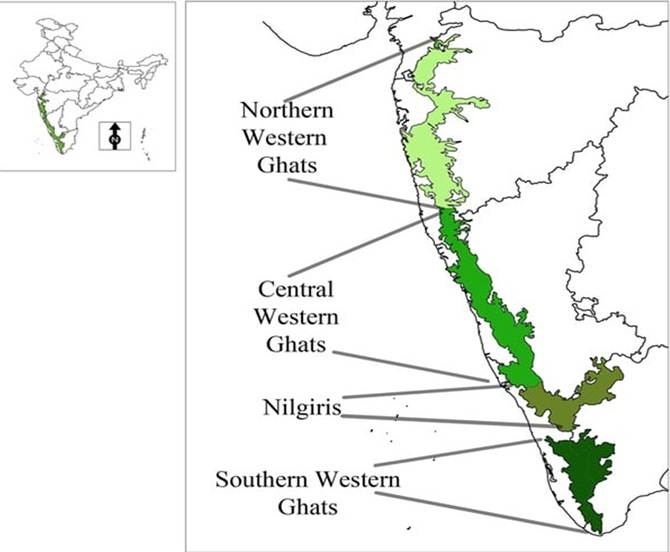
Recently, the Karnataka government rejected the Kasturirangan Committee’s report for the environmental conservation of the Western Ghats. The state government argued that the report exaggerated the extent of the Ecologically Sensitive Area (ESA), which could hinder developmental projects. This decision has once again revived the debate between development and environmental conservation.
|
Point |
Details |
|
Formation |
Formed in 2012 by the central government following objections from states to the Gadgil Committee report. |
|
Chairperson |
Dr. K. Kasturirangan |
|
Objective |
To study the environmental status of the Western Ghats and provide policy recommendations for its conservation. |
|
Key Recommendations |
- Declare about 37% of the Western Ghats (≈60,000 sq km) as ESA. |
|
Threat |
Details |
|
Human Activities |
Rapid urbanization, unregulated tourism, expansion of agricultural land, and mining have damaged the ecology. |
|
Mining & Industry |
Extraction of iron ore, bauxite, manganese, etc., has led to soil erosion and water pollution. |
|
Climate Change |
Changes in rainfall patterns, droughts, and increased landslides. |
|
Deforestation |
Illegal logging is causing fragmentation of wildlife corridors. |
|
Policy Disagreements |
Opposition from affected states—especially Karnataka, Maharashtra, and Goa—has delayed ESA notification. |
“Development is meaningful only when it is balanced with the environment.”
| (GS -III- Environment and Ecology) |
India, being a country with diverse geomorphology and rich biodiversity, faces the challenge of balancing development with environmental conservation. To maintain this balance, the government has developed the concept of Ecologically Sensitive Zones (ESZs). The idea is to allow controlled development without disturbing the ecological balance of protected areas.

"Not to stop development, but to regulate it in an environmentally sustainable manner."
Definition:-
Though the term “ESZ” is not explicitly mentioned in a specific law, its legal foundation is derived from:
|
Provision |
Description |
|
Environment (Protection) Act, 1986 |
Section 3(2)(v) empowers the central government to regulate industrial and developmental activities in areas that pose a threat to the environment. |
|
Environment (Protection) Rules, 1986 (Rule 5) |
Allows the government to restrict or regulate certain activities in designated areas. |
|
MoEFCC Guidelines (2011) |
Guidelines for ESZ demarcation, activity categorization, and boundary determination. |
|
Supreme Court Orders (2022) |
Directed that a minimum 1 km ESZ should be established around every National Park and Wildlife Sanctuary. |
|
Type |
Description / Examples |
|
Prohibited |
Mining, thermal power plants, large buildings, waste disposal plants, radioactive materials, high-pollution industries. |
|
Regulated |
Agriculture, fisheries, tourism, small-scale industries – only with environmental approval. |
|
Permitted |
Organic farming, afforestation, environmental education, eco-tourism, community-based livelihoods, reforestation. |
Each ESZ has a Zonal Master Plan that specifies permissible activities in different zones.
|
Challenge |
Description |
|
Local opposition & livelihood concerns |
Villagers may be dissatisfied due to restrictions on farming, construction, or tourism. |
|
Administrative coordination |
Delays in decision-making between MoEFCC and state governments. |
|
Weak monitoring & enforcement |
Many zones exist only on paper; monitoring committees may be inactive. |
|
Development vs conservation |
Infrastructure projects (highways, dams, hydro projects) often clash with conservation policies. |
|
Policy ambiguity |
Lack of uniform standards; “site-specific” approach leads to inconsistency. |
|
Area |
Description |
|
Ramgarh Vishdhari Tiger Reserve (Rajasthan) |
ESZ proposed between 1 km to 14.79 km; local farmers raised concerns about land-use restrictions. |
|
Silent Valley National Park (Kerala) |
Eco-tourism and community conservation projects encouraged in the ESZ. |
|
Kaziranga National Park (Assam) |
Supreme Court banned mining; ESZ helped in biodiversity conservation. |
| (Prelims: Contemporary International Events) |
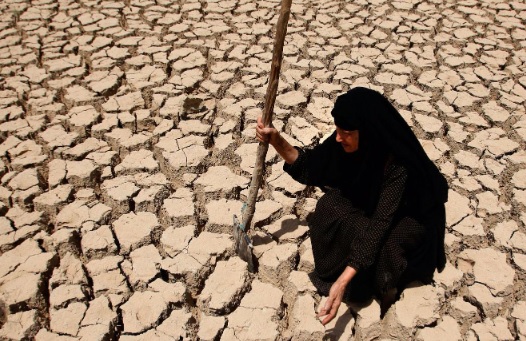
According to recent reports, the water level in the dam reservoirs supplying water to the northeastern Iranian city of Mashhad has fallen below 3%, and the country is facing a severe water crisis. The president has warned that if the situation does not improve, the capital, Tehran, may have to be evacuated.
| (Prelims Exam; Environment and Ecology) |
According to a study published in the journal Nature Ecology and Evolution, the biomass movement of humans on Earth is 40 times greater than that of all terrestrial animals, birds, and insects combined.

This study demonstrates the global scale of human activities. We are not only the most mobile species on Earth's surface, but our mobility has profoundly impacted climate change, pollution, and ecological balance. Therefore, it is essential that humanity balances its dynamic power with responsibility and environmental protection, so that the natural balance of life on Earth is maintained.
| GS Paper-II — International Relations |

The platform was created to develop:
|
Pillar |
Key Areas |
Objective |
|
Economic Cooperation |
Trade, investment, transport, digital connectivity |
Promote regional development and economic integration |
|
Energy Security |
Renewable energy, rare earth minerals, water resources |
Ensure alternative energy sources and stable energy supply |
|
Security Cooperation |
Terrorism, extremism, drug trafficking, cross-border crimes |
Maintain peace and political stability in the region |
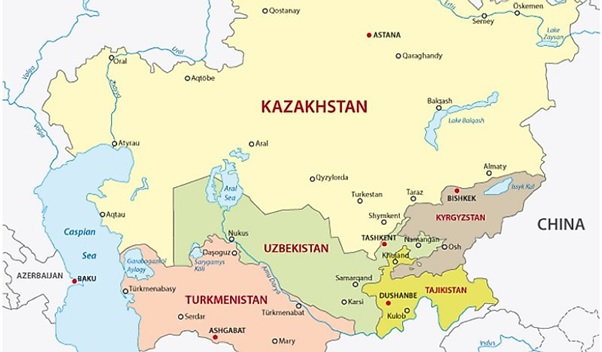 Central Asia has historically been under Russian and Chinese influence. Through C5+1, the USA seeks to offer a third strategic alternative.
Although India is not part of C5+1, Central Asia is a key geopolitical region for India’s foreign policy.
Objective: Develop broad political, economic, security, and cultural partnerships with Central Asian countries.
|
Area |
Priority |
|
Security |
Joint response to terrorism and extremism; stability in Afghanistan |
|
Energy |
Ensure supply of oil, gas, and uranium (especially from Kazakhstan and Turkmenistan) |
|
Connectivity |
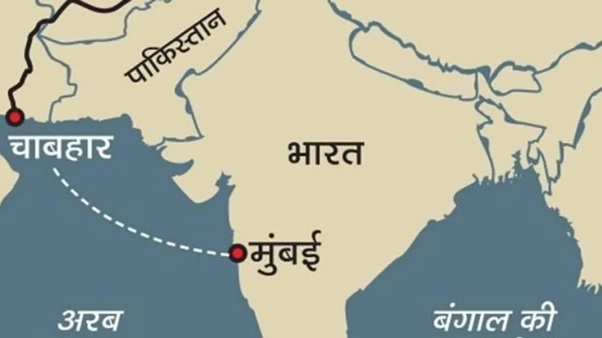
Develop alternative routes to overcome maritime constraints |
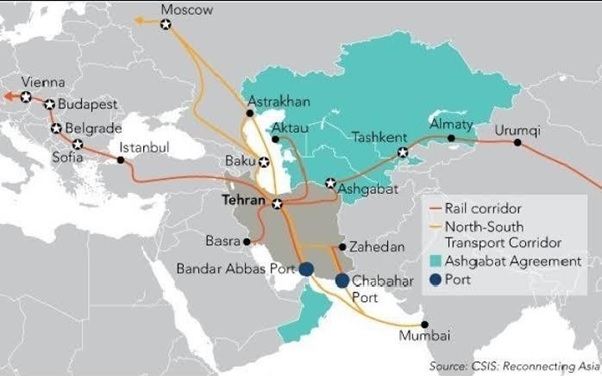
|
Stage |
Route/Region |
|
1 |
Starts from Mumbai (India) |
|
2 |
Passes through Iranian ports |
|
3 |
Crosses the Caspian Sea |
|
4 |
Continues through Russia |
|
5 |
Reaches Northern European countries |
|
Dimension |
Analysis |
|
Geopolitical Importance |
Central Asia is a buffer zone between Russia and China; the US seeks to make it a new strategic pivot. |
|
Economic Perspective |
Rich in rare earth minerals, oil, gas, and energy resources — a center of global competition. |
|
Importance for India |
Energy security, post-Afghanistan stability, and new connectivity opportunities. |
|
Diplomatic Challenge |
India must maintain balance among the US, Russia, and China. |
Thus, C5+1 is not only a US–Central Asia cooperation platform but is also emerging as a new center for the Asian power balance.
| GS Paper-III – Environment and Ecology |
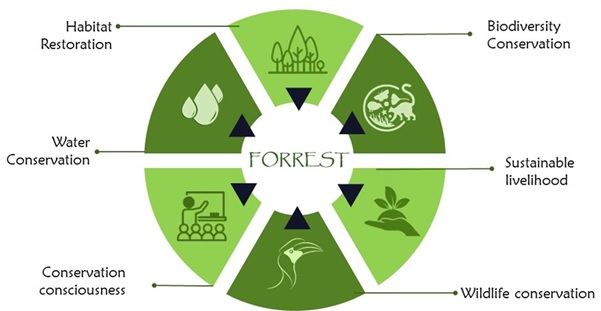
Forest conservation in India is not only environmental but also deeply rooted in cultural and spiritual traditions:
|
Indicator |
Data / Source |
|
Total Geographical Area |
3,287,469 sq km |
|
Total Forest Cover |
25.17% |
|
Tree Cover |
2.91% |
|
Total Forest + Tree Cover |
28.08% |
|
State with Highest Forest Cover |
Mizoram (84.53%) |
|
State with Lowest Forest Cover |
Haryana (3.62%) |
|
Very Dense Forest |
3.04% of total area |
|
Moderately Dense Forest |
9.33% |
|
Open Forest |
12.80% |
|
Mangrove Area |
5,992 sq km (0.1% increase) |
(i) Economic Contribution
(ii) Ecological Benefits
(iii) Social & Cultural Significance
|
Act / Institution |
Description |
|
Indian Forest Act, 1927 |
Forest administration, crime, timber trade regulations. |
|
Forest (Conservation) Act, 1980 |
Prohibits non-forest use without central approval. |
|
Amendment Act, 2023 |
Clarified “forest,” exempted boundary areas & security projects. |
|
Forest Rights Act, 2006 (FRA) |
Recognizes rights of tribal and traditional forest dwellers. |
|
National Forest Policy, 1988 |
Target: 33% forest cover. |
|
T.N. Godavarman Case (1996) |
Supreme Court defined “forest” broadly; Green Bench established. |
|
Constitution Article 48A |
State duty: protect environment & forests. |
|
Constitution Article 51A(g) |
Citizen duty: protect environment & forests. |
|
Initiative |
Objective |
|
REDD+ |
Reduce emissions from deforestation; provide economic incentives. |
|
Bonn Challenge |
Restore 350 million hectares by 2030. |
|
UN Decade on Ecosystem Restoration (2021–2030) |
Restore degraded ecosystems. |
|
Global Forest Vision 2030 |
Restoration, recovery, regeneration via 8 priority actions. |
|
Paris Agreement NDCs |
Create additional carbon sink of 2.5–3 billion tons CO₂. |
|
Region / Country |
Initiative |
Result |
|
Japan |
Forest Environment Tax |
Sustainable revenue for forest conservation. |
|
Congo Basin |
Forest Partnership Initiative |
Protects Africa’s “lungs of the world.” |
|
Kerala, India |
Miyawaki Urban Forests |
Dense urban forests with local biodiversity. |
|
Sikkim, India |
Community Forest Management |
Panchayats monitor & regenerate community forests. |

Our support team will be happy to assist you!

 Contact Us
  New Batch : 9555124124/ 7428085757
  Tech Support : 9555124124/ 7428085757