New
GS Foundation (P+M) - Delhi : 19th Jan. 2026, 11:30 AM Spring Sale UPTO 75% + 10% Off, Valid Till : 6th Feb., 2026 GS Foundation (P+M) - Prayagraj : 09th Jan. 2026, 11:00 AM Spring Sale UPTO 75% + 10% Off, Valid Till : 6th Feb., 2026 GS Foundation (P+M) - Delhi : 19th Jan. 2026, 11:30 AM GS Foundation (P+M) - Prayagraj : 09th Jan. 2026, 11:00 AM

Current Affairs for 11 February 2026

Network Readiness Index 2025

India has improved its ranking in the Network Readiness Index (NRI) 2025, jumping four places to 45th. India's score increased to 54.43/100, reflecting the country's strength and progress in digital and network readiness.
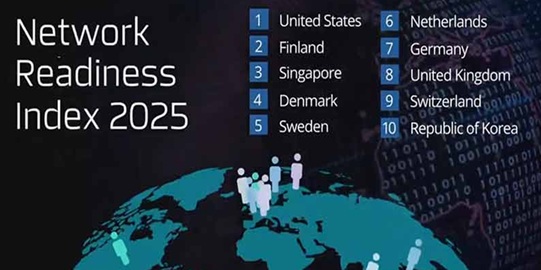

About the Network Readiness Index (NRI)

The Network Readiness Index (NRI) is a global index that measures how effectively countries are using information and communication technologies (ICTs) to drive economic growth, innovation, quality of governance, and social progress.

Publisher

The index is published by the Portulans Institute, an independent, non-profit research and educational institute based in Washington, D.C.

Objectives

  • To measure a country's digital network and technology readiness
  • To assess the extent to which ICT adoption is achieving inclusive growth, innovation, governance efficiency, and social impact.

Key Features

  • The NRI covers the economies of 127 countries.
  • The index is based on four main pillars:
    • Technology: Digital infrastructure, access, and future technologies
    • People: Skills, digital inclusion, and workforce readiness
    • Governance: Rules and policy, trust, and security
    • Impact: Economic, social, and environmental outcomes
  • It includes 53 indicators such as broadband access, AI research, digital trade, laws, and market size.
  • Countries are compared by income level to reveal which countries are performing better or worse than their income potential.

India's Performance in NRI 2025

Rank and Score

  • India ranked 45th, an increase of four places compared to 2024.
  • Score increased from 53.63 (2024) to 54.43 (2025).

Global Leadership

  • India ranked first in the world in the following areas:
    • Annual investment in telecommunications services
    • Scientific publications related to AI
    • Exports of ICT services
    • Laws and policies related to e-commerce

Robust infrastructure and use

  • India ranked second in the following areas:
    • FTTH/building internet subscriptions
    • Mobile broadband traffic
    • International internet bandwidth

Market Scale

India ranks third in terms of domestic market size, reflecting its large and digitally active consumer base.

Income-Adjusted Performance

According to the report, India's network readiness exceeds expectations for its income level. India ranks second in the category of low-middle income countries.
AI Impact Summit 2026

Context

  • India will host the AI ​​Impact Summit 2026 from February 16-20, 2026. This event is historic because for the first time, a significant forum on global AI governance is being held in the Global South.
  • The Summit's objective is not to impose immediate and binding regulations, but to develop practical, balanced, and long-term policy guidelines for AI. The Summit will place a special emphasis on linking AI governance with inclusive development, environmental sustainability, and broader societal impact.


Background: Evolution of the Global AI Debate

  • The AI ​​Impact Summit is the next step in a continuously evolving series of international meetings focused on AI governance.
  • Identifying the potential existential and catastrophic risks posed by AI was a key theme at the Bletchley Park AI Safety Summit in 2023.
  • Subsequently, the Seoul Summit 2024 broadened the scope of discussions to include innovation, inclusion, and the participation of developing countries.
  • The Paris AI Action Summit 2025 focused on implementation, economic opportunities, and industrial applications.
  • This series of conferences demonstrates that the global AI discussion has gradually moved beyond mere safety and risk control to development-oriented and practical concerns.

India's Approach: People, Planet, and Progress

  • Compared to previous conferences, India's approach is more humane and development-focused. Whereas previously, AI was viewed primarily from the perspective of regulation and risk management, India is grounding the discussion in the principle of "People, Planet, and Progress."
  • The aim is to develop AI solutions that address real socio-economic problems, especially in developing and underdeveloped countries.
  • This stance underscores India's dual identity—on the one hand, it is an emerging AI power, and on the other, it is also a representative voice of the collective concerns and aspirations of the Global South.
  • Through this conference, India seeks to strengthen its role in global AI governance and increase its share of the economic and developmental benefits generated by AI.

AI Impact Summit 2026: Expected Format and Significance

This conference will be one of the largest global events related to AI ever held. It will see broad participation from various regions and continents.

High-Level International Participation

  • Delegates from over 100 countries are expected to participate in the conference. These will include 15–20 heads of state or government, over 50 ministers, and over 40 CEOs of global and Indian companies.
  • Prime Minister Narendra Modi will inaugurate the conference, host a formal dinner, and address the CEO Roundtable.

Multi-Stakeholder Model

The event will be attended by governments, industry, academia, research institutions, civil society organizations, and international institutions. This reflects an inclusive and multi-stakeholder approach to AI governance.

Key Topics and Discussions

During the conference, various working groups will delve into the impact of AI on employment, reliable and secure frameworks for AI systems, and AI applications in key sectors such as healthcare, industry, and services.

India's AI Initiatives and Focus on Innovation

  • Under the ₹10,370 crore IndiaAI Mission, several indigenous AI language models will be launched during the conference, including foundational models and small language models.
  • Additionally, over 500 AI startups will be provided a platform, and approximately 500 sessions will be held parallel to the main event, making the summit a major global hub for innovation and entrepreneurship.

AI Impact Summit and China: Strategic Signals

  • Possible Chinese Participation: A Chinese delegation is expected to attend the conference. India formally invited China as both countries are focused on strengthening their domestic AI capabilities.
  • Conference format and diplomatic flexibility: This conference is not under any formal multilateral organization, but its structure is determined by the host country. This gave India the freedom to invite China despite geopolitical sensitivities.
  • Signs of thaw in bilateral relations: The invitation to China reflects a gradual thaw in India-China relations. The recent resumption of direct flights between the two countries after a five-year hiatus and the easing of restrictions on rare mineral supplies are examples of this.

Hardware and Energy: Structural Challenges Facing India

  • Dependence on computing hardware: A major weakness for India in the AI ​​field is the lack of domestic production of advanced computing hardware. High-end GPUs, the backbone of AI systems, are largely dependent on imports, limiting self-reliance.
  • Prospects for India-US Tech Cooperation: The proposed interim India-US trade agreement is expected to increase trade in technology products, especially GPUs and data center equipment, which could provide some support to India's AI capabilities.
  • Data Center Policy and Budgetary Indications: The Indian government has announced a tax holiday for foreign companies on data center establishments until 2047 to develop domestic AI infrastructure. However, the allocation for compute subsidies under the IndiaAI Mission in the Union Budget 2026–27 has been increased.
  • Energy Requirements and the Nuclear Option: The growing energy demands of AI data centers are emerging as a new challenge. Governments are beginning to consider nuclear power as a viable option for a long-term solution.

Conclusion

The AI ​​Impact Summit 2026 is not just an international conference for India, but a strategic opportunity to establish leadership in global AI governance. India's approach, focused on inclusive development, pragmatic policies, and the interests of the Global South, can provide a new direction to the global AI discourse. However, without addressing structural challenges related to hardware, energy, and investment, it will be difficult to fully capitalize on this opportunity. Nevertheless, this summit has the potential to elevate India's technology diplomacy and global role to new heights.

Motion to Remove the Speaker: Constitutional Process, Precedents, and Democratic Implications

Prelims: (Polity & Governance + CA)
Mains: (GS 2 – Parliament, Constitutional Offices, Democratic Accountability)

Why in News ?

The Opposition has moved a no-confidence motion against Lok Sabha Speaker Om Birla. Parliamentary sources indicate that the motion will now be examined and processed as per established constitutional and procedural rules.

The move follows criticism from the Congress and other parties, who accused the Speaker of not permitting the Leader of Opposition to quote from or discuss former Army Chief M M Naravane’s unpublished memoir.

The Opposition also objected to the Speaker’s claim that Prime Minister Modi could have been attacked inside the House, calling it unwarranted and contentious.

Background and Context: Speaker’s Office in India’s Parliamentary Democracy

The office of the Speaker of the Lok Sabha occupies a central position in India’s parliamentary system. As the presiding officer of the House, the Speaker is expected to function with neutrality, uphold constitutional values, protect minority rights, and ensure smooth legislative functioning.

Over time, however, the Speaker’s decisions—particularly regarding recognition of members, certification of Money Bills, disciplinary actions, and allocation of speaking time—have increasingly come under political scrutiny. The current controversy reflects growing tensions between the ruling party and the Opposition over procedural fairness, parliamentary debate, and the limits of presiding authority.

While India’s Constitution allows for the removal of the Speaker, the process is deliberately stringent to safeguard the dignity, stability, and independence of the office, ensuring that removal is not used as a routine political tool.

Removal of the Lok Sabha Speaker: What the Constitution Allows

The Lok Sabha Speaker (or Deputy Speaker) can be removed from office only through a strict constitutional process.

Under Article 94(c) of the Constitution, removal is possible by a resolution passed by a majority of all the then members of the Lok Sabha.
This provision applies only to the Lok Sabha, not the Rajya Sabha, and the procedural requirements are stringent, reflecting the high threshold set for removing the presiding officer of the House.

When Does the Lok Sabha Speaker or Deputy Speaker Vacate Office ?

Article 94 of the Constitution lays down the conditions under which the Speaker or Deputy Speaker vacates office:

  • Cessation of membership (Article 94(a)): They automatically vacate office if they cease to be a member of the Lok Sabha.
  • Resignation (Article 94(b)): They may resign at any time by submitting a written resignation.
  • Removal by resolution (Article 94(c)): They can be removed through a Lok Sabha resolution passed by a majority of all the then members of the House.

These provisions ensure both stability and accountability of the presiding officers.

Procedure to Remove the Lok Sabha Speaker or Deputy Speaker

  • A member seeking removal must submit a written notice to the Secretary-General of the Lok Sabha.
  • The notice may be jointly signed by two or more members, but the resolution cannot be moved unless at least 14 days’ notice is given.
  • After receipt, a motion for leave to move the resolution is listed in the List of Business in the members’ names.
  • The date fixed must be any day after the 14-day notice period, following which the House may consider the motion as per rules.

Past Precedents of No-Confidence Motions Against Lok Sabha Speakers

  • No-confidence motions have been moved against the Lok Sabha Speaker on three occasions—in 1954, 1966, and 1987.
  • For such a motion to proceed, it must be supported by at least two Members of Parliament, and 50 members must stand in support, fulfilling the House’s quorum.
  • The procedure is governed by Rules 200–203 of the Rules of Procedure and Conduct of Business in Lok Sabha.
  • Historically:
    • 1954: Motion against G V Mavalankar (India’s first Speaker)
    • 1966: Motion against Hukam Singh
    • 1987: Motion against Balram Jakhar

In all three cases, the motions failed, and none of the Speakers were removed from office, underscoring the high threshold for such action.

Guidelines Governing a No-Confidence Motion Against the Speaker

Under Rule 200A of the Rules of Procedure and Conduct of Business in Lok Sabha, a no-confidence motion against the Speaker must meet strict content and conduct requirements:

  • The resolution must be specific in its charges, clearly and precisely worded.
  • It must be free of arguments, inferences, ironic expressions, imputations, or defamatory statements.
  • Once the motion is admitted for discussion, the Member(s) who submitted it are not permitted to make a speech, underscoring the procedural rigor governing such motions.

What Follows If a No-Confidence Motion Is Admitted ?

  • If a no-confidence motion is admitted, members supporting it must rise in their places.
  • If at least 50 members stand, the presiding officer declares that leave is granted and schedules the motion for a day within 10 days.
  • If fewer than 50 members rise in support, the presiding officer declares that the member “has not the leave of the House”, and the motion does not proceed further.
  • Any resolution submitted without the required notice is not taken up, ending the process at the preliminary stage.
  • On the appointed day, the resolution is listed in the business of the House and taken up for discussion.
  • The mover(s) may be allowed to speak for up to 15 minutes, subject to the presiding officer’s permission, and the debate must be strictly confined to the charges stated in the resolution.

Speaker’s Role During Consideration of Removal Motion

  • While a removal motion is under discussion, the Speaker continues in office and, as a Member of the Lok Sabha, retains the right to participate and speak in the proceedings.
  • The Speaker is entitled to vote in the first instance on the resolution or related matters, but cannot exercise a casting vote in the event of a tie, preserving procedural fairness.

Significance of a No-Confidence Motion Against the Speaker

1. Reinforcing Parliamentary Accountability

Such motions, though rare, serve as an institutional mechanism to hold the presiding officer accountable to constitutional norms and parliamentary ethics.

2. Protecting the Neutrality of the Speaker’s Office

The high threshold ensures that the Speaker is insulated from routine political pressures, preserving the independence and dignity of the office.

3. Reflecting Health of Parliamentary Democracy

Open contestation over procedural fairness highlights the vibrancy of parliamentary democracy and the centrality of debate, dissent, and institutional checks.

4. Balancing Stability and Oversight

The stringent process balances the need for stability in legislative functioning with the democratic principle of oversight over constitutional offices.

5. Setting Normative Standards for Legislative Conduct

Debates around the Speaker’s role influence evolving conventions regarding impartiality, decorum, and procedural justice in Parliament.

Challenges and Way Forward

Challenges

  • Politicisation of the Speaker’s Office: Growing perceptions of partisan conduct can undermine public trust in parliamentary institutions.
  • Procedural Deadlocks: Repeated confrontations may disrupt legislative functioning and reduce productivity of Parliament.
  • Erosion of Parliamentary Conventions: Declining adherence to unwritten norms of impartiality and decorum risks weakening democratic culture.

Way Forward

  • Strengthen Institutional Conventions: Reinforce traditions of neutrality through political consensus and parliamentary ethics codes.
  • Enhance Transparency: Provide clearer reasoning and documentation for major procedural rulings.
  • Promote Dialogue: Encourage structured engagement between the ruling party and Opposition on parliamentary reforms.
  • Capacity Building: Regular orientation programmes for presiding officers and members on constitutional roles and procedures.
  • Codify Best Practices: Consider formal guidelines or conventions to clarify the Speaker’s discretionary powers and responsibilities.

FAQs

1. Under which Article can the Lok Sabha Speaker be removed ?

Under Article 94(c) of the Constitution, by a resolution passed by a majority of all the then members of the Lok Sabha.

2. Is a no-confidence motion against the Speaker common in India ?

No, it is extremely rare and has been attempted only three times since Independence, none of which succeeded.

3. What notice period is required for moving a removal motion ?

A minimum of 14 days’ written notice must be given to the Secretary-General of the Lok Sabha.

4. Can the Speaker participate in the proceedings during a removal motion ?

Yes, the Speaker can speak and vote but cannot exercise a casting vote in case of a tie.

5. Why is the process of removing the Speaker so stringent ?

To protect the neutrality, dignity, and independence of the Speaker’s office and prevent its misuse for routine political battles.

Curbing Deepfakes and Digital Harm: India’s New Framework for Regulating Synthetic Media

Prelims: (Polity + Governance + Science & Technology + CA)
Mains: (GS 2 – Governance, Fundamental Rights, Cyber Law; GS 3 – Science & Technology, Internal Security)

Why in News ?

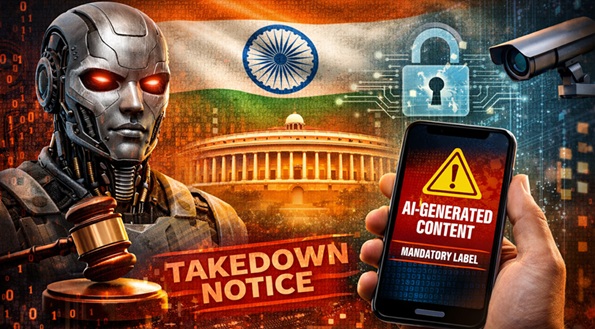
  • The Union Government has notified amendments to the Information Technology (Intermediary Guidelines and Digital Media Ethics Code) Rules, 2021, effective February 20, 2026.
  • The amendments aim to strengthen regulation of AI-generated (synthetic) content and drastically reduce takedown timelines for unlawful material.
  • They seek to curb the spread of non-consensual deepfakes, intimate imagery, and unlawful content, while reinforcing platform accountability under the IT Act, 2000.

Background and Context: Regulating AI in the Digital Public Sphere

Advances in generative artificial intelligence have dramatically lowered the cost and skill required to create hyper-realistic audio, video, and images. While these technologies enable creativity and innovation, they have also fueled a surge in deepfakes, misinformation, impersonation, and non-consensual intimate imagery.

Globally, governments are grappling with how to regulate synthetic media without undermining free speech and innovation. The European Union’s AI Act, China’s deepfake labelling rules, and emerging US policy debates reflect a shared concern over the societal harms of unregulated AI-generated content.

In India, the challenge is compounded by the scale of digital platforms, rapid virality, linguistic diversity, and the vulnerability of individuals—especially women and public figures—to online abuse. Existing takedown timelines under the IT Rules were increasingly seen as inadequate to prevent irreversible harm once content goes viral.

The February 2026 amendments mark a shift from reactive content moderation to proactive digital governance, embedding accountability, transparency, and rapid response into India’s regulatory framework.

Key Amendments at a Glance

1. Sharp Reduction in Removal Timelines

For Court/Government-declared illegal content:

  • Takedown timeline reduced to 3 hours (earlier 24–36 hours).

For non-consensual intimate imagery and deepfakes:

  • Takedown timeline reduced to 2 hours (earlier 24 hours).

For other unlawful content:

  • Takedown timeline reduced from 36 hours to 3 hours.

Rationale: Earlier timelines were seen as ineffective in preventing virality and irreversible reputational harm. The government argues that major platforms possess sufficient technical capacity for faster removal.

Concerns:

  • Determining “illegality” within 2–3 hours is operationally difficult.
  • Risk of over-censorship and precautionary takedowns.
  • Increased compliance burden for intermediaries.

2. Mandatory Labelling of AI-Generated Content

Legal definition of “Synthetically Generated Information (SGI):”
Audio, visual, or audio-visual content artificially created, generated, modified, or altered using a computer resource in a way that makes it appear real or indistinguishable from authentic events or persons.

Key features:

  • AI-generated imagery must be labelled “prominently.”
  • The earlier proposal requiring 10% of image space to carry the label has been diluted.
  • Platforms must:
    • Seek user disclosure for AI-generated content.
    • Proactively label content if disclosure is absent.
    • Remove non-consensual deepfakes.

Exclusions: Routine editing and quality-enhancing tools (e.g., smartphone touch-ups) are excluded—narrowing the scope from the draft October 2025 version.

Safe Harbour and Intermediary Liability

What is Safe Harbour ?

Under Section 79 of the IT Act, 2000, intermediaries are protected from liability for user-generated content, provided they exercise “due diligence.”

Impact of the amendment:

  • If an intermediary knowingly permits, promotes, or fails to act against unlawful synthetic content, it may be deemed to have failed due diligence.
  • This may result in loss of safe harbour protection, significantly increasing regulatory pressure on platforms and altering the liability landscape of digital intermediaries.

Administrative Changes

The amendment partially rolls back an earlier rule that limited States to appointing only one authorised officer for issuing takedown orders.

States may now designate multiple authorised officers, addressing administrative needs of populous States and improving enforcement capacity.

Trigger Events: The Global Deepfake Crisis

The urgency of reform follows global controversies, including:

  • AI platforms generating non-consensual intimate images of women.
  • Deepfake political speeches and impersonations undermining democratic trust.
  • Manipulated audio-visual content misrepresenting real-world events.

These incidents raise serious concerns about:

  • Privacy and dignity
  • Gender-based online violence
  • Electoral integrity and public order

India’s amendments place the country within a broader international movement toward stricter AI governance and platform accountability.

Governance and Constitutional Dimensions

Article 19(1)(a) – Freedom of Speech:

Overbroad or rushed takedowns may chill legitimate expression. Short timelines increase the risk of defensive over-removal by platforms.

Article 21 – Right to Privacy and Dignity:

Faster removal of non-consensual deepfakes strengthens protection of individual dignity, bodily autonomy, and reputational rights.

Federal Implications:

  • Allowing multiple State officers enhances decentralised enforcement and operational flexibility.
  • The amendments reflect a constitutional balancing act between free expression and protection from digital harm.

Significance of the Amendments

1. Protecting Individual Dignity and Privacy

Rapid takedown of deepfakes and intimate imagery strengthens constitutional protections under Article 21.

2. Enhancing Platform Accountability

By linking compliance to safe harbour protection, the rules shift responsibility onto intermediaries to act decisively and transparently.

3. Curbing AI-Driven Misinformation

Mandatory labelling and rapid removal reduce the risk of synthetic media distorting public discourse, elections, and social trust.

4. Aligning India with Global AI Governance Trends

The amendments place India alongside the EU, China, and other jurisdictions adopting stricter norms on synthetic media.

5. Strengthening Cyber Governance Architecture

The reforms modernise India’s digital regulatory framework to keep pace with rapidly evolving AI technologies.

Challenges and Way Forward

Challenges

  • Determining illegality within 2–3 hours: Legal ambiguity and unclear law enforcement communications may hinder accurate and timely decisions.
  • Risk of over-censorship: Platforms may err on the side of removal, potentially undermining free speech and digital innovation.
  • Compliance burden on Big Tech and smaller platforms: Real-time moderation requires advanced AI tools and human review; smaller platforms may struggle disproportionately.
  • Verification mechanisms: Ensuring authenticity of user declarations and deploying “reasonable technical measures” without violating privacy.

Way Forward

  • Clearer illegality standards: Develop structured guidance and standardised digital takedown protocols for platforms. 
  • Independent oversight mechanism: Establish appellate or review authorities to check arbitrary or excessive takedowns.
  • Strengthening AI detection tools: Promote indigenous AI detection systems under India’s national AI mission.
  • Harmonisation with the Digital Personal Data Protection Act:
    Ensure consistency in privacy, consent, and data protection standards.
  • Capacity building for States: Train authorised officers in cyber law, AI governance, and digital evidence handling.

FAQs

1. What are “synthetically generated information” (SGI) under the new rules ?

SGI refers to audio, visual, or audio-visual content artificially created or altered using computer resources in a way that makes it appear real or indistinguishable from authentic events or persons.

2. What are the new takedown timelines ?

Court/government-declared illegal content must be removed within 3 hours, and non-consensual deepfakes or intimate imagery within 2 hours.

3. How do the amendments affect intermediary safe harbour ?

If intermediaries fail to exercise due diligence in removing unlawful synthetic content, they may lose safe harbour protection under Section 79 of the IT Act.

4. Are all edited images considered AI-generated content ?

No. Routine editing and quality-enhancing tools, such as smartphone touch-ups, are excluded from the definition of synthetically generated information.

5. Why are these amendments constitutionally significant ?

They seek to balance freedom of speech (Article 19(1)(a)) with the right to privacy and dignity (Article 21) in the digital age.

India’s Civil Aviation Under Strain: Safety, Sustainability, and Systemic Reform

Prelims: (Economics + CA)
Mains: (GS 3 – Infrastructure, Transport, Internal Security; GS 2 – Governance and Regulation)

Why in News ?

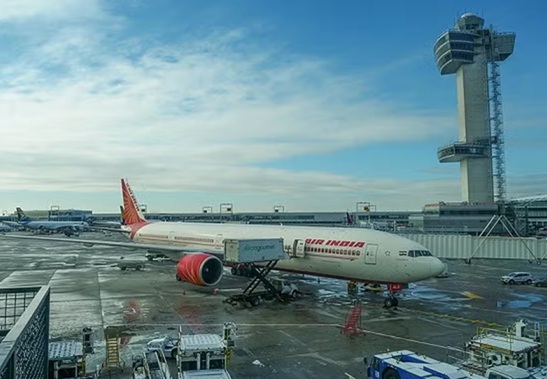
India’s aviation sector is under scrutiny following repeated operational disruptions, safety incidents, and declining service reliability among major airlines, raising concerns about the sustainability, safety, and resilience of the country’s rapidly expanding air transport system.
Background and Context: Growth Outpacing Governance

Over the past decade, India’s civil aviation sector has transformed into one of the fastest-growing in the world, driven by rising incomes, urbanisation, regional connectivity initiatives such as UDAN, and aggressive fleet expansion by private carriers. India is now the world’s third-largest domestic aviation market, reflecting a structural shift toward air travel as a mainstream mode of transport.

This rapid expansion, however, has increasingly outpaced institutional capacity, manpower availability, and regulatory oversight. The sector’s growth model—characterised by ultra-high aircraft utilisation, thin profit margins, and heavy dependence on global fuel markets—has created systemic fragilities.

Globally, aviation systems absorb shocks through spare capacity, robust training pipelines, and strong regulatory buffers. In contrast, India’s aviation ecosystem operates close to its limits, making it vulnerable to cascading failures from even minor disruptions.

Overview of India’s Aviation Sector

India operates over 840 aircraft and carries more than 350 million passengers annually, making aviation a key driver of economic integration, tourism, trade, and mobility.

Rapid growth in air travel demand has been driven by:

  • Rising incomes and middle-class expansion
  • Regional connectivity initiatives
  • Fleet expansion by private carriers

However, this expansion has exposed structural weaknesses related to manpower, regulation, market concentration, and cost pressures.

While the sector contributes significantly to national development, its current growth trajectory appears overstretched, raising concerns about sustainability, safety, and passenger welfare.

Operational Disruptions and Safety Concerns

The past year witnessed multiple operational failures, including:

  • Mass flight cancellations
  • Prolonged delays
  • Safety-related incidents

A major disruption in December involving IndiGo acted as a failed “stress test” for the system, revealing vulnerabilities that go beyond a single airline.

These incidents were not isolated but indicative of system-wide constraints, with airlines operating close to maximum capacity.

The rising frequency of safety notices issued by the aviation regulator points to deeper compliance and oversight challenges.

Pilot Shortage and Flight Duty Time Constraints

  • One of the most critical structural challenges is the acute shortage of trained pilots. India’s aviation expansion has outpaced its training capacity.
  • New Flight Duty Time Limitation (FDTL) norms, which mandate longer rest periods and reduced night operations, have made existing airline schedules difficult to sustain.
  • Major airlines operate with a pilot-to-aircraft ratio significantly below global benchmarks, increasing fatigue risks and operational fragility.
  • While India may require 25,000–30,000 pilots over the next decade, licensing and training bottlenecks have constrained supply, forcing airlines to rely on costly and limited foreign pilots as stopgap measures.

Regulatory Capacity and Oversight Gaps

  • Regulatory stress has compounded operational issues.
  • The aviation regulator faces significant staff shortages, with a large proportion of technical positions vacant despite rapid sectoral growth.
  • In practice, disruptions have often been managed through ad hoc exemptions rather than strict enforcement of safety norms.
  • This approach reflects a shift toward crisis management instead of preventive regulation, weakening long-term institutional capacity and undermining confidence in oversight mechanisms.

Market Concentration and the Aviation Duopoly

  • India’s domestic aviation market is highly concentrated, with two airline groups controlling nearly 90% of passenger traffic.
  • This level of concentration transforms dominant carriers into systemically important entities whose failures directly impact national connectivity.
  • On a majority of domestic routes, only one airline operates. Consequently, disruptions do not result in passenger redistribution but in the complete loss of connectivity, particularly affecting smaller cities and time-sensitive travel.

Entry of New Regional Airlines

To address concentration and improve connectivity, the government has approved new regional airlines aimed at serving underserved routes.

These entrants align with the objectives of the UDAN scheme, which has expanded regional air access across multiple States.

However, past failures of regional airlines highlight persistent challenges such as:

  • High fuel costs
  • Weak demand on thin routes
  • Infrastructure gaps
  • Intense price competition

Without sustained policy support—such as assured subsidies, better airport infrastructure, and relief from fuel price volatility—new entrants risk inheriting the same fragilities.

Structural Challenges and Fuel Price Volatility

  • Aviation Turbine Fuel (ATF) remains one of the biggest cost drivers for Indian airlines.
  • Prices are linked to global oil markets and currency fluctuations, exposing carriers to external shocks.
  • Combined with thin profit margins, this volatility has historically contributed to airline failures.
  • Globally, airlines maintain spare crew and capacity buffers to absorb shocks. Indian carriers, by contrast, operate at near-total utilisation, allowing minor disruptions to cascade across networks.

Significance of the Current Aviation Stress

1. Economic Growth and National Integration

Aviation underpins trade, tourism, business travel, and regional integration. Persistent disruptions threaten economic efficiency and investor confidence.

2. Passenger Safety and Welfare

Operational fragility and regulatory gaps directly affect passenger safety, service reliability, and trust in air travel.

3. Infrastructure and Employment Impact

The sector supports millions of jobs across airlines, airports, tourism, logistics, and manufacturing. Systemic stress risks employment stability.

4. Strategic Connectivity and National Security

Reliable aviation connectivity is critical for disaster response, border management, and strategic mobility.

5. Policy Credibility and Governance Capacity

The aviation crisis tests the state’s ability to regulate high-growth infrastructure sectors effectively and transparently.

Challenges and Way Forward

Challenges

  • Manpower shortages: Insufficient pilots, engineers, and regulatory personnel.
  • Regulatory overstretch: Limited enforcement capacity and reliance on ad hoc exemptions.
  • High market concentration: Systemic risks from airline dominance.
  • Fuel price volatility: Exposure to global oil markets and currency fluctuations.
  • Infrastructure and training gaps: Inadequate expansion of airports, simulators, and training institutions.

Way Forward

  • Expand pilot training capacity: Invest in domestic flight schools, simulators, and faster licensing pipelines.
  • Strengthen regulatory institutions: Fill vacancies, enhance technical expertise, and shift toward preventive regulation.
  • Promote competition: Facilitate entry of new airlines, rationalise slot allocation, and review competition policy in aviation.
  • Stabilise fuel costs: Consider rationalising ATF taxation, exploring long-term fuel hedging, and promoting sustainable aviation fuels.
  • Build system buffers: Encourage airlines to maintain spare crew and operational reserves to absorb shocks.
  • Enhance infrastructure: Accelerate airport modernisation, regional connectivity infrastructure, and air traffic management upgrades.

FAQs

1. Why is India’s aviation sector facing repeated disruptions ?

Due to pilot shortages, high aircraft utilisation, regulatory capacity gaps, fuel price volatility, and high market concentration.

2. What are Flight Duty Time Limitation (FDTL) norms ?

They are safety regulations that limit pilot working hours and mandate rest periods to reduce fatigue and enhance flight safety.

3. How concentrated is India’s aviation market ?

Two airline groups control nearly 90% of domestic passenger traffic, creating systemic risks.

4. What is the role of the UDAN scheme ?

UDAN aims to enhance regional connectivity by supporting flights to underserved and unserved airports.

5. What reforms are needed to stabilise India’s aviation sector ?

Key reforms include expanding pilot training, strengthening regulation, stabilising fuel costs, promoting competition, and building operational buffers.

Empowering Young Women Entrepreneurs: India’s Swavalambini Initiative Explained

Prelims: (Polity & Governance + CA)
Mains: (GS 2 – Social Justice, Governance; GS 3 – Skill Development, Entrepreneurship)

Why in News ?

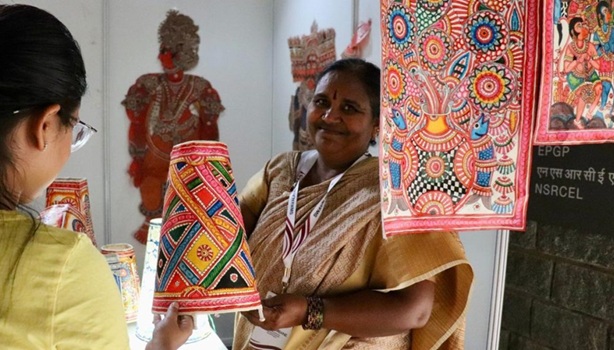
Recently, the Minister of State (Independent Charge), Ministry of Skill Development and Entrepreneurship (MSDE), informed the Lok Sabha about the Swavalambini Scheme, a national initiative aimed at promoting women entrepreneurship through structured training, mentorship, and institutional support.
Background and Context: Women Entrepreneurship in India

Despite significant progress in education and workforce participation, women in India continue to face systemic barriers to entrepreneurship, including:

  • Limited access to finance and collateral
  • Lack of business networks and mentors
  • Social norms discouraging risk-taking and enterprise ownership

India’s female labour force participation rate remains among the lowest globally, and women-led enterprises account for a relatively small share of total businesses, particularly in high-growth and formal sectors.

Recognising that entrepreneurship can serve as a powerful tool for women’s economic empowerment, financial independence, and leadership, the government has increasingly focused on skill development, enterprise promotion, and ecosystem building for women.

The Swavalambini Scheme emerges within this broader policy context, aiming to create a pipeline of confident, skilled, and networked young women entrepreneurs from educational institutions.

Overview of the Swavalambini Scheme

The Swavalambini Scheme is a women entrepreneurship programme designed to empower young women with the skills, mindset, and institutional support needed to establish their own businesses.

It introduces a structured, multi-stage training model to help participants move from:

  • Ideation
  • Skill acquisition
  • Business planning
  • Enterprise launch and sustainability

The scheme seeks to:

  • Cultivate an entrepreneurial mindset among female students
  • Increase awareness of government schemes, financial instruments, and market linkages
  • Build confidence, leadership, and innovation capabilities
  • Promote entrepreneurship as a viable and respected career path for women

Programme Structure and Implementation

Target Group:  1,200 female students from Higher Educational Institutes (HEIs) and universities across India.

Multi-Stage Training Model

1. Entrepreneurship Awareness Programme (EAP)

Participants undergo an introductory programme focused on:

  • Understanding entrepreneurship
  • Opportunity identification
  • Risk-taking and innovation
  • Basic business concepts

2. Entrepreneurship Development Programme (EDP)

This stage provides in-depth training on:

  • Business planning and operations
  • Financial management and access to credit
  • Market linkages and customer acquisition
  • Legal compliance and regulatory requirements
  • Networking and enterprise scaling

3. Mentorship and Handholding Support 

After formal training, participants receive:

  • One-on-one mentoring
  • Business incubation and advisory support
  • Guidance on accessing seed funding
  • Assistance in enterprise registration and compliance

This ensures that training translates into real, sustainable enterprises, rather than remaining theoretical.

Institutional Framework and Support Mechanisms

  • Implementing Agencies:
    • National Institute for Entrepreneurship and Small Business Development (NIESBUD), Noida
    • Indian Institute of Entrepreneurship (IIE), Guwahati
  • Supervising Authority:
    • Ministry of Skill Development and Entrepreneurship (MSDE) oversees execution, monitoring, and evaluation.
  • Strategic Support:
    • NITI Aayog provides:
      • Mentoring support
      • Facilitation of seed funding
      • Recognition of successful entrepreneurs through the Award To Reward (ATR) initiative

This multi-institutional approach ensures coordination between training, finance, recognition, and ecosystem development.

Significance of the Swavalambini Scheme

1. Advancing Women’s Economic Empowerment

By enabling women to create and own enterprises, the scheme promotes financial independence, asset ownership, and economic agency.

2. Enhancing Female Labour Force Participation

Entrepreneurship offers an alternative pathway to employment, particularly in regions where formal jobs are scarce or social norms limit women’s workforce participation.

3. Building a Sustainable Startup Pipeline

By targeting students, the scheme nurtures entrepreneurial talent early, strengthening India’s long-term startup ecosystem.

4. Supporting Inclusive Growth

Women-led enterprises often invest more in family health, education, and community development, contributing to broader social outcomes.

5. Aligning with National Development Goals

The scheme supports national objectives under:

  • Skill India Mission
  • Startup India
  • Women-led Development as a core governance vision

Challenges and Way Forward

Challenges

  • Access to finance: Even with training, women entrepreneurs often struggle to secure collateral-free loans or seed funding.
  • Social and cultural barriers: Gender norms may discourage women from pursuing entrepreneurship or scaling businesses.
  • Regional disparities: Institutional support and market access vary significantly across States.
  • Sustainability of enterprises: Early-stage ventures face high failure risks without long-term support.

Way Forward

  • Expand financial linkages: Strengthen connections with banks, NBFCs, venture funds, and government credit schemes.
  • Enhance mentoring networks: Involve successful women entrepreneurs, industry leaders, and alumni as mentors.
  • Integrate with incubation ecosystems: Link participants to startup incubators, innovation hubs, and MSME clusters.
  • Ensure long-term monitoring: Track enterprise survival, growth, and employment outcomes over time.
  • Promote digital entrepreneurship: Encourage women to leverage e-commerce, digital platforms, and remote work models.

FAQs

1. What is the Swavalambini Scheme ?

It is a national women entrepreneurship programme aimed at empowering young women with skills, mentorship, and support to establish sustainable businesses.

2. Who implements the Swavalambini Scheme ?

It is implemented by NIESBUD, Noida, and IIE, Guwahati, under the supervision of the Ministry of Skill Development and Entrepreneurship.

3. Who are the beneficiaries of the scheme ?

1,200 female students from higher educational institutions and universities across India.

4. What support does NITI Aayog provide under the scheme ?

NITI Aayog offers mentoring, facilitates seed funding, and recognises successful entrepreneurs through the Award To Reward (ATR) initiative.

5. Why is the Swavalambini Scheme significant ?

It promotes women-led development, enhances female labour force participation, strengthens India’s startup ecosystem, and supports inclusive economic growth.

Repatriating Sacred Heritage: Smithsonian’s Return of Three Indian Bronze

Prelims: (History & Culture + CA)
Mains: (GS 1 – Indian Art & Culture, GS 2 – International Relations, Cultural Diplomacy)

Why in News ?

Earlier this month, the Smithsonian’s National Museum of Asian Art (NMAA) announced it will return three historic bronze sculptures to the Government of India, acknowledging they were illegally removed from temple settings.
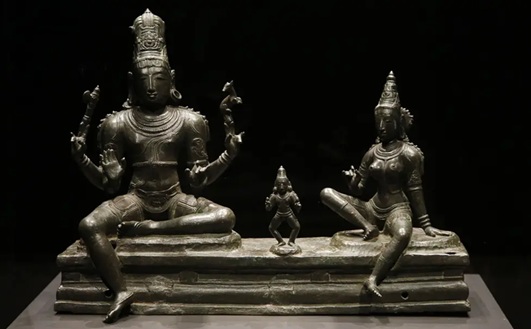
The artefacts include:

  • Shiva Nataraja (Chola period, ca. 990)
  • Somaskanda (Chola period, 12th century)
  • Saint Sundarar with Paravai (Vijayanagar period, 16th century)

The decision aligns with a global push for restitution of looted or illicitly trafficked cultural property to Asian countries such as Cambodia, Indonesia, Sri Lanka, and Thailand. As part of this broader effort, the United States returned 297 Indian antiquities in 2024 alone.

Of the three bronzes, two will be physically repatriated to India, while the Shiva Nataraja will remain at the Smithsonian on a long-term loan. The return follows detailed provenance research that traced their unlawful removal, underscoring growing institutional accountability in global museum practices.

Background and Context: Global Repatriation and Cultural Justice

  • For much of the 19th and 20th centuries, artefacts from colonised and developing regions were removed—often illegally or unethically—and housed in Western museums and private collections. Weak export controls, unequal power relations, and lax acquisition standards facilitated this large-scale displacement of cultural heritage.
  • In recent decades, there has been a growing international movement for restitution and repatriation, grounded in ethical museum practices, international conventions, and post-colonial justice. The UNESCO 1970 Convention marked a turning point by establishing norms against illicit trafficking and encouraging the return of stolen cultural property.
  • India, with its vast and living religious heritage, has increasingly pursued the recovery of stolen antiquities, particularly temple bronzes and sculptures removed during the mid-20th century. The Smithsonian’s decision reflects this global shift toward accountability, transparency, and respect for the cultural and spiritual rights of source communities.

The Three Bronzes: Sacred Origins and Iconography

All three sculptures were sacred processional bronzes, traditionally carried during temple rituals, reflecting the refined bronze-casting traditions of South India. These were not decorative objects but living icons central to worship and ceremonial life.

Shiva Nataraja: Lord of the Dance

The Shiva Nataraja bronze originated from the Sri Bhava Aushadesvara Temple in Tamil Nadu’s undivided Thanjavur district.
It portrays Shiva as “Lord of the Dance,” performing the ananda tandava (dance of bliss), symbolising cosmic creation, preservation, and destruction.

Somaskanda: The Divine Family

The Somaskanda bronze traces its provenance to the Visvanatha Temple in Mannargudi, Tamil Nadu.
It depicts:

  • Shiva seated with Parvati (Uma)
  • Their son Skanda, who may sit between or dance around them

Notably, the NMAA sculpture is missing Skanda. According to experts, Skanda was often cast separately and was typically the first figure to be lost or separated. Archival photographs show Skanda was already missing by 1959.

Crucially, provenance research revealed that buried or damaged bronzes could later be reinstalled in temples, challenging earlier scholarly assumptions that burial meant permanent removal from ritual use.

Saint Sundarar with Paravai: Devotion in Bronze

The third sculpture depicts Saint Sundarar and his wife Paravai, originally from a Shiva temple in Veerasolapuram village, Tamil Nadu.

The couple were influential Shaivite saints, credited with spreading Shiva worship in eighth-century southern India, and are deeply revered in Tamil religious tradition.

Living Icons, Not Museum Objects

According to the NMAA, such images were:

  • Housed in dedicated shrines for most of the year
  • Once annually subjected to elaborate ritual bathing (abhisheka) using water, milk, yogurt, honey, sandalwood paste, and sacred ash
  • Then dressed in ceremonial robes

This underscores their spiritual centrality, distinguishing them from secular museum artefacts.

How the Three Bronzes Entered the Smithsonian’s Collection

  • The three bronzes had been part of the Smithsonian’s National Museum of Asian Art collections for decades.
  • They came under scrutiny during a systematic provenance review, which revealed gaps and inconsistencies in their documentation. The bronzes were acquired during a period when museum collecting standards were less stringent.
  • Today, NMAA requires documentary proof of legal export, assessed against the UNESCO 1970 Convention, alongside export permits, seller consent, and a complete ownership trail, factoring in colonial and geopolitical contexts.
  • A 2023 collaboration with the French Institute of Pondicherry photo archives confirmed that the bronzes were photographed in situ in Tamil Nadu temples between 1956 and 1959.
  • The Archaeological Survey of India (ASI) subsequently reviewed the findings and confirmed the sculptures were removed in violation of Indian law.
  • While the exact circumstances of removal remain unclear, the museum established that the bronzes appeared in US markets or collections after the 1950s and passed through dealers linked to illicit antiquities. There is no evidence of lawful export from India.

Why the Smithsonian Is Returning the Bronzes

  • The Smithsonian’s National Museum of Asian Art stated that the decision reflects its commitment to responsible stewardship of cultural heritage and greater institutional transparency.
  • NMAA began its restitution efforts as early as 2002, making it one of the earlier US museums to address issues of illicitly acquired cultural property.
  • The institution acknowledges that many artefacts were transferred over the past two centuries without the consent of local communities, and that ethical museum practice now requires redress of historical injustices.

What Restitution Means for India

  1. Restoring Legal and Cultural Ownership :  Restitution ensures that India regains legal title over artefacts that rightfully belong to it. While ownership returns to the Government of India, objects may remain on long-term loan, allowing them to be displayed internationally while acknowledging their true origin.
  2. Ethics and International Goodwill :  The provenance research and return process reflect ethical museum practice and foster diplomatic goodwill. Restitution signals recognition of historical wrongs and builds trust between source nations and global institutions.
  3. Opportunities for Cultural Collaboration :  Repatriation can open doors to long-term cultural partnerships.
    For example, after returning three sculptures to Cambodia—one remaining on loan—the museum collaborated on a five-year exhibition project in 2023.
  4. Such arrangements allow source countries to showcase their heritage globally through structured cooperation.
  5. Expanding Global Cultural Presence :  For India, restitution does not necessarily mean withdrawal from global spaces. Instead, it can:
    • Strengthen India’s cultural diplomacy
    • Promote curated international exhibitions
    • Ensure wider global engagement with Indian heritage

Significance of the Smithsonian’s Decision

  1. Affirming India’s Cultural Sovereignty :  The return reinforces India’s sovereign rights over its cultural and religious heritage, correcting historical injustices.
  2. Strengthening Global Norms Against Illicit Trafficking :  It sends a strong message to collectors, dealers, and institutions that artefacts without clear provenance will not be legitimised.
  3. Revitalising Living Traditions : Repatriated bronzes can return to ritual contexts or community spaces, restoring their original religious and cultural functions.
  4. Advancing Ethical Museum Practices : The case exemplifies a shift from possession-based to stewardship-based museum ethics.
  5. Enhancing India’s Soft Power and Cultural Diplomacy :  Restitution strengthens India’s global cultural standing and supports its broader diplomatic engagement through heritage diplomacy.

Challenges and Way Forward

Challenges

  • Tracing Provenance: Many artefacts lack complete documentation, making legal and historical verification complex.
  • Logistical and Conservation Issues: Transporting and reintegrating fragile artefacts require specialised expertise and resources.
  • Balancing Access and Ownership: Ensuring global public access while restoring rightful ownership remains a delicate balance.

Way Forward

  • Strengthen International Cooperation: Enhance collaboration between museums, governments, and cultural institutions on restitution frameworks.
  • Invest in Provenance Research: Expand archival digitisation and interdisciplinary research to trace artefact histories.
  • Enhance Domestic  museum Infrastructure: Upgrade museum and conservation facilities in India to safely house repatriated artefacts.
  • Promote Cultural Exchange Agreements: Use long-term loans and joint exhibitions to combine restitution with global cultural engagement.
  • Tighten Anti-Trafficking Mechanisms: Strengthen border controls, customs enforcement, and public awareness to prevent future illicit removals.

FAQs

1. What artefacts are being returned by the Smithsonian to India ?

Three bronzes: Shiva Nataraja (Chola, ca. 990), Somaskanda (Chola, 12th century), and Saint Sundarar with Paravai (Vijayanagar, 16th century).

2. Why is the Smithsonian returning these artefacts ?

Provenance research confirmed they were illegally removed from Indian temples and lacked lawful export documentation.

3. Will all three artefacts physically return to India ?

Two will be physically repatriated, while the Shiva Nataraja will remain at the Smithsonian on a long-term loan.

4. How does this relate to international conventions ?

The return aligns with the UNESCO 1970 Convention and evolving global norms against illicit trafficking of cultural property.

5. What is the broader significance of this restitution for India ?

It restores cultural ownership, strengthens ethical museum practices, enhances India’s cultural diplomacy, and revitalises living religious traditions.

« »
  • SUN
  • MON
  • TUE
  • WED
  • THU
  • FRI
  • SAT
Have any Query?

Our support team will be happy to assist you!

OR
X