| Prelims: (Polity & Governance + CA) Mains: (GS 2 – Health, Government Policies & Interventions; GS 3 – Inclusive Growth, Cooperative Sector) |
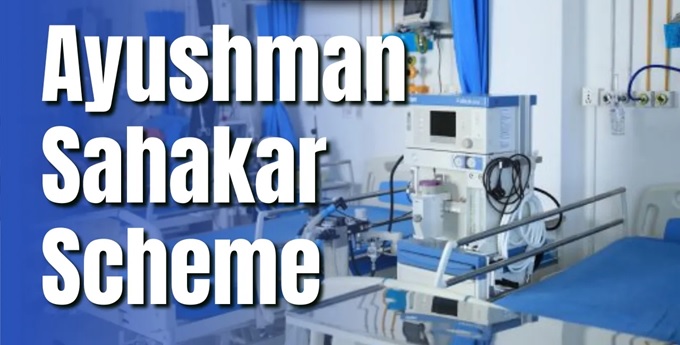
The Union Minister for Home and Cooperation recently informed the Rajya Sabha about the implementation and progress of the Ayushman Sahakar Scheme, highlighting its role in strengthening cooperative-led healthcare infrastructure across the country.
India’s healthcare system faces structural challenges such as:
While government schemes like Ayushman Bharat aim to provide financial protection, there remains a significant need to:
Cooperative societies, historically active in sectors like agriculture, dairy, and banking, have increasingly been viewed as potential partners in expanding community-based healthcare services. The Ayushman Sahakar Scheme was conceptualised to leverage the cooperative movement for building holistic and affordable healthcare infrastructure.
The scheme aims to integrate the cooperative sector into national health objectives by facilitating affordable healthcare delivery.
Encourage cooperatives to establish and expand facilities related to:
This aligns with India’s traditional healthcare systems and integrative medicine approach.
Support cooperative institutions in achieving objectives such as:
Enable cooperatives to integrate with national digital initiatives such as the Ayushman Bharat Digital Mission, ensuring:
By empowering local cooperatives, the scheme enhances:
Affordable cooperative-run hospitals can:
The interest rebate incentivises:
Promotion of AYUSH facilities supports:
The scheme:
Ayushman Sahakar complements:
FAQs1. What is the Ayushman Sahakar Scheme ? It is a financial assistance scheme of the National Cooperative Development Corporation to support cooperative societies in developing healthcare infrastructure and services. 2. Who is eligible under the scheme ? Any cooperative society registered under State or Multi-State Cooperative Societies Acts with provisions to undertake healthcare activities. 3. What kind of projects are funded ? Hospitals, healthcare centres, health education facilities, AYUSH institutions, and modernisation of existing cooperative healthcare units. 4. What is the loan tenure under the scheme ? Loans are provided for up to 8 years, including a 1–2 year moratorium on principal repayment. 5. How does the scheme promote inclusivity ? It offers a 1% interest rebate for cooperatives with majority women membership and encourages rural healthcare expansion. |
| Prelims: (Security + CA) Mains: (GS 3 – Internal Security, Indigenous Resources, Conservation of Native Breeds) |
The Assam Rifles, India’s oldest paramilitary force, is preparing specialised dog squads comprising indigenous breeds such as the Tangkhul Hui and the Kombai, alongside imported breeds. This move marks a significant step toward integrating native Indian dog breeds into formal security and defence operations.

Security forces in India traditionally rely on imported dog breeds such as:
These breeds are favoured for:
However, growing recognition of India’s indigenous breeds has led to renewed interest due to:
Simultaneously, several native dog breeds are facing decline due to:
The inclusion of Tangkhul Hui and Kombai reflects a dual objective — enhancing operational efficiency and conserving indigenous genetic heritage.
Key Characteristics:
Conservation Concern:
The population of purebred Tangkhul Hui is steadily declining, making authentic lineage increasingly rare.
Key Characteristics:
The Kombai has long been valued for its defensive instincts and ability to operate in rugged terrain.
Dog squads are used for:
Indigenous breeds may offer improved endurance in region-specific environments.
Native breeds are:
Formal induction into paramilitary forces:
The move aligns with:
The initiative reflects a broader shift in policy thinking:
It also underscores the evolving role of security forces in supporting sustainable and locally adapted solutions.
FAQs1. Why is Assam Rifles inducting indigenous dog breeds ? To enhance operational adaptability in local terrains while promoting conservation of rare Indian dog breeds. 2. Where does the Tangkhul Hui originate from ? It originates from the Ukhrul district of Manipur and is raised by the Tangkhul community. 3. What makes the Kombai breed unique ? The Kombai is known for its bravery, loyalty, and historical use in protection and combat by South Indian royalty. 4. How does this move support biodiversity conservation ? By creating institutional demand and structured breeding programmes, it helps preserve declining indigenous dog breeds. 5. What is the broader significance of this initiative ? It strengthens border security, promotes self-reliance, and integrates conservation of native genetic resources with defence operations. |
| Prelims: (Economics + CA) Mains: (GS 3 – Technology, Innovation & Inclusive Growth; GS 2 – Governance & Welfare Delivery) |
The Economic Survey 2026 highlights Human Primacy and Economic Purpose as guiding principles for AI adoption, arguing that India’s AI leadership will depend less on large GPU clusters and more on real-world applications that improve everyday life.

Rather than competing purely in foundation models, India’s comparative advantage may lie in building an AI Applications Stack focused on:
Globally, AI competition has centred on:
However, India’s structural strengths include:
The Economic Survey 2026 emphasises that AI must align with:
This shifts focus from “AI for scale” to “AI for social transformation.”
1. Niramai – Early Breast Cancer Screening
Niramai has developed a non-invasive AI-based thermal imaging solution:
This reduces dependency on costly mammography infrastructure.
2. Qure.ai – Rapid Imaging Diagnostics
Qure.ai uses AI to analyse X-rays and CT scans within seconds.
Improves triage speed and treatment efficiency.
3. AISteth – Remote Cardiac Diagnosis
AISteth offers an AI-powered stethoscope:
Strengthens primary healthcare delivery.
1. Neoperk – Instant Soil Testing
Neoperk uses spectroscopy and machine learning to:
Promotes climate-smart agriculture.
2. CottonAce – Pest Management
Developed by the Wadhwani Institute for Artificial Intelligence, CottonAce:
Enhances crop yield and profitability.
3. Niqo Robotics – Precision Spraying
Niqo Robotics deploys AI-driven robots:
Improves sustainability and farmer margins.
4. Cropin – Digital Farm Ecosystem
Cropin offers:
Transforms fragmented agriculture into data-driven systems.
1. PadhaiWithAI – Boosting Math Outcomes
PadhaiWithAI provides personalised learning tools for government schools.
2. Rocket Learning’s Appu – Early Childhood Development
Rocket Learning developed “Appu”:
3. Belagavi Smart City – Adaptive eBooks
Under the Belagavi Smart City initiative:
The government can catalyse AI scale-up by:
Such orchestration reduces uncertainty and builds trust.
An India AI Applications Stack would:
International collaboration platforms such as the Global Partnership on Artificial Intelligence can support outreach.
A governance framework aligned with global standards (e.g., GDPR-like safeguards) can enhance credibility.
1. Inclusive AI Development
Moves focus from elite tech capability to mass welfare impact.
2. Cost-Effective Innovation
Leverages frugal engineering and public digital infrastructure.
3. Rural Empowerment
Brings AI tools to farmers, ASHA workers, and government schools.
4. Global Export Potential
India-tested, scalable solutions can serve Global South markets.
5. Strengthening Digital Sovereignty
Reduces overdependence on foreign AI platforms.
Challenges
FAQs1. What is the India AI Applications Stack? It refers to a unified suite of scalable, India-tested AI applications across key sectors such as health, agriculture, and education. 2. Why is application-focused AI important for India? Because India’s development priorities require affordable, scalable solutions that improve welfare outcomes. 3. How can the government support AI scaling? Through procurement policies, standards setting, digital infrastructure, and ecosystem coordination. 4. Which sectors are leading in AI innovation in India? Healthcare, agriculture, and education are currently witnessing strong AI-based interventions. 5. What global potential does India’s AI stack have? India-tested, cost-effective AI applications could be exported to developing countries facing similar challenges. |
| Prelims: (Geography + CA) Mains: (GS 1 – Physical Geography; GS 3 – Disaster Management, Infrastructure Security) |
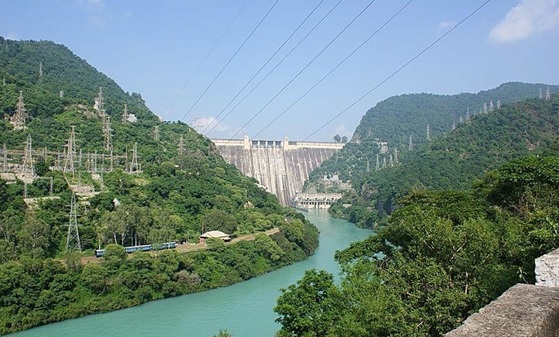
Amid rising incidents of monsoon-induced landslides in the surrounding hillocks, the Geological Survey of India is likely to undertake a comprehensive geological study of areas around the Bhakra Dam to assess slope stability and long-term structural safety.
India’s Himalayan and sub-Himalayan regions are:
Large dam infrastructure in such fragile zones faces multiple risks:
The Bhakra Dam region, located in the Shivalik foothills, has witnessed increasing rainfall variability and extreme weather events, raising concerns about:
Given the dam’s strategic importance for irrigation and power generation, scientific monitoring is critical.
1. Gobind Sagar Reservoir
2. Nangal Dam
The Bhakra Dam plays a crucial role in:
1. Irrigation
Supports agricultural productivity in:
2. Hydroelectric Power Generation
3. Flood Control
1. Landslides During Monsoon
2. Reservoir-Induced Seismicity
Large reservoirs can sometimes:
3. Infrastructure Vulnerability
Unstable hillocks may:
1. Strengthening Dam Safety Mechanisms
A detailed geological assessment can:
2. Enhancing Disaster Preparedness
Scientific data will help in:
3. Protecting Strategic Infrastructure
Bhakra Dam is vital for:
Ensuring geological stability safeguards these national interests.
4. Climate Change Adaptation
With increasing frequency of extreme rainfall events, geological reassessment aligns with:
5. Sustainable River Basin Management
Understanding slope dynamics helps in:
India has strengthened dam safety frameworks through:
The study around Bhakra Dam reflects proactive infrastructure governance rather than reactive crisis management.
FAQs1. Where is the Bhakra Dam located? It is built across the Sutlej River in Bilaspur district of Himachal Pradesh near the Punjab border. 2. Why is a geological study being conducted around Bhakra Dam? Due to rising landslides during the monsoon season, authorities aim to assess slope stability and structural safety. 3. Which body operates and maintains the Bhakra Dam? The Bhakra Beas Management Board (BBMB) manages its operation and maintenance. 4. What is the importance of Gobind Sagar Reservoir? It is one of India’s largest reservoirs and supports irrigation, power generation, and flood control. 5. Why is Bhakra Dam strategically significant for India? It ensures irrigation for major agricultural states, provides renewable energy, regulates floods, and supports regional water security. |
| Prelims: (Science & Technology + Defence + CA) Mains: (GS 3 – Defence Technology, Internal Security, Indigenisation of Technology) |
The Defence Acquisition Council (DAC) has recently granted Acceptance of Necessity (AoN) for the procurement of Airship-Based High-Altitude Pseudo-Satellites (AS-HAPS) for the Indian Air Force, marking a significant step toward strengthening India’s long-endurance surveillance and intelligence capabilities.

India faces complex security challenges, including:
Traditionally, surveillance and reconnaissance are carried out using:
However, these systems have limitations:
To bridge the gap between satellites and conventional drones, High-Altitude Pseudo-Satellites (HAPS) have emerged globally as a cost-effective, long-endurance alternative capable of persistent monitoring.
Unlike conventional satellites that orbit at least 200 km above Earth, HAPS platforms hover over specific geographic areas, offering continuous and targeted coverage.
1. Persistent Surveillance
2. Advanced Sensor Suite
Equipped with:
3. Multi-Domain Applications
4. Cost-Effective Alternative to Satellites
5. Rapid Deployment and Redeployment
Unlike satellites, HAPS platforms can be repositioned depending on strategic requirements.
India’s push for AS-HAPS aligns with its broader defence modernisation and self-reliance initiatives under Atmanirbhar Bharat.
India has been developing indigenous HAPS capabilities through:
This initiative complements India's focus on:
1. Strengthening Border Security
Persistent real-time monitoring along sensitive borders enhances:
2. Enhancing Maritime Domain Awareness
Supports surveillance over the Indian Ocean Region, crucial for:
3. Strategic Autonomy in ISR
Reduces dependency on foreign satellite imagery and defence platforms, improving technological sovereignty.
4. Cost-Effective Force Multiplier
Provides satellite-like coverage at a fraction of the cost, optimizing defence expenditure.
5. Boost to Indigenous Aerospace Ecosystem
Encourages domestic R&D, advanced material sciences, solar energy integration, and high-altitude platform engineering.
6. Integration with Future Warfare Systems
AS-HAPS can potentially integrate with:
Globally, major powers are investing in HAPS technology for:
India’s move positions it among technologically advanced nations pursuing stratospheric platforms as part of next-generation defence architecture.
FAQs1. What is AS-HAPS? AS-HAPS stands for Airship-Based High-Altitude Pseudo-Satellite — a solar-powered unmanned platform operating in the stratosphere to provide persistent surveillance. 2. How is HAPS different from conventional satellites? Unlike satellites orbiting 200 km or more above Earth, HAPS hover at about 18–25 km altitude and can be repositioned while offering long-endurance monitoring at lower cost. 3. Which body approved the procurement of AS-HAPS? The Defence Acquisition Council granted Acceptance of Necessity for its procurement. 4. What are the primary applications of AS-HAPS? Border surveillance, maritime monitoring, target tracking, missile detection, and intelligence gathering. 5. Why is AS-HAPS significant for India? It enhances persistent ISR capability, reduces reliance on costly satellites, strengthens border security, and promotes indigenous defence technology development. |

Our support team will be happy to assist you!


 Contact Us
  New Batch : 9555124124/ 7428085757
  Tech Support : 9555124124/ 7428085757