
New
Hindi Medium: (Delhi) - GS Foundation (P+M) : 21st Sept. 2026, 11:30 AM Hindi Medium: (Prayagraj) - GS Foundation (P+M) : 22nd Sept. 2026, 8:00 AM English Medium: (Delhi) - GS Foundation (P+M) : 6th Aug 2026 English Medium: (Prayagraj) - GS Foundation (P+M) : 19th Aug 2026, 11:00 AM Hindi Medium: (Delhi) - GS Foundation (P+M) : 21st Sept. 2026, 11:30 AM Hindi Medium: (Prayagraj) - GS Foundation (P+M) : 22nd Sept. 2026, 8:00 AM English Medium: (Delhi) - GS Foundation (P+M) : 6th Aug 2026 English Medium: (Prayagraj) - GS Foundation (P+M) : 19th Aug 2026, 11:00 AM

Current Affairs for 15 September 2026

Kishau Dam Project: Himachal Pradesh and Five States to Sign MoU With Centre

Prelims: Kishau Multipurpose Dam Project, Tons River, Yamuna River and inter-state water management.Hydroelectric power, irrigation, water storage and Centre-State cooperation.
Mains: GS Paper II: Centre-State Relations, Inter-State Water Disputes, Cooperative FederalismGS Paper III: Water Resources, Infrastructure, Hydropower, Irrigation and Environmental Concerns
Keywords : Kishau Multipurpose Dam Project, Kishau Dam, Tons River, Yamuna River, Multipurpose Dam, Hydroelectric Power, Water Storage, Irrigation, Inter-State Water Management, Yamuna Rejuvenation, Water Sharing, Centre-State Cooperation, Himachal Pradesh, Uttarakhand, Uttar Pradesh, Haryana, Rajasthan, Delhi, Kishau Dam MoU.

Why in News?

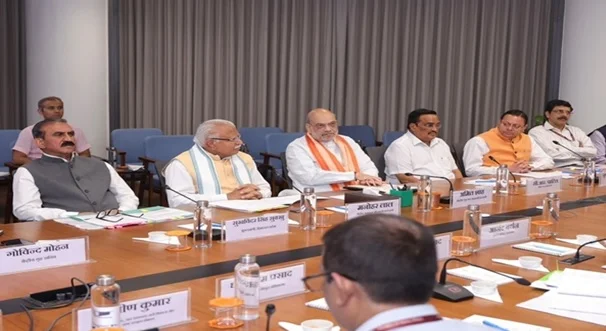
Union Home Minister Amit Shah is likely to hold a meeting with the Chief Ministers of Himachal Pradesh, Uttarakhand, Uttar Pradesh, Haryana, Rajasthan and Delhi on September 15, 2026, regarding the long-pending Kishau Multipurpose Dam Project.

The meeting will discuss the implementation of the project and the proposed Memorandum of Understanding (MoU) among the six participating states. The project is also expected to be placed before the Union Cabinet for approval soon.
Important Points

  • The project will support irrigation, hydropower generation and drinking water supply. 
  • The Centre is proposed to bear 90% of the cost of the water component. 
  • The remaining 10% cost will be shared by the six states
  • Himachal Pradesh’s share of water is proposed to be allocated to Delhi and Rajasthan
  • The project is expected to support Yamuna rejuvenation by improving water flow and availability. 
  • The six states are expected to sign an MoU with the Centre for project implementation. 
  • The project is an important example of Centre-State cooperation in water management.

What is the Kishau Multipurpose Dam Project?

The Kishau Multipurpose Dam Project is an under-construction multipurpose water storage and hydroelectric project on the Tons River, a major tributary of the Yamuna.

The project is designed to serve multiple purposes, including:

  • Water storage and regulation 
  • Irrigation 
  • Hydroelectric power generation 
  • Augmentation of drinking water supply 
  • Increasing the flow of water in the Yamuna River 

The project is considered important for improving water availability in the Yamuna basin and supporting the rejuvenation of the river.

Six States Involved in the Project

The project involves six states:

  1. Himachal Pradesh 
  2. Uttarakhand 
  3. Uttar Pradesh 
  4. Haryana 
  5. Rajasthan 
  6. Delhi 

These states are expected to sign an MoU for the implementation of the project.

What Was Decided in the June 2026 Meeting?

  • A meeting chaired by Union Home Minister Amit Shah was held on June 16, 2026, at the Ministry of Home Affairs.
  • During the meeting, the six states reached a consensus on the long-pending project and agreed to move forward with an MoU.

The major decisions included:

Central Government Assistance:

  • The Centre will bear 90% of the cost of the water component of the project as Central assistance.

State Contribution:

  • The remaining 10% cost will be shared by the six participating states.

Water Allocation:

  • A consensus was reached to allocate Himachal Pradesh's share of water to Delhi and Rajasthan.
  • In return, the cost of Himachal Pradesh's share of the power component will be shared by the participating states.

Importance of the Kishau Dam Project

1. Yamuna Rejuvenation

The project is expected to increase the flow of water in the Yamuna and contribute to efforts to improve the river's water quality.

2. Irrigation

The stored water can support irrigation and improve water availability for agriculture in the participating states.

3. Hydroelectric Power

The project will generate hydroelectric power and contribute to the region's energy requirements.

4. Drinking Water Supply

The reservoir will help augment drinking water supplies for areas facing increasing water demand.

5. Inter-State Water Cooperation

The project provides a framework for cooperation among six states over water sharing, financing and power generation.

Key Financial Arrangement

  • The proposed arrangement gives the Central Government a major financial role, with 90% of the water component's cost to be provided as Central assistance. The remaining 10% will be shared by the six states.
  • This arrangement is aimed at resolving financial and inter-state issues that have contributed to delays in the project.

Challenges

Despite the recent consensus, the project may face several challenges:

  • Inter-state water-sharing issues 
  • Financial and cost-sharing concerns 
  • Coordination among six states 
  • Environmental and ecological concerns 
  • Rehabilitation and resettlement-related issues 
  • Delays in obtaining necessary approvals 

Way Forward

  • Effective implementation will require strong coordination between the Centre and participating states. A clear framework for water allocation, cost sharing and power distribution should be finalised through the proposed MoU.
  • Environmental safeguards, rehabilitation measures and timely statutory approvals should also be ensured. Regular monitoring can help prevent further delays in the project.

Conclusion

The proposed agreement on the Kishau Multipurpose Dam Project represents an important step towards resolving a long-pending inter-state water and infrastructure issue. With financial support from the Centre and cooperation among six states, the project can contribute to water security, hydropower generation, irrigation and the rejuvenation of the Yamuna River.

Prelims practice question 

Q. Consider the following statements regarding the Kishau Multipurpose Dam Project:

  1. The project is being developed on the Tons River, a tributary of the Yamuna. 
  2. Six states are involved in the project. 
  3. The Central Government will bear 90% of the cost of the water component. 

Which of the statements given above is/are correct?

A. 1 and 2 only
B. 2 and 3 only
C. 1 and 3 only
D. 1, 2 and 3

Mains practice Question

Q. Discuss the significance of the Kishau Multipurpose Dam Project for water security, hydropower generation and Yamuna rejuvenation. Also examine the challenges involved in implementing such inter-state water projects.

FAQs

1. What is the Kishau Multipurpose Dam Project?

It is a multipurpose water storage and hydroelectric project on the Tons River, a tributary of the Yamuna.

2. Which states are involved in the Kishau Dam Project?

Himachal Pradesh, Uttarakhand, Uttar Pradesh, Haryana, Rajasthan and Delhi are the six participating states.

3.What are the main objectives of the Kishau Dam Project?

The project aims to support irrigation, hydropower generation, drinking water supply and Yamuna rejuvenation.

4.How will the project be funded?

The Centre is proposed to bear 90% of the cost of the water component, while the remaining 10% will be shared by the six states.

5.Why is the Kishau Dam Project important for the Yamuna?

The project is expected to improve water availability and flow in the Yamuna, supporting efforts towards Yamuna rejuvenation.

PM Modi to Inaugurate SEMICON India 2026 in Delhi

Prelims : Semiconductor, Chip Manufacturing, India Semiconductor Mission,  MeitY, Semicon India Programme, Semicon 2.0, DLI Scheme, EDA Tools, Advanced Packaging,  Semiconductor Value Chain.
Mains :  GS Paper III – Science & Technology
Keywords : SEMICON India 2026, Semiconductor Ecosystem, India Semiconductor Mission, Semicon India Programme, Semicon 2.0, Semiconductor Manufacturing, Semiconductor Value Chain, Chip Manufacturing, Semiconductor Industry in India, Electronics Manufacturing, Design Linked Incentive Scheme, EDA Tools, Semiconductor Startups, Advanced Packaging, Global Semiconductor Supply Chain, Semiconductor R&D, India’s Semiconductor Mission.

Why in News?

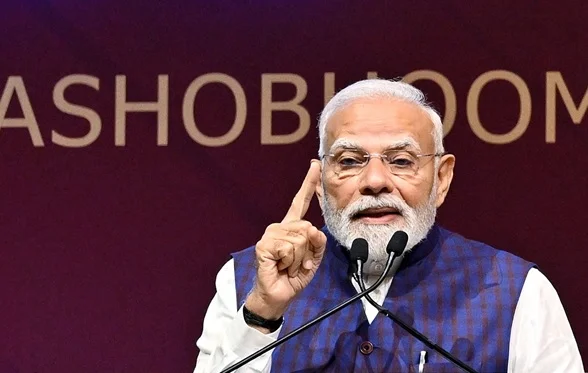
Prime Minister Narendra Modi will inaugurate the fifth edition of SEMICON India 2026 on September 17, 2026, at Yashobhoomi in New Delhi. The three-day event will be held from September 17 to 19 and will focus on strengthening India’s semiconductor and electronics ecosystem.

The event will bring together Indian and global companies to discuss investments, technology partnerships, manufacturing and supply-chain opportunities.

About SEMICON India 2026

  • SEMICON India 2026 is being jointly organised by the Ministry of Electronics and Information Technology (MeitY), India Semiconductor Mission (ISM), and SEMI, a global industry organisation.
  • The theme of the event is “Silicon to Systems: Building the Ecosystem.”
  • The event will showcase the complete semiconductor value chain, covering semiconductor materials, manufacturing, advanced packaging, chip design, electronics and systems.

Important points 

The event will feature:

  • More than 600 exhibitors, including around 300 international companies.
  • More than 150 speakers from India and abroad.
  • Exhibition space covering around 15,000 square metres.
  • Six country pavilions and 12 state government pavilions.
  • Dedicated areas for startups, student hackathons and workforce development.
  • A special “Sand to Silicon to Systems” Value Chain Experience.

This experience will help visitors understand the different stages of the semiconductor ecosystem and India’s growing capabilities across the value chain.

India’s Progress in the Semiconductor Sector

  • Under the Semicon India Programme, the Union Government has approved 12 semiconductor projects.
  • Three semiconductor units approved under Semicon 1.0 have already started commercial production.
  • The Union Cabinet has also approved Semicon 2.0, the next phase of the programme, which is based on six key pillars for further developing India’s semiconductor ecosystem.

Support for Semiconductor Startups and Innovation

  • The government has expanded access to Electronic Design Automation (EDA) tools to more than 400 academic institutions and 105 startups.
  • So far, 24 startups have received approval under the Design Linked Incentive (DLI) Scheme.
  • The Startup Pavilion at SEMICON India 2026 will showcase around 40 startups working in the semiconductor and microelectronics sectors.

Focus on Workforce Development

  • The event will also focus on developing skilled talent for India’s growing semiconductor industry.
  • The Workforce Development Pavilion will provide opportunities to learn about skills, careers and employment prospects in the microelectronics sector.
  • Developing a skilled workforce is important for supporting semiconductor manufacturing, chip design and other advanced technology activities in India.

Major Companies to Participate

  • Several leading global and Indian companies are expected to participate in the event.
  • These include ASML, Applied Materials, Teradyne, Infineon, Ebara, Jabil, IBM Research, NXP, Tata Electronics, Micron, Merck KGaA, Rapidus, Lam Research, CG Power, Uno Minda, Advantest and Tokyo Electron, among others.

Significance for India

SEMICON India 2026 will provide an important platform for Indian and international companies to explore:

  • Investment opportunities
  • Technology partnerships
  • Manufacturing collaborations
  • Supply-chain linkages
  • Semiconductor research and innovation

The event can help strengthen India’s position as a trusted global semiconductor partner.

A stronger semiconductor ecosystem can also support electronics manufacturing, technological innovation, employment generation and India’s goal of greater self-reliance in critical technologies.

Challenges 

  • High Capital Investment: Semiconductor fabrication plants require very large investments and advanced infrastructure. 
  • Technological Complexity: Chip manufacturing involves highly advanced technologies, precision equipment and specialised processes. 
  • Skilled Workforce: India needs more highly trained professionals in semiconductor design, fabrication, packaging and testing. 
  • Global Supply Chain Dependence: India remains dependent on other countries for several critical materials, equipment and technologies. 
  • Water and Power Requirements: Semiconductor manufacturing requires a stable supply of high-quality water and uninterrupted electricity. 
  • Strong Global Competition: India faces competition from established semiconductor hubs such as Taiwan, South Korea, the United States and China. 
  • Research and Development: Greater investment in domestic R&D and innovation is needed to develop advanced semiconductor technologies.

Way Forward

  • Strengthen R&D: Increase investment in semiconductor research, chip design and advanced manufacturing technologies. 
  • Develop Skilled Workforce: Expand specialised education and training programmes in semiconductor design, fabrication, packaging and testing. 
  • Promote Industry-Academia Collaboration: Encourage partnerships between universities, research institutions and semiconductor companies. 
  • Build Resilient Supply Chains: Diversify sources of critical minerals, materials, equipment and technologies. 
  • Attract Global Investment: Continue providing a stable policy environment and incentives to attract leading global semiconductor companies. 
  • Support Domestic Startups: Expand funding and incentives for semiconductor design and deep-tech startups. 
  • Improve Infrastructure: Ensure reliable electricity, high-quality water, logistics and other infrastructure required for semiconductor manufacturing. 
  • Focus on the Full Value Chain: Move beyond chip fabrication by developing capabilities in design, packaging, testing, equipment and electronics manufacturing.

Conclusion

SEMICON India 2026 highlights India’s growing ambitions in the global semiconductor industry. With government support, new manufacturing projects, startups, skilled workforce initiatives and participation from major global companies, India is working to build a strong and integrated semiconductor ecosystem.

Prelims MCQ

Q1. With reference to SEMICON India 2026, consider the following statements:

  1. It is being organised by the Ministry of Electronics and Information Technology, India Semiconductor Mission and SEMI. 
  2. Its theme is “Silicon to Systems: Building the Ecosystem.” 
  3. The event focuses only on semiconductor manufacturing and does not cover chip design or advanced packaging. 

Which of the statements given above is/are correct?

A. 1 and 2 only
B. 2 and 3 only
C. 1 and 3 only
D. 1, 2 and 3

Mains Question

Q. India is seeking to build a globally competitive semiconductor ecosystem. Discuss the significance of the Semicon India Programme and examine the major challenges in achieving semiconductor self-reliance.

FAQs

1. What is SEMICON India 2026?

SEMICON India 2026 is a major event focused on India’s semiconductor and electronics ecosystem. It will bring together Indian and international companies, policymakers, startups and technology experts.

2. When and where will SEMICON India 2026 be held?

It will be held from September 17 to 19, 2026, at Yashobhoomi, New Delhi.

3. Who will inaugurate SEMICON India 2026?

Prime Minister Narendra Modi will inaugurate the event on September 17, 2026.

4. What is the theme of SEMICON India 2026?

The theme is “Silicon to Systems: Building the Ecosystem.”

5. What is Semicon 2.0?

Semicon 2.0 is the next phase of India’s semiconductor programme, approved by the Union Cabinet to further strengthen the country’s semiconductor ecosystem.

upsc english
« »
  • SUN
  • MON
  • TUE
  • WED
  • THU
  • FRI
  • SAT
Have any Query?

Our support team will be happy to assist you!

OR


