.jpg)
The Central Adoption Resource Authority (CARA) is the apex body in India that regulates and monitors the adoption process to ensure it is transparent, ethical, and child-centric. Recently, CARA issued nationwide directives to strengthen adoption procedures, secure records, and protect the identity of children—marking an important step toward safeguarding child rights.
CARA is a statutory body under the Ministry of Women and Child Development, Government of India, responsible for regulating adoption in India.
The primary objectives of CARA are :
CARA is designated as the Central Authority for inter-country adoption in India.
(A) Promotion of Domestic Adoption
(B) Inter-State Adoption
(C) Regulation of Inter-country Adoption
(D) Policy Formulation
(E) Role under Hague Convention
(F) Monitoring and Regulation
CARA supervises and regulates the following bodies :
Key highlights of recent CARA directives :
CARA plays a crucial role in India’s child protection system :
Despite progress, several challenges remain :
|
Prelims : (Science & Technology + CA) |
The rapid adoption of Artificial Intelligence (AI) in the financial sector is transforming operations, improving efficiency, and enhancing customer services.
However, it has also raised concerns about job displacement, ethical bias, and cybersecurity risks, prompting calls for stronger regulatory oversight.

The global financial industry is undergoing a digital transformation, with AI becoming central to decision-making processes.
Financial institutions are increasingly using AI-driven tools to :
This shift is driven by the need to remain competitive in a data-intensive and technology-driven economy.
Artificial Intelligence refers to the use of :
In finance, AI enables institutions to process complex datasets, predict trends, and provide real-time insights, improving operational efficiency and accuracy.
1. Improved Operational Efficiency
AI systems can process vast amounts of data quickly and accurately.
Applications :
Outcome : Reduced operational costs and faster decision-making.
2. Enhanced Risk Management and Fraud Detection
AI enables predictive analytics and anomaly detection.
Capabilities :
This significantly reduces financial fraud and systemic risks.
3. Improved Customer Experience
AI-powered tools such as chatbots and virtual assistants provide :
This enhances customer satisfaction and trust.
1. Job Displacement and Workforce Disruption
Automation threatens jobs involving routine and repetitive tasks, such as :
However, new roles are emerging in :
2. Ethical Concerns and Bias
AI systems rely on historical data, which may contain biases.
Risks :
This raises issues of fairness, accountability, and transparency.
3. Cybersecurity and Systemic Risks
AI systems are vulnerable to :
These risks could undermine financial stability and consumer trust.
AI is transforming the nature of jobs in finance.
The workforce now requires :
Continuous reskilling is essential for adapting to these changes.
AI adoption in finance is accelerating worldwide.
Key Trends :
AI is set to become a core component of financial systems globally.
With increasing reliance on AI, robust governance frameworks are essential.
Key Requirements :
Global organisations and regulators are emphasising the need for responsible AI deployment.
1. Boost to Financial Efficiency
AI enhances speed, accuracy, and productivity in financial operations.
2. Strengthening Risk Management
Predictive analytics helps prevent fraud and financial crises.
3. Driving Innovation
Encourages development of fintech solutions and digital banking services.
4. Economic Transformation
Supports growth of knowledge-based and technology-driven economies.
5. Ethical and Governance Challenges
Highlights the need for balancing innovation with accountability.
A balanced approach is needed to harness AI’s benefits while minimising risks.
FAQs1. What is Artificial Intelligence in finance ? It refers to the use of AI technologies like machine learning and data analytics to automate and improve financial services. 2. How does AI improve efficiency in financial institutions ? By processing large datasets quickly, enabling faster decision-making and reducing operational costs. 3. What are the major risks of AI in finance ? Job displacement, algorithmic bias, cybersecurity threats, and lack of transparency. 4. How is AI affecting employment in the finance sector ? It is replacing routine jobs but also creating new roles requiring advanced digital skills. 5. Why is regulation important for AI in finance? To ensure transparency, fairness, accountability, and protection against systemic risks. |
|
Prelims : (Geography + CA) |
The Prime Minister of India recently inaugurated the Lower Kopili Hydroelectric Project, marking a significant step toward enhancing renewable energy capacity in Northeast India.
The project aims to strengthen regional power supply while promoting clean and sustainable energy generation.

India has been actively expanding its renewable energy portfolio to reduce dependence on fossil fuels and meet climate commitments.
Hydropower plays a crucial role in this transition, especially in resource-rich regions like the Northeast. The Assam and surrounding areas possess significant untapped hydroelectric potential due to their river systems.
The Lower Kopili project is part of efforts to :
The Lower Kopili Hydroelectric Project is a run-of-the-river hydropower project developed on the Kopili River basin.
Financed by the Asian Development Bank (ADB) under the Assam Power Sector Investment Program
The Kopili River is an important river system in Northeast India.
1. Boost to Renewable Energy
The project contributes to India’s target of increasing clean energy capacity, reducing reliance on fossil fuels.
2. Regional Development
Improves electricity availability in remote and hilly areas of Northeast India, supporting :
3. Sustainable Hydropower Model
As a run-of-the-river project, it has :
4. Strengthening Energy Security
Enhances energy self-sufficiency in the region and reduces dependence on imported fuels.
5. Strategic Importance of Northeast
Supports the development of Northeast India, a region with vast untapped hydro potential.
FAQs1. What is the Lower Kopili Hydroelectric Project ? It is a 120 MW run-of-the-river hydropower project in Assam aimed at generating clean electricity. 2. Where is the project located ? It is located in West Karbi Anglong and Dima Hasao districts of Assam. 3. Which river is associated with this project ? The project is built on the Kopili River, a tributary of the Brahmaputra. 4. Who is funding the project ? The project is funded by the Asian Development Bank (ADB). 5. Why is this project significant ? It promotes renewable energy, regional development, and energy security, especially in Northeast India. |
| Prelims : (Environment & Ecology + CA) Mains : (GS 3 – Environmental Pollution, Conservation; GS 2 – International Institutions) |
A recent report by the United Nations Environment Programme (UNEP) titled “Safe Disposal of Unused Medicines” has warned that improper disposal of medicines is emerging as a serious threat to both environmental sustainability and public health.
The report highlights that pharmaceuticals entering water bodies and soil systems can cause ecological damage, antimicrobial resistance, and health risks.
With rising global consumption of medicines, improper disposal practices—such as flushing drugs down toilets or dumping them with household waste—have become widespread.
These practices lead to :
International organisations like United Nations Environment Programme have increasingly focused on the intersection of environment, health, and pollution control.
The United Nations Environment Programme is the leading global authority on environmental issues.
UNEP is tasked with :
1. United Nations Environment Assembly (UNEA)
2. Committee of Permanent Representatives (CPR)
3. Secretariat
4. Regional and Thematic Offices
UNEP operates across :
1. Environmental Impact
Improper disposal of medicines leads to :
2. Public Health Risks
3. Lack of Awareness
1. Emerging Environmental Challenge
Pharmaceutical pollution is a growing but under-recognised issue globally.
2. Link Between Environment and Health
Highlights the interconnectedness of ecological and human health systems.
3. Policy Implications
Calls for :
4. Global Governance Role
Reinforces UNEP’s role in addressing cross-border environmental issues.
FAQs1. What is UNEP ? UNEP is the UN’s leading environmental body, responsible for global environmental governance and coordination. 2. Why is improper disposal of medicines harmful ? It leads to water and soil pollution, harms ecosystems, and contributes to antimicrobial resistance. 3. What is the role of UNEA ? UNEA is the highest decision-making body on environmental issues globally. 4. Where is UNEP headquartered ? It is headquartered in Nairobi, Kenya. 5. What measures can address pharmaceutical pollution ? Safe disposal systems, public awareness, improved regulation, and eco-friendly drug design. |
| Prelims : (Economy + CA) Mains : (GS 3 – Energy Security, Sustainable Development, Infrastructure) |
India is increasingly exploring electric cooking solutions as a viable alternative to LPG due to rising import dependence and costs. The country spends nearly $26.4 billion annually on LPG imports, much of which passes through the Strait of Hormuz.
With electric cooking now becoming cheaper and more efficient than unsubsidised LPG, it is being seen as a key step in India’s energy transition, although concerns remain about electricity demand and grid capacity.

India has significantly expanded access to clean cooking fuel through schemes like the Pradhan Mantri Ujjwala Yojana, increasing LPG connections from 150 million in 2015 to over 332 million by 2025.
Despite this progress :
This growing dependence exposes India to global price volatility and geopolitical risks, especially in West Asia.
1. High Import Dependence
2. Affordability Issues
3. Sustainability Concerns
Studies by Institute for Energy Economics and Financial Analysis (IEEFA) show :
Electric pressure cookers are among the most energy-efficient cooking devices.
Solution : Development of multi-burner and flame-simulating electric technologies
Electric cooking adoption raises concerns about increased electricity demand, especially during peak hours.
What is Peak Demand ?
Peak demand refers to periods when electricity usage spikes due to simultaneous consumption.
Mass adoption of electric cooking could :
Rooftop solar systems can turn households into prosumers (producers + consumers).
India’s rooftop solar capacity is expected to grow :
Supported by schemes like :
Benefits :
India has initiated several programs :
1. Strengthening Energy Security
Reducing LPG imports lowers dependence on volatile global supply chains.
2. Supporting Climate Goals
Electric cooking reduces carbon emissions, especially when powered by renewable energy.
3. Economic Benefits
4. Boost to Renewable Energy Ecosystem
Encourages adoption of solar energy and decentralised grids.
5. Inclusive Energy Transition
Urban adoption can free LPG supply for rural and underserved households.
A balanced approach is essential to ensure affordability, reliability, and sustainability.
FAQs1. Why is India promoting electric cooking ? To reduce LPG import dependence, lower costs, and support clean energy transition. 2. Is electric cooking cheaper than LPG ? Yes, studies show it is significantly cheaper and more energy-efficient than LPG. 3. What is the biggest challenge in adopting electric cooking ? Managing peak electricity demand and grid capacity constraints. 4. How can rooftop solar help electric cooking ? It provides clean, locally generated electricity, reducing dependence on the grid. 5. What policy measures can accelerate adoption ? Subsidies for electric appliances, smart tariffs, rooftop solar promotion, and improved infrastructure. |
| Prelims : (Science & Technology + CA) Mains : (GS 3 – Space Technology, Infrastructure, Indigenisation of Technology) |
India’s indigenous navigation system NavIC has suffered a setback after the atomic clock onboard IRNSS-1F failed, rendering it incapable of providing accurate positioning data.
The situation is further aggravated by the failure of NVS-02 to reach its designated orbit, raising concerns about India’s navigation reliability and long-term strategic ambitions.
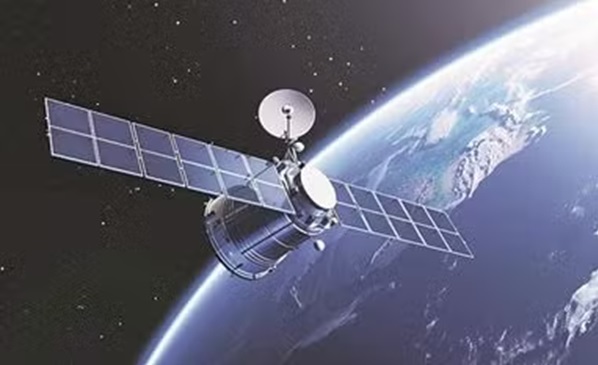
India launched the Indian Regional Navigation Satellite System (IRNSS), also known as NavIC, to reduce dependence on foreign systems such as Global Positioning System (GPS).
NavIC is designed to provide accurate positioning services over India and up to 1,500 km beyond its borders, supporting sectors like transportation, defence, disaster management, and infrastructure planning.
However, recurring technical failures, ageing satellites, and delays in ecosystem development have impacted its effectiveness.
The NavIC is a regional satellite navigation system developed by the Indian Space Research Organisation (ISRO).
Following earlier launches, five satellites were providing positioning services :
Satellite navigation relies on extremely precise time measurement.
Atomic clocks help calculate distance by measuring the time taken for signals to travel from satellite to receiver.
Failure of atomic clocks leads to :
The NVS-02 was launched aboard GSLV-F15.
This failure further delayed constellation replenishment efforts.
A report by the Comptroller and Auditor General of India (CAG) highlighted :
Despite this, NavIC is now used in :
ISRO has developed indigenous atomic clocks, reducing reliance on foreign technology and addressing earlier failures.
Along with existing L5 and S bands, NavIC now includes L1 band, which is widely used globally.
Benefits
Major Global Systems
These systems provide global coverage with 20+ satellites each.
These systems provide high accuracy over specific regions.
1. Strategic Autonomy
Reduces dependence on foreign systems like GPS, especially critical for defence and national security.
2. Enhanced Accuracy in Indian Region
Geostationary satellites provide better signal strength in difficult terrains like forests and valleys.
3. Boost to Indigenous Technology
Supports the vision of Atmanirbhar Bharat by promoting domestic innovation in space technology.
4. Economic and Civilian Applications
Used in :
These issues affect reliability and public confidence.
FAQs1. What is NavIC ? NavIC is India’s regional satellite navigation system designed to provide accurate positioning services over India and nearby regions. 2. Why are atomic clocks important in navigation satellites ? They ensure precise timing, which is essential for calculating accurate location coordinates. 3. What caused the recent setback in NavIC ? Failure of the atomic clock in IRNSS-1F and orbital failure of NVS-02 reduced positioning capability. 4. How is NavIC different from GPS ? NavIC is a regional system focused on India, while GPS is a global system providing worldwide coverage. 5. What improvements are being made in new NavIC satellites ? They include indigenous atomic clocks, longer lifespan, and L1 frequency compatibility for better performance and wider usage. |

Our support team will be happy to assist you!


 Contact Us
  New Batch : 9555124124/ 7428085757
  Tech Support : 9555124124/ 7428085757