
- UPSC Exam
- State PCS
- One Day Exam
- Current Affairs
- PT Quiz
- Downlaods
- About Coaching
- Blog
- Videos

| Prelims : (Science & Technology + CA) Mains : (GS 3 – Space Technology, Infrastructure, Indigenisation of Technology) |
India’s indigenous navigation system NavIC has suffered a setback after the atomic clock onboard IRNSS-1F failed, rendering it incapable of providing accurate positioning data.
The situation is further aggravated by the failure of NVS-02 to reach its designated orbit, raising concerns about India’s navigation reliability and long-term strategic ambitions.
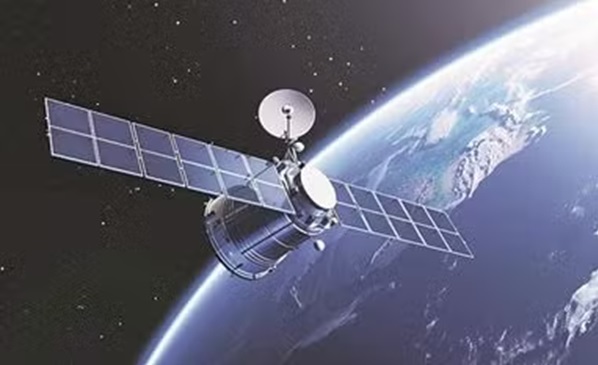
India launched the Indian Regional Navigation Satellite System (IRNSS), also known as NavIC, to reduce dependence on foreign systems such as Global Positioning System (GPS).
NavIC is designed to provide accurate positioning services over India and up to 1,500 km beyond its borders, supporting sectors like transportation, defence, disaster management, and infrastructure planning.
However, recurring technical failures, ageing satellites, and delays in ecosystem development have impacted its effectiveness.
The NavIC is a regional satellite navigation system developed by the Indian Space Research Organisation (ISRO).
Following earlier launches, five satellites were providing positioning services :
Satellite navigation relies on extremely precise time measurement.
Atomic clocks help calculate distance by measuring the time taken for signals to travel from satellite to receiver.
Failure of atomic clocks leads to :
The NVS-02 was launched aboard GSLV-F15.
This failure further delayed constellation replenishment efforts.
A report by the Comptroller and Auditor General of India (CAG) highlighted :
Despite this, NavIC is now used in :
ISRO has developed indigenous atomic clocks, reducing reliance on foreign technology and addressing earlier failures.
Along with existing L5 and S bands, NavIC now includes L1 band, which is widely used globally.
Benefits
Major Global Systems
These systems provide global coverage with 20+ satellites each.
These systems provide high accuracy over specific regions.
1. Strategic Autonomy
Reduces dependence on foreign systems like GPS, especially critical for defence and national security.
2. Enhanced Accuracy in Indian Region
Geostationary satellites provide better signal strength in difficult terrains like forests and valleys.
3. Boost to Indigenous Technology
Supports the vision of Atmanirbhar Bharat by promoting domestic innovation in space technology.
4. Economic and Civilian Applications
Used in :
These issues affect reliability and public confidence.
FAQs1. What is NavIC ? NavIC is India’s regional satellite navigation system designed to provide accurate positioning services over India and nearby regions. 2. Why are atomic clocks important in navigation satellites ? They ensure precise timing, which is essential for calculating accurate location coordinates. 3. What caused the recent setback in NavIC ? Failure of the atomic clock in IRNSS-1F and orbital failure of NVS-02 reduced positioning capability. 4. How is NavIC different from GPS ? NavIC is a regional system focused on India, while GPS is a global system providing worldwide coverage. 5. What improvements are being made in new NavIC satellites ? They include indigenous atomic clocks, longer lifespan, and L1 frequency compatibility for better performance and wider usage. |



Our support team will be happy to assist you!

 Contact Us
  New Batch : 9555124124/ 7428085757
  Tech Support : 9555124124/ 7428085757