- UPSC Exam
- State PCS
- One Day Exam
- Current Affairs
- PT Quiz
- Downlaods
- About Coaching
- Blog
- Videos

| Prelims: International Relations, International Organizations (UN, OCHA, WHO), UN Days & Observances, International Humanitarian Law Mains: GS Paper I: Indian Society, Communalism, Post-Independence Consolidation GS Paper II: International Relations, International Organizations, India and its Neighbourhood GS Paper III: Disaster Management, Internal Security |
The world observed World Humanitarian Day on 19 August 2026. This year's global campaign is built around the theme "Families of Fallen Humanitarians", while the World Health Organization used the occasion to renew its call for greater protection of health care in conflict zones.

|
Protected Health Component |
Humanitarian Importance |
|
Doctors and nurses |
Provide life-saving treatment |
|
Hospitals and clinics |
Provide essential medical services |
|
Ambulances |
Transport wounded and sick persons |
|
Medical supplies |
Medicines, vaccines and surgical equipment |
|
Patients |
Civilians requiring treatment |
|
Humanitarian health workers |
Provide emergency assistance in crisis zones |
A humanitarian worker is a person engaged in providing assistance and protection to populations affected by emergencies. They may include doctors, nurses, paramedics, ambulance workers, disaster-response personnel, food-distribution workers, water and sanitation specialists, engineers, refugee-support personnel, search-and-rescue teams, UN personnel, Red Cross and Red Crescent personnel, NGO workers, local volunteers, etc.
| Organisation | Major Role |
| OCHA (UN Office for the Coordination of Humanitarian Affairs) | Coordination of humanitarian assistance |
| WHO (World Health Organisation) | Emergency health response |
| UNICEF (United Nations Children’s Fund) | Children, nutrition, vaccination, water and sanitation |
| WFP (World Food Programme) | Emergency food assistance |
| UNHCR (United Nations High Commissioner for Refugees) | Refugees and displaced populations |
| UNFPA (United Nations Fund for Population Activities) | Reproductive and maternal health |
| IOM (International Organization for Migration) | Migration and displacement assistance |
| SDG 1-No Poverty | Humanitarian crises can push vulnerable populations into extreme poverty |
| SDG 2-Zero Hunger | Conflict and displacement frequently disrupt agriculture and food supply chains. |
| SDG 3-Good Health and Well-being | Protection of hospitals and health workers is essential for access to health services |
| SDG 6-Clean Water and Sanitation | Humanitarian operations often restore water and sanitation after disasters |
| SDG 10-Reduced Inequalities | Refugees and displaced populations are among the most vulnerable groups |
| SDG 16-Peace, Justice and Strong Institutions | Protection of civilians and accountability for violations are central to sustainable peace |
India has increasingly emerged as an important provider of Humanitarian Assistance and Disaster Relief (HADR). India frequently deploys Indian Armed Forces, National Disaster Response Force (NDRF), medical teams, naval ships, aircraft, field hospitals, medicines, food and relief material during humanitarian emergencies.
Prelims MCQQ. Consider the following statements:
Which of the statements given above is/are correct? A. 1 and 3 only B. 2 and 3 only C. 1 only D. 1, 2 and 3 Mains Practice QuestionQ. “Discuss the challenges in protecting humanitarian and healthcare workers during conflicts and suggest measures to ensure their safety and neutrality.” |
Why is 19 August observed as World Humanitarian Day?It commemorates humanitarian workers killed in the 2003 Canal Hotel bombing in Baghdad. Who was Sérgio Vieira de Mello?He was the UN Secretary-General's Special Representative for Iraq, killed in the 2003 Baghdad bombing. What are the four humanitarian principles?Humanity, neutrality, impartiality and independence. Which UN body coordinates humanitarian affairs?The UN Office for the Coordination of Humanitarian Affairs (OCHA). What is BHISHM?It is India's modular emergency medical system designed for rapid deployment during disasters and humanitarian emergencies. |
| Prelims: Government Policies & Schemes, Women's Welfare, Population & Demography, Tamil Nadu Current Affairs GS Paper I: Population and Associated Issues, Women-related Issues GS Paper II: Government Policies and Interventions, Welfare Schemes for Women, Judiciary |
On 18 August 2026, the Tamil Nadu government announced in the state Legislative Assembly that women government employees having a third child will now be entitled to 365 days (one year) of maternity leave, up from the existing 12 weeks.

|
Fact |
Detail |
|
State |
Tamil Nadu |
|
Beneficiary |
Women state government employees |
|
Third-child maternity leave earlier |
12 weeks |
|
New announced duration |
365 days |
|
Announcement made by |
Human Resources Management Minister D. Sarathkumar |
|
Central legislation |
Maternity Benefit Act, 1961 |
|
Major amendment |
Maternity Benefit (Amendment) Act, 2017 |
|
Constitutional provision on maternity relief |
Article 42 |
|
Special provisions for women |
Article 15(3) |
|
Replacement-level fertility |
About 2.1 |
| Aspect | Earlier Position | New Announcement |
| First Child | 365 days | 365 days |
| Second Child | 365 days | 365 days |
| Third Child | 12 weeks/84 days | 365 days |
| Beneficiaries | Women government employees | Women government employees |
|
Year |
Development |
|
Pre-2011 |
Women government employees were entitled to 90 days of maternity leave. |
|
2011 |
Chief Minister J. Jayalalithaa's government raised maternity leave to six months (180 days). |
|
2016 |
The Jayalalithaa government further extended maternity leave to nine months. |
|
July 2021 |
The DMK government led by M.K. Stalin extended maternity leave to 365 days (one year) for regular women employees with fewer than two surviving children. |
|
March 2026 |
The state government amended a provision of the Tamil Nadu Fundamental Rules which govern service conditions to cap maternity leave at 12 weeks for employees with two or more surviving children, following a Supreme Court order on the matter. |
|
June 2026 |
The Madras High Court, hearing a plea by a government employee seeking the full 365-day leave for her third child, upheld the 12-week provision. |
|
18 August 2026 |
The government reversed its own March 2026 position, announcing that the third child would also be entitled to the full 365 days of maternity leave. |
Maternity protection is closely connected with several constitutional principles.
|
State / Level |
Approach to Maternity Leave and Third-Child Incentives |
|
Union Government (Central Civil Services) |
180 days maternity leave for employees with fewer than 2 surviving children; since 2024, 180 days for commissioning mothers in surrogacy + 15 days paternity leave for commissioning fathers. |
|
Andhra Pradesh |
6 months maternity leave for any number of children; two-child restriction removed amid declining birth-rate concerns. |
|
Sikkim |
2nd child: 1 salary increment; 3rd child: 2 increments + free childcare attendant for 1 year, aimed at raising fertility. |
Prelims MCQQ. Article 42 of the Constitution of India is associated with which of the following? A. Equal pay for equal work B. Maternity relief and humane conditions of work C. Free legal aid D. Uniform Civil Code Mains Practice QuestionQ. India’s demographic debate is gradually shifting from population control towards managing regional differences in fertility and population ageing. Discuss. |
What has the Tamil Nadu government announced?Women government employees will get 365 days of maternity leave for their third child. How much leave was earlier available for the third child?The applicable provision provided 12 weeks of maternity leave. Does the new policy apply to private-sector employees?The latest announcement specifically concerns Tamil Nadu government women employees. Which constitutional Article specifically mentions maternity relief?Article 42 of the Directive Principles of State Policy. What is India's main maternity-benefit legislation?The Maternity Benefit Act, 1961, substantially amended in 2017 |
A notifiable disease is a disease or health condition that healthcare professionals and institutions are legally required to report to designated public health authorities when a case is suspected, probable or confirmed.
The purpose of notification is to enable governments to:
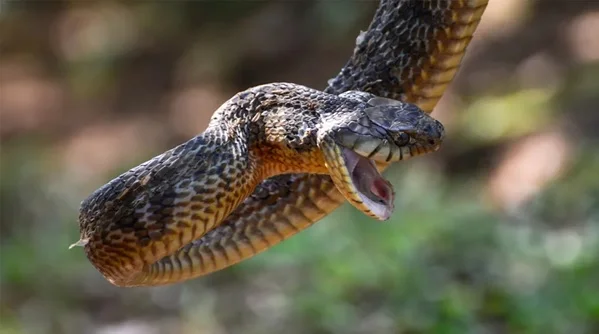
Important: Notifiable disease status does not necessarily mean that a disease is infectious. Snakebite is a good example: it is not a communicable disease, but reporting it is important for public-health surveillance and resource planning.
Snakebite is an important public-health concern in India, particularly in rural and agricultural areas. Timely treatment with Anti-Snake Venom (ASV) can be critical in serious envenoming.
The new reporting mechanism will help authorities understand:
Healthcare institutions will maintain records covering details such as:
Hospitals will also have to maintain updated records of the availability, receipt, utilisation and balance stock of Anti-Snake Venom.
Snakebite cases will be reported to the concerned:
Serious or fatal cases and deaths will require immediate reporting through designated communication systems.
Data may be recorded through systems such as the Health Management Information System (HMIS/DHIS-2) and the Integrated Disease Surveillance Programme (IDSP) or other systems specified by the government.
Maharashtra has established responsibilities at different administrative levels.
|
Level |
Nodal Authority |
|
State |
Director (Hospitals) |
|
District |
District Civil Surgeon and District Health Officer |
|
Municipal Corporation |
Medical Health Officer/Additional Medical Health Officer |
These authorities will monitor reported cases, review treatment arrangements and coordinate preventive measures.
Q1. What is a notifiable disease?Answer :-A notifiable disease is a disease or health condition that healthcare facilities and medical professionals are legally required to report to designated public health authorities. Q2. Is snakebite a communicable disease?Answer :- Snakebite is not a communicable disease because it does not spread from one person to another. It is made notifiable to strengthen surveillance and public-health planning. Q3. Why has Maharashtra declared snakebite a notifiable disease?Answer :-The objective is to improve reporting of cases and deaths, monitor treatment, ensure adequate availability of Anti-Snake Venom (ASV), identify high-risk areas and plan preventive measures. |
| Prelims: IREL (India) Ltd | Rare Earth Elements | Critical Minerals | Neodymium-Praseodymium (NdPr) | NdFeB Magnets | Titanium Sponge | Monazite | Rare Earth & Titanium Theme Park (RETTP) Mains: GS Paper III – Science & Technology | Critical Minerals | Energy Security | Defence Indigenisation | Electric Mobility | Renewable Energy | Atmanirbhar Bharat Keywords: IREL, Rare Earth Elements, Critical Minerals, NdPr, NdFeB Permanent Magnets, Titanium Sponge, Monazite, RETTP Bhopal, Rare Earth Permanent Magnets, Critical Mineral Supply Chain, Strategic Minerals |
IREL (India) Limited, a public sector undertaking under the Department of Atomic Energy (DAE), has invited entrepreneurs, startups and industries to commercialise seven indigenous rare-earth and titanium technologies.

IREL has also established a facility at RETTP for recovering magnetic rare-earth elements from end-of-life permanent magnets.
The Rare Earths and Titanium Technology Park, located in Bhopal, Madhya Pradesh, was inaugurated on 10 May 2026.
According to the Department of Atomic Energy, the facility is intended particularly to scale up technologies developed by institutions such as BARC and enable their adoption by industry.
IREL's technology-transfer programme covers technologies linked to rare-earth materials, permanent magnets, phosphors and titanium.
Rare Earth Elements constitute a group of 17 metallic elements, including the 15 lanthanides along with scandium and yttrium. Despite their name, many rare earths are not necessarily geologically rare. The challenge is that economically viable concentrations are limited and their separation and refining are technologically complex.
NdFeB stands for Neodymium-Iron-Boron. NdFeB magnets are among the most powerful commercially available permanent magnets.
Main Raw Materials
India possesses a significant geological base of rare-earth-bearing minerals.
According to government estimates:
|
Parameter |
Details |
|
Total Outlay |
₹7,280 crore |
|
Target Capacity |
6,000 MTPA |
|
Technology |
Integrated Sintered NdFeB Permanent Magnets |
|
Beneficiaries envisaged |
5 |
|
Sales-linked incentives |
₹6,450 crore |
|
Capital Subsidy |
₹750 crore |
|
Scheme Duration |
7 years |
The proposed integrated facilities will cover:
Rare Earth Oxide → Rare Earth Metal → Alloy → Finished Permanent Magnet
The government intends to create a domestic supply chain instead of remaining dependent on imports for finished magnets.
Prelims MCQs1. Consider the following statements regarding IREL (India) Limited:
Which of the statements given above are correct? A. 1 and 2 only Mains Practice QuestionDespite possessing substantial rare-earth resources, India remains dependent on imports for several high-value rare-earth products. Discuss how indigenous technology commercialisation and domestic permanent-magnet manufacturing can strengthen India's strategic autonomy. |
1. What is IREL (India) Limited?IREL is a Government of India enterprise under the Department of Atomic Energy engaged in mineral sands and rare-earth-related activities. 2. Where is the Rare Earths and Titanium Technology Park located?It is located in Bhopal, Madhya Pradesh and was formally inaugurated on 10 May 2026. 3. What is NdPr?NdPr refers to neodymium-praseodymium, two rare-earth elements widely used as inputs for high-strength NdFeB permanent magnets. 4. Why are NdFeB magnets strategically important?They are among the strongest permanent magnets and are extensively used in electric vehicles, wind turbines, electronics, aerospace and defence systems. 5. Why is IREL's technology commercialisation initiative significant?It can help bridge India's gap between indigenous research and large-scale industrial production, especially in high-value segments of the rare-earth and titanium supply chains. |
The latest audited accounts of the PM CARES Fund have been made public, showing that its closing balance increased to ₹8,452.07 crore as of March 31, 2025, from ₹7,173.03 crore in the previous financial year.
PM CARES stands for Prime Minister's Citizen Assistance and Relief in Emergency Situations.
According to the latest audited accounts:
|
Indicator |
2024-25 |
|
Opening Balance |
₹7,173.03 crore |
|
New Receipts |
₹1,279.91 crore |
|
Closing Balance |
₹8,452.07 crore |
|
Fixed Deposits |
₹7,846.65 crore |
|
Interest from Fixed Deposits |
₹469.38 crore |
|
Domestic Donations |
₹479.04 crore |
|
Foreign Contributions |
₹92.83 lakh |
|
Payments/Expenditure |
₹87.85 lakh |
Nearly 92.8% of the closing balance was held as fixed deposits with scheduled banks.
Interest earned from fixed deposits emerged as one of the most important sources of income for the fund.
During 2024-25:
This indicates that the fund's financial position is increasingly supported by interest income from its accumulated corpus.
Thus, the rise in the closing balance cannot be attributed solely to fresh donations. Interest income, refunds and the relatively low expenditure also contributed to the increase.
The fund's payments declined substantially during 2024-25.
This represents a sharp reduction in annual expenditure compared with the pandemic years when the fund was used extensively for COVID-19-related interventions.
|
Financial Year |
Major Development |
Closing Balance |
|
2019-20 |
Initial voluntary and foreign contributions |
₹3,076.63 crore |
|
2020-21 |
Large-scale contributions; COVID-related expenditure |
— |
|
2021-22 |
Major expenditure on oxygen and COVID infrastructure |
₹5,415.66 crore |
|
2022-23 |
Receipts exceeded expenditure |
₹6,283.68 crore |
|
2023-24 |
Expenditure fell sharply |
₹7,173.03 crore |
|
2024-25 |
Balance increased; fixed deposits became a major source of income |
₹8,452.07 crore |
The fund witnessed its largest inflows during the pandemic.
The expenditure was primarily associated with COVID-19 response measures.
In 2021-22, the fund received:
It spent ₹3,716.29 crore on COVID-related infrastructure and equipment, including:
The closing balance subsequently declined to ₹5,415.66 crore.
As the immediate pandemic emergency subsided, expenditure declined significantly.
Of the 2023-24 expenditure, ₹15.38 crore was spent under the PM CARES for Children Scheme.
The publication of audited accounts raises broader questions about:
The data provides an example of:
The fund played a role in financing healthcare-related interventions during the pandemic, particularly:
|
Feature |
PM CARES Fund |
PMNRF |
|
Established |
2020 |
1948 |
|
Nature |
Public charitable trust |
Public charitable trust |
|
Purpose |
Emergency situations, including pandemics |
Relief to people affected by natural disasters and other emergencies |
|
Contributions |
Domestic and foreign contributions |
Primarily voluntary contributions |
|
Focus |
Emergency response and relief |
Relief and assistance |
1. What is PM CARES Fund?Answer :-PM CARES stands for Prime Minister's Citizen Assistance and Relief in Emergency Situations. It was established on 27 March 2020 as a public charitable trust to provide assistance during emergencies, including pandemics and other crises. 2. What is the latest balance of PM CARES Fund?Answer :-According to the latest audited accounts, the closing balance of PM CARES Fund was ₹8,452.07 crore as of March 31, 2025, compared with ₹7,173.03 crore in March 2024. 3. What is PM National Relief Fund (PMNRF)?Answer :- The Prime Minister's National Relief Fund (PMNRF) was established in January 1948 to provide relief to people affected by natural disasters and other emergencies and to provide assistance for certain medical treatments. |
UPSC Prelims MCQsQ1. With reference to the PM CARES Fund, consider the following statements:
Which of the statements given above is/are correct? A. 1, 2 and 3 only |

Our support team will be happy to assist you!

 Contact Us
  New Batch : 9555124124/ 7428085757
  Tech Support : 9555124124/ 7428085757