- UPSC Exam
- State PCS
- One Day Exam
- Current Affairs
- PT Quiz
- Downlaods
- About Coaching
- Blog
- Videos

| (Prelims: General Issues Related to Environmental Ecology, Biodiversity, and Climate Change) (Mains, General Studies Paper 3: Conservation, Environmental Pollution and Degradation, Environmental Impact Assessment) |
Armenia has unveiled its new logo for the Convention on Biological Diversity (COP 17). The logo features the Erivan Anomalus Blue butterfly as its main attraction.

The Union Minister of Home Affairs and Minister of State for Cooperation held a review meeting regarding the establishment of a dedicated Bureau of Port Security (BoPS) for the security of ships and ports.

| Prelims: (Science & Technology + CA) Mains: (GS 2 - International Relations, Arms Control; GS 3 - Defence Technology) |
The United States Army and Navy have recently completed integrated testing of the Dark Eagle Long-Range Hypersonic Weapon (LRHW), marking a key milestone in the US effort to deploy operational hypersonic strike capabilities amid intensifying great power competition.
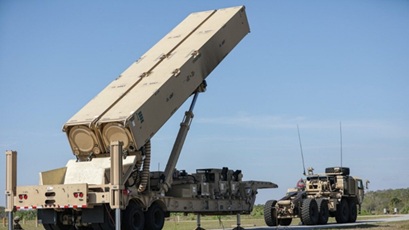
Hypersonic weapons—capable of travelling at speeds greater than Mach 5 while maintaining high manoeuvrability—are emerging as game-changers in modern warfare. Countries such as China and Russia have already operationalised hypersonic systems, prompting the US to accelerate development to:
The Dark Eagle LRHW forms a critical component of the US military’s conventional prompt strike capability, designed to deliver fast, accurate, and hard-to-intercept strikes without using nuclear warheads.
FAQsQ1. What is the Dark Eagle LRHW ? It is a US Army-operated, ground-launched, non-nuclear hypersonic missile system designed for long-range precision strikes. Q2. What makes Dark Eagle difficult to intercept ? Its hypersonic glide vehicle (C-HGB) travels at speeds up to Mach 17 and follows a highly manoeuvrable, unpredictable trajectory. Q3. Is Dark Eagle a nuclear weapon ? No, it is a conventional (non-nuclear) weapon system. Q4. Which companies are involved in developing the Dark Eagle missile ? Lockheed Martin and Northrop Grumman. Q5. Why are hypersonic weapons strategically important ? They can bypass missile defences, strike targets rapidly, and alter deterrence dynamics. |
| Prelims: (Economy + CA) Mains: (GS 2 - Government Policies & Interventions, Digital Governance; GS 3 - Economic Development) |
The Government of India has launched the Bharat Taxi Initiative, a cooperative-driven, citizen-first national ride-hailing platform, aimed at empowering drivers by making them co-owners of the platform and reducing dependence on profit-driven private cab aggregators.

India’s ride-hailing sector has expanded rapidly with the growth of the gig economy, but concerns persist over:
In line with the vision of the Ministry of Cooperation—to strengthen cooperatives as engines of inclusive growth—the Bharat Taxi initiative seeks to introduce a platform cooperative model, combining digital public infrastructure with cooperative ownership to ensure fair incomes, transparency, and sustainability for drivers.
The initiative is jointly promoted by major cooperative and financial institutions, including:
This broad institutional backing strengthens financial viability, governance, and nationwide scalability.
FAQsQ1. What is the Bharat Taxi Initiative ? It is India’s first cooperative-based national ride-hailing platform where drivers are shareholders and co-owners. Q2. Which ministry is associated with Bharat Taxi ? The initiative is developed under the Union Ministry of Cooperation, with technical support from NeGD. Q3. How is Bharat Taxi different from private cab aggregators ? It follows a zero-commission model, has no surge pricing, and is driver-owned. Q4. Which digital platforms are integrated with Bharat Taxi ? DigiLocker, UMANG, and API Setu. |
| Prelims: (Economy + CA) Mains: (GS 2 - Welfare Schemes, Government Policies; GS 3 – Economic Development) |
The Ministry of Micro, Small and Medium Enterprises (MSME) has intensified efforts to promote entrepreneurship among Scheduled Caste (SC) and Scheduled Tribe (ST) communities through the National Scheduled Caste and Scheduled Tribe Hub (NSSH) Scheme, with a renewed focus on capacity building, access to credit, and participation in public procurement.
Despite constitutional safeguards and affirmative action, SC/ST entrepreneurs remain underrepresented in India’s MSME ecosystem due to structural barriers such as lack of access to capital, markets, networks, and skills.
Recognising entrepreneurship as a key pathway to economic empowerment and social mobility, the government launched the NSSH to mainstream SC/ST enterprises into formal markets, especially government procurement, and align inclusion with India’s broader goals of inclusive growth and Atmanirbhar Bharat.
1. Public Procurement Enablement
2. Access to Finance and Credit Facilitation
3. Skill Development and Capacity Building
4. Handholding and Market Linkages
FAQsQ1. What is the National SC-ST Hub (NSSH) ? It is a flagship MSME scheme aimed at promoting entrepreneurship and capacity building among SC/ST communities. Q2. Which organisation implements the NSSH Scheme ? The scheme is implemented by the National Small Industries Corporation (NSIC). Q3. What is the procurement target for SC/ST enterprises ? Government Ministries, Departments, and CPSEs are mandated to procure at least 4% of goods and services from SC/ST enterprises. Q4. How does NSSH support access to finance ? By facilitating linkages with banks, financial institutions, and NBFCs to provide affordable and timely credit. |
| Prelims: (Social Issues + CA) Mains: (GS 1 - Social Issues, Women & Child Development; GS 2 - Government Policies & Interventions, Welfare Schemes, Social Justice) |
The Union government has launched a 100-day nationwide awareness drive to mark one year of the Bal Vivah Mukt Bharat Abhiyan, reaffirming India’s commitment to eliminate child marriage by 2030, in line with the Sustainable Development Goals (SDGs).
Despite notable declines over the past decade, progress has slowed and remains uneven across States and socio-economic groups, raising concerns about India’s ability to meet the UN target on time.
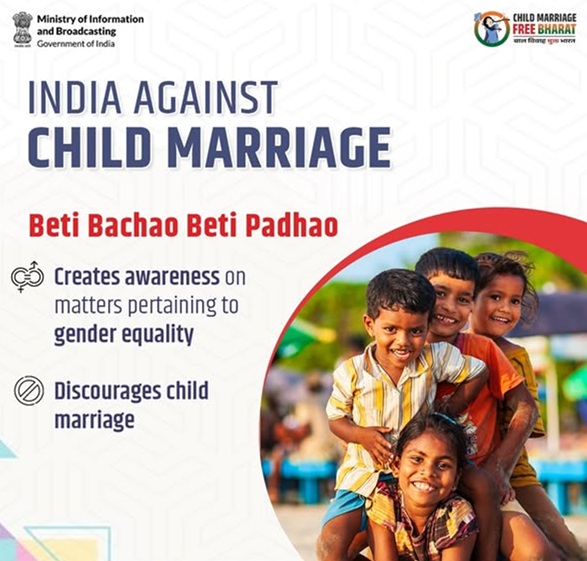
Child marriage is a deeply rooted social practice linked to poverty, gender inequality, low educational attainment, and entrenched social norms. While India has made substantial gains through legal reforms and welfare interventions, the persistence of early marriage among marginalised communities underscores the limits of law-centric approaches.
The renewed policy focus reflects recognition that ending child marriage is not only a social justice imperative but also a prerequisite for achieving broader development goals.
FAQsQ1. What is India’s target year to eliminate child marriage ? India aims to end child marriage by 2030, in line with SDG 5.3. Q2. Which law primarily governs child marriage in India ? The Prevention of Child Marriage Act, 2006. Q3. Why is girls’ education crucial in preventing child marriage ? Higher education delays marriage, improves agency, and enhances economic prospects. Q4. Why is raising the marriage age controversial ? Critics fear criminalisation without social reform and weak enforcement capacity. |
| Prelims: (Economy + CA) Mains: (GS 2 - Government Policies & Interventions; GS 3 - Pharmaceutical Industry, Economy) |
The Union government is exploring the possible introduction of data exclusivity in the pharmaceutical sector, triggering concerns over delayed access to affordable medicines and the sustainability of India’s generics-driven drug industry.

India has built its pharmaceutical strength on a robust generic drug manufacturing ecosystem, supplying affordable medicines domestically and to developing countries worldwide. This model rests on a regulatory framework that allows generic producers to enter the market immediately after patent expiry, without duplicating costly clinical trials.
However, amid evolving global trade negotiations and demands for stronger intellectual property (IP) protections, the idea of introducing data exclusivity has resurfaced—raising critical questions about public health, affordability, and India’s constitutional commitment to healthcare access.
Introducing data exclusivity could:
This raises serious public health concerns, particularly for treatments related to cancer, HIV/AIDS, rare diseases, and chronic conditions.
Experts argue this could fundamentally disrupt India’s generics-led growth model.
India currently has no international legal obligation under the TRIPS Agreement to introduce data exclusivity. Any policy shift must carefully balance:
Possible approaches include:
FAQsQ1. Is data exclusivity mandatory under international law ? No. TRIPS does not mandate data exclusivity; it only requires protection against unfair commercial use of data. Q2. How is data exclusivity different from patents ? Patents protect inventions, while data exclusivity protects clinical trial data, even after patent expiry. Q3. Why is India opposed to data exclusivity ? Because it can delay generic entry, raise medicine prices, and weaken access to affordable healthcare. Q4. Can data exclusivity affect public health emergencies ? Yes. It can restrict the government’s ability to enable rapid generic production during health crises. |

Our support team will be happy to assist you!

 Contact Us
  New Batch : 9555124124/ 7428085757
  Tech Support : 9555124124/ 7428085757