
New
Final Result - UPSC CSE Result, 2025 GS Foundation (P+M) - Delhi : 23rd March 2026, 11:30 AM Navratri offer UPTO 75% + 10% Off | Valid till 26th March GS Foundation (P+M) - Prayagraj : 17th March 2026 Final Result - UPSC CSE Result, 2025 GS Foundation (P+M) - Delhi : 23rd March 2026, 11:30 AM Navratri offer UPTO 75% + 10% Off | Valid till 26th March GS Foundation (P+M) - Prayagraj : 17th March 2026

Current Affairs for 26 March 2026

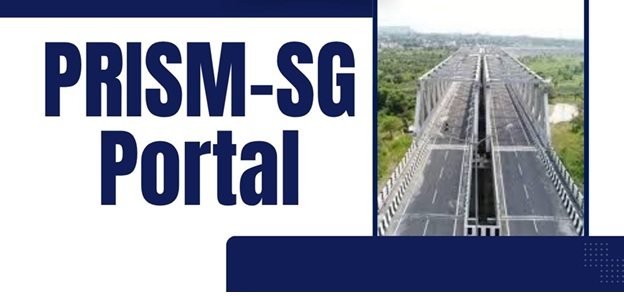
PRISM-SG Portal launched: What is the Rail-Road inspection portal for ROB approvals?

Prelims : (Infrastructure + Governance + CA)
Mains : (GS 3 – Infrastructure, Transport; GS 2 – Governance, E-Governance)

Why in News ?

The Minister for Road Transport and Highways, Nitin Gadkari has launched the PRISM-SG Portal in New Delhi to streamline inspection and approval processes for road and railway bridge infrastructure.
Background and Context

Infrastructure development in India, especially projects involving coordination between multiple agencies such as road authorities and railways, often faces delays due to complex approval mechanisms and fragmented processes.

Construction of Road Over Bridges (ROBs) and railway bridges requires multiple stages of inspection, technical clearances, and inter-agency coordination, leading to prolonged timelines and inefficiencies.

To address these issues, the government has introduced a digital platform to ensure transparency, efficiency, and faster project execution.

About PRISM-SG Portal

  • Full Form : Portal for Rail-Road Inspection & Stages Management – Steel Girders
  • Purpose :
    • Digitise inspection and approval processes
    • Enhance coordination among stakeholders
  • Focus Areas :
    • Road Over Bridges (ROBs)
    • Railway bridges involving steel girders

Key Features of the Portal

1. End-to-End Digital Workflow

  • Online submission of documents
  • Scrutiny and approvals through a unified platform
  • Query generation and resolution system

2. Inspection Management System

  • Scheduling of inspections
  • Uploading inspection reports, photographs, and test results
  • Real-time monitoring of progress

3. Technical Documentation Integration

  • Quality Assurance Plan (QAP)
  • Welding Procedure Specification Sheet (WPSS)
  • Fabrication stage inspection records

4. Multi-Stakeholder Integration

  • Connects :
    • Road Owning Departments
    • Indian Railways
    • Contractors and fabricators
    • Inspection agencies

5. Transparency and Audit Trail

  • Complete digital record of approvals and inspections
  • Ensures accountability and traceability

Significance of the Portal

1. Faster Project Execution

  • Reduces approval timelines from ~12 months to 3–4 months

2. Improved Coordination

  • Seamless interaction between multiple agencies

3. Enhanced Transparency

  • Minimises manual intervention and delays

4. Strengthening Infrastructure Delivery

  • Supports timely completion of ROBs and railway bridges

5. Boost to Connectivity and Economic Growth

  • Accelerates infrastructure development across regions

Challenges

  • Adoption and training of stakeholders
  • Integration with existing legacy systems
  • Ensuring data accuracy and reliability
  • Cybersecurity risks
  • Infrastructure readiness in remote areas

Way Forward

  • Strengthen digital infrastructure and cybersecurity
  • Conduct capacity-building programmes for stakeholders
  • Integrate with other national infrastructure platforms
  • Ensure real-time monitoring and accountability
  • Expand similar digital systems to other infrastructure sectors

FAQs

1. What is the PRISM-SG Portal ?

It is a digital platform for managing inspection and approval processes for road and railway bridge projects.

2. What does PRISM-SG stand for ?

Portal for Rail-Road Inspection & Stages Management – Steel Girders.

3. What projects does it cover ?

Primarily Road Over Bridges (ROBs) and railway bridges involving steel girders.

4. How does it improve efficiency ?

By digitising processes and reducing approval timelines significantly.

5. Why is it important ?

It enhances transparency, coordination, and timely delivery of critical infrastructure projects.

Women’s Reservation Act: What are the constitutional hurdles in increasing Lok Sabha seats?

Prelims: (Polity & Constitution + CA)
Mains: (GS 2 – Governance, Representation, Constitutional Provisions)

Why in News ?

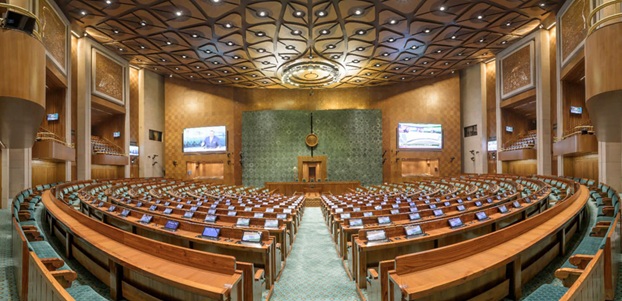
The government is considering increasing Lok Sabha seats from 543 to 816 (a 50% rise) to facilitate the implementation of the Nari Shakti Vandan Adhiniyam (Women’s Reservation Act), 2023. The proposal, however, faces significant constitutional and legal hurdles.
Background and Context

India’s electoral system is based on the principle of equal representation, where population determines the allocation of seats. Over time, demographic changes and regional disparities have made delimitation a politically sensitive issue.

The Women’s Reservation Act links the implementation of 33% reservation for women to delimitation, which in turn requires updated Census data—creating a policy and constitutional challenge.

What Is Being Proposed

  • Increase Lok Sabha seats from 543 to 816
  • Reserve 33% seats (273 seats) for women
  • Conduct delimitation using the 2011 Census instead of a fresh Census
  • Maintain proportional representation among states
  • Extend similar expansion to State Assemblies

Why the 2011 Census ?

  • The next Census has been delayed, delaying delimitation
  • The government aims to fast-track women’s reservation
  • Avoids political conflict between northern and southern states
  • Prevents immediate redistribution that could reduce southern states’ representation

Constitutional Provisions Governing Seat Allocation

Article 81

  • Ensures equal representation across states
  • Mandates “one person, one vote, one value”
  • Requires uniform population-to-seat ratio

Article 82

  • Mandates delimitation after every Census
  • Covers seat allocation and constituency boundaries

Exception :

  • Smaller states (population < 6 million) may have disproportionate representation

The Delimitation Freeze

  • 1976 Amendment : Froze seat allocation based on 1971 Census
  • 2001 Amendment : Extended freeze until first Census after 2026
  • Result : Inter-state seat distribution unchanged since 1971

Why Was the Freeze Introduced?

  • Southern states achieved population control
  • Northern states continued high population growth
  • Redistribution would penalise southern states
  • Freeze ensured political balance and fairness

The Road Ahead: Delimitation Process

If the freeze ends :

  • Census conducted and data published
  • Parliament enacts Delimitation Act
  • Delimitation Commission is constituted
  • Constituencies are redrawn accordingly

Last major exercise :

  • Delimitation Act, 2002 (based on 2001 Census)
  • Only intra-state boundary changes, not inter-state seat redistribution

Key Constitutional Roadblocks

  1. Article 81 Constraint
    • Any expansion must maintain equal population representation
  2. Violation of Equality (Article 14)
    • Distorting representation may violate the Basic Structure
  3. Delimitation-Census Link (Article 82)
    • Using outdated Census data is constitutionally questionable
  4. Federal Imbalance
    • Southern states may resist loss of political weight
  5. Judicial Review
    • Any deviation can be challenged in courts

Possible Legal Routes

Route 1 : Amend Women’s Reservation Act

  • • Delink reservation from delimitation
  • • Faster and less controversial

Route 2 : Amend Articles 81 & 82

  • • Allow delimitation using 2011 Census
  • • Higher legal and political risks

A Possible Solution: Compensatory Principle

  • Provide safeguards for southern states
  • Balance population-based representation with equity
  • Maintain federal harmony

Significance of the Issue

  1. Democratic Representation Impacts fairness in Parliament
  2. Women’s Empowerment : Key to implementing 33% reservation
  3. Federal Balance : Affects Centre-State political dynamics
  4. Constitutional Integrity : Tests Basic Structure doctrine
  5. Long-Term Political Impact : Shapes India’s parliamentary structure for decades

Challenges

  • Achieving political consensus
  • Balancing equity vs population-based representation
  • Legal scrutiny by judiciary
  • Managing regional disparities
  • Timing of Census and reforms

Way Forward

  • Build consensus among states
  • Consider phased delimitation reforms
  • Ensure constitutional safeguards
  • Protect interests of population-stabilised states
  • Align reforms with democratic and federal principles

FAQs

1. Why is Lok Sabha seat expansion proposed ?

To improve representation and implement women’s reservation.

2. What is the main constitutional issue ?

Delimitation must be based on the latest Census, not 2011 data.

3. Why has seat allocation been frozen since 1971 ?

To avoid penalising states that controlled population growth.

4. What are the legal risks ?

Violation of equality and Basic Structure principles.

5. What is the possible solution ?

Amend laws carefully and adopt a compensatory approach to balance interests.

IVFRT Scheme approved by Union Cabinet: What is India’s immigration visa tracking system and why is it important?

Prelims : (Polity & Governance + CA)
Mains : (GS 2 – Governance, E-Governance, Security; GS 3 – Internal Security)

Why in News ?

The Union Cabinet has approved the continuation of the Immigration, Visa, Foreigners Registration & Tracking (IVFRT) Scheme for the period 2026–2031, aiming to modernise and strengthen India’s immigration and visa management system.
Background and Context

With increasing global mobility, tourism, business travel, and security concerns, managing the entry, stay, and exit of foreign nationals has become a critical governance and security priority for India.

The IVFRT scheme was introduced to address fragmentation in immigration systems and bring in a unified, technology-driven framework. The recent approval aligns with the broader legal framework under the Immigration and Foreigners Act, 2025.

About IVFRT Scheme

  • Launched in : 2010
  • Duration (current phase) : 1 April 2026 – 31 March 2031
  • Objective :
    • Integrate immigration, visa, and foreigner registration processes
    • Enhance security, efficiency, and transparency
  • Nature :
    • Central Sector Scheme
    • Technology-driven governance platform

Key Features of the IVFRT Scheme

1. Adoption of Emerging Technologies

  • Use of AI, data analytics, and automation
  • Mobile-based services for users
  • Self-service kiosks at airports for faster clearance

2. Infrastructure Modernisation

  • Upgradation of Immigration Check Posts (ICPs)
  • Strengthening Foreigners Regional Registration Offices (FRROs)
  • Expansion of data centres for secure data management

3. Unified Digital Platform

  • Integration of visa issuance, immigration, and registration systems
  • Seamless data sharing across agencies
  • Improved monitoring of foreign nationals

4. Improved Service Delivery

  • Faster visa processing
  • Reduced manual intervention
  • Enhanced user experience for travellers

5. Strengthened Security Framework

  • Real-time tracking of foreign nationals
  • Detection of overstays and illegal activities
  • Better coordination among security agencies

Significance of the Scheme

1. National Security Enhancement

  • Enables real-time monitoring of foreign nationals
  • Helps prevent illegal immigration and security threats

2. Ease of Doing Business and Tourism

  • Simplifies visa and immigration processes
  • Improves India’s global image as a travel destination

3. Digital Governance

  • Promotes e-governance and paperless systems
  • Reduces delays and bureaucratic inefficiencies

4. Data-Driven Decision Making

  • Provides reliable data for policymaking
  • Enhances intelligence and enforcement capabilities

5. Integration with Legal Framework

  • Aligns with Immigration and Foreigners Act, 2025
  • Strengthens regulatory oversight

Challenges

  • Data privacy and cybersecurity concerns
  • Coordination among multiple agencies
  • Infrastructure gaps at smaller immigration points
  • Capacity building for personnel
  • Risk of system misuse or technical glitches

Way Forward

  • Strengthen cybersecurity frameworks
  • Enhance inter-agency coordination
  • Invest in advanced technologies like AI and biometrics
  • Improve training of immigration officials
  • Ensure robust data protection mechanisms

FAQs

1. What is the IVFRT Scheme ?

It is a technology-driven system to manage immigration, visa issuance, and foreigner registration in India.

2. When was it launched ?

It was originally launched in 2010.

3. What is the objective of the scheme?

To create a unified, secure, and efficient immigration management system.

4. How does it improve security ?

By enabling real-time tracking and monitoring of foreign nationals.

5. What is the duration of the current phase ?

From April 2026 to March 2031.

Nationally Determined Contributions (NDCs) for 2035: What are the Targets, Progress and Challenges ?

Prelims : (Environment + CA)
Mains : (GS 3 – Environment, Climate Change; GS 2 – International Relations)

Why in News ?

India’s climate strategy and targets, guided by equity and the principle of Common But Differentiated Responsibilities (CBDR-RC), are under focus as the country remains on track in several climate commitments while balancing growth and sustainability.
Background and Context

India’s climate commitments are framed under the Paris Agreement, through its Nationally Determined Contributions (NDCs).

Key Guiding Principles :

  • Equity in climate responsibility
  • CBDR-RC principle
  • Developmental needs
  • Energy security

India’s Climate Targets

  • Reduce emissions intensity of GDP
  • Increase share of non-fossil fuel energy
  • Expand forest and tree cover (carbon sink)

India is currently :

  • On track or ahead in several parameters
  • Balancing climate goals with economic growth

Main Pillars of India’s Climate Strategy

1. Institutional Framework

  • Anchored in : National Action Plan on Climate Change (NAPCC)
  • Supported by : State Action Plans on Climate Change (SAPCCs)

2. National Missions under NAPCC

  • Solar Mission
  • Sustainable Agriculture
  • Sustainable Habitat
  • Water Mission
  • Green India Mission

3. Implementation Through Flagship Schemes

  • Jal Jeevan Mission
  • National Mission on Sustainable Agriculture
  • Sustainable Habitat initiatives
  • MISHTI
  • National Disaster Management Plan
  • Soil Health Card Scheme
  • Pradhan Mantri Krishi Sinchayee Yojana

4. People-Centric Approach

  • Based on : Lifestyle for Environment (LiFE)
  • Key initiatives : “Ek Ped Maa Ke Nam”
  • Focus : Behavioural change and Mass participation

Significance of India’s Climate Strategy

1. Leadership of Global South

  • India acts as voice of developing countries
  • Emphasises Climate justice

2. Balancing Growth and Sustainability

  • Simultaneously promotes: Industrial growth and Climate mitigation

3. Strategic Autonomy

  • NDCs are Self-determined
  • Align with National priorities

4. Inclusive Climate Action

  • Focus on : Energy access and Affordable power

5. Global Climate Diplomacy

  • Strengthens India’s position in International negotiations

Challenges and Concerns

1. Modest Targets Debate

  • Critics argue : Targets may be less ambitious

2. Capacity vs Generation Gap

  • Non-fossil capacity : ~52%
  • Actual generation : ~25%
  • Due to : Intermittency of renewables

3. Infrastructure Constraints

  • Issues in Land acquisition and Transmission networks

4. Forest Cover Limitations

  • Current : ~24.6%
  • Target : 33% (National Forest Policy)

5. Global Inequities

  • Developed nations: Rolling back commitments
  • Issues like: Carbon border taxes

Way Forward

1. Strengthen Renewable Ecosystem

  • Invest in : 
    • Grid infrastructure
    • Energy storage
    • Green hydrogen

2. Bridge Capacity-Generation Gap

  • Promote : Hybrid energy systems
  • Improve : Efficiency of renewables

3. Expand Carbon Sink

  • Encourage : 
    • Agroforestry
    • Urban forestry
    • Community conservation

4. Mobilise Climate Finance

  • Push for : International funding and Technology transfer
  • Use : Green bonds

5. Policy and Institutional Reforms

  • Streamline approvals
  • Strengthen governance frameworks

FAQs

1. What guides India’s climate policy ?

The Paris Agreement and the CBDR-RC principle.

2. What are NDCs ?

Nationally Determined Contributions outlining a country’s climate targets.

3. What is the LiFE initiative ?

A people-centric approach promoting sustainable lifestyles.

4. What is the major challenge in renewable energy ?

Gap between installed capacity and actual power generation.

5. Why is India considered a climate leader ?

Due to its balanced approach of development, equity, and sustainability.

UDAN Scheme 2.0: Regional Air Connectivity, Benefits & Challenges Explained

Prelims :  (Governance + CA)
Mains : (GS 3 – Infrastructure, Aviation, Inclusive Growth; GS 2 – Governance)

Why in News ?

The Union Cabinet has approved a revamped version of the UDAN Scheme (UDAN 2.0) with enhanced funding support and extended subsidy mechanisms to strengthen regional air connectivity.

Background and Context

India’s aviation sector has witnessed rapid growth, yet a significant gap persists in connectivity between metropolitan cities and smaller towns.

Large parts of the country, especially :

  • Tier-2 and Tier-3 cities
  • North-East region
  • Hilly and island areas

remain underserved due to :

  • Low commercial viability
  • Infrastructure constraints
  • Limited airline penetration

To address these disparities, the Government launched the UDAN (Ude Desh ka Aam Nagrik) Scheme in 2017 under the Regional Connectivity Scheme (RCS), aiming to democratise air travel.

About UDAN Scheme

  • Launched in: 2017
  • Nodal Ministry: Ministry of Civil Aviation
  • Objective: Affordable and accessible air travel

Objectives of the Scheme

  • Enhance regional connectivity across underserved regions
  • Make air travel affordable for common citizens
  • Promote balanced regional development
  • Utilise underused and unserved airports

Key Features

  • Competitive Bidding: Airlines selected through transparent bidding
  • Viability Gap Funding (VGF): Financial support for low-demand routes
  • Fare Cap: Around ₹2,500 per hour of flight for 50% seats
  • Regional Focus: Connectivity to remote, hilly, and island regions

Funding Mechanism

  • Funded through a Regional Connectivity Levy (RCL) on major routes
  • Cross-subsidisation ensures viability of regional routes

Phase-wise Evolution of UDAN Scheme

UDAN 1.0 (2017) :

  • Initial focus on connecting unserved airports
  • Basic route allocation and fare structure

UDAN 2.0 :

  • Expanded coverage including helipads and water aerodromes
  • Greater focus on North-East and remote regions

UDAN 3.0 :

  • Inclusion of tourism routes
  • Focus on seaplanes and strategic connectivity

UDAN 4.0 & Beyond :

  • Emphasis on sustainability of routes
  • Improved infrastructure and airline participation

UDAN 2.0 Revamp (Current) :

  • Higher funding support
  • Extended subsidy duration
  • Focus on long-term viability

Governance & Regulatory Framework

  • Implemented by the Ministry of Civil Aviation
  • Managed through Airports Authority of India (AAI) as implementing agency
  • Coordination with :
    • State Governments
    • Airlines
    • Airport operators

Regulatory Support :

  • Concessions on :
    • Airport charges
    • Taxes on Aviation Turbine Fuel (ATF)
      • Simplified procedures for route approvals
      •  Policy support for infrastructure development

How Will UDAN 2.0 Benefit Consumers ?

  • Affordable Air Travel : Continued fare caps make flying accessible to middle and lower-income groups
  • Improved Accessibility : Direct flights from smaller cities reduce travel time significantly
  • Better Connectivity : Integration of remote regions into national transport network
  • Convenience : Reduced dependence on rail/road for long-distance travel

Socio-Economic Multiplier Effects (Tourism & Jobs)

1. Boost to Tourism

  • Enhanced access to tourist destinations
  • Promotion of eco-tourism and regional tourism circuits

2. Employment Generation

  • Direct jobs in aviation sector
  • Indirect jobs in :
    • Hospitality
    • Transport
    • Local businesses

3. Regional Economic Development

  • Improved connectivity attracts investment
  • Facilitates trade and business expansion

4. Social Integration

  • Connects remote populations with mainstream economy
  • Improves access to healthcare and education

Achievements of the Scheme

  • Over 600 routes operationalised
  • More than 90 airports revived
  • Enhanced connectivity in North-East and remote regions
  • Strengthened last-mile connectivity

Significance of the Revamp

1. Strengthening Regional Connectivity

Bridges the urban-rural connectivity gap in aviation.

2. Inclusive Growth

Ensures equitable development across regions.

3. Infrastructure Utilisation

Revives unused airports and enhances efficiency.

4. Strategic Connectivity

Improves access to border and remote areas.

5. Economic Multiplier Effect

Boosts tourism, trade, and employment.

Challenges

1. Financial Sustainability of Routes

Many UDAN routes struggle to remain operational after the withdrawal of Viability Gap Funding (VGF), as passenger demand in several regions remains insufficient to sustain commercial airline operations.

2. Low Passenger Demand in Remote Areas

Despite improved connectivity, air travel demand in Tier-2 and Tier-3 cities is often limited due to lower income levels, lack of awareness, and preference for cheaper transport modes such as railways.

3. Infrastructure Gaps at Regional Airports

Several revived airports lack adequate infrastructure such as night landing facilities, navigation systems, and terminal capacity, which restricts operational efficiency and flight frequency.

4. High Operational Costs for Airlines

Airlines face high costs related to Aviation Turbine Fuel (ATF), maintenance, and logistics, making regional routes less attractive despite government support.

5. Route Discontinuation and Airline Exit

A significant number of routes have been discontinued due to operational losses, indicating challenges in maintaining long-term airline participation.

6. Coordination Challenges Among Stakeholders

Effective implementation requires coordination between central government, state governments, airport operators, and airlines, which often leads to delays and inefficiencies.

7. Regulatory and Procedural Bottlenecks

Delays in approvals, land acquisition, and clearances can slow down airport development and route operationalisation.

8. Limited Private Sector Participation

Private airlines may hesitate to enter regional markets due to uncertain returns and operational risks.

Way Forward

1. Introduce Dynamic Subsidy Models

The government should design flexible VGF mechanisms based on route performance and demand patterns to ensure gradual transition towards self-sustainability.

2. Strengthen Airport Infrastructure

Investments should be increased to upgrade regional airports with modern navigation systems, better terminals, and all-weather operational capabilities.

3. Promote Demand Generation

Awareness campaigns, tourism promotion, and integration with local economic activities can help increase passenger traffic on regional routes.

4. Rationalise Aviation Fuel Taxes

Reducing state-level taxes on ATF can significantly lower operational costs and improve airline viability.

5. Encourage Regional Airline Ecosystem

Special incentives should be provided to small and regional carriers to enhance competition and service delivery in underserved areas.

6. Improve Multi-Modal Connectivity

Seamless integration of air transport with rail and road networks can enhance last-mile connectivity and increase passenger convenience.

7. Enhance Policy Stability and Ease of Doing Business

Simplifying regulatory procedures and ensuring policy continuity will attract greater private investment in regional aviation.

8. Leverage Technology and Data Analytics

Use of AI-driven demand forecasting and route optimisation can help airlines and policymakers make informed decisions.

9. Focus on Long-Term Sustainability

Shift focus from short-term connectivity to building economically viable and self-sustaining aviation ecosystems.

10. Strengthen Centre-State Coordination

Improved collaboration between central and state governments is essential for faster project execution and operational efficiency.

FAQs

1. What is the UDAN Scheme ?

It is a government initiative to make air travel affordable and improve regional connectivity.

2. What is UDAN 2.0 ?

It is the revamped version with enhanced funding and extended support to ensure long-term sustainability.

3. How does the scheme make flights affordable ?

Through fare caps and Viability Gap Funding for airlines.

4. What are the main benefits of UDAN for the economy?

It boosts tourism, generates employment, and promotes regional development.

5. What are the key challenges of the scheme ?
      Low demand, financial sustainability, infrastructure gaps, and route discontinuation.
      « »
      • SUN
      • MON
      • TUE
      • WED
      • THU
      • FRI
      • SAT
      Have any Query?

      Our support team will be happy to assist you!

      OR
      X



