| Prelims: (Economy + CA) Mains: (GS 3 – Economy, Banking Reforms, International Trade, Financial Technology) |
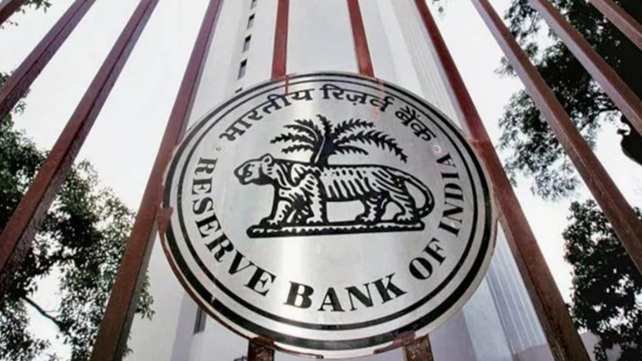
The Reserve Bank of India (RBI) has advised the Indian government to encourage BRICS countries to collaborate on using digital currencies for cross-border payments. Such a move could reduce transaction costs, speed up settlements, and lower dependence on the US dollar.
However, in the near term, it also poses risks related to financial stability, regulatory coordination, cyber security, and differences in digital infrastructure among BRICS members, which would require careful management.
Global cross-border payments are currently dominated by:
These systems are often:
In response, many countries are exploring Central Bank Digital Currencies (CBDCs) as a sovereign, digital alternative to cash and traditional banking instruments, with the potential to modernise both domestic and international payments.
The RBI has reportedly proposed that India use its BRICS chairmanship in 2026 to encourage member countries to adopt their CBDCs for cross-border payments.
Key elements of the proposal include:
Although not formally announced, the RBI is reported to have conveyed this idea to the Ministry of Finance, signalling a strategic push to reshape cross-border payment infrastructure.
CBDCs are legal tender issued by a central bank in fully digital form.
Key features:
may delay tangible benefits.
India will need to balance these near-term risks against the long-term gains in monetary sovereignty, financial efficiency, and strategic autonomy.
FAQs1. What is a Central Bank Digital Currency (CBDC) ? It is legal tender issued by a central bank in digital form, functioning like physical currency but existing only electronically. 2. Why is RBI encouraging BRICS countries to use CBDCs for cross-border payments ? To reduce transaction costs, speed up settlements, and lower dependence on the US dollar-dominated global payment system. 3. How are CBDCs different from UPI and cryptocurrencies ? CBDCs transfer value directly between digital wallets and are centrally issued and regulated, unlike UPI (bank-to-bank transfers) and private cryptocurrencies (decentralised and unregulated). 4. What are the main benefits of CBDCs in cross-border transactions ? Greater transparency, programmability, reduced illicit flows, and strategic autonomy in international payments. 5. What are the key risks of adopting CBDCs for international payments ? Regulatory coordination challenges, cybersecurity risks, financial stability concerns, and potential geopolitical and trade repercussions. |
| Prelims: (Health + CA) Mains: (GS 2 – Health, Governance, Social Sector Policies, Sustainable Development) |
Under the National Framework for Malaria Elimination (2016–2030), India aims to eliminate malaria by 2030, with an interim target of stopping indigenous transmission nationwide by 2027.
By the end of 2025, sustained surveillance and interventions had yielded major gains, with 160 districts across 23 States and Union Territories reporting zero indigenous malaria cases between 2022 and 2024—marking a significant milestone toward nationwide elimination.
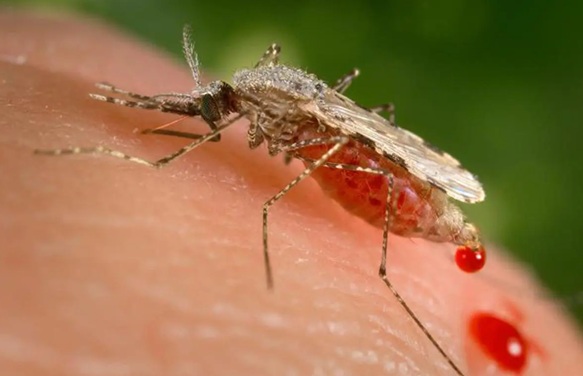
The World Health Organization (WHO) defines malaria elimination as the interruption of local transmission of all human malaria parasites nationwide for at least three consecutive years, supported by a robust surveillance and response system.
Based on this criterion:
Malaria remains a major global public health challenge, especially in tropical and subtropical regions, making elimination a complex, long-term governance and health systems task.
India has made substantial progress in reducing malaria burden over the past decade:
However, challenges remain:
India’s elimination drive is guided by two key national policy frameworks:
Key pillars of India’s strategy include:
According to India’s NSP, elimination requires special focus on:
The World Malaria Report 2025 acknowledges significant progress in the WHO South-East Asia Region but highlights persistent challenges:
A growing concern is antimalarial drug resistance:
In response, India is:
India has reached an advanced stage in its malaria elimination journey:
Experts emphasise that the next phase depends on:
Urban malaria remains a critical concern. Rapid urbanisation, expanding infrastructure, and household water storage practices in cities like Chennai create breeding grounds for mosquitoes. Addressing this requires:
As India targets zero indigenous malaria cases by 2027 and prevention of re-establishment thereafter, sustained political commitment, scientific vigilance, and community participation will be crucial to achieving and sustaining malaria elimination.
FAQs1. What does malaria elimination mean according to WHO ? It means interruption of local transmission of all human malaria parasites nationwide for at least three consecutive years, supported by a strong surveillance system. 2. What is India’s malaria elimination target ? India aims to stop indigenous transmission by 2027 and achieve nationwide elimination by 2030. 3. What progress has India made in reducing malaria ? India has reduced malaria cases by about 80% since 2015 and exited the WHO’s high-burden category in 2024. 4. What are the main challenges to malaria elimination in India ? Key challenges include migration, urban malaria, hard-to-reach areas, cross-border transmission, and rising drug and insecticide resistance. 5. Why is Plasmodium vivax a major obstacle to elimination ? It can cause relapses due to dormant liver stages, making complete elimination more difficult and requiring strict treatment compliance. |
| Prelims: (Social Issues + CA) Mains: (GS 2 – Governance, Welfare Schemes, Digital Public Infrastructure, Labour Reforms) |
The Employees’ Provident Fund Organisation (EPFO), India’s premier retirement fund body, is undertaking a new phase of digital and institutional reforms under EPFO 3.0. These reforms aim to simplify access, enhance portability, and prepare the institution for expanded social security coverage under the Labour Codes.
EPFO is in the final stages of floating a tender for IT platform implementation and has shortlisted firms such as Wipro, Infosys, and TCS. Meanwhile, EPFO 2.0 is nearing completion, with only pension, claim, and annual accounts modules pending.
Nature of the body: EPFO is a statutory organisation under the Ministry of Labour and Employment, established in 1952 to provide social security to the organised workforce.
With growing labour mobility, digitisation, and expansion of social security to new categories of workers, EPFO’s legacy systems have increasingly required structural and technological upgrades—prompting reforms under EPFO 2.0 and now EPFO 3.0.
FAQs1. What is EPFO 3.0 ? EPFO 3.0 is a new phase of institutional and digital reforms aimed at creating a centralised, portable, and citizen-centric social security system. 2. How is EPFO 3.0 different from EPFO 2.0 ? EPFO 2.0 focused on operational simplification and digital services, while EPFO 3.0 aims at structural transformation through core banking, multilingual AI tools, and readiness for expanded social security coverage. 3. Why is a centralised core banking solution important for EPFO ? It allows members to access services from any location, improves portability for migrant workers, and ensures uniform service delivery across the country. 4. How will EPFO reforms support gig and unorganised workers ? EPFO is likely to administer separate social security funds for gig and platform workers, aligning with the Social Security Code’s objective of universal coverage. 5. What challenges does EPFO face in implementing EPFO 3.0 ? Key challenges include managing scale expansion, ensuring data security, bridging digital literacy gaps, and smoothly transitioning from legacy systems. |
| Prelims: (Polity & Governance + CA) Mains: (GS 2 – Governance, Civil Services, Federalism, Administrative Reforms) |
The Union government has notified a revised cadre allocation policy for the IAS, IPS, and IFoS, replacing the earlier zonal system with a new grouping structure, aimed at improving transparency, fairness, and national integration.
Cadre allocation is a crucial administrative process that determines the State or Joint Cadre in which officers of the:
will serve throughout their careers.
Since 2017, cadre allocation was governed by a zonal system, where:
These concerns prompted the government to redesign the framework.
The revised policy replaces the zonal arrangement with four alphabetical groups of State and Joint Cadres.
According to the notification issued by the Department of Personnel and Training (DoPT):
AGMUT (Arunachal Pradesh–Goa–Mizoram–Union Territories), Andhra Pradesh, Assam-Meghalaya, Bihar, Chhattisgarh
Gujarat, Haryana, Himachal Pradesh, Jharkhand, Karnataka, Kerala, Madhya Pradesh
Maharashtra, Manipur, Nagaland, Odisha, Punjab, Rajasthan, Sikkim, Tamil Nadu
Telangana, Tripura, Uttarakhand, Uttar Pradesh, West Bengal
This replaces the earlier five-zone model that relied on geographical clustering, which often resulted in regional concentration of officers.
The new framework aims to achieve:
Vacancies will now be determined annually by cadre-controlling authorities:
Key procedural changes:
The revised policy reiterates strict norms:
These rules aim to curb discretionary interpretation and strengthen merit-based allocation.
A major procedural reform is the introduction of a rotational cycle system:
This system introduces predictability, objectivity, and procedural clarity into cadre placement.
The revised cadre allocation policy is significant because it:
FAQs1. What is cadre allocation in the All India Services ? It is the process of assigning IAS, IPS, and IFoS officers to State or Joint Cadres where they will serve during their careers. 2. What major change has been introduced in the revised policy ? The earlier five-zone system has been replaced by four alphabetical groups of cadres. 3. Why was the zonal system replaced ? Due to concerns over lack of transparency, uneven distribution, and rigid allocation outcomes. 4. What is the rotational cycle system ? A system where candidates are allocated in cycles of 25, ensuring predictability, merit-based prioritisation, and fair distribution. 5. Why is this policy important for governance ? It improves national integration, reduces disputes, strengthens federal cooperation, and enhances administrative efficiency. |
| Prelims: (Art & Culture + CA) Mains: (GS 1 – Art & Culture, Heritage Conservation, Education, Knowledge Traditions) |
The President of India recently inaugurated Granth Kutir at Rashtrai Bhavan, marking a significant step toward preserving and promoting India’s classical literary and manuscript heritage.

India possesses one of the world’s richest manuscript traditions, spanning over two millennia and covering diverse domains such as:
However, a large portion of this heritage remains:
Recognising this, the Government of India has prioritised the documentation, conservation, and dissemination of manuscripts and classical texts as part of its broader cultural and educational policy.
Nature of the Institution: Granth Kutir is a curated repository and knowledge centre located at Rashtrapati Bhavan, dedicated to showcasing India’s classical manuscripts and literary traditions.
Languages Covered: It houses manuscripts and books in major classical and regional languages of India, including:
Subject Coverage: The collection spans a wide range of disciplines:
Granth Kutir has been developed through extensive collaboration involving:
This collaborative model ensures:
Granth Kutir supports the vision of the Gyan Bharatam Mission, a comprehensive national initiative under the Ministry of Culture, Government of India, dedicated to:
By providing a physical and institutional anchor for manuscript heritage, Granth Kutir complements the Mission’s digital and conservation efforts, strengthening India’s knowledge ecosystem.
FAQs1. What is Granth Kutir ? It is a national repository and knowledge centre at Rashtrapati Bhavan showcasing India’s classical manuscripts and literary heritage. 2. Which languages are represented in Granth Kutir ? Languages include Tamil, Sanskrit, Kannada, Telugu, Malayalam, Odia, Marathi, Pali, Prakrit, Assamese, and Bengali. 3. What kinds of subjects does Granth Kutir cover ? It covers epics, philosophy, linguistics, history, governance, science, devotional literature, and the Constitution of India. 4. How does Granth Kutir support national cultural policy ? It enhances public awareness, preserves manuscripts, supports research, and promotes India’s pluralistic knowledge traditions. 5. What is the Gyan Bharatam Mission and how is Granth Kutir linked to it ? The Gyan Bharatam Mission is a Ministry of Culture initiative for surveying, documenting, conserving, and digitising manuscripts; Granth Kutir serves as a key institutional and cultural pillar supporting this mission. |

Our support team will be happy to assist you!


 Contact Us
  New Batch : 9555124124/ 7428085757
  Tech Support : 9555124124/ 7428085757