
- UPSC Exam
- State PCS
- One Day Exam
- Current Affairs
- PT Quiz
- Downlaods
- About Coaching
- Blog
- Videos

| Prelims: (Art & Culture + CA) Mains: (GS 1 – Art & Culture, Heritage Conservation, Education, Knowledge Traditions) |
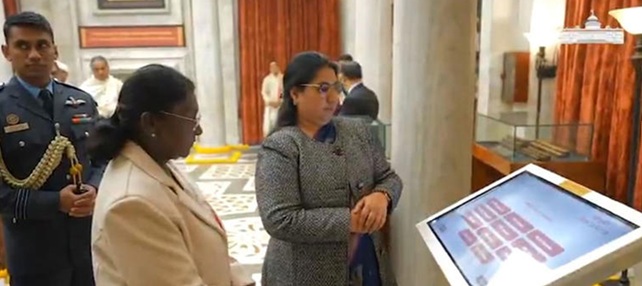
The President of India recently inaugurated Granth Kutir at Rashtrai Bhavan, marking a significant step toward preserving and promoting India’s classical literary and manuscript heritage.
India possesses one of the world’s richest manuscript traditions, spanning over two millennia and covering diverse domains such as:
However, a large portion of this heritage remains:
Recognising this, the Government of India has prioritised the documentation, conservation, and dissemination of manuscripts and classical texts as part of its broader cultural and educational policy.
Nature of the Institution: Granth Kutir is a curated repository and knowledge centre located at Rashtrapati Bhavan, dedicated to showcasing India’s classical manuscripts and literary traditions.
Languages Covered: It houses manuscripts and books in major classical and regional languages of India, including:
Subject Coverage: The collection spans a wide range of disciplines:
Granth Kutir has been developed through extensive collaboration involving:
This collaborative model ensures:
Granth Kutir supports the vision of the Gyan Bharatam Mission, a comprehensive national initiative under the Ministry of Culture, Government of India, dedicated to:
By providing a physical and institutional anchor for manuscript heritage, Granth Kutir complements the Mission’s digital and conservation efforts, strengthening India’s knowledge ecosystem.
FAQs1. What is Granth Kutir ? It is a national repository and knowledge centre at Rashtrapati Bhavan showcasing India’s classical manuscripts and literary heritage. 2. Which languages are represented in Granth Kutir ? Languages include Tamil, Sanskrit, Kannada, Telugu, Malayalam, Odia, Marathi, Pali, Prakrit, Assamese, and Bengali. 3. What kinds of subjects does Granth Kutir cover ? It covers epics, philosophy, linguistics, history, governance, science, devotional literature, and the Constitution of India. 4. How does Granth Kutir support national cultural policy ? It enhances public awareness, preserves manuscripts, supports research, and promotes India’s pluralistic knowledge traditions. 5. What is the Gyan Bharatam Mission and how is Granth Kutir linked to it ? The Gyan Bharatam Mission is a Ministry of Culture initiative for surveying, documenting, conserving, and digitising manuscripts; Granth Kutir serves as a key institutional and cultural pillar supporting this mission. |



Our support team will be happy to assist you!

 Contact Us
  New Batch : 9555124124/ 7428085757
  Tech Support : 9555124124/ 7428085757