Prelims: (Health + CA)
Mains: (GS 2 – Health, Governance, Social Sector Policies, Sustainable Development) |
Why in News ?
Under the National Framework for Malaria Elimination (2016–2030), India aims to eliminate malaria by 2030, with an interim target of stopping indigenous transmission nationwide by 2027.
By the end of 2025, sustained surveillance and interventions had yielded major gains, with 160 districts across 23 States and Union Territories reporting zero indigenous malaria cases between 2022 and 2024—marking a significant milestone toward nationwide elimination.
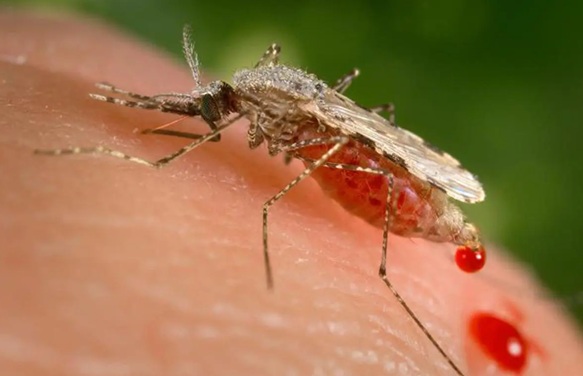
Background: Understanding Malaria Elimination and Assessment
The World Health Organization (WHO) defines malaria elimination as the interruption of local transmission of all human malaria parasites nationwide for at least three consecutive years, supported by a robust surveillance and response system.
Based on this criterion:
- 47 countries or territories had been officially certified malaria-free by WHO as of mid-2025.
- Elimination does not imply the absence of risk; instead, it requires sustained vigilance to prevent re-establishment.
Malaria remains a major global public health challenge, especially in tropical and subtropical regions, making elimination a complex, long-term governance and health systems task.
India’s Current Status in the Fight Against Malaria
India has made substantial progress in reducing malaria burden over the past decade:
- According to the World Malaria Report 2025, India exited the WHO’s “High Burden to High Impact (HBHI)” group in 2024, reflecting sustained improvements in high-endemic States.
- Malaria cases declined by around 80% between 2015 and 2023.
- India is on track to meet the WHO Global Technical Strategy (2016–2030) target of a 75% reduction in incidence by 2025, having already achieved over 70% reduction by 2024.
However, challenges remain:
- India still accounted for 73.3% of the estimated 2.7 million malaria cases in the WHO South-East Asia Region in 2024.
- Localised transmission, population mobility, and cross-border importation continue to threaten elimination gains.
India’s Strategy for Eliminating Malaria
India’s elimination drive is guided by two key national policy frameworks:
- National Framework for Malaria Elimination (2016–2030)
- Sets the long-term vision and phased national targets.
- National Strategic Plan (NSP) for Malaria Elimination (2023–2027)
- Operationalises the framework with district-level strategies and time-bound interventions.
Key pillars of India’s strategy include:
- Transforming surveillance into a core intervention, ensuring real-time detection and response.
- Universal access to timely diagnosis and treatment through a “test, treat, and track” approach.
- Strengthening vector control through insecticide-treated nets, indoor residual spraying, and environmental management.
- Enhancing community participation and inter-sectoral coordination.
Key Challenges in India’s Malaria Elimination Drive
1. Migration and Mobility
- Migration from malaria-endemic neighbouring States increases the risk of reintroduction in areas that have achieved low or zero transmission.
2. Urban Malaria
- Urban settings present distinct challenges due to:
- High population density,
- Informal settlements,
- Water storage practices,
- Rapid construction and infrastructure expansion.
3. Hard-to-Reach and Vulnerable Areas
According to India’s NSP, elimination requires special focus on:
- Forest and tribal regions,
- Border districts,
- Large infrastructure project zones,
- Migrant populations and remote rural areas.
Regional and Cross-Border Transmission Risks
The World Malaria Report 2025 acknowledges significant progress in the WHO South-East Asia Region but highlights persistent challenges:
- Plasmodium vivax, responsible for nearly two-thirds of regional malaria cases, hinders elimination due to its ability to cause relapses.
- Localised transmission in India and Nepal, driven by cross-border movement, underscores the need for:
- Sub-national strategies,
- Regional cooperation,
- Cross-border surveillance and response mechanisms.
Rising Drug and Insecticide Resistance
A growing concern is antimalarial drug resistance:
- WHO has warned of partial resistance to artemisinin derivatives, the backbone of current malaria treatment.
- There are also signs of declining efficacy of partner drugs and insecticides used for vector control.
In response, India is:
- Strengthening drug and insecticide resistance monitoring systems.
- Emphasising strict compliance with the 14-day radical treatment regimen for Plasmodium vivax to prevent relapses.
- Updating treatment guidelines based on surveillance data.
The Road Ahead for Malaria Elimination in India
India has reached an advanced stage in its malaria elimination journey:
- 34 States and Union Territories recorded an Annual Parasite Incidence (API) of less than one in 2023, according to the Ministry of Health and Family Welfare.
- Only Tripura and Mizoram remain above this threshold, indicating that malaria transmission is now geographically concentrated.
Experts emphasise that the next phase depends on:
- Data accuracy and robust surveillance, including mandatory reporting of even suspected malaria cases—especially by private healthcare providers.
- Intensified control measures in high-burden districts.
- Strengthened diagnostic capacity and rapid response systems.
Urban malaria remains a critical concern. Rapid urbanisation, expanding infrastructure, and household water storage practices in cities like Chennai create breeding grounds for mosquitoes. Addressing this requires:
- Strong municipal governance,
- Community engagement,
- Household-level behavioural change to prevent mosquito breeding.
As India targets zero indigenous malaria cases by 2027 and prevention of re-establishment thereafter, sustained political commitment, scientific vigilance, and community participation will be crucial to achieving and sustaining malaria elimination.
FAQs
1. What does malaria elimination mean according to WHO ?
It means interruption of local transmission of all human malaria parasites nationwide for at least three consecutive years, supported by a strong surveillance system.
2. What is India’s malaria elimination target ?
India aims to stop indigenous transmission by 2027 and achieve nationwide elimination by 2030.
3. What progress has India made in reducing malaria ?
India has reduced malaria cases by about 80% since 2015 and exited the WHO’s high-burden category in 2024.
4. What are the main challenges to malaria elimination in India ?
Key challenges include migration, urban malaria, hard-to-reach areas, cross-border transmission, and rising drug and insecticide resistance.
5. Why is Plasmodium vivax a major obstacle to elimination ?
It can cause relapses due to dormant liver stages, making complete elimination more difficult and requiring strict treatment compliance.
|






 Contact Us
  New Batch : 9555124124/ 7428085757
  Tech Support : 9555124124/ 7428085757