Recently, the Minister of State for Commerce and Industry and Electronics and Information Technology dedicated the new Aadhaar App to the nation, marking a significant milestone in the field of identity verification in the public interest.
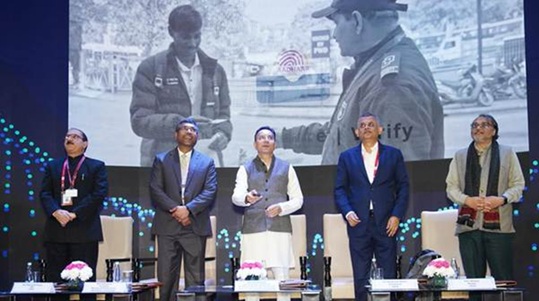
Developed by the Unique Identification Authority of India (UIDAI), the Aadhaar App is a next-generation mobile application designed to enable Aadhaar number holders (ANHs) to carry, share, display, and verify their digital identity in a secure, convenient, and confidential manner.
|
S. No. |
Type of Writ |
Meaning / Purpose |
|
1. |
Habeas Corpus |
Issued to secure the release of a person from illegal or unlawful detention |
|
2. |
Mandamus |
Command issued to a public authority to perform a statutory or public duty |
|
3. |
Prohibition |
Issued to prevent a lower court or authority from exceeding its jurisdiction |
|
4. |
Certiorari |
Issued to quash or cancel an illegal, improper, or erroneous order of a lower court or authority |
|
5. |
Quo Warranto |
Issued to challenge the legality of a person’s claim to hold a public office |
According to Article 361 of the Constitution, a writ of mandamus cannot be issued against the President or Governor in matters relating to the discharge of their constitutional duties.
Generally, writs are not admissible against private individuals or entities unless the allegation is that the State has colluded with a private party to violate constitutional or statutory provisions.
The Supreme Court held that the question was not merely technical in nature but had constitutional and federal significance. Therefore, the matter was admitted for detailed hearing.
| Prelims: (Polity & Governance + CA) Mains: (GS 2 – Polity, Constitution, Federalism, Judiciary; GS 3 – Internal Security, Money Laundering) |
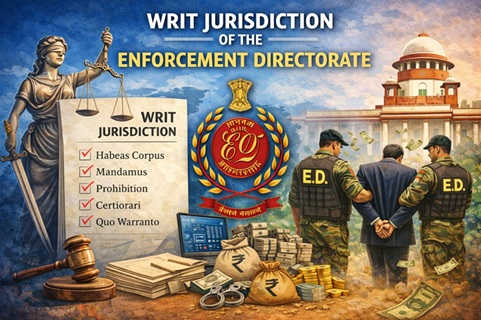
The Supreme Court has agreed to examine a significant constitutional question: Does the Enforcement Directorate (ED) have the locus standi to file writ petitions under Article 226 of the Constitution?
The issue arises from a prolonged legal dispute between the ED and State governments (Kerala and Tamil Nadu), with serious implications for Centre–State relations, federal balance, separation of powers, and the autonomy of investigative agencies.
The controversy stems from the Kerala gold smuggling case (2020) involving diplomatic baggage from the UAE at Thiruvananthapuram airport.
The ED registered cases under:
Allegations were made against senior Kerala officials, including the then Chief Minister. The ED approached the Kerala High Court seeking:
Meaning: A writ petition is a formal request to a higher court (Supreme Court under Article 32 or High Courts under Article 226) seeking a constitutional remedy to enforce rights or correct legal wrongs.
Types of Writs:
Limitations:
Article 226 empowers High Courts to issue writs for enforcement of fundamental rights and “for any other purpose.” Traditionally, this jurisdiction is exercised by:
The dispute is whether the ED qualifies as such an entity.
High Courts’ Stand (Kerala & Madras HCs):
Lack of Juristic Personality:
Violation of Article 131:
Judicial Precedents:
which held that only juristic persons can sue governments.
Procedural Integrity:
Official Capacity Filing:
Statutory Empowerment:
Operational Necessity:
Possible Implications:
FAQs1. Why is the ED’s right to file writ petitions controversial ? Because the ED is not explicitly recognised as a juristic person in law, raising doubts about whether it can independently invoke constitutional remedies under Article 226. 2. What is the relevance of Article 131 in this dispute ? Article 131 grants the Supreme Court exclusive jurisdiction over Centre–State disputes. Allowing ED writs in High Courts could bypass this constitutional safeguard. 3. How have High Courts viewed ED’s locus standi ? Both Kerala and Madras High Courts have held that ED is a statutory authority with independent powers and can therefore approach courts. 4. What are the risks of allowing ED to file writs ? It could expand executive power, weaken federal boundaries, and dilute procedural checks on Centre–State litigation. 5. What would be the benefit of legislative clarification ? It would remove ambiguity, ensure constitutional compliance, and balance effective law enforcement with federal accountability. |
| Prelims: (Polity & Governance + CA) Mains: (GS 2 – Governance, Accountability, Institutions; GS 3 – Infrastructure, Aviation Safety, Disaster Management) |
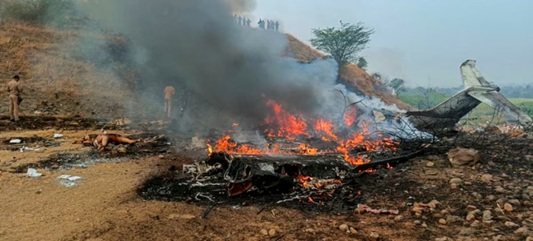
A plane crash in Baramati that killed Maharashtra Deputy Chief Minister Ajit Pawar has reignited concerns over India’s civil aviation safety framework, particularly in the non-scheduled aviation sector. The tragedy closely mirrors warnings issued months earlier by a Parliamentary Standing Committee in its August 2025 report, which cautioned that India’s rapid aviation growth was outpacing regulatory oversight, safety enforcement, and institutional capacity.
The committee had specifically flagged vulnerabilities in private jets and charter aircraft operations, highlighting uneven compliance, weak monitoring, and structural gaps when compared to scheduled commercial airlines.
FAQs1. Why has the Baramati plane crash raised concerns about aviation safety ? Because it occurred despite prior Parliamentary warnings about regulatory gaps, particularly in private and charter aviation, highlighting systemic weaknesses rather than isolated failures. 2. Which segment of aviation is considered most vulnerable ? The non-scheduled aviation sector, including private jets and charter aircraft, due to uneven compliance, weaker oversight, and limited operational support systems. 3. What are the main challenges faced by the DGCA ? Manpower shortages, expanding regulatory responsibilities, limited predictive oversight tools, and the need to shift from reactive to preventive safety regulation. 4. How does ATC fatigue affect aviation safety ? High workloads, long shifts, and stress increase the likelihood of human error, which can compromise flight safety, especially during peak traffic and adverse weather conditions. 5. What is the key lesson from this incident for India’s aviation sector ? That rapid growth must be matched by stronger safety institutions, regulatory capacity, infrastructure investment, and a safety-first governance culture to ensure sustainable and secure aviation expansion. |

Our support team will be happy to assist you!


 Contact Us
  New Batch : 9555124124/ 7428085757
  Tech Support : 9555124124/ 7428085757