
- UPSC Exam
- State PCS
- One Day Exam
- Current Affairs
- PT Quiz
- Downlaods
- About Coaching
- Blog
- Videos

| Prelims : (Polity + Elections + Current Affairs) Mains : (GS-2 – Governance, Constitutional Bodies, Electoral Reforms) |
The Supreme Court of India recently intervened in the Special Intensive Revision (SIR) of electoral rolls in West Bengal by directing the deployment of judicial officers to examine nearly 60 lakh disputed voter verification cases.
The intervention came amid a dispute between the Election Commission of India and the Government of West Bengal regarding the availability of appropriate officials for scrutinising electoral roll entries and verifying voter eligibility. The Court invoked its extraordinary powers under Article 142 of the Constitution of India to ensure the timely completion of the revision exercise ahead of upcoming elections.
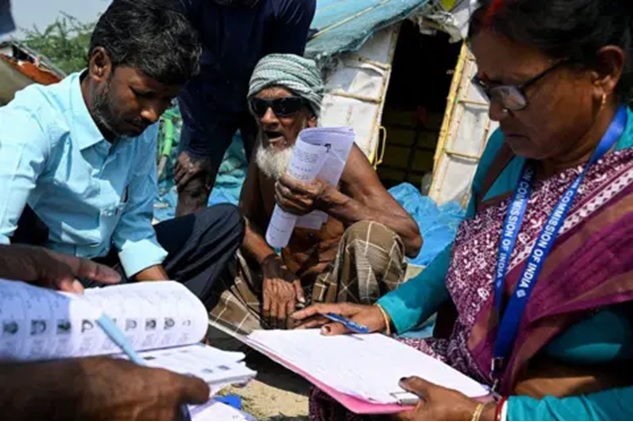
Electoral rolls are the official lists of individuals eligible to vote in elections. In India, only citizens whose names appear on the voter list are permitted to participate in the electoral process.
The preparation and maintenance of electoral rolls is conducted under the supervision of the Election Commission of India, which derives its authority from Article 324 of the Constitution of India.
Accurate electoral rolls are essential because they :
Errors or inconsistencies in voter lists may lead to exclusion of legitimate voters or inclusion of ineligible individuals, both of which can undermine electoral credibility.
The Special Intensive Revision (SIR) is a comprehensive exercise undertaken periodically to verify and update electoral rolls.
Its objective is to ensure that voter lists remain accurate, inclusive, and free from irregularities.
The process generally involves the following steps :
Officials such as Electoral Registration Officers (EROs) and Assistant Electoral Registration Officers (AEROs) play a central role in scrutinising applications, examining documents, and making decisions on disputed cases.
During the revision exercise, certain voter entries are flagged for further scrutiny due to irregularities or inconsistencies.
Two major categories identified in the West Bengal revision process include :
These arise when voter information appears inconsistent or contradictory. Examples include :
Such cases require individuals to submit additional documentation to confirm their eligibility.
These involve voter entries that cannot be clearly linked with previously verified electoral rolls or supporting records.
Such entries require verification to ensure that :
In West Bengal’s ongoing revision exercise, nearly 60 lakh such cases have been flagged, making the verification process unusually large and administratively complex.
The Supreme Court of India stepped in after disputes emerged between the Election Commission of India and the Government of West Bengal regarding the conduct of the SIR exercise.
To ensure that the revision process is completed without delay, the Court invoked Article 142 of the Constitution of India, which allows it to pass orders necessary for doing complete justice in any matter.
This measure was adopted because the second phase of the SIR process was nearing completion and the high volume of disputes required urgent resolution.
The controversy largely centred on the availability and suitability of officials responsible for verifying voter records.
The Election Commission of India argued that :
The Government of West Bengal disputed the Commission’s claims and raised several concerns :
The disagreement created administrative delays and led to litigation before the Supreme Court of India.
The Court emphasised the importance of completing the revision process in a timely manner, particularly with elections approaching.
Key observations included :
By appointing judicial officers to adjudicate disputed cases, the Court sought to create an independent and credible mechanism for resolving conflicts.
The controversy has revived an important institutional debate regarding the administrative structure of the Election Commission of India.
Under Article 324 of the Constitution of India, the Commission has the authority to supervise elections. However, it does not maintain a permanent administrative cadre of its own.
Instead, it relies on officers temporarily deputed from :
This arrangement sometimes creates structural issues :
The West Bengal episode highlights the need to examine whether the Commission requires greater institutional autonomy or a permanent electoral administration framework.
Maintaining reliable voter lists is fundamental for the credibility of democratic elections.
Accurate electoral rolls help to :
Conversely, errors in electoral rolls can result in :
Therefore, periodic revision exercises such as the Special Intensive Revision (SIR) play a critical role in safeguarding electoral integrity.
FAQs1. What is the Special Intensive Revision (SIR) of electoral rolls ? The Special Intensive Revision is a comprehensive verification exercise conducted by the Election Commission of India to update voter lists by correcting errors, adding new voters, and removing ineligible entries. 2. Why did the Supreme Court intervene in the West Bengal SIR process ? The Supreme Court of India intervened after disputes between the Election Commission and the State government delayed verification of nearly 60 lakh disputed voter entries, and directed the deployment of judicial officers to ensure timely completion. 3. What are “logical discrepancy” cases in electoral roll verification ? Logical discrepancy cases arise when voter details such as age, address, or identity information appear inconsistent or contradictory with official records and require additional documentation. 4. Why are electoral rolls important for democratic elections ? Electoral rolls determine who is eligible to vote. Accurate voter lists prevent fraud, ensure inclusion of eligible citizens, and maintain the credibility of the electoral process. 5. What structural issue in India’s electoral administration does this controversy highlight ? The episode highlights that the Election Commission of India lacks its own permanent administrative staff and depends on government officials on deputation, which may sometimes lead to coordination challenges during election-related processes. |



Our support team will be happy to assist you!

 Contact Us
  New Batch : 9555124124/ 7428085757
  Tech Support : 9555124124/ 7428085757