Prelims: Black Mass, Lithium-ion Batteries, Critical Minerals, DGFT, Circular Economy
Mains: GS Paper II – Government Policies and Interventions; GS Paper III – Energy Security, Industrial Development, Environmental Conservation and Critical Minerals
Keywords: Black Mass, Battery Recycling, Critical Mineral Security, Electric Vehicles, National Critical Mineral Mission, Urban Mining, Resource Security, Circular Economy. |
Why in News?
- On November 11, 2026, the Directorate General of Foreign Trade (DGFT) prohibited the export of lithium-ion battery waste and scrap containing black mass with immediate effect.
- The decision aims to ensure the domestic availability of critical minerals, strengthen India's battery recycling industry and reduce import dependence for electric vehicles, electronics and renewable energy storage systems.
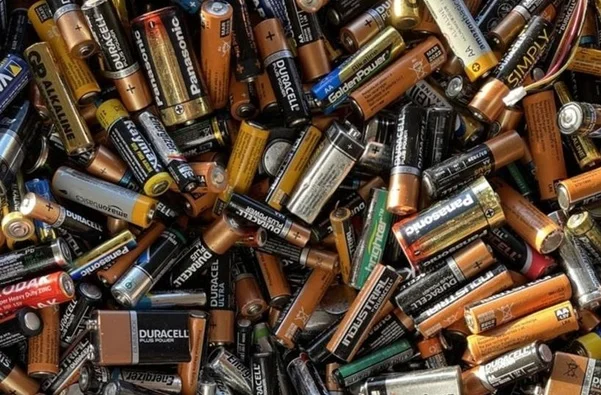
Key Highlights of the Export Ban
- The export of battery waste and scrap containing lithium-ion battery black mass has been prohibited under ITC (HS) Code 85491400.
- The measure aims to ensure that black mass generated in India is recycled and refined domestically.
- It will improve raw material availability for domestic recycling and refining industries.
- The decision is expected to encourage investment, employment and indigenous mineral processing capabilities.
- India reportedly recorded zero exports under this classification in FY 2026, making the measure primarily preventive in nature.
What is Lithium-ion Battery Black Mass?
- Black mass is a dark, powdered mixture obtained during the recycling of lithium-ion batteries.
- It contains valuable materials such as lithium, nickel, cobalt, manganese and graphite, depending on battery chemistry.
- These materials can be recovered and purified through advanced recycling technologies.
- The recovered minerals can be reused in battery manufacturing, reducing the requirement for fresh mineral extraction.
Why is Black Mass Important?
|
Material
|
Major Application
|
|
Lithium
|
Rechargeable batteries
|
|
Cobalt
|
Battery cathode materials
|
|
Nickel
|
High-energy-density batteries
|
|
Manganese
|
Battery cathodes and steel production
|
|
Graphite
|
Lithium-ion battery anodes
|
India currently faces a shortage of black mass feedstock relative to its existing processing capacity. Retaining this material domestically could improve the utilisation of recycling facilities.
Government Initiatives for Critical Mineral Recycling
1. National Critical Mineral Mission (NCMM)
The National Critical Mineral Mission was approved in January 2025 to strengthen India's critical mineral supply chains through domestic exploration, mining, overseas mineral acquisition and recycling.
2. Critical Mineral Recycling Incentive Scheme
- Approved: September 3, 2025.
- Financial outlay: ₹1,500 crore.
- Duration: FY 2025–26 to FY 2030–31.
- Objective: Develop domestic capacity for extracting critical minerals from secondary resources, including electronic and battery waste.
3. Battery Waste Management Rules, 2022
- Introduced under the Environment (Protection) Act, 1986.
- Establish Extended Producer Responsibility (EPR) for battery producers.
- Promote environmentally responsible collection, recycling and refurbishment of waste batteries.
Significance of the Export Ban for India
- Critical Mineral Security: Ensures greater domestic availability of strategically important minerals.
- Reduced Import Dependence: Helps reduce reliance on foreign suppliers and foreign exchange expenditure.
- Electric Vehicle Ecosystem: Supports indigenous battery manufacturing and electric mobility.
- Circular Economy: Encourages the reuse and recovery of materials instead of their disposal.
- Employment Generation: Creates opportunities in recycling, refining and advanced manufacturing.
- Strategic Autonomy: Reduces India's vulnerability to geopolitical disruptions in mineral supply chains.
- Environmental Sustainability: Reduces pressure on primary mining and encourages scientific waste management.
What is Urban Mining?
- Urban mining refers to the recovery of valuable metals and minerals from discarded products, electronic waste, batteries and other human-generated waste rather than extracting them from natural mineral deposits.
- The recovery of lithium and other critical minerals from black mass is an important example of urban mining.
Challenges Associated with Battery Recycling
- High Processing Costs: Advanced recycling and refining technologies require substantial investment.
- Informal Recycling Sector: Unscientific recycling practices create environmental and health risks.
- Limited Feedstock Availability: Insufficient collection of discarded batteries affects industrial capacity utilisation.
- Technological Challenges: Extracting high-purity minerals from diverse battery chemistries remains complex.
- Environmental Concerns: Improper processing may cause chemical contamination and hazardous emissions.
- Price Volatility: Fluctuations in global mineral prices can affect recycling profitability.
Way Forward
- Establish dedicated critical mineral recycling clusters.
- Strengthen battery waste collection and traceability mechanisms.
- Promote research in hydrometallurgical and direct recycling technologies.
- Encourage public-private partnerships in battery recycling.
- Integrate informal waste collectors into the formal recycling ecosystem.
- Ensure strict implementation of Extended Producer Responsibility provisions.
Conclusion
- India's prohibition on lithium-ion battery black mass exports represents a strategic shift towards domestic resource recovery and critical mineral self-reliance.
- Combined with advanced recycling infrastructure and effective waste management policies, the measure can strengthen India's clean energy transition, industrial competitiveness and long-term resource security.
Prelims Practice Question
Q. With reference to lithium-ion battery black mass, consider the following statements:
- It is obtained during the recycling of lithium-ion batteries.
- It may contain lithium, cobalt, nickel and graphite.
- Its recycling can contribute to the development of a circular economy.
Which of the statements given above is/are correct?
(a) 1 and 2 only
(b) 2 and 3 only
(c) 1 and 3 only
(d) 1, 2 and 3
Mains Practice Question
Q. Discuss the significance of lithium-ion battery recycling in ensuring India's critical mineral security. How can urban mining contribute to India's clean energy transition and strategic autonomy?
|
FAQs
Q1. What is black mass?
A mineral-rich powder recovered from recycled lithium-ion batteries.
Q2. Why has India banned black mass exports?
To strengthen domestic recycling and secure critical minerals.
Q3. Which authority has prohibited black mass exports?
The Directorate General of Foreign Trade has intervened.
Q4. What is urban mining?
Recovery of valuable minerals from discarded manufactured products.
Q5. What is the outlay of the recycling incentive scheme?
The scheme has an outlay of ₹1,500 crore.
|