- India is undertaking one of the world’s largest dam rehabilitation and safety modernisation programmes as the country increasingly focuses on strengthening ageing water infrastructure through policy reforms, technological interventions, legal mechanisms and institutional strengthening.
- The objective is to improve dam safety, operational efficiency, climate resilience and long-term sustainability of water infrastructure that supports irrigation, drinking water supply, hydropower generation, flood control and water security.
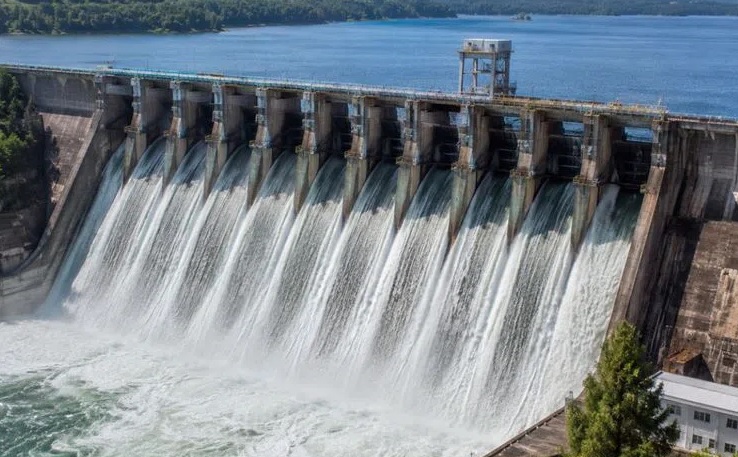
Status of Dams in India
- India possesses the world’s third-largest dam network after the United States and China, with 6,628 specified dams across the country.
- Nearly 98.5 percent of these dams are owned by State Governments, making states the principal stakeholders in dam management, maintenance and safety.
- Among Indian states, Maharashtra has the highest number of specified dams, followed by Madhya Pradesh and Gujarat.
- Dams play a critical role in India's economy and development by supporting :
- Irrigation and agricultural productivity
- Hydropower generation
- Drinking water supply
- Flood moderation and management
- Water storage and security
- Industrial and urban development
However, a significant proportion of India’s dam infrastructure is ageing rapidly.
According to the Ministry of Jal Shakti :
- 1,681 dams, constituting around 26 percent of total specified dams, are more than 50 years old.
- 291 dams have already crossed 100 years of age.
- Around 42 percent of dams belong to the age group of 25–50 years.
India’s oldest operational dam is Kallanai (Grand Anicut) located in Tamil Nadu, which has remained functional for nearly 2,000 years and continues to support irrigation activities.
Key Challenges Associated with Dam Safety in India
1. Ageing Infrastructure and Structural Deterioration
Many dams in India were constructed decades ago and are now approaching or exceeding their intended design life.
Ageing infrastructure increases :
- Structural vulnerability
- Maintenance requirements
- Repair costs
- Risk of operational inefficiencies
- Safety concerns during extreme weather events
The deterioration of civil structures, gates, spillways and foundations makes rehabilitation increasingly necessary.
2. Sedimentation and Reduction in Reservoir Capacity
Sedimentation has emerged as one of the most significant threats affecting reservoir performance and storage efficiency.
A study conducted by the Central Water Commission (CWC) covering 439 reservoirs found that :
- Reservoirs have lost an average 19 percent of their gross storage capacity because of sediment deposition.
- Annual loss of storage capacity is estimated at approximately 0.74 percent.
Reduction in storage capacity adversely affects :
- Irrigation potential
- Hydropower generation
- Flood management capability
- Water availability during dry periods
3. Seismic Vulnerability of Dams
Several dams in India are situated in earthquake-prone regions, making seismic safety an important concern.
For example, during the 2001 Bhuj Earthquake in Gujarat, liquefaction occurred in the foundation area of Chang Dam, highlighting the vulnerability of dam infrastructure to seismic events.
Earthquakes may result in :
- Structural instability
- Foundation damage
- Cracking
- Increased risk of failure
4. Climate Change and Changing Hydrological Patterns
Climate change has significantly altered hydrological conditions.
Challenges include :
- Irregular rainfall distribution
- Increase in extreme precipitation events
- Intensification of floods and droughts
- Higher climate variability
- Increased hydrological uncertainty
These developments require dams to be managed under more dynamic and risk-based operational systems.
5. Vulnerability to Glacial Lake Outburst Floods (GLOFs)
- Mountainous regions face additional threats due to glacial lake expansion and sudden outburst floods.
- In 2023, the Chungthang Dam in Sikkim was washed away during flash floods triggered by a Glacial Lake Outburst Flood (GLOF) event.
- This incident highlighted the growing climate risks facing Himalayan infrastructure.
Dam Rehabilitation and Improvement Programme (DRIP): India’s Flagship Dam Safety Initiative
- To address structural deficiencies and improve dam safety, the Government of India launched the Dam Rehabilitation and Improvement Project (DRIP) in 2012 with financial and technical support from the World Bank.
- DRIP is a multi-phase programme aimed at improving :
- Structural safety
- Operational performance
- Monitoring systems
- Emergency preparedness
- Institutional capacity
- Major components include :
- Structural rehabilitation works
- Spillway modernisation
- Instrumentation systems
- Dam safety inspections
- Emergency Action Plans (EAPs)
- Digital monitoring mechanisms
DRIP Phase I (2012–2021)
The first phase of DRIP was implemented between 2012 and 2021.
It covered 223 dams located across seven states, namely :
- Jharkhand
- Karnataka
- Kerala
- Madhya Pradesh
- Odisha
- Tamil Nadu
- Uttarakhand
Major interventions included :
- Structural strengthening
- Dam safety assessments
- Emergency planning
- Capacity building of institutions
The phase also introduced the Dam Health and Rehabilitation Monitoring Application (DHARMA).
DRIP Phase II and Phase III
The second and third phases began operations in October 2021 and substantially expanded programme coverage.
Together, they include:736 dams ,19 states ,Three central agencies
The participating central agencies are :
- Central Water Commission (CWC)
- Bhakra Beas Management Board (BBMB)
- Damodar Valley Corporation (DVC)
Financial Structure of DRIP
The total financial allocation for DRIP stands at ₹10,211 crore.
Funding pattern includes :
- ₹7,000 crore financed through external assistance from the World Bank and Asian Infrastructure Investment Bank (AIIB)
- ₹3,211 crore contributed by participating states and agencies
Major dams undergoing rehabilitation include :
- Bhakra Dam
- Nagarjuna Sagar Dam
- Gandhi Sagar Dam
As of March 2025 :
- Rehabilitation proposals worth ₹5,053 crore for 191 dams had received approval.
- Major rehabilitation works had been completed in 43 dams.
Dam Safety Act, 2021: Establishing a Legal and Institutional Framework
A major milestone in dam governance was achieved with the implementation of the Dam Safety Act, 2021, which came into force in December 2021.
The Act provides a nationwide legal framework governing :
- Surveillance
- Inspection
- Operation
- Maintenance
- Accountability mechanisms
The objective is to prevent dam failures and improve safety standards.
A specified dam under the Act refers to :
- Dams exceeding 15 metres in height, or
- Dams between 10 and 15 metres fulfilling prescribed technical conditions.
Four-Tier Institutional Structure Under the Dam Safety Act
The Act established a comprehensive institutional framework consisting of :
- National Committee on Dam Safety
- National Dam Safety Authority
- State Committees on Dam Safety
- State Dam Safety Organisations (SDSOs)
All 31 dam-owning states have established State Dam Safety Organisations responsible for inspections, compliance and monitoring.
Key Provisions of the Dam Safety Act
The Act mandates :
- Periodic inspections
- Installation of instrumentation systems
- Risk assessments
- Flood forecasting mechanisms
- Early warning systems
- Emergency Action Plans
- Monitoring protocols
The law transformed dam safety from an advisory framework into a legally enforceable governance mechanism.
Technology and Digital Monitoring in Dam Safety
Technology has become the foundation of India’s evolving dam safety ecosystem.
Dam Health and Rehabilitation Monitoring Application (DHARMA)
DHARMA functions as a digital monitoring platform and now contains information related to all 6,628 specified dams.
The platform facilitates :
- Digital inspection records
- Maintenance tracking
- Safety assessments
- Data management
- Monitoring activities
Authorities conduct approximately 13,000 dam inspections every year, and inspection findings are digitally documented through DHARMA.
Rapid Risk Screening (RRS)
Rapid Risk Screening exercises have already been completed for 5,553 dams using web-based analytical tools.
Objectives include :
- Identification of structural vulnerabilities
- Risk prioritisation
- Planning rehabilitation interventions
- Improving safety management systems
Real-Time Monitoring and Early Warning Systems
The government is also promoting installation of :
- Instrumentation systems
- Hydro-meteorological stations
- Early warning systems
- Inflow forecasting systems
These technologies improve disaster preparedness and real-time operational monitoring.
Research Institutions and Capacity Building
India is strengthening scientific research related to dam safety.
A National Centre for Earthquake Safety of Dams is being established at Malaviya National Institute of Technology Jaipur.
Additionally, Centres of Excellence are being developed at :
- Indian Institute of Technology Roorkee
- Indian Institute of Science Bengaluru
Research areas include :
- Seismic hazard mapping
- Reservoir sedimentation studies
- Rehabilitation technologies
- Risk assessment methodologies
Mandatory Compliance Requirements for Dam Owners
The new regulatory framework imposes responsibilities on dam owners, including :
- Central Government agencies
- State Governments
- Public sector undertakings
- Private entities
- Local authorities
Dam owners must now :
- Establish dedicated dam safety units
- Conduct pre-monsoon inspections
- Conduct post-monsoon inspections
- Allocate maintenance funds
- Prepare Emergency Action Plans
- Undertake periodic safety evaluations
Risk-Based Categorisation Framework (2024)
From April 2024, dams are classified into three categories :
Category I : Dams having critical deficiencies requiring immediate intervention.
Category II : Dams having major deficiencies requiring corrective measures.
Category III : Dams having minor deficiencies or satisfactory conditions.
According to post-monsoon inspections conducted in 2025 :
- Three dams were placed under Category I
- 188 dams were placed under Category II
The Act also provides penalties including imprisonment and fines where negligence creates threats to life or public safety.
Shift from New Construction Towards Lifecycle Management
India’s dam policy is increasingly shifting away from constructing new infrastructure towards :
- Lifecycle management of existing assets
- Rehabilitation of ageing dams
- Operational efficiency enhancement
- Climate resilience
- Digital governance
- Risk-based safety management
The combined implementation of :
- Dam Rehabilitation and Improvement Programme (DRIP)
- Dam Safety Act, 2021
- DHARMA digital monitoring platform
is helping India establish a modern, technology-driven and data-based dam safety ecosystem.
These reforms are expected to reduce disaster risks while strengthening water security, agricultural sustainability, energy generation capacity and long-term resilience of critical infrastructure across the country.





 Contact Us
  New Batch : 9555124124/ 7428085757
  Tech Support : 9555124124/ 7428085757