
- UPSC Exam
- State PCS
- One Day Exam
- Current Affairs
- PT Quiz
- Downlaods
- About Coaching
- Blog
- Videos

| Prelims: (Economy + Infrastructure + CA) Mains: (GS 2 - Governance, Regulatory Institutions; GS 3 - Infrastructure, Public–Private Partnership, Civil Aviation) |
The Union government has advanced the third round of airport privatisation, proposing to lease 11 Airports Authority of India (AAI) airports to private operators under the Public–Private Partnership (PPP) model. The move is part of India’s broader effort to monetise public infrastructure and expand aviation capacity.
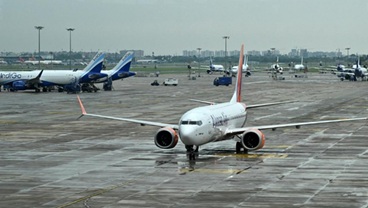
Airport privatisation in India aims to improve efficiency, attract private investment, and reduce the fiscal burden on the government.
The current round represents a new phase by introducing bundling of metro and non-metro airports.
The key objectives include:
Privatisation is also linked to India’s long-term aviation growth strategy. With only around 6% of Indians using air travel, expanding airport capacity is seen as essential for economic growth, tourism, and regional connectivity.
Once cleared by the Public Private Partnership Appraisal Committee (PPPAC) and the Union Cabinet, bidding is expected to begin around 2026.
This round aligns with the National Monetisation Pipeline (NMP), under which privatisation of 25 airports was projected to raise over ₹20,000 crore. However, aviation monetisation has lagged behind roads and railways, prompting renewed policy push.
Revenue Model Shift
While this provides predictable revenue to AAI, it raises concerns over higher user charges for passengers.
Non-aeronautical revenues are intended to offset passenger costs, but disputes persist over under-reporting of such revenues.
Airport privatisation is not just an economic reform but a governance challenge.
Balancing private efficiency with public accountability will determine the success of airport privatisation.
FAQsQ1. Why is the government privatising airports ? To improve efficiency, attract private investment, and reduce fiscal burden while expanding aviation capacity. Q2. What is new in the third round of airport privatisation ? Bundling of metro and non-metro airports and alignment with the National Monetisation Pipeline. Q3. Who regulates airport tariffs in India ? The Airport Economic Regulatory Authority (AERA). Q4. What are the main concerns with airport privatisation ? Market concentration, rising passenger charges, and service-quality issues. Q5. How can passenger interests be protected ? Through strong regulation, service-linked tariffs, competition safeguards, and transparency. |



Our support team will be happy to assist you!

 Contact Us
  New Batch : 9555124124/ 7428085757
  Tech Support : 9555124124/ 7428085757