(Prelims: General Issues Related to Environmental Ecology, Biodiversity, and Climate Change)
(Mains, General Studies Paper-3: Conservation, Environmental Pollution and Degradation, Environmental Impact Assessment, Disaster and Disaster Management) |
Context
- The seventh session of the United Nations Environment Assembly (UNEA-7) held in Nairobi adopted a resolution submitted by India on "Strengthening Global Management of Forest Fires," reflecting the international community's growing concern about emerging environmental threats.
- Passed with widespread support from Member States, this resolution underscores the fact that forest fires are no longer merely a local or seasonal problem but a serious, climate-induced global crisis that requires coordinated international action.
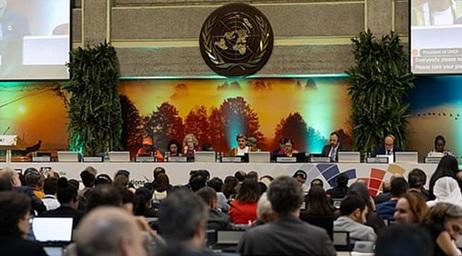
United Nations Environment Assembly (UNEA): An Overview
UNEA is the world's highest-level decision-making body on environmental matters and provides a global platform to address serious environmental challenges.
|
Characteristic
|
Description
|
|
Established
|
2012 (Post Rio+20 Conference)
|
|
Membership
|
Universal (All 193 UN Member States)
|
|
Meeting Frequency
|
Every two years
|
|
Meeting Venue
|
Nairobi, Kenya
|
|
Mandate
|
Sets the global environmental agenda, provides broad policy guidance, and defines UNEP’s strategic direction
|
UNEA-7: Striving Towards a Resilient Planet
The seventh session of the UNEA (2025) was held in Nairobi under the theme "Advancing Sustainable Solutions for a Resilient Planet." This session took place at a time when climate change, biodiversity loss, and pollution crises are intersecting and exacerbating global risks.
Forest Fires: An Emerging Global Threat
- Through its resolution, India focused on the fact that forest fires are no longer natural phenomena of limited duration. Climate change, rising temperatures, prolonged droughts, and human activities are leading to a steady increase in their frequency, intensity, and duration. As a result, ecological balance, livelihoods, and national economies are under severe pressure.
- Every year, millions of hectares of land are engulfed in fire, causing significant damage to forests and biodiversity, impacting the quality of soil and water resources, and increasing air pollution.
- Additionally, forest fires emit massive amounts of greenhouse gases, weakening carbon sinks and exacerbating the climate crisis.
Scientific Warnings and Policy Directions
- Citing the UNEP's "Spreading Like Wildfires" report, India warned that if current trends continue:
- Forest fires could increase by 14% by 2030
- 30% by 2050
- 50% by 2100.
- These projections clearly indicate that wildfires are a long-term and climate-driven risk, requiring a shift from reactive measures to proactive prevention and preparedness.
Need for Integrated Fire Management
- India emphasized the need for integrated fire management at the global level, including:
- Early warning systems
- Risk maps
- Satellite-based monitoring, and
- The involvement of local communities and frontline workers.
- UNEP's role was highlighted as crucial in adaptation, ecosystem restoration, and strategy development, while the Global Fire Management Hub, established by FAO and UNEP in 2023, was highlighted as a key platform for global cooperation.
Key Provisions of the Proposal
- The proposal submitted by India calls for several concrete measures. These include:
- Strengthening international cooperation on early warning systems and risk assessment tools
- Enhancing regional and global partnerships for prevention and recovery, developing training programs for knowledge sharing and capacity building
- Supporting national and regional action plans on integrated fire management
- Furthermore, emphasis has been placed on ensuring improved access to international finance through multilateral and results-based financing mechanisms.
Broader Implications of UNEA-7
- UNEA-7 concluded with the adoption of 11 resolutions, including:
- Conservation of coral reefs
- Chemical and waste management
- Antimicrobial resistance, sustainability of artificial intelligence
- Glacier protection, and youth participation
- This demonstrates how broad and multifaceted the global environmental agenda has become.
Conclusion
India's proposal on forest fires at UNEA-7 emerges as an important intervention in global environmental governance. It not only addresses a serious and growing threat but also points the way forward for the international community towards coordinated, science-based, and community-centered solutions. At a time when political differences are challenging multilateral cooperation, this resolution is a reminder that solutions to environmental crises are possible only through shared responsibility and collective action.






 Contact Us
  New Batch : 9555124124/ 7428085757
  Tech Support : 9555124124/ 7428085757